9 Lessons Bond 24 Must Learn From Skyfall
 Skyfallthe 23rd installment of the James Bond franchisewas the highest-grossing Bond film ever and the eighth-highest-grossing film of all time (not adjusted for inflation). It was the biggest film ever released in the UK. For many critics, director Sam Mendes' Bond was one of the most cerebral and most beautifully filmed offerings in the franchise. Fans also appreciated the ways in which Skyfall built on the Bond franchise but continued to pave a new direction forward. The elements that we know and love in any Bond filmthe recognizable opening action sequence, the emblematic opening song and titles, gadgets, excellent chase scenes, a stellar villain, a 'Bond girl,' and the global trekking of Bondwill, to some extent or another, be present in Bond 24. Skyfall used all of these recognizable Bond elements but notably modified a number of them, which perhaps led to the film's popularity with both critics and fans. We know a few things about Bond 24namely that Daniel Craig and Sam Mendes will returnbut many of the other casting and plot details remain murky. Even with these unknowns, we can use the aesthetic and commercial success of Skyfall as a barometer of things to come. So, let's take a moment to reflect on 9 lessons Bond 24 should learn from Skyfall. Please offer your comments on the directions that Bond 24 will take. I would be curious to hear your views. What's fun about the Bond films are the conversations that they inspire!
9. A Solid Soundtrack And Title Song
As obvious as the soundtrack and title song may seem to any film's success, these are key elements that establish the mood of any great Bond film. Since I first watched Bond films as a child, I can vividly remember the excitement that a great title song created and the ways that a stellar soundtrack sustained the excitement. Adele's "Skyfall," the title song (co-written with Paul Epworth), won the Academy Award for Best Original Song, which was a first for a Bond movie song. Many compared "Skyfall" with previous Bond classics like "Goldfinger" (Shirley Bassey), "Live and Let Die" (Paul McCartney & Wings), and "Nobody Does It Better" (Carly Simon) and liked how it allowed them to forget less-successful offerings like "Die Another Day" (Madonna), "You Know My Name" (Chris Cornell), and "Another Way to Die" (Jack White & Alicia Keys). Again, like a lot of elements in Bond films, there's a great degree of subjectivity involved in any rating, but "Skyfall" stands out for Adele's talent as a vocalist and for the sense of drama that the song conveysno doubt due to the skillful orchestration of J. A. C. Redford. Reportedly, Daniel Craig was so moved by a demo recording of it that he shed a tear. For more on the best and worst Bond songs, see Mike Reyes in WhatCulture! James Bond: Ranking The Theme Songs From Worst To Best and Michael Dunaway's "The Graded, Ranked, and Non-Negotiable Guide to Every Bond Song" in The Atlantic. In addition to the award-winning title song, we have the score from Thomas Newman who has been nominated for eleven Academy Awards and who scored Skyfall director Sam Mendes' film American Beauty and his outstanding Revolutionary Road. So, as we await Bond 24, we can only hope that we will get another winner in the title song and the score as we did with Adele and Thomas Newman's work on Skyfall. Update: There is a rumour that Daniel Craig asked Adele to return and perform the title song for Bond 24, so we will have to wait and see what happens.8. Daniel Craig As James Bond
 Opinions abound in terms of who was the best bond ever. Many have Sean Connery as the best, others Daniel Craig; opinions differ on Roger Moore and Pierce Brosnan, with few mentions of George Lazenby and Timothy Dalton as the best. Of all of the Bond actors, Craig plays the lead character in a serious and cerebral manner. There are notable moments of humoursuch as his response to "M" during a free association psychological test in the first hour of Skyfallbut these are delivered in a subdued manner in contrast to the one-liners of Moore and Brosnan (with the exception of Craig's "I got into some deep water" line at the end of the film). Even in the comedic film Happy and Glorious (directed by Danny Boyle for the London 2012 Olympic Games), Craig's Bond is decidedly stoic. Interestingly, in a recent tease for Bond 24, Craig offered, "Hopefully we'll reclaim some of the old irony, and make sure it doesn't become pastiche. I can't do shtick, I'm not very good at it." This was also reported in the Telegraph. Of course, the debate about the best Bond is subjectivedetermined, in part, by the script that the actor has been given and the mood of the times in which the film is shot. The current Bond diverges from the campy and techno-gadget focus of pre-Craig films and instead offers a more serious and psychological portrayal of the Bond universe. If this tendency is going to continueand the box-office success of Skyfall certainly indicates it willthen Craig is the obvious choice for a more serious James Bond, even if he does play up the irony in Bond 24.
7. Sam Mendes As Director
 Sam Mendes is confirmed to be returning to direct the still unnamed Bond 24. Along with Craig's involvement as Bond, Mendes' return as director is a clear opportunity for continued success with the franchise. Asked of his own opinion as to how he would make Skyfall, especially given the divide of opinions among Bond fans as to what constitutes a great Bond film, Mendes offered: "Everybody has an opinion, and they're all different. Literally, on one day someone said to me, 'God, I hope you put some humour into this.' Then, half-an-hour later someone said, 'Oh, it's so much better now they're not trying to be funny.' These are friends and acquaintances. Then others say, 'Oh, please can it not be so violent,' or, 'You've got to put more explosions in there!'" It's easy to appreciate Mendes' sensibilities about directing Skyfall because he clearly respects both sides of the Bond tradition. While he comes down decidedly on one of these sides, he acknowledges that the Bond franchise is a multi-layered and multi-audience undertaking. In the same interview, Mendes said offered, "So, for me the job was: find a story for Bond, and then find a way to marry that with the necessities of the franchise, which is a different thing." Mendes' success in Skyfall is found in his ability to reference the franchise in interesting but not overtly obvious ways (see Creative Re-envisioning and Less Reflexive and Less Nostalgic below) and his consideration of Bond (and M's) obsolescence and associated psychological issues as underlying themes. This latter theme is reminiscent of the scenario of agent Frank Horrigan (played by Clint Eastwood) in In the Line of Fire, but Mendes delivers it in a more compelling and believable manner. We do know that Mendes is set to direct Bond 24. The only question is whether or not he will stick to this "blended" approach to the Bond franchise or if he will add even more of his own unique directorial touches that shine so greatly in Revolutionary Road.
6. A Strong Supporting Cast
 There is still a lot of speculation about the supporting cast for the upcoming Bond 24. According to IMDb, in addition to Daniel Craig, we will see the return of Ben Whishaw as Q, Naomie Harris as (Eve) Moneypenny, and Ralph Fiennes as M. With the departure of Judi Dench as Mwho held the role from 1995-2012we see a new formulation of the Bond supporting cast that reminds of J.J. Abrams' overhaul of the beloved Star Trek franchise (with opinions still out on that cast and the direction of the franchise). As we'll get into in the Re-envisioning section later, there have been mixed emotions about some of the casting decisions in the Daniel Craig-era of Bond. Opinions are divided on Ben Whishaw as a younger Q, but there is a noted intensity and subtly about his performance in Skyfall. Most consider Ralph Fiennes to be at the top of the class as an actor and presume that he will grow into a larger role as M in Bond 24. The biggest remaining questions about the cast for the next Bond film is who will play the 'Bond girl.' One popular rumour is that it will be Penelope Cruz (who is married to Skyfall villain actor Javier Bardem). Whatever the case may be with the supporting cast in Bond 24, it may be that the best cast is the most subtle. My personal preference for a Bond cast is that they quietly supplement the action and not throw dialogue softballs for Bond's wisecracks (like John Cleese's Q). They can also be used to effectively challenge Bond (as Judi Dench's M did so often in her critiques of the Brosnan and Craig Bonds) and assist in transforming his character throughout a film. Perhaps a strong performance will seal the deal for some of the newbie supporting cast in Bond 24particularly those like Fiennes who had smaller parts in Bond 23. Keep in mind that Sam Mendes originally thought that casting Daniel Craig as Bond was a bad decisionhe later changed his mind after he saw Casino Royaleso we ought to give any of the new supporting cast at least the next film to prove their value to the franchise.
5. The Dark And Inward-Focused Villain
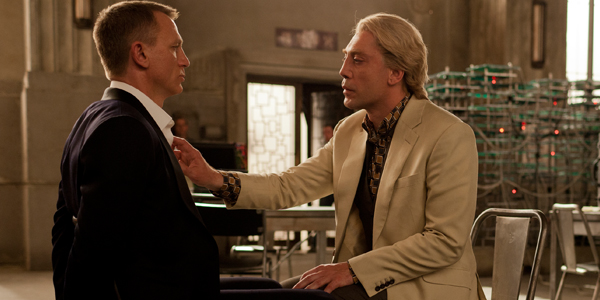 When director Sam Mendes signed on for Skyfall, it is reported that he was intrigued with the choice of Javier Bardem to play villain Raoul Silva. He offered that the selection of Bardem seemed more in line with the tone of Christopher Nolan's Dark Knight films. Mendes said of Nolan's second installment of the Dark Knight films that "It was a game changer for everybody..." Mendes' referencing of Nolan's work with the Dark Knight is significant, for like Nolan, Mendes believes that the rebooting of a successful franchise can benefit from a villain who is dark, inward-focused, perhaps even flawed in his own commitments about being a villain. The Bond villain, quite obviously, plays a pivotal role in the film's plot. The villain is the one who guides Bond to action and who threatens Bond's existence, the efforts of MI6, and, typically, the fate of the planet. As discussed in the section on Story, Skyfall departs from the villain as megalomaniac narrative and instead, quite smartly, opts for a villain who is equally dark as any megalomaniac villain but who looks inwardly and is disruptive to Bond (and MI6) in a more psychological and introspective way. Part of Silva's inward- or reflexive-looking foundation is used to thematically create the triangle of Bond, the villain, and M, but another part is used in a way reminiscent of Heath Ledger's portrayal of the Joker in The Dark Knight. Like the Joker, Silva exists not so much to wreak havoc on the world but to disrupt systems and unsettle their most loyal adherents. Some fans have expressed that Silva is a good villain but that he doesn't go far enough. Indeed, at times it feels that Bardem could be given more screen time to explore the inherently psychological villain that he plays. Nevertheless, Silva does create dramatic energy in the film for the fact that he represents a personal, intimate, and autobiographical threat to Bond. A dark and inward-focused villain does not always guarantee success. Consider villain Dominic Greene in Quantum of Solace (played by the outstanding French actor Mathieu Amalric). Greene is too subtle, too silent throughout much of the film. So, as we think about the villain for Bond 24some rumours suggest that it could be Benedict Cumberbatch who played the latest villain in Star Trek Into Darknesswe might consider the power of the reflexive villain from Skyfall. On the other hand, it could be a great opportunity for Mendes, who has often masterfully crafted stories of inward and troubled characters (see American Beauty and Revolutionary Road), to take on a new challenge and give us a re-envisioned version of the megalomaniac villain. Update: a legal settlement has led to new rumours that classic villain Blofeld may be back in Bond 24.
4. Dark Tone (Sans Humor)
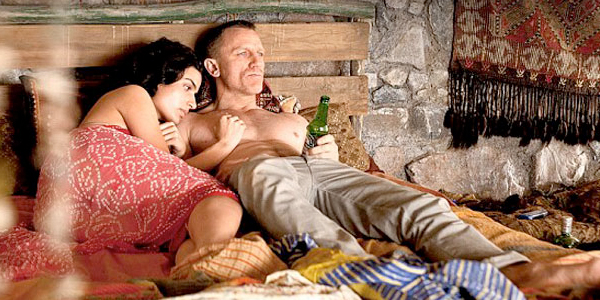 Like the two previous Daniel Craig Bond films, Skyfall is a dramatically darker version of Bond than many of the earlier ones. In varying degrees, The Living Daylights and Die Another Day had notable dark elements to the film, but they failed, in part, due to an overreliance on special effects and gadgets, cheeky one-liners, and plot issues that challenge the suspension of disbelief (consider the Gustav Graves = Tan-Sun Moon scenario in the second of these films). The dark tone of Skyfall is initially established through Bond whose psychological and physical fitness are questioned by those within MI6. While Bond has recovered from his spat of revenge in Quantum of Solace, he is noticeably shaken at his core and this plays into the M-Silva-Bond triangle that composes most of film. It seems that a good deal of the darkness and drama of Skyfall revolves around this triangle and the fact that this film is to be Judi Dench's last go-round as M. For this reason, as well as Craig's last two portrayals and director Sam Mendes' personal vision of the film, Skyfall avoids the special effects festivals and comeback lines of other Bond films. As the film develops from the M's gripping reading of Tennyson's Ulysses during a key action sequence ("We are not now that strength which in old days moved earth and heaven") to the key finale at Skyfall Lodgewhich is so much more soft-spoken and more powerful than the over-the-top destruction of the Atacama Desert hotel in Quantum of Solacewe are caught up in the highly personalized and emotional stakes of the conflict between M, Silva, and Bond. At times, the triangle reminded me of the triads of characters in The Dark Knight and No Country for Old Men (the latter which also featured Bardem as a villain). Of course, we need to keep in mind that of all of themes explored in this article, this one clearly falls into the realm of enjoyment. One could, for example, find extreme pleasure in Roger Moore's portrayal of Bond in Octopussyclown suit and alland find Skyfall and the other Daniel Craig-era films to be too dark, too psychological, and utterly depressing. Many of the darker elements of Bond and other characters from Ian Fleming's novels have been absent from many of the films, so there is precedence for a filmic Bond that is a bit more lite. For more on this theme of the novels, see "The Dark Side of 007." Clearly, there are foundations for both the campy, humorous Bond and the more serious, self-doubting, and psychological Bond. The trend now has shifted to the serious, darker Bond, but this does not mean that Bond 24 will be devoid of the irony that Daniel Craig has alluded may play a bigger part in it. I would make the argument for the maintenance of the serious Bond that Craig has portrayed aptly in two films and that Mendes has directed in one. Like Christopher Nolan's reboot of the Batman franchise, the new direction of Bond through the last three films offers an opportunity to consider more serious political and social themes. This seems particularly relevant given the current world picture of terrorism, intelligence and security scandals (such as with the NSA), geo-political instability, and other issues of a global world.
3. The Story
 The conflicts between an effective villain and a good hero can go a long way. Many Bond villains, like Goldfinger and Max Zorin (A View to a Kill), seem to be so obsessed with money and wealth that they are willing to kill others and bring about physical and/or economic disasters. Elliot Carver (Tomorrow Never Dies) is willing to start a war between China and the United Kingdom in order to control the flow of all news and media information on the planet. There are numerous variations of the Bond villain's plot, each with its own cinematic strengths and weaknesses. What works quite well in Skyfall is the ways in which Silva's character fits with and connects the past (M) and the future (Bond) of MI6. As well, Silva's planthough at times as unbelievable as any Bond villains' plans areis manageable. He doesn't seek to take over the worldthough he clearly illustrates that he could do just this as his computer skills seem limitlessbut merely enact his revenge on M and MI6. Bond 24's story might then reflect on Skyfall's use of the villain's plot as a limited yet effective storytelling device. Because Bond is lacking relatives and a steady romantic partner, the story could not, it would seem, take the route of revenge and the family (as some of the Mission Impossible and Jason Bourne movies have used and as Quantum of Solace did). Of course, new backstory can always establish the opportunity for a revenge yarn, but what works so well in the Daniel Craig Bond era is the exploration of Bond's inner demonshis doubting of self, his supervisors, and MI6 itself. Deception and conspiracy related to the newest cast of supporting characters is one possibility for Bond 24 and perhaps some these elements (combined with Bond's self-flagellation) could be a successful formula for the next Bond. An additional element of the story relates to the action. Bond films rely on gripping action sequences with harrowing stunts. Skyfall takes a somewhat different approach to action sequences. As far as the main onesthere is the opening train sequence with Bond's presumed death, the attack at the intelligence hearing, and the final confrontation at Skyfall. It is the final scene at the Skyfall Lodgea fictional set built in Scotlandthat serves as the most interesting aspect of the Bond story. Screenwriters Neal Purvis, Robert Wade, and John Logan decided to choose a subdued but action-packed sequence for the end of the film. Once you get around the minor issues with the suspension of disbeliefafter all, Bond and M could have called in reinforcements to the Skyfall Lodge, though M said that she wanted to avoid further collateral damage to MI6you are drawn into the remote, serene, and suspenseful location for the finale of the film. Perhaps Bond 24 could draw on a similar setting, but it might also be time for a more spectacular setting for the finale. This could be true especially if the Bond 24 Blofeld rumors are true. So, Bond 24 will need to consider whether it wants to reach back into the franchise and revive the megalomaniacal villain or stick with the more inward-focused, psychologically taut, and limited mission-directed villain of Skyfall.
2. Creative Re-envisioning
 The sense of a creative re-envisioning of Bond can be imagined on two levels. One is the level of the Bond franchise which, like any franchise, has the danger of becoming worn out by time. The end of the Judi Dench M-era is certainly a signal that Bond is undergoing significant transformation. Much like Star Trek, Bond has been due for a rebootwhich it received with Casino Royale and the first appearance of Craig as Bond. However, one danger with any rebootto return to Star Trekis the extent to which the new elements of the re-envisioning take the franchise in a direction that will alienate franchise loyalists and new fans. There has been significant discussion of J.J. Abrams' treatment of Star Trekespecially Star Trek Into Darkness, which upset some diehard fans for its use of the Khan-Kirk-Spock backstoryand clearly in the case of the Bond franchise, there is a delicate balance between innovation and the canon. One of the successes of Skyfall was the choice of a subdued and allegorical setting (of Skyfall Lodge) for the finale of the film. The location choice, its connection to Bond's life, and its role in the M, Silva, Bond triangle is more than effective. Contrast this vision with the Jason-Borne like sequences of close combat and excessive levels of violence in Quantum of Solace. Like Skyfall, Bond 24 should take renewed approaches to the franchise while not tampering with its most successful kernels. With Sam Mendes at the helm again, we may be lucky enough to see a vision of the franchise that mimics what Christopher Nolan did in the Dark Knight trilogy (save the final film in the series). The second level of creative re-envisioning takes place within the fictional world of Bond. A recurring theme of Skyfall was noted in the hearings that M endured and by comments offered by the soon-to-be M in Ralph Fiennes. Time and again, Judi Dench's M is told that she is "living in the ruins" of sentimentality (about James Bond) and old-fashioned notions about intelligence. What's clear is that Bond and his situation within MI6 have to change with the times. The themes of globalization, post-911 terrorism, and general culture change are reflected in both Quantum of Solace and Skyfall and will perhaps be the most dramatically explored in Bond 24. Because, presumably, Bond 24 cannot be as nostalgic as Skyfallone of the key points of the nostalgia was to bring Judi Dench's tenure as M to an endthere will be a real need to offer further elaboration of the changing Bond world. The "living in the ruins" notions about MI6, old timey Bond gadgets (that the new Q in Skyfall mocks), and Bond's questionable psychological fortitude are all themes that could be further explored in Bond 24. Whatever the case may be, we are fortunate that both Craig and Mendes will be back for the next installment. Let us hope that Bond 24 will continue to grow and explore the theme and variations of Skyfall.
1. Less Reflexive And Less Nostalgic
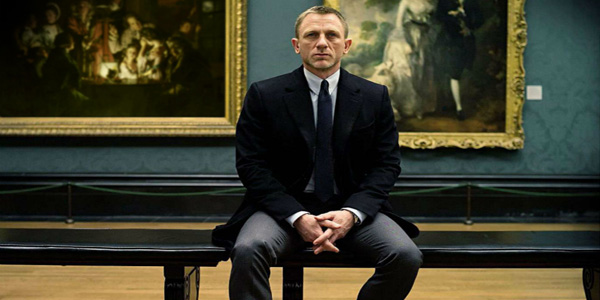 This will sound somewhat contradictory because one of the most successful elements of Skyfall was the way that the film referenced the entirety of the Bond franchise in a way that was touching yet not overtly sentimental. As Ryan Gilbey's review of Skyfall in the New Statesman noted, one of the clear themes of the film was nostalgia. Consider all of the references to previous Bond films in Skyfall: the Aston Martin complete with machine guns in the grille, the Walther PPK/S 9mm palm-reading pistol, Q's joke about an exploding pen, some previous Bond filming locations (such as Turkey), and the autobiographical Skyfall Lodge in Scotland. The emblematic scene of Q and Bond meeting at London's National Gallery and viewing J. M. W. Turner's masterpiece The Fighting Temeraire (1838) gives us a clear impression that Mendes and the Bond writers are more than a bit interested in exploring a reflexive Bond that is perhaps at times too nostalgic but which is all the while engaging. In many dramatic senses, the film's use of Bond's pastin both the comedic exploding pen joke and the serious autobiographical locale of Skyfall Lodgeprovides clarity for the film's triangle of M, Silva, Bond. Quite literally, Silva represents MI6's past, as does M who has been asked to retire. Bond tries to maintain his sense of loyalty to MI6's mission, even in the face of Silva's challenges to him and his repudiation of M and all that MI6 represents. Silva, perhaps, is the most reflexive of all of the Bond villains for he challenges everything that is Bond. At the same time, he is clearly OK with the idea of dying along with M when he asks her to kill them both with his gun. Ultimately, the nostalgia and self-referencingwhich some critics and fans have said was too excessive at timesdraws the triangle story to a close as it does the career of Dench as M. For obvious reasons, then, this level of reflexivity and nostalgia may not be fitting for Bond 24. This, for me, is the most exciting anticipation that I have for the next film. What directions will Mendes take? Will he give us more of the inward, troubled Bond? Will he bring us Blofeld as some rumours have suggested? Will Bond 24 return to the theme of Bond saving the world from certain destruction? What do you predict?