8 Tragic Pixar Moments That Are Totally Wasted On Kids

Unhappily ever after.
Have you ever watched a Pixar movie with a child? It's infuriating. They spend the whole time laughing and dancing to the songs, really yukking it up. They're distracted by the bright colours and cutesy voices and the popcorn that they're spilling all over the floor (popcorn that you bought for them but it's not as though they even consider that). It's almost like they think these are happy movies, meant to inspire joy and hope. It's like they think these movies are for them. Of course we, the adults, know better. We know that Pixar sets out to devastate you, that it's less an animation studio than an existential crisis factory. Here are a few moments that pass kids right by while reducing you, a person of voting age, to public shreds. Spoilers within though if you haven't seen every Pixar movie already, you're probably wasting your life, so that's kind of on you.

8. Kitty Farewells Boo in Monsters Inc.
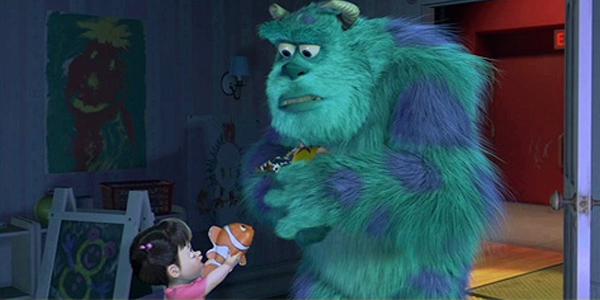
The set-up for Monsters Inc. is a bummer in and of itself. It opens with the monsters- the audience avatar because aren't we all just hideous monsters desperate for love?- struggling to make ends meet. Their industry is in decline and their careers are at risk. It came out in 2012, 4 years after General Motors filed for bankruptcy for basically the same reason. Too soon, Pixar! Imagine how those family chats went- "Mummy, is Mike going to leave Detroit to re-train just like Dad did?" "It's a new world, sweetheart. Mike has to learn to adjust". The relationship between kids and Pixar movies is pretty neatly summed up in the scene when Boo, the toddler, and Kitty, her monster-BFF, have to say goodbye, seemingly forever. Boo has no idea what's happening and pulls out toy after toy while Kitty tries to explain that their relationship, like everything else good in this world, is ending. Kids might find this scene sad because they would like a friend like Kitty but will they understand the feeling a parent with shared custody gets at the end of a weekend with their child? Probably not. As Mike says to Boo (and also, children everywhere) "Go ahead. Go grow up".

7. Dory's Monologue in Finding Nemo

Would you believe that a movie that opens with the death of the protagonist's mother contains an even sadder scene? Nemo's mum dying is definitely a downer but it's also not that unexpected in a film produced by Disney (see also: Bambi) (and Tarzan) (oh, and Frozen) (you know what? See also most Disney movies). And obviously even kids would feel sorry for Marlin, in their basic kid way, when Nemo goes missing. But they won't appreciate the actual break-up dialogue in the scene where Marlin tries to leave his companion, Dory, behind. You will, though. It'll feel familiar to you. Because you've lived. "Please don't go away. Please? No one's ever stuck with me for so long before... I look at you and I'm home. Please. I don't want that to go away". Well Dory, Marlin is sorry but people- uh, fish- grow apart and just because something worked for a while doesn't mean it's a forever thing. It's not you, it's him. Time for you to get back out there, Dory! Is Ocean Tinder a thing?

6. The Plane Crash in The Incredibles

The Incredibles is about family dynamics and realising your potential. It's also about suppressing that potential so you can fit in and seem as though you're just like everyone else, because society doesn't want you to be different. It doesn't want you to be your truest self. Cheery, right? The Incredibles is also, in one particularly chilling scene, about the blind violence of war. Oh, do you think planes crashes look fun and exciting kid? DO YOU? As Helen (Mama Incredible) flies a plane to rescue her husband from the villainous Syndrome, she discovers that two of her children have stowed away. Missiles are headed for the plane and so she yells down the radio "There are children aboard! Say again, there are children aboard this plane!". But the missiles keep coming. Because war doesn't discriminate. Collateral damage is everywhere. There are no magical elastic mothers in the real world. The horror. The horror.

5. The Final Scene Of WALL-E

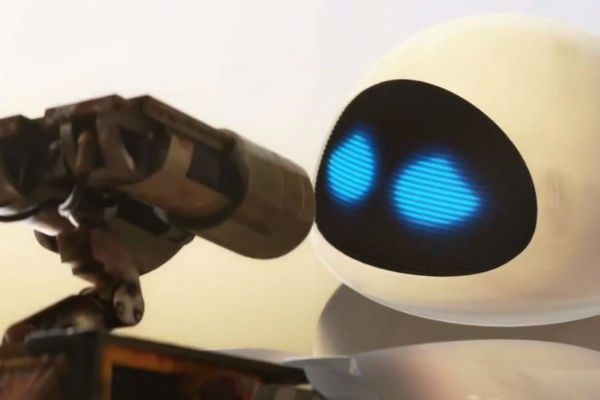
Someone at Pixar is still clearly still trying to appeal to kids, presumably because they're chasing that sweet merchandising green. How else do you explain the third act of WALL-E taking place on a loud, bright spaceship filled with flashing screens and populated by chubby humans who ultimately do the right thing by each other? That's not the real narrative at the heart of WALL-E. That can be found in the opening scenes, as WALL-E traverses a junk-filled landscape alone, collecting trinkets in a desperate attempt to fill his days, much like we might sign up to do hot yoga as a way of injecting meaning into our 9-5 lives. Sure, WALL-E connects with EVE for a while but ultimately, he's a slave to his programming. In the final scene, she reboots him and his first act is to ignore her, to get back to work. Because he's married to the job, EVE, babe. You knew that when you met him. And you used to care about your job, too. Remember your dreams, EVE? The film ends on a bright note, with WALL-E noticing that EVE exists and holding her hand. But how long until he resents her for interfering with his career? A robot's gotta eat (figuratively speaking).

4. Everything About Dug from Up

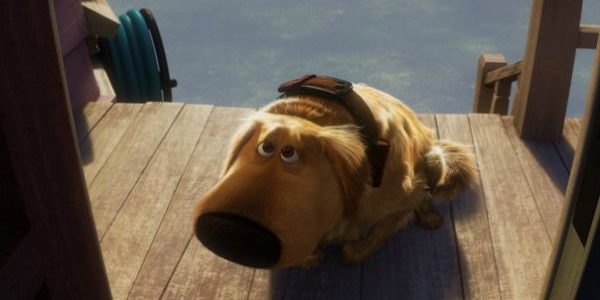
There is a famously heartbreaking sequence early in Up. Over 4 minutes, we see an entire marriage play our between the protagonist, Carl, and his wife, Ellie. They struggle through financial trouble and infertility and it ends with Ellie dying, leaving Carl completely alone. Children everywhere were forced to squirm uncomfortably in their seats as their parents wept openly next to them and you'd think Up would stop there. The damage was already done. Give us an hour or so to recover with a lighthearted balloon adventure before we have to drive home. Instead, Up gives us Dug, the talking dog, who appears at first to be a comedy character. But as the movie goes on and it becomes clear that he's a force of pure optimistic id, he becomes a potent reminder that the world is not good enough for dogs. It's too cruel a place for an animal that will hide under your porch, despite being terrified, just because it loves you, unquestioningly and forever. Oh Dug, we're sorry. It is us, the humans, who should wear the cone of shame.

3. Andy Says Goodbye in Toy Story 3

You know which character kids relate to in Toy Story 3? Bonnie. They relate to Bonnie, the adorable child who gets all the toys she wants and can play with them whenever she likes. She only stops playing for meals cooked for her by her mother because she doesn't have to do anything for herself. That's who kids relate to. And look, she's cute, sure, but she's also pretty grabby with things that are being given to her for free, with no expectation of reward. Kids are like that, though. They'll just take your stuff without a second thought and that's why you should've stopped at two, mum. As for us adults, well, we alternate between being the Andy or the Woody. We're either the one leaving or the one being left. We know what it's like to outgrow our friends or to feel like we've been outgrown. And worst of all, Andy's about to go away to college, which means he's entering the stage of his life where he has to cook his own dinner. Enjoy that sweet spot while you can, Bonnie/children watching this film. It'll be gone soon enough.

2. Merida Resists Betrothal In Brave

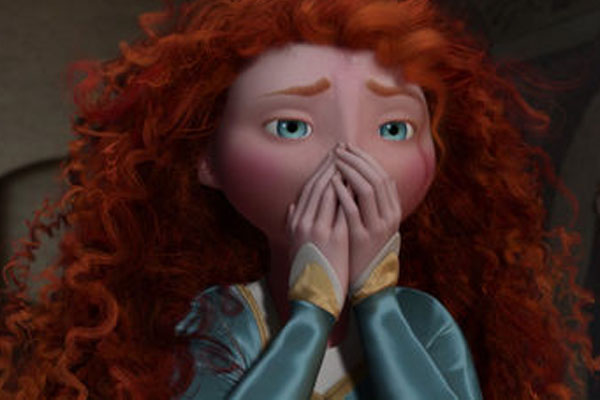
After years of being a pretty dude-centric studio, Pixar announced they were developing Brave, their first film with a female star. They made it a decidedly feminist story, creating a strong-willed lead in Merida, a princess who wishes to defy gender stereotypes. She resists the obligations forced on her due to her being a chick, particularly the requirement that she marry an ally's son. She wants to carve out her own path and be granted the same rights as her brothers. Great message for little girls, right? Except that in Brave, Merida's feminist acts have dire consequences. In a fight with her mother, she yells "I want my freedom!". Her mother, who was also married off at a young age and is resigned to the ways of the world, responds "But are you willing to pay the price your freedom will cost?". In Brave, that price is a witch turning her mother and her brother into bears. In real life, it's 80p to the pound. Because adult women must ask themselves that question constantly. Should we marry the first man who'll have us to reap the benefits of tax breaks and rent-splitting? Or should we power on solo, a woman in a man's world, trying to stay afloat? Are we willing to pay the price? WHO WILL LOOK AFTER THESE BEARS?

1. The Mother's Mind In Inside Out

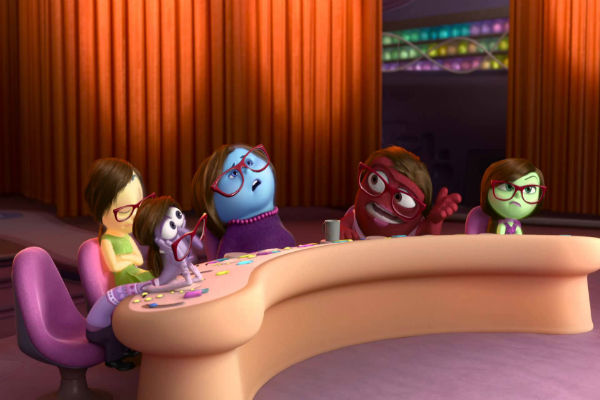
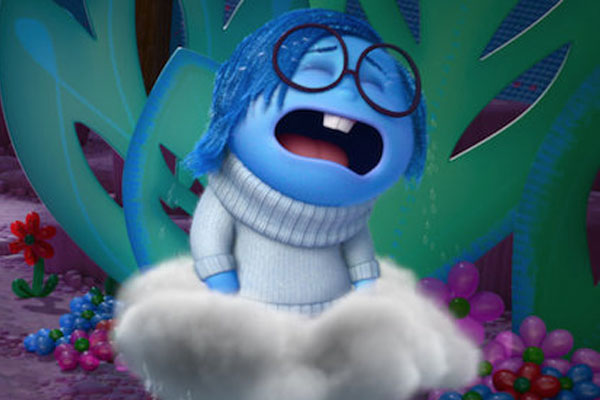
There are a lot of gut-wrenching moments in Inside Out. Moving house. The death of an imaginary friend. The conversion of all happy childhood memories to melancholic ones. It's basically a 90 minute colourful animation of a Smiths song. But the most devastating part of the film is a tiny little detail that's easy for kids to miss. It'd be easy for adults to miss too, except that by the time this movie came out, we were primed to be on the look-out for the tragedies littered throughout everything Pixar releases. Riley, Inside Out's main character, is driven primarily by the emotion of Joy and as the plot progresses, Joy must make space for the other emotions, including the previously ignored Sadness. That's all well and good. A mix of emotional states is healthy and we have every reason to believe that Riley will continue to be mostly joyful, right? Nope. The few times we see inside her mother's head, it's driven by Sadness and apparently that's the status quo (and has been for a while). Riley seems destined for a future dictated by Sadness. Childhood is fleeting and misery comes for us all. Enjoy the movie, kids.

Contributor
Contributor

Brydie is an Australian writer and performer living in London and she complains exactly the same amount about the weather as every other Australian living in London. Yes, that is her natural lip colour, no, she will not be taking any further questions at this time.