8 Reasons Why The Hobbit: An Unexpected Journey Is My Favourite Movie Of 2012
Tolkien fanatic Benji Taylor explains why An Unexpected Journey is his favourite movie of 2012
 IntroductionThe Hobbit: An Unexpected Journey- the first installment in The Hobbit trilogy which marks Academy Award winning director Peter Jacksons long awaited return to Middle-earth- has been open to the public for scarcely less than a week, but with the review embargo having long ago been lifted a critical consensus is beginning to take shape around Jacksons latest spellbinder. Official reviews have so far largely spanned the divide of positive to mixed, with An Unexpected Journey garnering aggregated scores of 65% on Rotten Tomatoes and 58% on Metacritic at the time of this articles publication, though fan reception has generally tended towards the positive. Often the criticisms Ive seen directed at the movie by detractors are ironically focused on the same areas as those who love the movie- length and depth in comparison to the book, use of CGI, tone, and a hefty and portentous prologue. In this article I would like to tell you why this epic tale of dwarves, goblins, wizards, elves and hobbits is by far my favourite movie of 2012- a rare blend of exceptional acting, breath-taking special effects and sublime storytelling that had me mesmerised for every one of its 166 minutes.
1. Martin Freeman
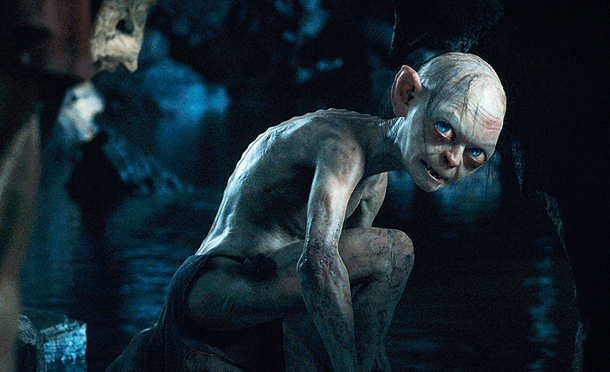
 Elijah Woods captivating performance as Frodo Baggins was central to the success of the previous Rings movies, with his seemingly doomed-to-die messianic turn as Frodo providing the emotional fulcrum on which much of the trilogys central dynamics hinged. Likewise, the actor chosen to embody Tolkiens eponymous protagonist would be crucial to the success of these movies- and within the first 30 minutes its not hard to see why Jackson has said despite the various rumours and speculation surrounding this role, there has only ever been one Bilbo Baggins for us Fans of British TV will know Freeman from his outstanding but understated turns as Tim Canterbury in The Office and as Watson in Sherlock, but Freeman becomes so much more here. Freeman is Bilbo Baggins, a diminutive furry-footed everyman plucked from obscurity not because he is a hero or a warrior, but because Gandalf divines in him a hidden well of resourcefulness that his 13 dwarven cohorts lack. Freeman excels from the get-go, employing his trademark tripartite meld of deadpan, expressiveness and humour to shattering effect, masterfully navigating the tightrope divide between drama and comedy that Jacksons epic vision of Tolkiens Hobbit demands. Nowhere is this showcased in grander fashion than in the Riddles In the Dark section, which may well prove to be a career-defining performance for both Freeman and Andy Serkis (more on Serkis below). This is the movies linchpin moment when Bilbo faces off against Gollum, with the pity he shows in this key scene ultimately proving to be the salvation for all the free peoples of Middle-earth, and there's a real sense of nostalgic poignancy when he decides to spare Gollum's life.
2. Acting
 A movie may boast gorgeous cinematography, stunning landscapes and state-of-the art era-defining CGI, but the actors are the key pieces of the jigsaw that hold the directors ideas together. In general a great director needs great performances to enable him to deliver his vision. So how does An Unexpected Journey hold up? The acting is sublime! The gradually shifting nature of the relationship between Gandalf, Thorin and Bilbo is the beating heart of An Unexpected Journey, and McKellen, Armitage and Freeman do not disappoint as the central leads around which Bilbos coming-of-age story is woven. Thorins back-story is established at the outset: the loss of Erebor to the movies scarcely-seen antagonist Smaug the Terrible, and Armitage brings an extraordinary depth, noble sadness and pathos to the role of this potential future king who has lost so much, serving as the perfect counterweight to the general jesting and frivolity that his troupe of dwarven comrades bring to the table. Andy Serkis, the undisputed master of performance capture, is unerringly phenomenal as he revises his role as the tragically doomed Gollum for his 15 minutes of scene-stealing screen time. Weta Digitals developments during the last 10 years have been grand indeed, but have been effectively paralleled by Serkis own evolving talents: never has Gollum so looked real, lifelike and emotionally expressive as he engages in his battle of wits and riddles with Bilbo. McKellen reprises everything that was great about Gandalf the last time around: exuding charisma as this 'younger' and slightly more humorous incarnation of Gandalf the Grey, lighting up scenes with meditative glances and eyebrow-raisings in the way that only Ian McKellen can accomplish. And we cannot forget the supporting cast of thespian heavyweights who reprise their roles as members of The White Council: Hugo Weavings Elrond Half-Elven, Cate Blanchetts Lady Galadriel and Sir Christopher Lees Saruman the White- all who are excellent in conveying the protracted debating and developing distrust amidst the Council as they slowly begin to realise with impending dread that Middle-earth is about to face the inevitable return of the shadow of Sauron.
3. Excellent Era-Defining CGI
The Return of The King was a landmark achievement in CGI and still plays superbly almost a decade on, but the fact that it has aged becomes all too apparent after seeing Jacksons latest Middle-earth installment. In Gandalf, Saruman and Radagast An Unexpected Journey boasts its own collective of wizards and sorcerers, and so too does Peter Jacksons New Zealand-based WETA Digital special-effects team: their party of enchanters and enchantresses enable Jackson to realise his dream-like vision of Middle-earth better than ever before. The Return of the Kings misshapen hulking trolls and the Witch-Kings colossal wyvern-like mount are all outshone in terms of CGI rendered villains here as we are treated to some of CGIs most dazzling creations to date. There is Azog the Defiler, Orc-chieftain of Moria and arch-nemesis to Thorin Oakenshield- a hulking monstrosity of an Orc who is especially vividly frightening and well-rendered. Equally imposing and impressively imagined is Barry Humphries Goblin King, whose sheer despicability and perfectly wrought grotesqueness simultaneously repulsed and enraptured me so much that I almost forgot to keep up with the story at times! In fact there are so many other highlights that it becomes almost impossible to keep track: Radagasts implausible rabbit-driven sled; the iconic scene boasting the ravenous antics of the dumb and lumbering trolls Bert, Bill & Tom (purists will be delighted not only do they speak, but that they speak with Cockney accents); and the threatening clash between the rock giants amidst the peaks of the Misty Mountains, which forms one of the movies greatest set-pieces and which brings us on nicely to4. Amazingly Detailed Set-Pieces
 The movie is not short of exposition and heart in the first act, but from act two onwards, with the audience now fully re-acquainted and re-familiarised with Middle-earth and the necessary back-stories, the movie begins to gather pace- and rapidly. The action-adventure displays come thick and fast in acts two and three, with a series of spell-binding set-ups that may well leave your heart racing and you trying to grab for your jaw as it plummets to the cinema floor. This is Peter Jackson even better than we remember him- a master of the genre at the peak of his powers. If last time he was the directorial real-world equivalent of Gandalf the Grey, then Mr Jackson has returned as Gandalf the White now. These sequences at once terrify and enthrall, offering a fantastic fusion of fun, energy, comedy and drama: the duel between the rock giants amidst the ferocious storm of the Misty Mountains as the heroes hang on for dear life; the ominous confrontation with the Goblin King amongst the twisting tunnels deep in the heart of the mountains; and all the while the 3D showing us in crystal clear clarity the hordes of orcs and goblins fall to their deaths from dizzying heights. And of course we have the action-drenched nail-biting climax, when the wolf-like wargs and their goblin masters corner and come to an explosive face-off with the company on the precipice of a cliff at the edge of the Misty Mountains. This set-piece with the eagles (who not for the first time prove to be Gandalfs ultimate get-out-of-jail free card) is gorgeous to behold, and is up there with the Riddles In The Dark piece as one of the highlights of this stupendous movie.
5. Howard Shores Score
 When it was announced that 3-time Academy Award winner Howard Shore would reprise his role as the composer for Jacksons vision of Middle-earth, having composed the scores for all 3 of the original trilogy films, Lord of the Rings fans and music lovers the world over rejoiced. But as Thorin Oakenshield might ask- what of it? Well ladies and gentlemen, the score is a triumph. Shore does not venture too far from the paths he tread 10 years ago, again weaving the films vivid and rich musical tapestry from threads and strands invoking innocence, excitement and wonder. There are more playful undertones infused at times though (Blunt the Knives for example), as befits the spirit of the party of dwarves and their soon-to-be intrepid hobbit companion early in the movie. Yes, there are many returning themes from the original trilogy- during the Shire, Rivendell and the eagles scenes for instance- but they all enhance those scenes by imbuing them with a real sense of familiarity and nostalgia. And the new themes accompanying Thorin, Radagast the Brown & Azog the Defiler were all sonically spectacular- with the Radagast the Brown and An Ancient Enemy themes being particular favourites of mine...** This is for me the best film score of 2012- and by some distance. A real tour-de-force. ** NOTE: I have been listening to the music score offline, and just want to point out that not all of these themes made it in their entirety into the movie.
6. 3D plus 48 Frames-Per-Second Higher Frame Rate
 There is no doubt that the 48 FPS/ HFR is jarring at first and it does take a while for your brain to adjust, but damn the results are amazing when it finally catches up. Combined with the under-stated 3D it creates a fully immersive world which mesmerises with the richness of its colour and exceptionally striking detail. Reviews are showing that the 48 FPS look was not to everyones tastes, and I have spoken to friends and critics who loved it and also to those who disliked it. Often, their argument for feeling the way they do has been the same: it looked so real! The 3G action scenes and the sweeping shots of the vistas of the Middle-earth were massively improved by the Higher Frame Rate- this was one of the highlights of An Unexpected Journey as far as I was concerned- because at times I felt like I was there, in Middle-earth. It reminded me of the crispness and clarity that comes with the most vivid and arresting lucid dreams.
7. Tone and Increased Scope Compared To The Book
 This is not a straight-out filmatic adaption of The Hobbit book, and to go into the movie expecting such a thing is to open yourself up to disappointment. This is The Hobbit re-imagined through the prism of Jacksons desire to show it as an out-and-out prequel to the apocalyptic and portentous events of his earlier trilogy. Fortunately, Jackson finds the perfect middle-ground in this picture of projecting the whimsicality of Tolkiens 1937 book and the ominous and apocalyptic overtones which dominate much of his other works. As a result of the inclusion of material from Tolkiens supplementary materials and appendices we see a wealth of incidents in An Unexpected Journey that are at best only alluded to in the book: The White Council, Radagast the Brown and the Necromancer of Dol Goldur sub-plots all feature much more prominently than they did as their paperback incarnations. Some out-and-out changes (Azog's inclusion over Bolg for instance, and the re-writing of the Witch-King of Angmar's history) may make more sense when we understand how events in all 3 movies will pan out, but they certainly do not detract from the singular experience here. As I pointed out in my previous article on differences between the movies and the book, some purists may criticise Jacksons methods but its key to remember that Tolkien himself retroactively amended the 1937 first edition of The Hobbit in the wake of the release of the Lord of the Rings books, essentially rewriting Chapter 5 Riddles in the Dark to reflect Gollums motivations as described by Gandalf in The Fellowship of the Ring. The result: An unexpected Journey gains a depth and foreboding resulting from its presentation as a richer, interconnecting and gradually darkening story in comparison to the book. And Tolkien geeks like me will no doubt feel their hearts beat slightly faster at the mention of the Blue Wizards, the spawn of Ungoliant, and references to Gondolin.
8. Cinematography & Landscapes: Its Gorgeous
 Jacksons Lord of the Rings trilogy was at least in part a love letter to New Zealand, full of gorgeously wrought landscapes and impressively conceived vistas which have done no small wonder for New Zealands booming tourist industry, to such an extent that Prime Minister John Key has acknowledged his intent to interact more with Peter Jackson in an effort to invest more of New Zealand's natural assets in Lord of the Rings related tourism. New Zealand is back and again transformed via the production teams vision into imagery and landscapes worthy of Tolkien's dazzling imagination. Production exceeds even the colossal heights of 10 years ago, in no small part because Jackson has reunited with key trilogy collaborators such as cinematographer Andrew Lesnie, chief production designer Dan Hennah and hordes of the same enchanters and enchantresses from Weta. There can no denying the majesty in Lesnies sweeping visuals, and key production values down to the make-up on the dwarves are simply spot-on. Just as he did 10 years ago, Jackson is pushing the boundaries of cinematography again- so expect even more astonishing spectacles in the subsequent installments (The Desolation of Smaug and There and Back Again) when we are set to see The Battle of Dol Goldur, The Battle for Esgaroth and The Battle Of Five Armies brought to life in spectacular fashion.