8 Mind-Blowing Tricks Famous Movies Subtly Played On You
Directing your thoughts without you knowing it.

Sometimes you'll watch a great movie and, for all your adoration, the true thing that makes it great will be just out of your reach. You rewatch and rewatch until you have that eye opening moment when it all clicks. Here's hoping I can give you a few of those today.
There are countless little tricks that a director can use to make an audience subliminally more involved with their film, but were more aware of some than others; you're pumping out the sad music in a sad moment so we cry, how original; oh look, that guys dressed in black, I wonder what his role is in all this. Thankfully, creativity isn't dead and every now and then a film will come around that uses something new (or an old trick in a fresh way) to suck us into the world without us even realising.
This article will guide you through eight of these brilliant films that messed with us in the most amazing of ways. What's amazing is that some of these tricks are often shamelessly repeated by other films where the director has clearly misunderstood their initial purpose.
Number four on this list has been redone to death, but each time the trick has been used since the original has been bandwagon jumping, rather than genuinely mind-blowing.
As always, theres an obligatory spoiler warning in effect, but theyre mild at best.
Honourable Mention: The Bomb Countdown Is In Real Time - The Dark Knight Rises
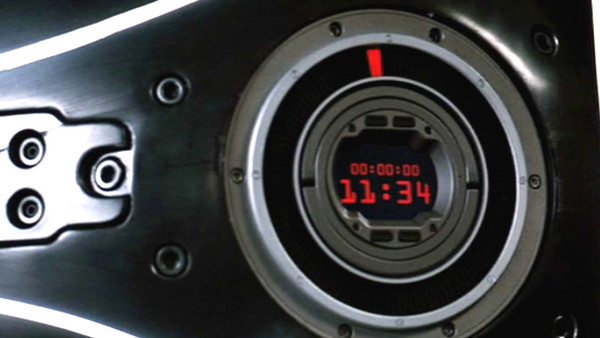
Bomb countdowns are a tricky thing to balance in movies. Too short and it just feels rushed, but drag it out and you're in Goldfinger at Fort Knox territory. The unreliable countdown cliché that hasn't become tired simply because it was never awake to begin with, the only joy coming from it being the odd occasion when a film does it right and presents it in time with the rest of the action.
Some people claimed that's what The Dark Knight Rises, but it's sadly not the case. The bomb goes off after exactly that amount of time in both film and real time - but after that point its predictions are all over the shop; at one point jumping ahead the on screen time puts the explosion in the middle of Bruce's funeral.
So sadly Nolan didn't get his timing right with this one. But keep your eyes peeled throughout this list for a time when he did.
8. Its All Hued Orange So You See Green - Wall Street

Despite bearing all the hallmarks of eighties drama (something it defined as much as copied), Wall Street always felt a pretty naturalistic film; even if John C. McGinley was a little over the top and Gordon Gekko's life was extremely extravagant it looks exactly as you'd expect life in banking to be. The only thing that betrayed this realism was the constant orange hue that lay over the New York skyline.
Rather than cheap sets, it's all part of Oliver Stone's way of getting you to love the immoral money driven world. When a colour is predominantly in your view, you see the contrasting colour when you close your eyes. Films have used this is various creative ways to influence the audience, but here the orange is a genius stroke; the coloured city is Stone literally making you see green (orange's opposite).
Money's in your face as much as it is in Bud Fox's. Gus Van Sant's shot-for-shot Psycho remake used a similar trick to update the film by having the criss-crossing opening sequence undercut with green; blink and you see a rich blood red.
7. Its Shot Close And Wide So You Dont Feel Youre Watching A Musical - Les Miserables
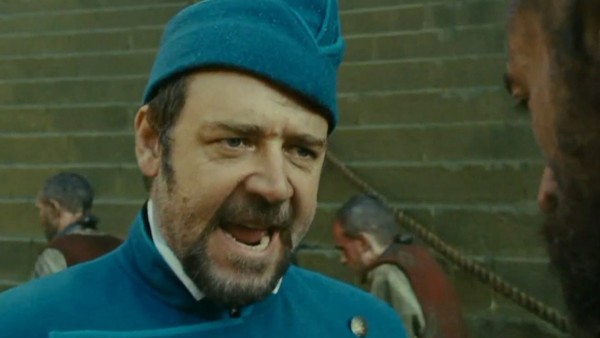
You certainly could hear the people singing the songs of angry men back in this one. Les Miserables proved to be a bigger hit than anyone expected, becoming a must see here in the UK and sitting comfortably in the view of the awards givers a few years back. But in all the hubbub, most people kept the focus squarely on the actors and their singing (insert Russell Crowe joke here), neglecting what director Tom Hooper had done creatively.
Ignoring the subpar CGI, Hooper clearly had a strong vision. His biggest decision was to record the music live on set (it remains the convention to dub over the actors with pre-recorded music) which led to another creative tic some critics picked up on. The film was predominantly shot in close ups and wide shots, varying from simple facial action to flat out epic, which helped separate it from the constant medium distance you'd get when watching the musical on stage; Les Mis felt like a cinematic musical.
The problem with this is that this decision could easily have been made out of convenience; with microphones placed in the mid-range its easier to shoot around them. Whether it was creative or convenient (I think the latter), it still helped make the musical appear grand.
6. The Rocks Are Car-Shaped So It Feels More Real - Cars

Cars was doomed to failure (at least with adult Pixar fans; it remains one of the company's biggest merchandise spinners) from the moment of its conception. The aims were adolescent (after The Incredibles gave us a Watchmen styled mid-life crisis, we seemed to be devolving into generic moral territory) and the character designs were just a little too cartoony; surely everyone imagines cars with headlights for eyes, not windshields?
It's this sort of knee jerk reaction that led to the film's bottom drawer reputation; it may not be Pixar's best, but if you ignore Mater it offers a real charm. It's in the imagination stakes where Cars stands alongside the best, with the world feeling exactly like a motor ruled version of our own.
As well as the petrolisation (not a word, but like many of my made up ones it should be) of the everyday elements of the real world, the geography has been warped. In the same way we see people in them, the clouds and rock formations are shaped like Car parts.
Many people noticed this, but few appreciated the effect it had, making Radiator Springs feel like it actually existed, of course making its fate all the more emotional. Well, for those who gave the film a chance.
5. The Kills Are Shot With The Same Skill As The Killer - Killing Them Softly
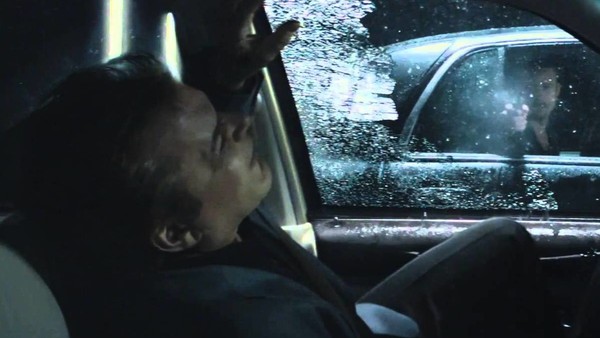
From the films he makes, Andrew Dominik seems like a smart man, but you have to hope he's not a weak one when it comes to criticism. It'd be so easy for him to return to bladder testing epics after his latest film, the swift Killing Them Softly, was slapped with a boring tag by audiences and critics. A director can plough on if a film gets only one (see The Tree Of Life or Transformers), but both can lead to a return to pastures old. I for one hope Dominik endures, because Killing Them Softly was a cracking film that used some very deceptive tricks to get its supporters on side.
With a cast of great actors, it was much more concerned with the characters than the story, giving each of the key players their own scene where their personality was laid bare through a key personal interest. But when the action did come it was with gusto and a purpose beyond showing how violent the mob can be.
Some of the kills were shot in artistic slow-mo, while others were loud and messy ordeals. But this wasn't random. Each one was shot depending on the killer; Cogans are soft while Frankie and Russells attempts are ill informed. It's this sort of attention that makes it criminal the film was overlooked.
4. The Music Is All Made From Two Notes - Inception

To be honest, I could talk about any intricate element of Christopher Nolan's mental sci-fi and blow you away, but few come bigger than this. Non Je Ne Regrette Rien worked brilliantly as a recurring audio motif for the characters throughout the film. And, unexpectedly, for the audience too; Hans Zimmer's score was created entirely from two of the songs notes.
That iconic brrrrmm? That's one note slowed down; notice how its appearances come when the music is playing in a higher dream level? Nolan had already gone to great lengths to make the outlandish dreams seem as real as possible, which this merging of diegetic and non-diegetic sound only furthered.
There's another cool timing trick with the song, although this is more up in the air as to how intended it was; Inception runs at 2 hours 28 minutes, which is exactly sixty times more than Non Je Ne Regrette Rien. And you thought Marion Cotillard playing Edith Piaf in La Vie En Rose was the coolest thing about that song's inclusion.
3. You Feel Like You're Actually In The Car - Drive
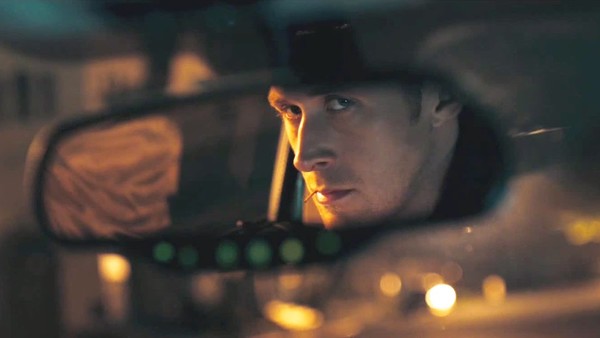
You can see Ryan Goslings eyes when hes behind the wheel in Drive. When you read that sentence it seems painfully obvious, but think about it a little more and ask yourself how many films actually clearly show you what's in a cars mirrors throughout? Some may do it in a certain scene to emphasise a character's personality (look at a recent example of Steve Carell in The Way Way Back), but it's a specific moment rather than a film encompassing trick.
For all that its trailer and name promised the masses, Drive wasn't really about driving, but that didn't stop Winding Refn from putting in the effort to make the car sequences feel real. From the opening there was something genuine about the driving segments that put you in the seat of a Chevrolet/Mustang/Pontiac.
Shot mostly from inside the car, often from passenger positions, and with the background driving sounds emphasised the vehicular sequences were done in a way that felt incredibly fresh. While many people fell in love with Drives style, it's really amazing to look further at the effect it had.
Even though Winding Refn had never learnt to drive, he paid attention to the feeling of being driven; the camera looks around the car with the same curiosity of one of Drivers employees and you feel as involved with the action.
2. The Logo Sets The Tone - Any Lionsgate Film
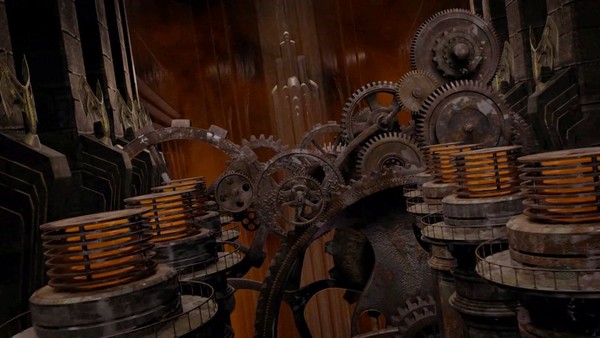
Lionsgate may have come out with a new, higher quality CGI opening title this year, but I'm pretty certain it'll take a while for people to forget the old one. You know the one; we start out on some cogs, then zoom out through an odd Empire State Building styled lobby, past some generators, out through a key hole before the door we were inside swings open to reveal the logo in a heavenly cloud. Or is it hellish smoke?
Actually its both; for the past ten years Lionsgate have used two separate, tonally opposite opening titles in front of their films, all just to set the mood for audiences. You see, the heavenly one goes before most of their films, a trumpeting announcement of the company in line with Warner and 20th Century Fox, but the hellish one comes out for horror films; the Saws, Cabin In The Woods and Texas Chainsaw 3D (among others) all ran this.
When you think about it, it's genius; showing this creepier opening before a horror grabs the attention of all the gore hounds and scare freaks in the audience and unashamedly announces the film's intentions. Many production companies use multiple logos, but often its in a showy brand way; Lionsgates duality is one that really works.
1. You're Unnerved Because The Hotel Layout Makes No Sense - The Shining

Whenever people talk about Room 237, last year's documentary on how constant reaffirmation without challenge can allow smart people to go crazy over the themes of The Shining, it's always in a condescending manner towards the suggestion the film is an apology for his faking of the moon landings.
While there's a lot of rubbish ideas (although that is part of the fun) there are some brilliant observations. Chief among them is that the layout of the Overlook Hotel repeatedly doubles back on itself, making no sense at all.
Watch again and look at the location of the office where Jack has his initial interview has a window; later on you'll see it's actually windowless and in the middle of the hotel. A creepier scene altogether, when Jack discusses his family with Grady, is even worse because it so blatant.
On his second trip to the hotel bar an advocaat incident has the duo loop back on themselves; the toilet where they have their conversation is where devilishly dressed bartender Llyod should be. The meaning is as vague as anything with this film, but the general consensus is the hotel/Jack's mind are actually changing the layout.
Now you can see why it's so scary.