8 Different Versions Of Star Wars Episode VII That Were Almost Made
The Force could have awoken very differently.
The journey of Star Wars from mad idea of a merchandisingly minded director to unstoppable mega-franchise is almost as exciting as the trials and tribulations of the Skywalker family on screen. When George Lucas originally wrote what was then called The Star Wars, he ended up with a story of unwieldily length. Splitting it into more and more pieces, he ended up with a narrative that could be told in six, nine or twelve parts (depending on who you believe).
There's a common view that this blue-print was the one he followed when making both the Original and Prequel Trilogy, and facilitated the possibility of a string of sequels. But while Lucas did indeed have some scarily particular elements planned out from the start (including Midi-chlorians), most of what ultimately followed was heavily made up on the fly (most notably the Saga-defining Vader twist). And with that approach many crazy ideas fell by the wayside; the various unmade entries in the Star Wars Saga are staggering in both number and plot.
Episode VII, a movie anticipated since Return Of The Jedi in 1983, finally arrived in the form of Star Wars: The Force Awakens in 2015, but that's not the first time a movie with that serial subtitle had almost been made.
Here are eight alternative versions that could have existed, ranging from Lucas' early fevered dreams to the original plans for the franchise after Disney bought Lucasfilm in 2012.
8. A Non-Lucas Follow-On In The Eighties
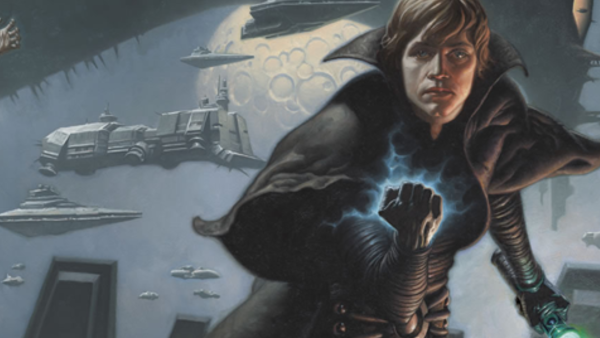
When Did It Almost Happen? After the Original Trilogy was wrapped up. Vader was dead, the seeds of a new Jedi order had been sown and the Rebellion had woken up on Endor with a banging headache. Yup, after Return Of The Jedi, the Original Trilogy's story was definitely over, making another sequel a questionable thing - the previous movies had been more open-ended.
Although Lucas was rather adamant as time went by that the Saga ended with Episode VI, he did toy with the idea of handing Star Wars over to another director for some subsequent movies lacking his involvement, revealed in interviews shortly after the first trilogy's conclusion.
He was off writing Indiana Jones, a franchise if anything closer to his heart to Star Wars, and dabbling in a variety of less noteworthy projects, so was likely happy to move on. Had he had more success with the likes of Howard The Duck (which he produced), then perhaps he'd never have felt inclined to keep such a tight hold on the franchise, before returning properly in the nineties.
By the time the Prequels rolled around, anyone else having creative control over another Star Wars was an alien concept to Lucas, with the director saying he no longer fancied giving the movies to someone else. This was also at the time when the Sequel Trilogy was consistently and vehemently denied, making the current state of affairs a massive u-turn.
7. The Fourth Film In The Overarching Story Straight After Return Of The Jedi

When Did It Almost Happen? Planned during the development of the original sequels.
Return Of The Jedi may now be known as the end of Anakin Skywalker's journey (assuming Vader's not insensitively exhumed in later movies), but that wasn't always the case. When first developing sequels to the 1977 original, Lucas toyed with the series being an even more epic story than it wound up being.
In various interviews around the release of The Empire Strikes Back, Lucas was adamant the Saga was a nine-part deal, while producer Gary Kurtz has revealed some of the broader plot points. In this version of events, Vader would die at the end of VI, with Luke heading off into the galaxy to find his sister (who wasn't Leia). The Emperor wouldn't be introduced until later on, remaining a hidden puppet-master for much of the series, with Luke finally taking him on in Episode IX.
The Episode VII here would be predominantly dealing with Luke's exploration of the galaxy, and according the Lucas would have been more "ethereal". These ideas were in development consistently until Return Of The Jedi entered pre-production. There it was decided to tie together all the set-up plot threads (the Emperor, Luke's twin) tightly in one film, leaving little scope for their exploration in later movies.
6. A Sequel Trilogy Instead Of The Prequels

When Did It Almost Happen? Planned during the production of the Original Trilogy.
Much is made of a conversation Lucas had with Mark Hamill on set of the original Star Wars, where the director talked about making a set of sequels thirty years down the line, with Luke in an Obi-Wan-esque position. But while a sixty year old Luke in Episode VII was mooted back than, it wasn't the only planned Sequel Trilogy that would feature the Jedi Master later in life.
Lucas' biographer Dale Pollock was allowed to read George's original 12-part treatment for the Star Wars Saga and, after being bound by a confidentiality agreement for decades, in 2012 could finally talk about them.
He didn't reveal much, but did say the films would deal with Luke in his 30s and 40s. That places the Sequel Trilogy for a planned release of the '90s - when Lucas would eventually start making the prequels. After Return Of The Jedi stopped the series' forward momentum, ending the pressing story, it looked like Lucas was happy to leave the franchise behind, and this idea of a middle-age Luke with it, until an interest in telling the back-story (having kids likely influenced that) eventually brought him back.
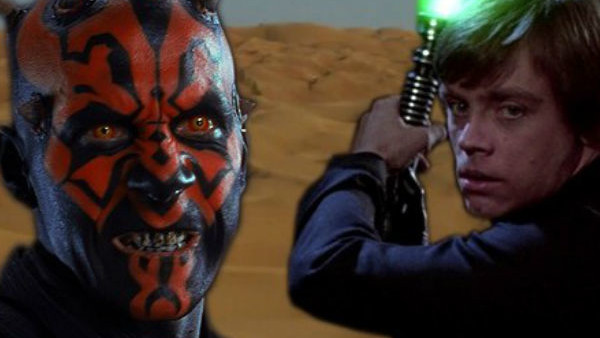
What this practically means is that many of the non-essential elements of the Prequels could have turned up in a 1990's Episode VII - Darth Maul vs. Luke Skywalker, anyone?
5. A David Fincher Directed The Force Awakens

When Did It Almost Happen? Just after Disney bought Lucasfilm in 2012.
When Disney bought Lucasfilm and announced Episode VII, the biggest question (after whether the central trio would return) was who'd direct. Lucas was officially out of the running, and based on Disney's track-record with finding helmers for projects (Joss Whedon on The Avengers) hopes were high. Clearly they really were aiming high, as they approached David Fincher with an eye to him rebooting the franchise.
A Star Wars movie from the man behind Fight Club, Seven and The Social Network is a delectable idea, although it was always highly unlikely - since his experience with heavy studio-meddling on Alien 3, Fincher's been a stickler for creative control, something he'd be unlikely get with a movie as important as Star Wars.
In the end, it was a difference in ideals that led to Fincher not taking up the chair that eventually went to J. J. Abrams. To him, the real intrigue in Star Wars were the droids - sentient machines who are forced into servitude - with him wanting to make a movie that would essentially be Ex Machina in space. Not really what Disney were going for.
4. A Non-Disney, Lucas-Directed Version Of The Force Awakens

When Did It Almost Happen? Before Lucas sold the rights to Disney.
In the public eye Star Wars only begun its awakening when Disney forked over $4.05 billion for Lucasfilm, but in fact a return to the galaxy far, far away had already taken its first steps years before. After spending the better part of a decade insisting the Sequel Trilogy would never, ever happen, George Lucas went back on his word and began hashing out the plots for Episode VII, VIII and IX, with an eye for him to directing.
Little is known about what these treatments included, but given Lucas' penchant for going back to old ideas, it would have likely incorporated concepts from those earlier versions that never materialised. It'd be easy to assume all the bitching online eventually got to him, but the real reason he never moved forward with these ideas was time.
To make a whole new trilogy would take all-in-all a decade, and as a filmmaker he wasn't ready for such a commitment. Disney had been sniffing around for the rights for a while (it was one CEO Bob Iger's major career goals) and he eventually realised letting someone else take on the movies wasn't a bad idea.
These treatments for the Sequels were part of the sale, but their significance will be looked at later.
3. The Force Awakens With Little Focus On The Old Cast
When Did It Almost Happen? During the scripting process of The Force Awakens.
One of the first people officially attached to the Disney-produced Episode VII was Michael Arndt, Oscar winning screenwriter of Little Miss Sunshine and Toy Story 3. The guy who created Mr. Pricklepants doing Star Wars? Heck yeah! It wasn't to be, however; Arndt left the project in late 2013, with The Empire Strikes Back's Lawrence Kasdan taking over.
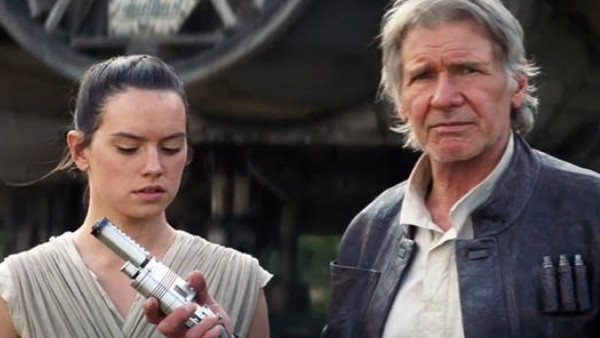
The exact reasons took a while to surface. Originally the tight production timeframe was blamed, but eventually it became apparent the problem was something more ingrained. Arndt's version of the movie had been too forward thinking, relegating returning characters Luke, Han and Leia to supporting roles and pushing younger characters (reportedly their children) front and centre, which clashed with Abrams' view of the film. This whole development accidentally revealed a lot about the approach of The Force Awakens, though ultimately the new cast (John Boyega, Daisy Ridley, Oscar Isaac) were prominent.
2. The Empire Strikes Back

When Did It Almost Happen? During the production of Episode V.
Episode V was originally going to be Episode VII. Yeah, really.
As already discussed, Lucas had a broad, twelve movie plan following Star Wars, and although the obvious assumption is that it was to be four sets of three, Lucas imagined it differently. The way he saw it, there would be three trilogies, interspersed with more stand-alone movies; Episode I would be a prelude, Episode II, III and IV would detail the Clone Wars (mentioned in the first Star Wars), Episode V would bridge the gap between Republic and Empire, Episode VI, VII and VIII would be the Original Trilogy, Episodes IX, X and XI would be some form of Sequel Trilogy (plot undefined) and Episode XII would be the finale of the whole thing.
Some elements of this approach remain - Episode I is really setting the scene and the next two (instead of three) Episodes show the Clone Wars - but for the most part it's just an early draft of a massive Saga. The thing that changed all that? The twist.
The reveal that Darth Vader is Anakin Skywalker really is the most important moment in the Star Wars Saga, not just in-universe, but also in how it changed the story's direction. Introduced in the second draft of Empire, it totally repurposed the Saga; this wasn't just a galactic conflict, but a generation spanning family drama.
Rather than just being players in the story, the Skywalkers were the story. With an actual point to the whole Saga, suddenly the narrative became tighter. The Prequel Trilogy wasn't about the Clone Wars, it was about Anakin, while having continuity filling episodes distracted from the Skywalking focus.
1. A Disney Version That Used Lucas' Ideas

When Did It Almost Happen? When Disney bought Lucasfilm.
When Disney bought Lucasfilm, it was made abundantly clear it wasn't just the rights to Star Wars, Indiana Jones and... erm... Sam And Max they'd got - they had George Lucas' treatments for the Star Wars sequels.
In the media storm around the purchase, Disney execs made it very clear these were going to be used as the groundwork for the movies going forward. It was a cause to be wary for fans burnt by the Prequels, but at least reassured everyone that the Mouse House wasn't just making more Star Wars just because they could. And... then they didn't use them.
Lucas revealed J. J. Abrams and co. completely ignored his treatments, taking the Saga in a totally new direction, much to the creator's ambivalence. George really doesn't seem all that torn up about the shunning, probably because $4.05 billion is an awful lot of money.
With a run of spin-offs turning Star Wars into a more coherent multi-media universe, to forsake a thirty year old idea isn't all that shocking, affording the film-makers total creative freedom, as well as keeping an air of mystery around the project. No doubt in years to come the content of Lucas' drafts will be revealed, leading to rampant comparisons with the films ultimately released, but for now just know that Creative Consultant credit isn't worth the paper the phenomenal contract was written on.
Would you have liked to have seen Episode VII turn out like any of these? Share your thoughts on Star Wars crazy production down in the comments.