8 Brilliant Movie Plot Twists (That Don't Make Sense At All)
"Wait a minute"...

Sometimes a movie plot twist will catch you so off-guard (and in the kind of way that forces your brain to explode inside your head) that we forget to ask ourselves: does this actually make sense? In most cases, it doesn't, such as in The Number 23, which existed only to make Jim Carrey look like he has the worst agent in the world, or in French thriller High Tension, where a twist was thrown in at the last minute for no real reason. Yes, most movies that go down twist avenue fail to realise how dangerous such a thing can be on a narrative level. You threaten everything.
Of course, when a movie twist does work, it really works, and that's where we get all those twists often considered to be... well, "the greatest twists of all time." That said, even the best ones - those etched into popular cultural as consistent talking points for movie nerds and the general population at large - might not be anywhere near as fool proof as you first imagined. And just because a movie twist is fundamentally brilliant doesn't mean that it isn't subject to flaws.
As is the case for the 8 great (and very famous) movie twists I've included on this list.
Please note, there are spoilers contained within this article for a whole bunch of movies.
8. Why Did Anyone Join Fight Club When The Narrator Was Actually Just Beating Himself Up? - Fight Club
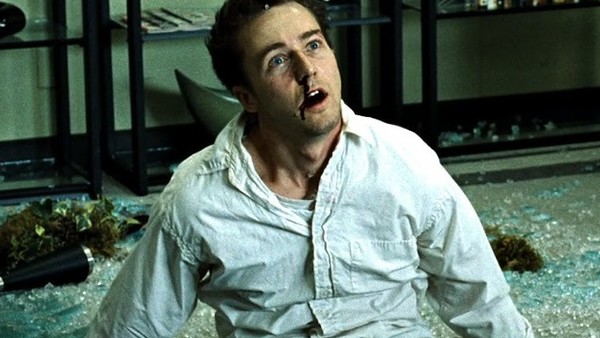
The Plot Twist: In Fight Club, a materialistic drone (call him Jack) befriends an uber-cool, '90s guy named Tyler Durden, and the two hatch a plan to start something called "Fight Club," where men get together in a basement and proceed to kick the sh*t out of one another for therapeutic reasons.
This escalates to the point where the group become a wanted terrorist syndicate, and it turns out that our drone-like stooge and his uber-cool buddy were actually the same person all along.
But Wait... Great as this twist is, and iconic as it has become in the realm of "twist movies," it doesn't really justify its own existence, simply because - when you comb back through the movie and picture every scene taking place with just one character instead of two - it makes no sense. Case in point: Fight Club originally starts up when two random guys approach our two main characters and ask to join in.
When we first see this, it's fine, because there are two people present, Jack and Tyler, seemingly fighting one another. But in reality, there's essentially just one character standing there punching himself in the face - Jack. How and why would anybody ask to join a club run by a guy who spends his time beating himself up in a parking lot?
7. Why Did Vader Wait So Long To Tell Luke He Was His Father? - Star Wars: Episode V - The Empire Strikes Back

The Plot Twist: Essentially the greatest plot twist of all-time, simple, effective and memorable, at the end of The Empire Strikes Back, the second installment in the Star Wars saga, Jedi wannabe Luke Skywalker ends up facing off against the guy who killed his father long ago, Darth Vader. When Vader defeats Luke and manages to slice off his hand, the most unexpected revelation emerges: Darth Vader didn't kill Luke's father - he is Luke's father! Who saw that one coming, huh?
But Wait... It has become standard procedure for most people to just accept this for what it is - the greatest moment in cinema history, and - back in '80, anyway - the most unexpected twist to have ever occurred, like, ever. Despite all that, though, the fact that George Lucas himself didn't know that Vader was going to end up being Luke's daddy until the second movie means that there are a lot of flaws inherent to this otherwise awesome idea.
That's to say, when did Vader learn about Luke? We never see that moment occurring. Also: why didn't he realise that Luke was his son when they were about twenty metres away from each other in the original Star Wars aboard the Death Star? Worst still, Luke has Vader's last name and has never been afraid of using it - he knows that his dad's name was Anakin Skywalker.
Why has this all taken so long to culminate? Well, we know why, of course (because it was never planned and a bit of shoe-horning had to be done to make it possible). Still, magnificent as this twist is, a ton of suspension of disbelief is required: it's so very easy to pick apart, after all.
6. How Did John Doe Suddenly Work Mills Into A Meticulous Scheme He'd Been Planning For Years? - Se7en

The Plot Twist: Se7en tells the grim tale of a serial killer who murders his victims according to the seven deadly sins over the course of a single week, whilst detectives David Mills and William Somerset - new partners - investigate. At the end of the movie, with just two victims and two deadly sins to go, the killer, John Doe - who hands himself in and demands to be driven out to the desert where he'll disclose the place where he buried the last bodies - unveils his masterstroke: he has murdered Mills' wife, and intends for Mills to become "wrath" by killing him, whilst he - as somebody who tried to taste life of a normal man - assumes the role of "envy." Mills, distraught, executes Doe. Doe wins, his plan completed.
But Wait... The movie seems so tight and complex at first, to the point that all seems to fit together... well, perfectly. Upon closer inspection, though, the plot of Se7en - beautifully constructed as it is in many ways - doesn't make sense, exactly. That's to say, how did John Doe know that Mills would come into his life, bringing the exact right circumstances with him, at that specific point in time? He simply couldn't have done - and remember, given the nature of the "sloth" death, which Doe prepared a year before the events in the film, we know that he's been planning it all for ages.
Okay, so, technically, the movie still makes sense, given that it was possible for John Doe to improvise this part of his plan. But does it seems at all plausible that he could come up with something incorporating "envy" and "wrath" on such short notice, with limited information, with just a few days to go? What would he have done originally, before Mills came into the picture? Who were the original "envy" and "wrath" deaths? Was it always going to be the investigating detective and his wife? For someone as meticulous as Doe, it seems a little... on the fly, don't you think?
5. Why Doesn't Malcolm Crowe Realise He's Dead Already, Given That He Never Talks To Anybody? - The Sixth Sense

The Plot Twist:The Sixth Sense clings to what is perhaps the most famous twist in movie history - I'm not suggesting that it's the best twist ever, or that it even deserves to be the most famous one, but it probably is. If you say "movie twist," most people think about this movie first. The story concerns a child psychiatrist, Dr. Malcolm Crowe, who is assigned a new patient, Cole Sear, who has the ability to "see dead people." In the end, it turns out that - yes - Dr. Crowe was a ghost all along.
But Wait... At first, this twist seems like a stroke of genius - nobody saw it coming, right? M. Night Shyamalan, you son of a gun! And that's true, until you realise that, although The Sixth Sense is a great movie, it's a horribly manipulative one, too. Think about it: the movie is purposely (and perfectly) designed to only show you only scenes where it looks as if Dr. Crowe is living a normal life. In one scene, for example, we see Crowe sitting opposite Cole's mother at her home in silence. We presume they're just lost for words, when in actuality she can't even see him - coming into this scene a few minutes earlier, though, and we might have realised what was really happening.
Fact is, Shyamalan is just concealing information 'til the end for the added impact. That's fine, but it's an incredibly sneaky way of doing things. That's to say, wouldn't Crowe have realised before he met Cole that he was dead, or that something weird was going on with his new lifestyle? He doesn't talk to anyone. He doesn't have any other patients. He doesn't eat. He doesn't go to bathroom. He just goes to work every day, stands around looking sad, and goes home again. Sure, you might cite the confused "transitional" period between life and death as the reason for all that, but really Shyamalan is just covering his tracks.
The biggest question of all, of course: who hired Crowe in the first place to talk to Cole?
4. How Did Anybody Know That Charles Kane's Last Words Were "Rosebud"? - Citizen Kane

The Plot Twist: In Citizen Kane, protagonist Charles Foster Kane dies at the beginning of the movie, revealing his last words to be "rosebud." The movie tracks a journalist as he attempts to discover what these enigmatic final words mean, and in the last moments of the flick we discover that "rosebud" does not refer to a person or place, but Kane's childhood sled, which - in itself - is a metaphor for happier times, when Kane was care-free and without worry.
But Wait... How did anybody know that Kane's final words were "rosebud"? There was nobody there in the room when he whispered his last words and dropped that snow-globe. Yes, a nurse runs into the room about four of five seconds after he utters it, but there's no way that she could have heard what he said, given how loud he actually says it and how far away she is. The sound of the globe smashing is what alerts her to Kane's room, after all, not the sound of him saying "rosebud."
The subtle twist at the end, revealing the sled, is nice, emotional and brings the movie together immeasurably well, but how did we - realistically - even get to that point in the first place?
3. How Could Kenneth Bowden Possibly Have Been Involved From The Beginning? - Wild Things
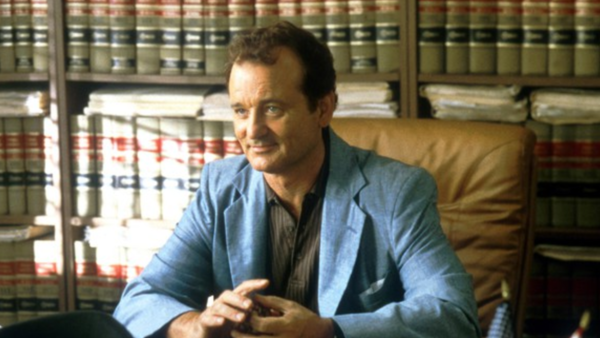
The Plot Twist: One could either argue whether or not the twist at the end of Wild Things is brilliant or not, based on whether or you thought that the movie was any good - and it is a movie that continues to divide audiences. If you take it for what it is, though, a schlocky, erotic thriller, it's a lot of fun. The plot concerns a man, Sam Lombardo, played by Matt Dillion, who gets accused of rape by two female students, Suzie and Kelly, and hires a lawyer called Kevin Bowden, played by Bill Murray, to defend him.
It turns out, though, that they were all working together and planned to split the millions of dollars Lombardo received in the end for defamation when the girls reveal - as prearranged - that they were actually lying. He doesn't split it, though, and chaos ensures. This escalates to the point where the plot twists over and over again, until we realise that everyone has been playing everyone else, and one of the girls - Suzie - comes on top. Only Suzie and Bowden survive of the ordeal, and Bowden - apparently - has been in on it all along.
But Wait...Wild Things is hardly full-proof in the plot department as it is, but one particular twist - in which Bill Murray's Bowden is revealed to have been in on it from the very beginning - doesn't cut the mustard, given that Sam Lombardo went to hire him at random. How could have have been involved when he was literally a random choice of lawyer, with no connection to the other characters? Bill Murray is arguably the best thing about the movie, but it doesn't make any sense as to how he's connected to the story in the way the movie tries to tells us he is. Somebody just forgot to explain, I guess.
2. How Did Elijah Manage To Find David So Quickly? - Unbreakable

The Plot Twist: M. Night Shyamalan's Unbreakable set out to find the answer to the question: what if Superman didn't know he was Superman, and lived on Earth like a regular guy who happened to look like Bruce Willis? At the climax of the movie, Willis' character, David Dunn, realises that his new friend, a comic book obsessive with brittle bones named Elijah, has engineered a bunch of catastrophes in order to find him (the theory being that, if somebody was invincible, they'd survive), so that they can take their rightful stands at both ends of the spectrum as superhero and supervillain.
But Wait... We never find out how many events Elijah orchestrates in order to find David, but we're not given the impression that it's more than, say, five. Otherwise how - and remember this movie is supposed to take place in our own reality - would Elijah have managed to evade capture for so long? Even if you take all that out of the equation, though, isn't it kind of hard to believe that this wannabe supervillain would find his invincible man so quickly? I mean, it boggles the mind that Elijah was able to complete his goal after just a few catastrophes - think how insane it is that, by complete chance, he ransacks the one train that David is a passenger on at the beginning of the movie, thereby shedding light on his existence?
Sure, it's not impossible, but M. Night Shyamalan is asking a lot from us when he unveils this twist at the end. It's a great and interesting one, of course, and it's arguably the highlight of the movie, but when you actually think about what Unbreakable is asking you to accept, it's pretty darn insane.
1. Why Does Verbal Kint Let Anybody See What He Looks Like At All? - The Usual Suspects

The Plot Twist: In a plot twist that people are still keen to cite as "totally awesome" and "so very f*cking awesome" today, The Usual Suspects tells the story of a crippled guy name Verbal Kint, played by Kevin Spacey, who recounts the story of an epic crime to a couple of police detectives, one that was pulled off by a super legendary criminal badass named "Keyser Soze." At the end of the movie, though, when Verbal Kint has been released from custody, a fax is sent to the officers revealing the true identity of Keyser Soze - and he looks exactly like Verbal freakin' Kint! Alas, he was their man all along. As Kint steps out into the street, he reveals himself as totally not-crippled at all, gets into a car, and disappears forever.
But Wait... The point of The Usual Suspects is that Verbal Kint makes up everything he tells the detectives to the point that they believe him enough to let him go. He does this using names and pieces of information he can spot from looking around their office, improvising as he talks. But before that part of the story plays out - which, as we know, is unreliable - the movie begins with a genuine sequence that we must presume we can take as factual, since Kint isn't relaying it to us. The aim of the entire ruse was that Kint (or Soze) set out to kill the man who knew what he looked like - we see flashes of this part at the beginning of the movie, free from Kint's tweaked version. But why the heck does he wait around in the aftermath of the crime so that the police can arrest him or take him into custody or look at his face?
All he had to do was not go to be interviewed in the first place, and then - when that fax came through at the end - the cops would be not the wiser. But I guess that wouldn't have made for a very good movie, huh?
Like this article? Which movies have we missed? Let us know in the comments section below.