8 Awesome Movies That Were Totally Out Of Character For Their Director
 One of the most enjoyable elements of cinema is how diverse it truly is as an artform. The myriad of genres that are open for a director or writer to explore is utterly fascinating, if a bit daunting for many. For this reason the majority of directors prefer to stick with one genre for the majority of their careers given that it is usually easiest to find something that you're good at and continue doing it. This has yielded some amazing results over the years. Think of Wes Craven making a career out of evolving the horror genre, Guillermo del Toro exploring fantasy and Brad Bird progressing animated film to new heights before directing the latest Mission Impossible film. The fact that these directors stick very close to well worn subject matter should be a hindrance to their creativity, but instead film as a whole has greatly benefited. However, not all directors are not satisfied by sticking to similar subject matter and some need to branch out in order to find creative and commercial fulfillment. Sometimes this means directing a movie that is virtually unrecognizable to what came before it, while also bearing the signature trademarks of that specific filmmaker. Some of the most interesting movies of all time have been made because of this and I'll be exploring 8 of them here. Read on to see 8 movies that were totally out of character for their director.
8. The Lord of the Rings Trilogy - Peter Jackson
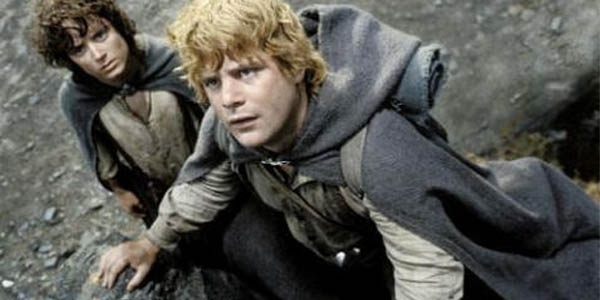 Previously known for: The Frighteners, Meet the Feebles and Dead Alive Before Peter Jackson found critical success with The Lord Of The Rings: The Fellowship of the Ring he was "that guy who made those low budget horror movies that grossed you out" and after Fellowship he became "that visionary who brought one of the greatest books ever written to the screen". Could anyone have ever even possibly conceived that Jackson would be able to make a film that wins multiple Oscars before he started his epic trilogy? It's become common knowledge at this point since we've all had a decade to experience his stratospheric success with his Lord of the Rings trilogy and his King Kong remake. Before he ventured out into the Tolkien universe he was a low budget shock maestro in the same vein as Sam Raimi. Dead Alive is worlds apart from The Two Towers, yet Jackson's direction on both of those films came across as assured and vivid. The Peter Jackson of the 90s is virtually unrecognizable when compared to the Peter Jackson of the most recent decade.
7. Barry Lyndon - Stanley Kubrick
 Previously known for: Path of Glory, Dr. Strangelove, 2001: A Space Odyssey and A Clockwork Orange Before the magnificent and beautiful Barry Lyndon, Stanley Kubrick was a filmmaker who was more keen on exploring the darker sides of humanity. A costume drama was the last thing that anyone expected from him, especially after the biting malevolence on display throughout A Clockwork Orange and the existential madness found in Dr. Strangelove. Kubrick was fond of vivid imagery, as referenced in his masterwork 2001: A Space Odyssey, but he had previously only applied it to films that had a certain coldness to them. Barry Lyndon was full of lush, natural lighting that lit up the screen in a way that made the film look distinctly unlike anything that Kubrick had ever made then or in his later career. The film was so distinct that it still has a visual style that is yet to be replicated. What really sets it apart from Kubrick's previous work is the fact that it has a lighter side to it. There are some dark moments featured in the movie but the characters all have a certain warmth to them that is missing from every other movie that Kubrick ever made.
6. Kundun- Martin Scorsese
 Previously known for: Mean Streets, Taxi Driver, Raging Bull, The King of Comedy and Goodfellas Like Stanley Kubrick, Martin Scorsese's movies tend to lean their focus more towards darker themes and portrayals of humanity. Whether it be the conflicted Catholicism present in Mean Streets, the calmly hidden psychosis in Taxi Driver or the anger inflicted tirades of Jake LaMotta in Raging Bull. Kundun has a sense of hope that runs throughout the narrative in a way that is unusual for a Scorsese picture. He has dealt with religion and its consequences before in his superb The Last Temptation of Christ, but that film had a stylistic resemblance to his other movies that is absent in Kundun. Roger Deakins' cinematography uses very bright lighting to convey the struggles of the Dalai Lama in the movie, while Scorsese's direction tends to focus more on the challenges presented to the Dalai Lama more often than the man himself. This gives the film a feeling unlike any that Scorsese has directed before because the characters aren't at the forefront of the movie when they are almost always the centerpieces of his narratives.
5. The Social Network - David Fincher
 Previously known for: Seven, Fight Club and Zodiac The Social Network is a movie that focuses on greed, the strains of friendship and the nature of the internet. It is quintessentially Aaron Sorkin given the fact that it relies heavily on dialogue to build the characters just as much as it does their actions, but also mainly features long stretches of people talking in rooms. David Fincher's directorial style is very frenetic and typically gruesome in his most well know works. The pairing of Sorkin and Fincher makes no sense on paper yet somehow works out brilliantly here. Fincher tackles topics that he had previously never developed in his movies, while he is also able to restrain his usual style to create something that honors Sorkin's script in an interesting way. Gone are the stylized sequences of Fight Club, the nihilism and dread of Seven and the thriller elements on display in Zodiac. With The Social Network, Fincher used Sorkin's words to provide the style and let his camera linger on the characters to present the most well rounded story of his career.
4. Big Fish - Tim Burton
 Previously known for: Batman, Edward Scissorhands and Ed Wood Brightly lit, whimsical stories backed by a sense of drama in relation to a neglectful son and his dying father are usually directed by someone like Wes Anderson, but not in this specific scenario. Big Fish is a funny and heartfelt movie that features many moments of reality that are typically very uncommon of the way Tim Burton works. He has dealt with the more fantastic elements of film many times before but Big Fish is an altogether different film for him since it deals with real life and the consequences people have to face. Burton's films are usually either very funny in a creepy kind of way, while balancing darker themes with a childlike innocence. Beeteljuice is one such example and it is positively worlds away from Big Fish. All of the performances given in Big Fish blur the line of reality and fantasy in a way that actually humanizes the characters instead of having the opposite effect as many of Burton's movies tend to do.
3. Slumdog Millionaire - Danny Boyle
 Previously known for: Trainspotting, 28 Days Later and Sunshine Danny Boyle has proven himself to be a cinematic chameleon over the course of his increasingly varied career and Slumdog Millionaire is a film that really sticks out in his repertoire. It bears none of the usual existential dread that hovered over his earlier movies Shallow Grave and Trainspotting, while it also shys away from the doom laden tone that he gave to 28 Days Later and Sunshine. Slumdog Millionaire does feature many moments of darkness, but it ultimately resolves in a way that no other Danny Boyle film has. The movie's main characters, Jamal and Latika, are reunited just as Jamal wins the 20 million rupees he had been competing for. The ending has such a happy resolution that Boyle went so far as to even include a Bollywood inspired dance number that plays out over the credits. The Bollywood influences not only set the film apart from anything else made by Danny Boyle, but also from anything else to be released in America and Great Britain in 2008. The visuals are also brighter and more vivid than Boyle's other films. He has always given his directing a visual flair but here he uses the full spectrum of colour to tell his story in a way that is truly unique.
2. No Country For Old Men - The Coen Brothers
 Previously known for: Raising Arizona, Barton Fink, Fargo and The Big Lebowski The Coen brothers are two of the greatest comedic filmmakers of the last 25 years so No Country for Old Men especially sticks out when browsing through their filmography. They made a name for themselves by writing and directing screwball comedies, like Raising Arizona, The Big Lebowski and O Brother, Where Art Thou?, but even their most serious movies were always exceptionally funny. The overall hopeless tone employed throughout No Country For Old Men was in stark contrast when compared to films like Barton Fink or Fargo. Drama in the world of Joel and Ethan Coen is always one step away from becoming comedy and they walk that line brilliantly. They have never been dark filmmakers, instead they've always chosen to focus on the absurdity of life by mixing comedy and drama in equal measure. No Country For Old Men is an exceptionally dark and nihilistic movie that features no comedic elements, which makes it feel like a giant departure for the Coen brothers.
1. Schindler's List- Steven Spielberg
 Previously known for: Jaws, Close Encounters of the Third Kind, E.T. the Extra-Terrestrial and Raiders of the Lost Ark The same director who is responsible for all of your fondest movie watching experiences during childhood is also responsible for exposing you to some of the harshest truths of life. Steven Spielberg is most known for making fun and thrilling action/adventure movies like Raiders of the Lost Ark and Jaws. He is also responsible for giving the world some of the most magical moments in the history of the summer blockbuster with Close Encounter of the Third Kind and E.T. the Extra-Terrestrial. 1993 was arguably the best year in the career of Spielberg. He released Jurassic Park, which fits perfectly with his other summer blockbusters, and Schindler's List. The latter film was personal, real and exceptionally eye opening in a way that allows it to stand in stark contrast to his previous work. Gone was the fun and optimistic tone of Spielberg's usual directing. He had replaced it with an intense drama that was shot with especially potent black and white photography. Spielberg was never looked at as a serious minded filmmaker until he directed a movie so unlike anything else he had ever made that people had to reevaluate his talents. Thanks so much for reading. I'd love to hear your thoughts and opinions in the comments.