8 'Next Big Thing' Movie Directors Who Didn't Live Up To The Hype
They promised so much and delivered so little.
One of the most exciting aspects of the film industry is that it can make stars out of anyone pretty much overnight. In the past year alone audiences have been treated to a bevy of directors who've shot to superstardom - with the likes of Jordan Peele and Ryan Coogler heralded as the "next big thing" - with all eyes being on their next projects.
However, for as quickly as the film industry can launch individuals to Hollywood heights, it can just as quickly send them right back to square one. Countless times over the years we've seen filmmakers being lauded as being the next Hitchcock, the next Kubrick or the next Godard, only for them to never live up to that potential.
Whether it's because audiences and critics expected too much from them after they enjoyed a bit of a hot streak or whether the directors did only create a smash hit by pure luck, it's resulted in plenty of careers that started in a blaze of glory, only to peter out following one disappointment after another.
8. Josh Trank
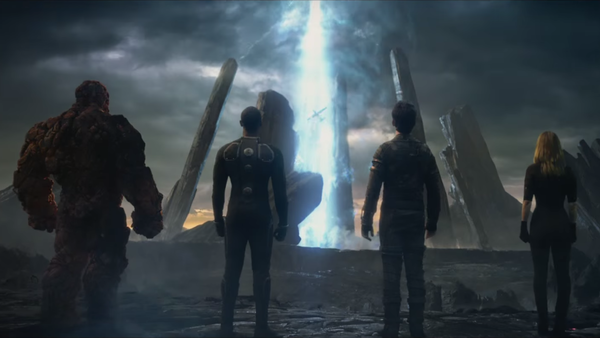
Nobody expected just how big 2012's Chronicle was going to be. The superhero/found footage mash-up movie launched the careers of just about everyone involved, including actors Dane DeHaan and Michael B. Jordan, writer Max Landis, and of course director Josh Trank.
It was the latter who seemingly hit the big time quicker than the rest though, being snapped up to take on Fox's reboot of the Fantastic 4, as well as being eyed to tackle a Star Wars spinoff.
Disaster struck during production on the former movie though, as executives apparently weren't happy with the initial cut of the reimagining, ordering substantial reshoots and all but kicking Trank off the project.
The rift between the studio and the filmmaker only got uglier from there, with accusations coming out that the director behaved erratic on set, while Trank himself took to Twitter to lament the fact that his original vision for the film had been butchered in the editing suite.
Either way, the controversy ensured that he wouldn't get a chance to see his Star Wars movie through, moving away from the studio system altogether to produce his upcoming Al Capone biography, Fonzo.
7. Guy Ritchie

In the early 2000s, Guy Ritchie was one of the most exciting directors to come out of Britain. With Lock, Stock and Two Smoking Barrels as well as Snatch, the director etched out a distinctive style for himself, drawing inevitable comparisons to Quentin Tarantino.
It didn't take long for him to break America, snapped up to take on a big-screen version of Sherlock Holmes just as his allure in the British filmmaking scene was starting to fade after a couple of duds like RocknRolla.
The series was a commercial success, but only the first instalment was actually any good, with the director's once-endearing indulgent style resulting in an underwhelming sequel.
Unfortunately, the same problems tanked his follow-up movies, with The Man From U.N.C.L.E. being a middling effort while King Arthur: Legend of the Sword was one of the most misguided attempts at kickstarting a franchise this decade.
Ritchie is allegedly returning to his roots with the upcoming British crime film Toff Guys, but at this point it might be too little, too late.
6. Daniel Myrick And Eduardo Sanchez

For the longest time, the original Blair Witch Project was the most profitable movie of all time, with directors Daniel Myrick and Eduardo Sanchez reaping the rewards while being credited as changing the horror genre forever.
After the huge success of that runaway hit, there was an expectation that the duo would follow it up with something just as powerful, even if they would probably never be able to reach the same heights of their astounding debut. Unfortunately, it took both directors over 7 years before they'd get a chance to return to being behind the camera.
Going their own ways to produce their own individual films, the only notable flick since has been the found-footage Bigfoot movie, Exists, which didn't exactly set the world on fire. The two never made another movie together after The Blair Witch Project, fading into obscurity just as quickly as they rose to fame.
5. Duncan Jones

When Duncan Jones burst onto the scene in 2008 with the inventive sci-fi thriller Moon, he was praised for breathing new life into a genre that was increasingly losing its smart appeal in favour of dumbed-down big-budget bombast. Sticking with the same theme, he went on to deliver the similarly-smart Source Code a few years later, properly establishing himself as one of the most exciting filmmakers working in the genre.
He then seemingly got his big break, picked to helm the big-screen adaption of Blizzard's Warcraft gaming series. A tough job for any director, Jones couldn't quite make the premise work on screen, though the film's failure was also blamed on interfering producers. Unfortunately, Jones couldn't fall back on the same excuse when his next film, Mute, received an even worse critical kicking.
Though he was once given the benefit of the doubt, it's becoming increasingly apparent that the director's most recent movies weren't the one-off misfires many believed them to be.
4. Marc Webb

Although there were plenty of names thrown into the hat when Sony decided to reboot the Spider-Man franchise following the cancellation of Sam Raimi's fourth movie, nobody could have expected Marc Webb, of 500 Days of Summer fame, would be the man for the job.
Still, it was seen as an interesting choice; 500 Days was a huge success both critically and commercially, establishing Webb as a master of the kind of awkward, quirky character drama present in the best Spidey stories. Also, he had a stupidly relevant last name.
His first attempt at a blockbuster, The Amazing Spider-Man, wasn't the home-run many wanted it to be, but it was still a promising start for a filmmaker obviously getting accustomed to a completely different genre and production style. Unfortunately, the faith fans had in the director was extinguished - along with the newly-rebooted franchise itself - once the dreadful sequel rolled around.
While many believed the director's strengths simply didn't lie in big-budget blockbusters, Webb's next movie, a disastrous small-scale romance titled The Only Living Boy in New York, pointed toward 500 Days of Summer being a charming fluke.
3. M. Night Shyamalan

It was impossible to write a list about directors who achieved massive success only to never follow up on their potential without mentioning M. Night Shyamalan. The director sprung to fame with inventive thrillers like The Sixth Sense and Signs, but proceeded to prove himself as a one-trick-pony trapped by his own cliches and conventions.
Burned by the gimmicks that made him famous, he turned his attention to blockbusters, being drafted to helm the film adaptation of The Last Airbender as well as Will Smith's After Earth. Both were terrible, seemingly singling the end for the once-budding director.
With his name being poison to any project, Shyamalan turned his attention back to low-budget thrillers, producing the fine-if-uninspired horror movie, The Visit. He has recently reclaimed some of his former glory with 2016's Split, and everyone has their fingers crossed that he can maintain that momentum when the sequel drops next year.
2. Richard Kelly

Donnie Darko was responsible not only for giving pretentious dudes in high school a reason to think they were edgy, but for launching the careers of Jake and Maggie Gyllenhaal. Unfortunately, it didn't have the same knock-on effect for its director, Richard Kelly, who was expected to reap the rewards of the film's cult success.
Though initially touted as the next big thing, the more the director talked about the film, the more apparent it became that it was only as good as it was by pure luck. The director's cut of the film is far more complex and less ambiguous, taking away most of the mystery that defined the original yet making the narrative somehow even more incoherent.
Kelly has only directed two features since, and both are a far cry away from the level of Donnie Darko. Southland Tales was an abstract, biblical tale that takes two hours and a stint on Wikipedia to properly grasp, while The Box squandered an interesting sci-fi thriller set up with the filmmaker's usual trappings.
1. Neil Blomkamp
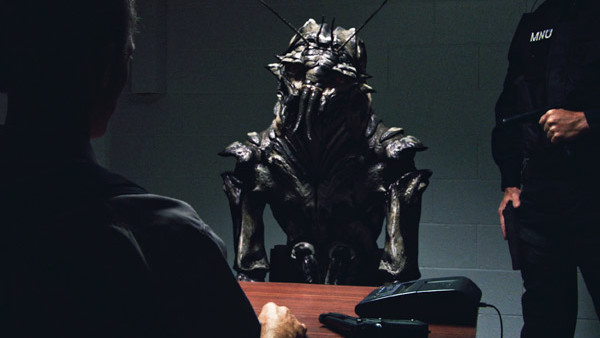
Directorial debuts don't really get better than District 9. An original sci-fi movie that hit a nerve with both audiences and critics - raking in strong box office receipts as well as securing a heap of Academy Award nominations - director Neil Blomkamp immediately became one of the most fascinating names working in the genre, with the hype for his next project, Elysium, going through the roof.
Sadly, there was probably no way that Blomkamp could ever deliver on the expectations people had for him. Everyone expected the filmmaker to produce another District 9 during the four-year wait for Elysium, and when that film turned out to be a solid-if-underwhelming sci-fi action movie, public perception quickly soured.
The director hasn't been able to catch a break since, with Chappie further convincing people that he was a mere one-trick pony. His most exciting project - a true sequel to Aliens set to bring back Sigourney Weaver and Michael Biehn - never got off the ground thanks to Ridley Scott returning to the universe he created, and the director has struggled finance any movie since.