7 Ways Thor: The Dark World Proved Us Wrong
 Thor: The Dark World opened in the United Kingdom last week and I got a chance to see it last night. As a result, I will inadvertently be posting spoilers, so this is a very early warning for you not to continue if you don't want to read any! Here at WhatCulture, we've already reviewed the movie, discussed the major plot points and looked at the references to the rest of the Marvel Cinematic Universe within the film since its release, while we also discussed the possibilities of what was to come for months in the build-up to it, so I'm going to look at it from a different perspective. Based on some of my assumptions about the move prior to its release, and based on what seemed to be the general consensus from other people about what they expected from it, I'm going to look at how the movie proved those expectations wrong - whether it be in a good way or a bad way - in a number of different areas. Of course, not everybody was proven to be wrong with all of the entries in this list, but all of these entries at least proved some people wrong - including me. On that note, here are seven ways that Thor: The Dark World proved people wrong...
7. It's A Worthy Successor To The Avengers
 I've seen a lot of people - particularly after the disappointment that was Iron Man 3 - saying that everything after the Avengers movie in the Marvel Cinematic Universe would be downhill. They were wrong. While Thor: The Dark World doesn't necessarily one-up the Avengers movie, it is at the very least a movie worthy of succeeding it. Thor's profile has undoubtedly been raised since the superhero team-up movie and, as a result, the early indications are that this movie is going to be a box office smash. Of course, Iron Man 3 was a box office smash too, but the difference here is that Thor: The Dark World is a damn good movie. It has everything; established and beloved characters, further development of old characters who we didn't know much about, new characters, an emotional rollercoaster (we laughed, we cried...), amazing special effects, rip-roaring action, redemption, deceit, a love story that actually has (a little bit of) depth and an enemy who actually feels like he is a genuine threat to the protagonist (though I must stress that I'm referring to Kurse, not Malekith). Overall, it was great and proved to people that the Marvel Cinematic Universe isn't all going to be one big anti-climax after the epic crossover movie that was The Avengers.
6. Darcy Lewis Isn't As Annoying As We All Thought
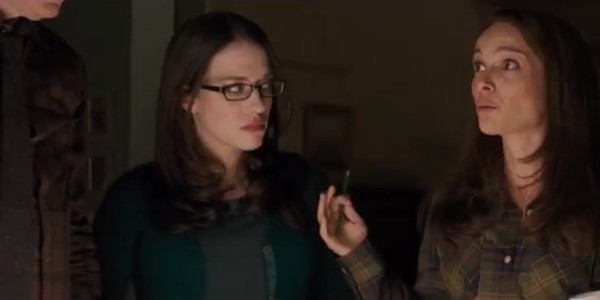 Although the inclusion of her intern/love interest, Ian, felt somewhat forced, Darcy Lewis felt more like she belonged in this instalment of Thor. Her inclusion baffled a few people last time, including me - why create an original character for nothing more than comedic relief? However, amidst the universal threat posed by the Aether in this movie, her light-heartedness, sarcasm and nonchalance served as a welcome interruption and she was actually helpful when it came to defeating the villain in the end. It certainly helped that, given that she is now an established character from the first movie, she had comedic references to fall back on - her mispronunciation of Mjolnir, for example, and her references to Thor's physique ("Look at you. Still all muscly and everything!") - but in general her presence just seemed to provide more of an equal and welcome balance between the potential tragedy that was occurring and mood-brightening moments of humour. Prior to the movie I, like many others, had envisioned that a named character would die and felt that Darcy Lewis was one of the dispensable characters who I wouldn't mind to see the back of if that was the case. After it ended, I was quite pleased she survived.
5. The Infinity Gems... Aren't Actually The Infinity Gems
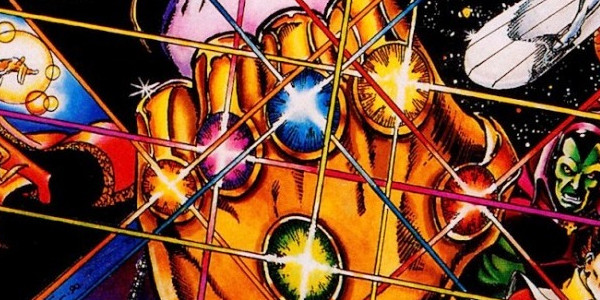 So, something we learned from the mid-credits scene with Benicio del Toro's Collector character is that the Tesseract and the Aether are actually two of the six items that are considered to be the Marvel Cinematic Universe's interpretation of the Infinity Gems. This didn't exactly prove anyone wrong (it's not as if anyone outright said "the Tesseract isn't an Infinity Gem!"), because no one would have ever thought to bother arguing such an abstract point prior to this movie, but it did disprove a very basic assumption that the Infinity Gems would be the same as they were in the comics. In the comics, the Infinity Gems are simply named after the particular aspect of the universe that they grant control over (space, time, mind, reality, power and soul) and the Tesseract (or Cosmic Cube) is a completely separate object which is essentially a not-quite-so-powerful, scientific version of the Infinity Gauntlet (granting the ability to warp reality on a massive scale). To describe the scene with the Collector in a little more detail, he meets with Sif and Volstagg as the Asgardians have decided that it would be "unwise" to keep the Aether so close to "another Infinity Stone" - that being the Tesseract - and, when he gets his hands on the Aether he says "one down, five to go", meaning he wants all six for himself (of course, so does Thanos, but that's another story...). Oh yeah, the Marvel Cinematic Universe also refers to the gems as "Infinity Stones". Just so you know.
4. Jane Foster Didn't Die
 I think everyone was certain that someone who was close to Thor in some way was going to die in this movie. Loki, Odin, Frigga, Jane Foster, Sif and numerous other characters with whom Thor was (or had been) very close (to) were speculated to meet their demise - but Jane Foster was undoubtedly the favourite. Natalie Portman has publicly stated the fact that she dislikes participating in the Marvel Cinematic Universe movies, and fans have expressed their dissatisfaction with her character and her relationship with Thor, so it seemed like the natural thing to do was kill her off. That didn't pan out, however (and her relationship with Thor did actually develop in to something slightly more meaningful and worthwhile in this movie), and it was actually Thor's mother Frigga who met her maker at the hands of Malekith and Kurse. Of course, Loki also "died" in the movie, before returning to usurp Odin as ruler of Asgard, but the fact is that Jane Foster remains alive and played something of a pivotal part in this movie to somewhat rectify the fact that she had previously been nothing more than a pointless onlooker.
3. Malekith Wasn't That Powerful
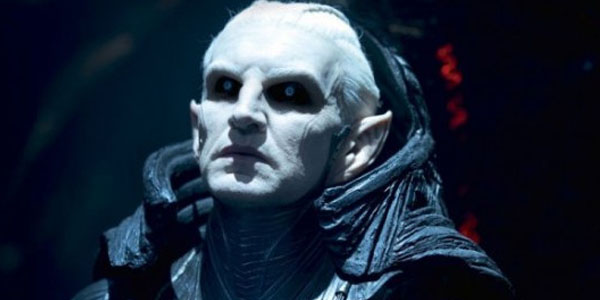 One of the only things that disappointed me about Thor: The Dark World was that Malekith wasn't all that. After a series of quite underwhelming villains in the Marvel Cinematic Universe, many people expected this guy - the one causing a "universal threat" - to be an enormously powerful foe. He was portrayed well enough by Christopher Eccleston, but the character wasn't developed very much and, most importantly for me, he was pretty damn weak with regards to the power scale. Even when he got his hands on the Aether (one of the Marvel Cinematic Universe's all-powerful Infinity Stones), he was barely a match for Thor in physical combat (with Thor even mocking him about how he didn't hit very hard) and without it he was barely a match for Thor's mother Frigga (who was a fairly formidable warrior herself, but it's not the best idea to have him struggle against her if he's meant to be presented as a threat to the God of Thunder). Indeed, the main physical threat to Thor came from Kurse - Malekith's henchman. When he was around, you genuinely felt as though Thor and his allies were in grave danger. He seemed to be of Hulk's level of strength with the added power he possessed to burn the life out of his foes and when he was killed off the physical threat to Thor rapidly dissipated.
2. Loki & Thor CAN Work Together
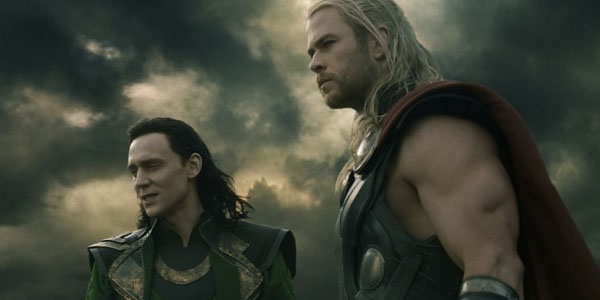 There were many people who, having seen the trailers to Thor: The Dark World in which Thor goes to his adopted brother for help, thought that the estranged duo would not be able to work together against Malekith's forces. At first, after Loki had led Thor out of the secret passage away from Asgard, it looked as though those people would be right, as Loki appeared to betray Thor, cutting off his hand and effectively offering his services to Malekith so that he could watch Asgard burn. However, it proved to be nothing more than a ruse provided by Loki's power of illusion and it brought Malekith and his forces close enough for Thor to launch his assault. It effectively proved that, if Loki was of good inclination, the pair could be absolutely formidable as a team. But we now know that he really can't ever be 100% committed to the good fight. On that note, despite our hopes...
1. Loki Could Never Truly Redeem Himself
 I think we all thought that Loki would end up as a villain ultimately in the Marvel Cinematic Universe, but some people certainly thought that he'd end this particular movie on a high. It certainly looked as if that was going to be the case when, alongside Thor, he devised a scheme to trick Malekith before engaging him and Kurse in battle. Loki then appeared to lose his life, sacrificing himself for the greater good, saving his adopted brother and earning an honourable death - which Thor promised to inform Odin about. However, that was not to be. Loki somehow survived the attack that supposedly killed him (probably by virtue of the fact that the whole thing was an illusion and the sequence probably never happened at all) and went back to Asgard to usurp his adopted father Odin and gain his throne. He may have killed Odin to do so, he may have him held captive somewhere - we don't actually know Odin's fate at this stage - but we do know that Loki has more evil up his sleeve and that there's more to come from him yet. Shame on any of us who thought he could fully redeem himself! So there you have it - seven ways that Thor: The Dark World proved some of our assumptions wrong. What else were you proved wrong about when you watched the movie? Let us know in the comments box below. And please feel free to follow me on Twitter!