7 Harry Potter Fan Theories J.K. Rowling Debunked (And 3 She Approved)
The Creator of the Wizarding World responds to the best Potterverse theories...
The depth of the Harry Potter universe is truly extraordinary. Movies, books, podcasts, games, stage plays, studio tours, Pottermore: there's an insane amount of lore to soak up, and so many nerdy discussions to be had.
With any fictional reality of this size and popularity, there are inevitably going to be some things that don't make sense, some potential gaps in logic, and lots and lots of question marks. Potter is no different here, but fortunately, where there are question marks, there are fans filling in the blanks.
Considering the unbridled love and passion many fans have for this series, there are hundreds of intriguing fan theories floating around online, some silly, and some genuinely convincing. Very rarely, creator of the wizarding world J.K. Rowling will actually address these theories herself, either giving them two giant Hagrid-sized thumbs up, or treating them like Horcruxes and destroying them.
So keep at it Potterheads. One day, if you persist, your theory that you worked on for weeks might be absolutely crushed by the one woman who has all the answers. Or, you might catch her on a good day. Let's look at the debunked theories first...
Debunked
7. Hagrid's Patronus Is A Boarhound

The Theory: Hagrid might be the most lovable character in the Harry Potter universe, partly because of the sympathy he elicits as a result of his limited magical ability.
The half-giant is capable of performing some magic - as seen when he gives Dudley a curly pig's tail - but the full extent of his power was never really explored in the books or the movies, and this, naturally, has led to fans discussing it.
One of the biggest questions permeating these discussions is whether or not Hagrid can cast a Patronus - a bright white spell that conjures an animal to ward off Dementors. Some people think he can, and have even speculated that his Patronus animal would be a boarhound - the same breed as his pet dog, Fang.
The Debunking: Sound theory, until Rowling came along. In 2015, the author took to Twitter and didn't just quell the whispers about Fang being Hagrid's Patronus, but put a definitive full-stop on the idea that Hagrid could even cast the charm in the first place.
Damn, Hagrid really can't catch a break, can he?
6. Dumbledore And McGonagall Were Lovers

The Theory: One of the oldest Potter theories lurking around online, the incredibly close bond shared by Professors Dumbledore and McGonagall has, by many fans, been thought to bear romantic connotations.
Threads from as far back as May 2007 - before the final book launched - would discuss the idea that the elderly teachers were in love, speculating that their friendship was actually a relationship.
Not much evidence was given to support these claims besides the fact that they've known each other for a really long time, are often seen together, and are on first-name terms (whereas a lot of other Hogwarts Professors use surnames). Despite this lack of evidence, Dumble-gall was a popular ship in the early 2000s.
The Debunking: Even after the book series concluded, Rowling continued to drop tasty nuggets of information for fans to gobble up. One of these came in October 2007, where the author revealed that Dumbledore was gay, stating that he had been in love with Gellert Grindelwald in his younger days.
Though not a direct dismissal of the idea that Dumbledore and McGonagall were in love, this revelation confirmed that their relationship had always been platonic, debunking the theory that they'd been lovers at some point during their Hogwarts careers.
5. Dumbledore Turned Fawkes Into A Horcrux

The Theory: The latter Harry Potter books began to delve further into Dumbledore's past, shining a light on things like his friendship with Grindelwald, and the tragic death of his sister, Ariana (which Dumbledore may have been responsible for).
The takeaway here is that the great wizard wasn't as perfect as he seemed, and he, like everyone else, has made many mistakes. In particular, his close relationship with the maniacal Grindelwald indicated that at one point, Dumbledore was extremely close to following a darker path than the one he ultimately chose.
And there are some that think he did indeed head down this path - at least part way - speculating that the former Hogwarts headmaster created a Horcrux at some point in his past. Horcruxes require the owner to have committed a murder in order to fracture their soul, and since Dumbledore may have cast the curse that killed his sister, this possibility was very much there.
The Debunking: As cool and interesting as this idea is, Rowling came along soon after the theory began doing the rounds, debunking it on her Twitter page.
Note that she only discounts the idea of Fawkes being the Horcrux - who's to say Dumbledore didn't use another vessel?
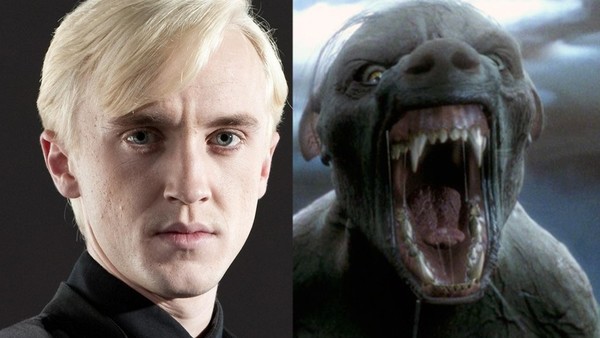
4. Snape Is A Vampire And Draco Is A Werewolf

The Theory: A double-whammy this one, since Rowling debunked both of them at the same time.
Snape being a vampire and Draco being a werewolf are two theories that have been floating around for a while now (the Draco theory even has its own website), and while they both sound preposterous, fans, to their credit, have managed to pinpoint some evidence.
For one, Draco starts hanging around with known werewolf Fenrir Greyback in The Half-Blood Prince, and throughout that same book/film, the young wizard is constantly stressed out and unwell. Besides his mission to kill Dumbledore, are these signs of a hidden monstrous affliction?
As for Snape being a vampire, there isn't a lot to go on (though mentions of a vampire essay in book three may be subtle clues). But doesn't he just have the skin tone and generally creepy demeanour of one?
The Debunking: According to Rowling, all these possible signposts don't mean anything, taking to Twitter in 2015 to put both of these theories out of their misery.
Snape is already an immensely complex character as-is, and adding another mystery to his backstory would be absolute overkill.
3. Ron Is A Time-Traveling Dumbledore

The Theory: The notion of Ron being a time-traveling Dumbledore is one of the most prolific Potter theories out there, and fans have combed through the books and the movies to find anything that might link the pair together.
Notable bits of evidence include the fact that Harry often describes both Ron and Dumbledore as being tall and thin with long noses, on top of the fact that Dumbledore has a scar on his left leg - the same leg that Ron injures in Prisoner Of Azkaban. Plus, Dumbledore seems to have an all-knowing quality about him, indicating that he's already lived through these events once, and also... they both have a sweet tooth, guys!
The Debunking: There's tons more "evidence" you can find online, and the whole thing is actually quite fascinating, but Rowling - the only voice that really matters - thinks this theory is complete rubbish, and dismissed it on Twitter page in a cold brief manner.
Not one to beat around the bush, is she? She's not the only one who thinks this theory is silly, either - watch our very own Potter fanatics Ash and Rich tear it to shreds below:
2. The Snake Harry Frees In The Philosopher's Stone Is Nagini

The Theory: It's a real shame that this theory isn't true: it's simple, adds an extra bit of flavour to Harry's pre-Hogwarts years, and would have meant that his journey started and ended with the creepy giant snake. How poetic.
Early on in the first book/movie, Harry visits a zoo with the Dursleys as a part of Dudley's birthday celebration. While there, he unwittingly releases a giant boa constrictor, which slides away and is never seen again. Or so we thought.
Many fans have talked about the idea that the snake was actually Nagini - one of Voldemort's Horcruxes - who we officially meet in The Goblet Of Fire. There isn't much evidence backing this concept up (besides the fact that they're both huge snakes) but because we don't know what happened to the snake after the zoo incident, there was a slim chance this theory was true.
The Debunking: Another great idea this one, but recently, Rowling put a definitive end to any and all speculation.
Additionally, others have pointed out that the boa constrictor is not venomous, while Nagini is, so the answer was under our noses all along. The true story of Nagini's origin will actually be revealed in Fantastic Beasts: The Crimes Of Grindelwald next month, so we don't have long to wait!
1. Hogwarts Students Must Pay Tens Of Thousands In Tuition Fees

The Theory: The topic of money is a big deal within the Harry Potter fan community. Since the world Rowling has created almost feels real at this point, fans want to know every tiny detail about every corner of the wizarding universe, and "Hogwarts tuition fees" is one of those details.
The cost of these hypothetical fees has been speculated for a long, long time, but in 2015, an article exploring the subject - courtesy of Mic - started doing the rounds. Here, the site estimated that the cost of attending Hogwarts for first-years would be around $43,031, which includes $1,031 worth of supplies and a staggering $42,000 in tuition fees. Accio enormous debt?
The Debunking: It didn't take long for Rowling to catch wind of this article, and the author quickly added her own two cents to the discussion, stating that Hogwarts tuition is free and that the Ministry Of Magic covers the cost of education.
Wizarding World 1-0 Reality.
And now for the theories she gave a thumbs up...
Approved
3. Krum Mispronouncing Hermione's Name Was Written To Teach Us All The Correct Way

The Theory: In The Goblet Of Fire, Hermione ends up getting involved with Bulgarian beefcake Viktor Krum, and the pair attend Hogwarts' lavish Yule Ball together.
Throughout their courtship, Krum - on account of English not being his native language - struggles to pronounce her name properly (he calls her "Her-My-Own" rather than "Her-My-Oh-Knee"). So, Hermione decides to teach him the correct way.
There are plenty of book-readers who have difficulty with the pronunciation too, and as a result, some fans posited that Rowling had written this part of the novel in order to teach us all how to say "Hermione" properly.
The Approval: And... they were right! Rowling recently confimed that she had indeed included the "Hermione schools Krum" passage as a way to school her readers.
Now if only she'd included a paragraph that told us all the "t" in Voldemort is silent...
2. Dumbledore Is Death

The Theory: In The Deathly Hallows book (and first of the two movies), Hermione reads a story called The Tale Of The Three Brothers. In this story, three magical brothers encounter Death, who offers each of them a prize for outsmarting him: the Invisibility Cloak, the Elder Wand, and the Resurrection Stone. Combined, these items form the Deathly Hallows.
Over the years, fans have linked these three brothers with a different Harry Potter character. The Elder Wand brother is said to represent Voldemort, a man obsessed with power; the Resurrection Stone brother is thought to be Snape, a man who wants to be with his deceased love (Lily Potter); and the Invisibility Cloak brother is said to represent Harry.
But if all that is true... then who is Death?
A popular theory is that it's Dumbledore. But why? Well, at one point in time, he was in possession of each of the three Hallows, just like Death in the story. Plus, when Harry "dies" at Voldemort's hands in the final movie, he ends up in a heavenly version of King's Cross station where he's greeted by none other than Dumbledore.
The Approval: This is a really strong, thoughtful theory with lots of interesting parallels between Snape, Harry, Voldemort and Dumbledore, and the characters in the Three Brothers story. So it's no surprise to hear that Rowling loves the idea as well.
Not that her approval makes it firm canon, but re-reading the books or re-watching the movies with this theory in mind will make you appreciate the saga even more.
1. Harry's Horcrux Wasn't Destroyed By The Basilisk Bite Because He Didn't Die

The Theory: With the final Harry Potter books revealing that Basilisk venom is capable of destroying Horcruxes (a method Ron and Hermione actually use to destroy Hufflepuff's Cup in The Deathly Hallows), a moment in The Chamber Of Secrets suddenly became a bit of a question mark.
Since Harry is a Horcrux, why wasn't that Horcrux destroyed when the Basilisk bit him?
This became a huge point of contention for years, but one of the most commonly-accepted answers to that question is quite simple: since Harry didn't die, neither did the Horcrux. A seemingly fine solution, but with no official comment on the subject, this remained firmly in theory territory.
The Approval: In 2015, Rowling addressed this topic directly, tweeting back at a fan who wondered why Harry's Horcrux was unharmed after being touched by Basilisk venom.
As the author states, the theory that Harry would need to have died for the Horcrux to be destroyed was, in fact, true.
Harry came dangerously close to death, but after being saved by Fawkes' tears he was able to make a full recovery, meaning the Horcrux stayed safe until Voldemort unwittingly destroyed it in book seven. Smooth move mate.
-
Which of these theories - debunked or approved - is your favourite? Share your picks in the comments section!