6 Movie Directors Who Redeemed Themselves In 2015
All is forgiven, guys. Kind of.
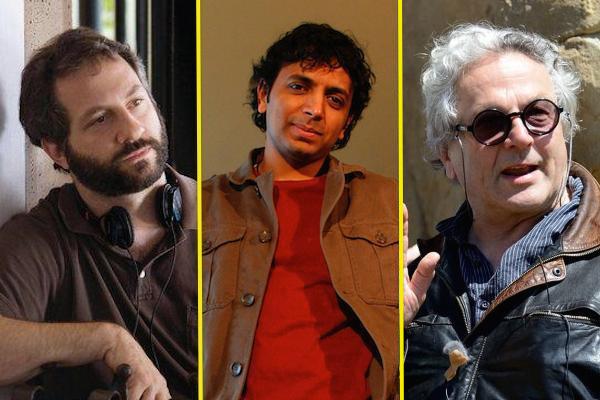
6. Judd Apatow - Trainwreck
Judd Apatow is one of Hollywood's most powerful producers; a creative force who pretty much defined the "tone" of current comedy movies with a new wave of banter-heavy pictures that embraced improv and weren't afraid to have a bit of heart, too. That The 40-Year-Old Virgin and Knocked Up were classics was clear, and Apatow was unofficially declared to be the best comedy director in the business on account of their successes. Then came the difficult third album, Funny People, which saw Apatow probing Woody Allen territory to little success. This Is 40 came next, a "sort-of sequel" to Knocked Up which seemed to suggest that Apatow was out of ideas; creatively, he appeared to have lost it. Who knew that Apatow would find his feet again, then, with Trainwreck, a movie that he himself did not write. That credit went to Amy Schumer, comedy's new First Lady, whose raunchy sensibility gelled perfectly with Apatow's relaxed style. The movie itself is clearly Schumer's, but in his attempt to be both present and invisible (his family do not appear, thank God), Apatow allowed a new talent the chance to shine without any interference. Safe to say, Trainwreck is his best film since Knocked Up - all the way back in 2007.5. George Miller - Mad Max: Fury Road

4. Peyton Reed - Ant-Man
Peyton Reed is as one of those anonymous Hollywood directors whose career is quite literally all over the place. He's not the worst of those worrisome "directors for hire," and he has made some okay-ish films over the years like cheerleader comedy Bring It On and The Break-Up. But even this guy would be the first to admit that he's no Stanley Kubrick, and that his filmography is a scattershot affair (Down With Love, anyone? Thought not). And yet Peyton Reed helmed Ant-Man, which is - without question - his best film to date; a dozen steps up (in terms of quality) than anything that he's put out before. It's difficult to know how much credit to give Peyton Reed for Marvel's latest flick, though, given that he came on board at such a late-stage in the game. Did he help to shape the movie personally, or was he simply there as a scapegoat who Marvel could hang out to dry if the picture ultimately came out as a fully-fledged disaster of the highest order? Maybe it doesn't matter. Two points stand. Firstly, Reed actually took the job in the wake of Edgar Wright leaving the project, knowing full well that people would deride him as a replacement choice. That's a pretty bold move. Secondly, Ant-Man is a good movie - fun and entertaining from start to finish, and that has to be - partly, at least - Reed's doing. If taking a movie in crisis and delivering solid results isn't a redeeming feature, what is?3. F. Gary Gray - Straight Outta Compton

2. James Wan - Furious 7
James Wan is a director capable of such varied work that it's hard to know whether or not you're a fan. He was the guy behind the first (and best) Saw movie, sure, but he's also the person partly responsible for birthing that increasingly terrible - a never-ending - franchise in the first place. And movies like Death Silence and Death Sentence are plainly terrible, whilst later horror efforts such as Insidious and The Conjuring are actually enjoyable. And though he has managed to steer clear of sequels for much of his career, Wan did go down the Insidious 2 route in 2013 to negative results. It looked like he was set for more mediocrity, and then... well, along came Furious 7, that's what. And it's hard to be mad at the person who pulled off Furious 7, because that could not have been an easy task - especially in the wake of Paul Walker's untimely death, halfway through shooting. Whatever you thought of Wan before Furious 7, then, it's clear that the movie works as an antidote to Insidious 2 (and those other Wan misfires). You can't hate on a movie like Furious 7, which knows exactly what it is and attempts to be nothing but the best version of that thing. Wan managed to inject a brilliant sense of kinetic energy into an already energetic franchise, and handled the death of Walker with respect and careful precision. It was a bittersweet moment, given the circumstances, but Wan - who was yet to helm a proper blockbuster before his work on this - proved himself as a large-scale filmmaker.1. M. Night Shyamalan - The Visit
