6 Bizarre Origins Of Iconic Twist Movie Endings

"Yes. I killed your father." Hang on, what?
Twists make for the most memorable cinematic experiences when done right, creating such a lasting WTF moment in the minds of audiences that they'll never be forgotten. Although many films have them, only a select few can pull off the switcheroo. It's a combination of great storytelling and not having your annoying older brother ruin it for you because he was old enough to see it at the time and you weren't.

Lesser movies either bungle the delivery, or the twist itself is unoriginal as hell (if I had a penny for every film where the main character realises they have split personality disorder...). These films are usually found riding the coattails of previous, trend-setting movies which showed Hollywood how it's done.

When they're done right, though, they go down in history, perpetuating themselves in the zeitgeist and finding themselves parodied until the cows come home. Young people today grow up knowing the twists to these classic films before they even see them themselves - thanks to The Simpsons, I knew Darth Vader was Luke's father long before I saw Empire.

But what about the stories behind the twists? How do cinema's great minds put these rug-pulling moments together? Well, you'd be surprised, as looking deeper at six of the most iconic twists of all time reveals some wonderfully interesting origins.

Hit the jump to see for yourself!


6. The Sixth Sense
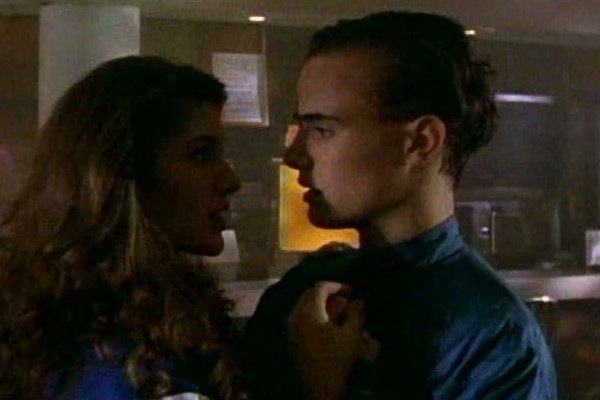
A lot of people may not realise that M. Night Shyamalan actually got his idea for The Sixth Sense and its big twist from a 1994 episode of Are You Afraid of the Dark? The episode, called 'The Tale of the Dream Girl', features a boy named Johnny who keeps experiencing strange encounters with a beautiful girl, and is ignored by everyone but his sister. The strange girl constantly asks Johnny for her ring back, which appears to be stuck on Liam's finger. In the end, it's revealed that the girl is Johnny's girlfriend Donna, and the pair died in a car accident. Johnny didn't remember, attempting to live his life anyway. His sister, for whatever reason, could still see him - until eventually she helped him to realise that he was dead, so that he could move into the afterlife with Donna. If elements of that sound familiar, they should be. The dead person who doesn't know they're dead, the person who can see them and helps them, additional ghosts, the presence of a ring that ends up solving the mystery... Turns out M. Night Shyamalan is a huge Nickelodeon fan.

5. Planet Of The Apes

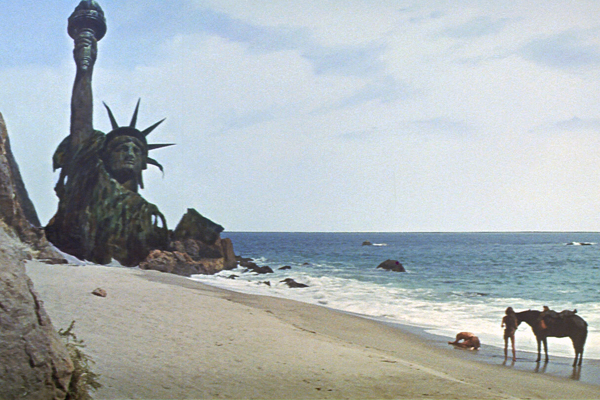
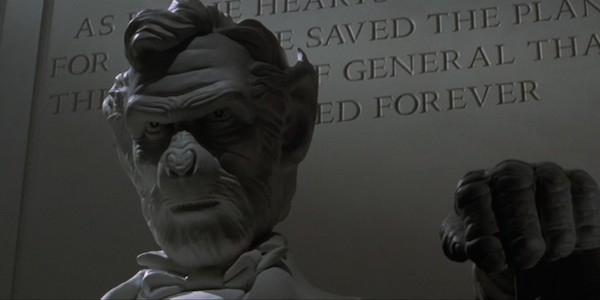
The ending that burned itself into pop culture memory with its grandiose, jaw-dropping revelation is an altogether more streamlined version of what it's actually based on. Planet of the Apes was adapted from a French book, see - La Planète des Singes (ten points for translation) - which involved three astronauts travelling light years across the universe. Thanks to time dilation, centuries pass on Earth whilst only two years go by for the crew. They end up landing on a planet where humans exist, but are about as advanced as Neanderthals, with apes being the ruling class - so intelligent that they have their own language. So far, so familiar. The crew, being of sound intelligence, are able to eventually communicate with the apes, becoming celebrities of a sort. They discover that the humans on the planet were once an advanced species, but brought about their own devolution. Eventually the main character, Ulysse, escapes off-planet with his new wife and child, eventually making his way back to earth. When he disembarks his spaceship, he's confronted by a jeep carrying - you guessed it - apes. Not only did the original Planet of the Apes mould this ending into the one people are more familiar with, but Tim Burton's much-maligned 'reimagining' even took cues from it. In doing so, both films actually missed the point of the original text - that on two worlds, humans were responsible for their own demise, with author Pierre Boulle implying that no matter what we do in any reality, we'll always destroy ourselves in the end. That said, the General-Thade-as-Abe-Lincoln ending might make a wee bit more sense now.

4. Se7en

"What's in the booox!?" Everybody knows the infamous line, as Brad Pitt's Detective Mills finds out that he is to be the seventh deadly sin - Wrath - in John Doe's (Kevin Spacey's) sick and twisted plan. No one wants to find Gwyneth Paltrow's head in a box, let alone when she's your pregnant wife. The shock twist ending - defying the established convention of cop thrillers up to that point - only made it to screen by fluke. Director David Fincher, who was being courted for the film by New Line, was accidentally sent an earlier draft of the script than the studio intended. In the version the studio wanted, Mills' wife's head didn't end up in the box, instead being a more bog-standard, Hollywood ending. Luckily, Fincher read the earlier draft, with the ending being the main reason he decided to get involved. All the way through filming, New Line tried to get him to go with the revised ending, or at least compromise and put Mills' dog's head in the box. "F*ck that," said everybody else. Fincher and Pitt then put up a united front, which New Line couldn't say no to - and the rest is history.

3. The Empire Strikes Back

Before George Lucas finalised the script for The Empire Strikes Back with Lawrence Kasdan, he originally had hired accomplished sci-fi writer Leigh Brackett to pen it, from his broad outline. Brackett, at the time suffering from cancer and in her early 60s, turned in a draft which did not feature Darth Vader revealing himself as Luke's father. Instead, he was actually responsible for Anakin's death. In fact, Brackett's draft had Luke meeting the ghost of his father Anakin whilst on Dagobah with Yoda - who, by the way, was called Minch in her draft. It's actually one of several differences - Han doesn't get captured, Luke doesn't lose a hand, etc etc. Anakin explains that when he saw the Empire closing in, he had Luke and his sister (who wasn't necessarily Leia at the time) separated as babies to protect them. Vader eventually killed him, just like Obi-Wan says he did. In the original draft, Vader still seeks to recruit Luke - just not as his offspring. Rather as a powerful ally useful for a coup d'état against the Emperor. In their showdown on Bespin, Vader even says "You don€™t stand a chance against me € No more than your father did, anyway." Burn. In the end, Lucas was unhappy with the draft, and intended on hashing out the whole father-angle with Brackett. Unfortunately, she passed away before they could have such a meeting, due to her tragic battle with cancer. In the end, he collaborated with Kasdan, and that's how we got the iconic ending we know and love today.

2. Citizen Kane

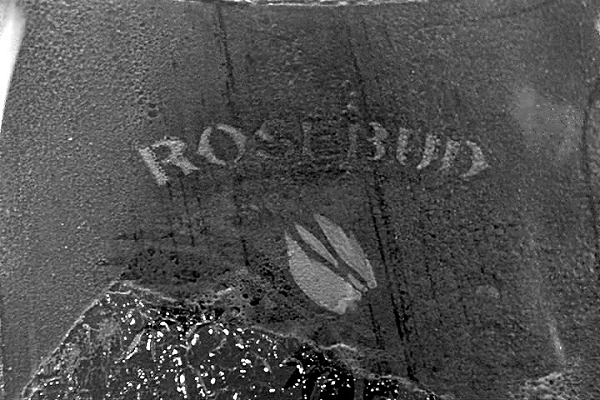
Whilst Orson Welles justifiably gets a lot of the credit for Citizen Kane - oft touted as one of the greatest films of all time, if not the greatest - but what a lot of people might not know is that he co-wrote the script with one of the all-time great Hollywood writers, Herman J. Mankiewicz. It was Mankiewicz' influence which placed 'Rosebud' - and arguably, the entire meaning of the film - into the script. Namely, as we all know, that the last word on billionaire magnate Charles Foster Kane's lips is "Rosebud". It's a callback to the last time he was truly happy and innocent in his life... when he played on his childhood sled, named - well, you get the picture. It all stems from Mankiewicz' childhood, for whom a bicycle stolen from him was symbolic. His biographer, Richard Meryman, considers it the prototype of Kane's sled. The term Rosebud itself was actually taken from the name of a prize-winning racehorse, Old Rosebud; the writer was renowned for his gambling addiction, and his first winning bet was on that same racehorse. For him, it signalled his distance from the rest of his family, and his long-lost innocence. The more you know.

1. The Usual Suspects

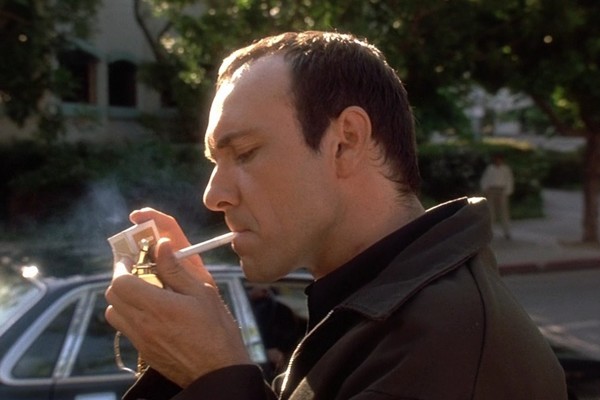
Kevin Spacey's iconic slow walk as he drops his whole Cerebral Palsy act has solidified itself in the zeitgeist, even going so far as to be parodied in Scary Movie, of all things. The revelation that he was Keyser Söze all along has had people watching and re-watching that film for years, trying to fit the bigger picture together and catch Bryan Singer out for any plot holes. The funny story is that during the filming of the film, half the cast thought that they would be revealed as Söze - especially Gabriel Byrne, who ended up having a barney in a car park with Singer when he found out that he wasn't. As it turns out, Singer just hadn't told any of the cast who was actually the mythical Hungarian mastermind. In the scenes where Byrne is decked out as Söze, in the trench coat and fedora, Byrne apparently pulled the director aside and demanded to know why he was dressed as the elusive big bad. Singer's reply was "It's because I'm a big Miller's Crossing fan!". Byrne, apparently, was sufficiently thrown off the scent.

Contributor

Cinephile since 1993, aged 4, when he saw his very first film in the cinema - Jurassic Park - which is also evidence of damn fine parenting. World champion at Six Degrees of Separation. Lender of DVDs to cheap mates. Connoisseur of Marvel Comics and its Cinematic Universe.