5 Varying Lengths Of Story-telling In Film
 We live in a world where nearly every story has either earned itself a franchise, or is given one as a cash-grab. Fewer films stand as their own as opposed to a plethora of franchises. Stories vary in length. From one singular telling to over twenty, some stories are rehashed, retold or given sequels within the same continuity, sometimes for the right reasons and sometimes the wrong. The hard part is determining just when to end it. A story deserves a natural conclusion, though theyre not always given one. Im going to rank the varying story-telling lengths used in cinema, and determine which is the most satisfying and intelligent point at which to close out a tale. In looking at franchises, I will look at the universe created and concluded for each story for example, the early batman films would not be considered within the Nolan franchise of three films. Its an ambiguous and highly debatable topic, but read on to see my views on the best way to craft a story, length-wise, from 5 being the least satisfying to 1 being the most.
5. Original And A Sequel A sequel is often an attempt to turn a solo success into something greater. A lot of the time it doesnt work. More often than not a disaster is averted. A second film can come very close to destroying the success of the original. Sometimes it can even ruin it. 2000s Battle Royale was a huge success, while the attempt at a sequel fell extremely short critically. Two part stories slide from memory or at least, people ask the question what sequel? Theyre unmemorable and risk damaging the original. At the other end of the scale, there is Quentin Tarentinos Kill Bill films. This is different territory to the 'Battle Royale' situation. These were both extremely popular, however the story seems lengthwise incomplete. Whispers and rumours of a third entry to that series propped up in both 2004 and 2007, though now it seems unlikely. Two successful entries seem to beg for a third. It is, however, a matter of opinion, and while some might have cried out for a third Kill Bill volume, others would have been happily content with the results theyd already been given. Franchises this short can be commended for their ability to stop at two. They can also be criticised for even trying again, and subsequently crashing and burning. There are few examples of a solid series of two films, or a solid sequel that had no follow up. It seems like the creators need to make up their mind. Leave it at one, or make something bigger and grander. One sequel leaves the series stranded, and its unfortunate.
4. Four Films
First and foremost, I believe that a story should have an outline, a plan. Even if conjured as the franchise extends, it should have ways of tying back to earlier films. It should be a cohesive, artistic creation. Four films in a franchise, straight away, fails to give a sense of structured story-telling. Four films suggest a series that continued to plod along until it became horrible enough to cut off completely. Other times, its the tragic tale of a great story being extended for financial benefit. An example of this is The Bourne Legacy, extending a solid and successful series even without the title character. The movie added little to the broader picture and only dampened the Bourne tale. The 90s Batman films lacked continuity and direction. Actors changing left, right and center, as well as directors, meant that there was no connection to draw between the films. Harvey Dent went from an African American to a Caucasian man in the space of two films, when he returned to the series as Two Face in Batman Forever. The Pirates of the Caribbean franchise will continue to be popular. Yet while the first three are solid entries that gave birth to and made the world fall in love with the iconic Jack Sparrow, the fourth film seems to extend the series purely because it can. Further installments have been confirmed, yet its hard to see how the future of the series can be as tight story-wise as the first three. It will, however, continue to make money. A lot of it. And that is at the center of the problem these over-extended franchises have. Its hard to reject the allure of success at the box office.3. Five and Over
 Here it starts to get a bit awkward. Very, very few film series can maintain the quality for this long. In fact, if you asked someone to name, off the top of their head, their favourite film franchise of five or more, I guarantee they will struggle. Or rather, to name a film franchise that lasts five or more, and maintains a certain quality in every entry. All of this, and within the same universe, is a tough ask. Die Hard is a major culprit of killing itself for the allure of the box office. The first three films of that series were well made and on most fronts well written. They were pure action films, with a great protagonist and included one of the great catchphrases. Then they made Live Free or Die Hard, and they shoved aside story for the opportunity to shoot a bombastic action film that makes use of modern technology, twelve years after the excellent third entry. If the fourth film killed it, then the fifth one was a very poor eulogy. And the potential of future installments threatens to dig an even deeper grave for a dead franchise. Admittedly, I quite enjoyed the Planet of the Apes, spanning from 1968-1973. Perhaps it was more fascination toward a series born more than twenty years before myself. Nevertheless, again there was a noticeable drop in quality as the series wore on, until it stumbled to the finish line. Dirty Harry is yet another that suffered from drawn out story telling. Its a little harder to argue for or against when a franchise runs longer than five. There are examples where there was no choice. If youre going to adapt Harry Potter to the screen, then youre going to have at least seven films. And then theres James Bond, which belongs in its own category, a timeless invention and reinvention. When its unavoidable, its simply necessary. And Harry Potter showed it can be done albeit with novel success pushing its box office performance. When an original creation starts pushing the boundary simply because they think it can be done, it probably cant be. Its better to go out on a high note, than to sink to the bottom, as Pirates of the Caribbean is now threatening to do.
2. The Standalone
 There is an obvious reason why films a part of a series are often the most successful. People like what is familiar. A film franchise garners so much interest because of the success of the previous entry. And its always fun seeing characters we grow to care about go around for another film. Its often a win, win for both the film industry and for audiences. However, some of the great films stand alone as single pieces of art. These are films left untouched, something becoming a rarity. Some films need a franchise. Some films are given sequels for the sake of it. And some films are left alone, to great appraisal. Notable films, both by Chris Nolan, are Inception and The Prestige. In no way do these films scream for sequels and it makes them so powerful and unique. Another notable one is Martin Scorseses The Departed. What these films have in common is a strong, contained story told in one sitting. For that, it has great re-watch potential and value. Telling a complete story in one two hour film is a talent, and when done right provide some of the greatest tales we will be given the opportunity of experiencing. The Hurt Locker, The Shawshank Redemption, again are movies that standout as singular viewing experiences, and they benefit from it. None of the films named deserve or need a sequel, because to do so would be an insult to the original work. Absolutely everything is put into these stories, and it shows. Sometimes its better to leave a piece of art alone.
1. The Trilogy
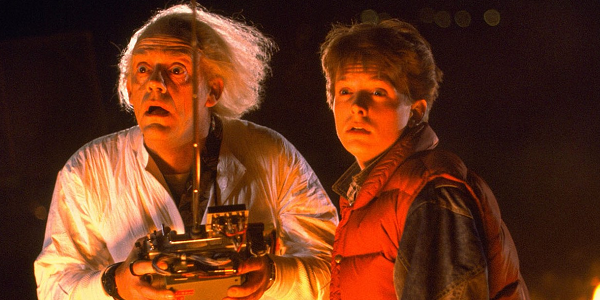 The rule of three is famous throughout history. Studies show that things in threes are more satisfying and more effective. In the simplest form - the kind of rule you learn in primary school - stories are told in three parts; beginning, middle and end. There is a Latin phrase, omne trium perfectum, that roughly translates to everything in threes is perfect. A trilogy of fiction work satisfies us because the number three is inherently satisfying. It represents permanence, hence why we do things in threes it strengthens our actions. Time is divided into three portions present, past and future. The number itself is a psychological beacon. It only makes sense that a series of three fictional works is the most satisfying method when telling a powerful, tight story. Some of the great stories are told in threes, and not just limited to the big screen. Take The Hunger Games novel trilogy, or the three seasons long Spartacus television series (disregarding the prequel mini-series). A series of two parts is somewhat of an abandonment, like a ship lost at sea, unable to find its way to the other side. A series of four arguably murders a series, prolonging its ending in an unsatisfactory way. Three parts is that opportunity to give the audience, as mentioned above, a beginning, a middle and an ending. The obvious examples are The Lord of the Rings and The Dark Knight trilogies. They each tell a complete story, satisfying us and their respective protagonists by giving them the conclusion they deserve. Other examples are Back to the Future and the original Star Wars trilogy. Its hard to create a great trilogy. It makes it that much more significant when we are gifted one. The dedication to story-telling is evident when a great trilogy is made. It removes any sense of dissatisfaction we might feel toward a drawn out story, or one cut short. Commitment and devotion from everyone involved will reap the rewards. Once that is achieved, the next big task is to ignore the allure of extending something great. Quality will always succeed over quantity, critically if not always financially. When everything comes together, and when the right people make the right decisions, the trilogy is the most satisfying length for the telling of a story. Do you agree? Post your thoughts below!