5 Things Pirates Of The Caribbean: Dead Men Tell No Tales Can Learn From Its Predecessors
Lessons POTC can learn in order to hopefully steer the ship back on course to what audiences fell in love with in 2003.
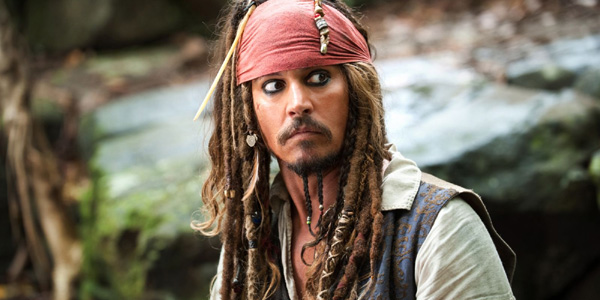 DisneyThough the next installment of Disneys juggernaut franchise has been pushed back until 2016 for now, at least Pirates of the Caribbean: Dead Men Tell No Tales is inevitably going to sail into theaters and make a boatload of cash. Despite the fact that critics have continued to fall out of love with the series with each passing film, 2011's On Stranger Tides proved that audiences are still willing to dole out money for an undercooked product, even if many of them walked out unsatisfied. With the incoming sequel, theres (hopefully) bound to be those at the studio who have evaluated how far the series has fallen critically and considered how to improve upon the complaints many have with what the series has become, full of bloated, needless narrative threads, a lack of creative energy and the overexposure of Jack Sparrow. As we wait for cameras to finally roll on the fifth entry, let's take the opportunity to look ahead at five lessons it can learn from its predecessors in order to hopefully steer the ship back on course to what audiences fell in love with in 2003.
5. Embrace The Imagery
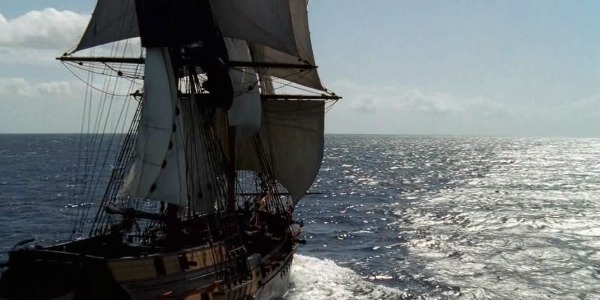 Walt Disney PicturesThe series has the benefit that the Caribbean was and is a very real place with a number of beautiful island locations and an endlessly undulating expanse of sea. With no faraway planets made of lava or futuristic cities replete with flying cars to worry about, the films can take and have taken advantage of the natural views and settings of the location to breathe life into their pirates' world. One thing the first three films in particular did well was utilizing the Caribbean to help make the world of the films seem like a much bigger place, with real ships sailing on real water and characters treading on real sandy shores. With On Stranger Tides, Disney attempted to cut back the budget, shifting production of the film mainly to Hawaii and causing a large chunk of the film to take place on land in a jungle setting. Though there were still some ocean-bound scenes aboard the Queen Anne's Revenge, gone were the epic sea battles, voyages and travels to new locations. Instead, the film ultimately confined itself to its single island location, robbing the audience of the previous film's "pirate life" experience of sailing the ocean, making port to plunder, pillage or enjoy a bit too much rum and seeing new sights. Dead Men Tell No Tales needs to get back to letting the audience explore the Caribbean alongside its characters. The fourth film had many problems and its decision to ground its characters in a single setting for the majority of the film only aided in sucking the traveling spirit out of the proceedings. For the fifth film, the location possibilities are endless, so we can only hope it gets back to showing off why its characters love to call the Caribbean their home.
4. Get The Energy Back
 Walt Disney PicturesAfter two or three films, it's hard not to imagine those involved running out of steam creatively. By a fourth or fifth, if that same crew is still around, it undoubtedly takes a lot of effort on their part to keep creativity high in order to deliver a product with the same vibe and energy they had in the first place. On Stranger Tides proved that those involved ran out of steam. Though director Gore Verbinski left the series after At World's End along with a number of series mainstays like Orlando Bloom and Keira Knightley, opening the door for a whole new creative spin on and fresh start for the series, series writers Ted Elliott and Terry Rossio hung in there only to deliver a story that wasn't worth telling, at least in the manner in which it was told. Couple that with Disney's desire to both cut the budget while simultaneously putting out a product solely to cash in on the series' popularity and the general by-the-motions feeling of Depp's performance and the film felt as soulless and hollow to watch as it most likely was to make for those involved. It even feels like director Rob Marshall was hired more to deliver a product in line with Disney's choice to take less financial risks than to flex his creative muscles. Though Geoffrey Rush seems to be giving it his all as usual, the absolute waste of casting Ian McShane as Blackbeard cuts the deepest. On the surface a perfect match between character and actor, McShane is surprisingly given little to do but be menacing and spout one threat after another, which even he seems to realize as his performance grows increasingly bored over the course of the film. While the second and third film can tend to be divisive amongst fans, it's hard to deny that they at least felt alive and that those involved both on and offscreen were actually interested in the films they were making. Even in its action scenes, On Stranger Tides feels no more than a paint-by-numbers affair without the fun, charm and spirit of its predecessors. With Disney taking the time to push Dead Men Tell No Tales back in order to get it right, the interesting hiring of new blood in directors Joachim Rønning and Espen Sandberg and audiences having a break from the series, we can only hope that the creative juices are flowing again after being at a standstill for the last outing.
3. Embrace Practical Effects
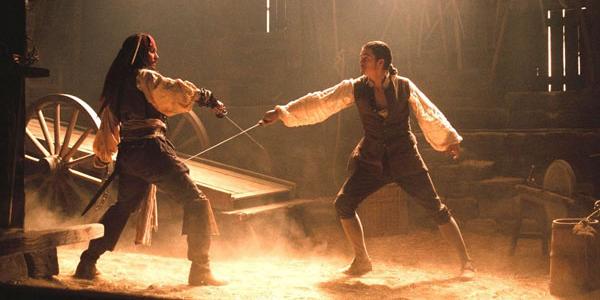 Walt Disney PicturesWhen it comes to these films, naturalism is the best option. What makes the classic Disney attraction so immensely popular and timeless is the fact it's a tangible, breathing environment, devoid of screens requiring 3D glasses or motion simulator vehicles. Some of the series' best moments have taken this principle to heart, with scenes like Will and Jack's first sword fight, the Isla de Muerta finale, the three-way sword fight on the beach near the end of Dead Man's Chest and even the London opening of On Stranger Tides all standing out for their minimalist use of CGI. The series' use of CGI is at its strongest when its not overshadowing everything else. The "skeleton crew" of the Black Pearl still holds up for not feeling out of place in the narrative as part of the curse and even Davy Jones feels like a living, breathing character due to actor Bill Nighy's performance being allowed to take precedence over the character existing purely for spectacle. Contrast this, though, to the series' needless use of CGI -- think rock crabs and Naomie Harris' groan-worthy transformation into a giant in At World's End -- and one can see the difference between the series' positive employment of CGI and its worst. When Jack and Barbossa are dueling as the former flits in and out of skeleton form, audiences are still invested because the special effects only serve to compliment the practical aspects of the fight; when Calypso bursts into crabs after growing a few sizes larger, audiences are quickly taken out of the moment. Dead Men Tell No Tales will hopefully continue to employ the series' great use of practical effects, but will also take heed that CGI has its limits in what works and doesn't work in the world it has presented.
2. Streamline The Narrative
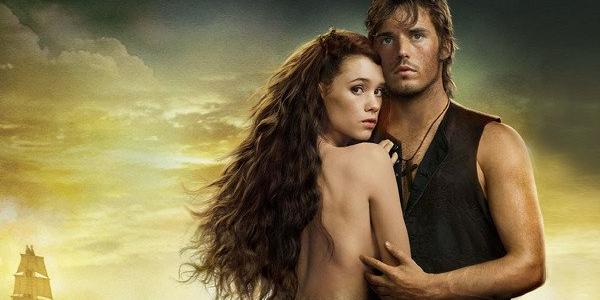 Walt Disney PicturesDid the general public really care about the romantic subplot between smitten missionary Philip and the mermaid he decided to name Syrena in On Stranger Tides? Even Tides seemed to forget about this little subplot, as after Syrena takes the wounded Philip underwater, they're never seen again. Love them or hate them, at least the relationship in comparison between Will and Elizabeth Turner over the course of their first film had a beginning, middle and end, with the two characters given the chance to be the true leads of the film and allow audiences to root for them. Pointless subplots like this need to be trimmed in the next installment, just as much as needlessly bloating the storyline in an attempt to creatively top what came before simply for the sake of going bigger should be stopped. Though Tides did admittedly attempt to tell a smaller-scale story than the first two sequels, it still felt aimless, even rehashing certain subplots, like Barbossa's desire for revenge against Blackbeard, that audiences had already seen done to better effect in the original film with Jack's desire for revenge against Barbossa. Looking at the first film, each character's storyline, from Jack and Barbossa to Will and Elizabeth and even James Norrington, had a forward momentum that all eventually intersected with one another by the final act. Ultimately, everyone had a part to play and each thread felt like part of a cohesive whole. By comparison, At World's End felt the need to introduce a wide array of new pirate faces and characters only to have them all sit around and be spectators to the whirlpool fight between the characters who actually mattered. It was an attempt for an epic moment -- that of the arrival of the entire pirate fleet to face down the East India Trading Company -- that only fell flat due to their passive role in the film's climax. Dead Men Tell No Tales can choose to go epic with its tale or reel it in to tell something much smaller in scale, but what matters is that it makes everything count. If new characters and storylines are to be introduced, then have them mean something by the end of the film. If the films can't bother to care about what they set up, then the audience won't either.
1. With Jack Sparrow, Less Is More
 Walt Disney PicturesBack in 2003, audiences fell in love with Johnny Depp's quirky performance as Captain Jack Sparrow. While he's still an enjoyable creation, over a decade later Depp's oversaturation as Sparrow and his similarly oddball performances as characters like Willy Wonka, the Mad Hatter and Tonto have done a lot to dampen the desire to see the character again. Even further, On Stranger Tides' decision to put Sparrow front and center as the film's lead ultimately dulled what made the character so great in the first place as a wildcard rogue tangled up in someone else's tale (that of Will and Elizabeth Turner). The character is at its best, particularly in The Curse of the Black Pearl, when he's not the main focus of the film, nor required to carry the whole thing. Watching other characters react to his persona and decision-making is just as fun as not knowing what to expect from him next, especially when he's absent from several scenes. As the lead of the film, a lot of the mystery of the character is lost, in the process turning a character who works best in small doses into one that quickly wears out his welcome. Cranking back Sparrow's role into a similar vein as the original film would do a lot for both the character and the audience and give new leads a chance to shine. Considering, too, that Johnny Depp will eventually decide not to reprise the role -- one which audiences would likely not take to seeing recast -- the gradual phasing out of the character from the series would also allow it to continue on with other pirates of the Caribbean instead of it just being the Jack Sparrow show.