5 Reasons The Great Gatsby Will Never Be Translated Accurately To Film
 I know that The Great Gatsby has already been made into a movie five times now, but with each successive attempt the story has remained illusive to the medium. Like many of you probably reading this, I went to see Baz Luhrmann's adaptation and just went away a little cold and let down. The movie was absolutely beautiful and DiCaprio was fantastic as Gatsby, but I just felt like so much was missing that held the movie back from capturing the real spirit of Fitzgerald's masterpiece. This got my mind working on all of the differences between the film and the book and a lot of nitpicking ensued from that point on. However, through the sea of my needless nitpicking, I was able to come up with 5 legitimate reasons as to why Gatsby hasn't been translated accurately from novel to film yet and will never be translated accurately. Keep in mind that The Great Gatsby is my favorite book so obviously this list is subjective and I feel a little more strongly about the subject than most people. Whenever you're ready, read on to see 5 reasons why The Great Gatsby will never be translated accurately to film...
5. The Narration
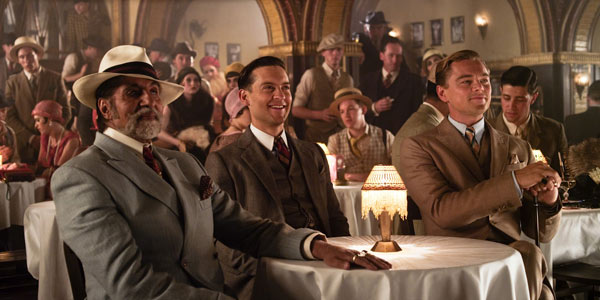 The narration is absolutely key to everything that the story stands for and failing to find success with it will ruin any adaptation of the novel even if everything else is handled flawlessly. Through Nick Carraway's constant narration in the novel the reader can really become attached to his character and the world that Fitzgerald has created comes across as tragically beautiful through his naive eyes. In the movies Nick comes across as plain because he is never given anything to do other than marvel at what's around him like a perpetually enthralled visitor to this otherworldly place. Film is an inherently visual medium so having an overabundance of narration means your movie is basically dead in the water from the first frame since very few films can balance voiceover narration with visuals correctly. The many adaptations of The Great Gatsby have all tried to find ways to keep the narration interesting but it just comes across as boring because the nature of the story changes when told through a different artistic medium. Also, Luhrmann's frame narrative of having Nick actually be the author of the story was a dreadful fail in every sense of the word and made it seemed like he was really trying way to hard to make the narration work, which made it feel forced instead of natural as in the novel. In the book it works flawlessly since literature can use narration in ways that enrich the world but films just show you their worlds making narration needless in most cases.
4. The Tone
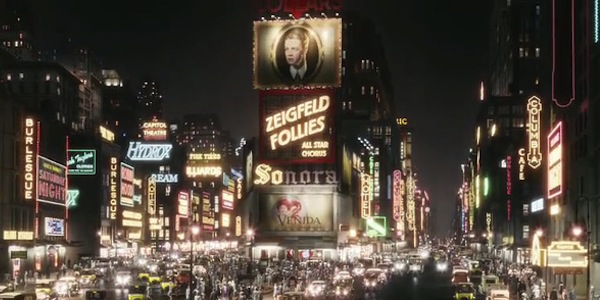 The tone of the novel is much more subdued than all of the movies have portrayed. Yes, Gatsby's parties are lavish and over the top, while Nick's forays into 1920s New York City often feature nights of excess and heavy drinking. The book makes no attempt to tame it's over the top elements but through Fitzgerald's writing there is always the subtle nod in the back of your mind that all of the parties and lavish gatherings are rather tragic and sad for the characters experiencing them. The movies have over-glorified the more excessive elements to often extreme measures, which is okay since film can achieve things visually that books can't, but what isn't ok is they either downplay the more tragic elements of the book or ignore them completely as Luhrmann has. When a filmmaker revels in the parties and excess the film becomes hollow and devoid of the original meaning that Fitzgerald had so masterfully imbued it with.
3. Subtext/The Gatsby & Daisy Relationship
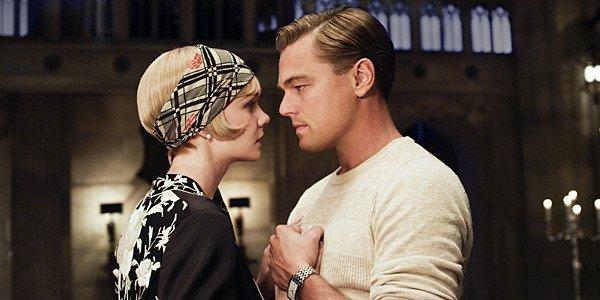 Like I mentioned earlier Fitzgerald's novel features a lot of excess but it's all for a purpose to present a portrait of a tragic figure who drowns himself in wealth and hopeless ideals. The movies portray Gatsby's life as fun whereas the book makes it abundantly clear that Gatsby is a sad and delusional man who has gained the world yet he only wants more and more, which leads him to utter his famous line of "You can't repeat the past? Of course you can" to emphasize his delusions. Gatsby's longing for Daisy is a parody of the very nature of the American dream and how it can destroy a person. His relationship with Daisy is all a metaphor for this but the movies just treat their romance as a cliche' movie romance with all of the brilliant subtext stripped away. Case and point you ask? I was watching tv a couple days ago and an interview with DiCaprio describing how he approached his role was on. The interviewer told him that when he, as Gatsby, was reunited with Daisy she started crying because they were finally together. That's the exact opposite reaction someone should have when experiencing the story. Daisy and Gatsby should never be together. He is only using her to fulfill his dreams of repeating the past and she is only using him for his wealth and social position. Gatsby has accumulated vast amounts of wealth in an effort to reclaim her but has lost his humble, lower class roots in the process. Likewise, Daisy is the "beautiful little fool" that she claimed all girls should be and is really the most morally bankrupt character in the entire story. As Nick says of her and Tom "They were careless people, Tom and Daisy- they smashed up things and creatures and then retreated back into their money or their vast carelessness, or whatever it was that kept them together, and let other people clean up the mess they had made." Gatsby is just another thing for Daisy to abuse, throw away and then have someone else clean up after her, which is ultimately why Gatsby ends up dead in his swimming pool. Their love can never last and Fitzgerald used their naivety to fill the last half of his novel with subtext regarding the state of America in the 1920s.
2. Fitzgerald's Prose
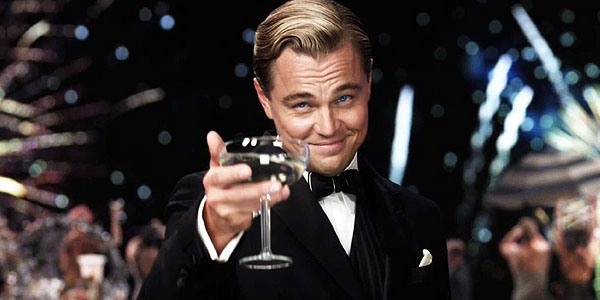 This one is extremely simple and also a universal truth for all book to film adaptations. Nobody has ever been completely successful in transferring the style of a book to a film because they are different artforms so things have to be changed, there's no way around it. Fitzgerald's prose is some of the most elegant and beautiful that American literature has to offer but it can't possibly be translated to film. This goes beyond the narration and into the ways that Fitzgerald describes his characters in general. Take for example this bit from the book regarding Daisy's speech "Her's was the kind of voice that the ear follows up and down, as if each speech is an arrangement of notes that will never be played again." A film can't convey a statement like that because it goes against the nature of the medium. Film can show Daisy in all of her beauty and elegance but there's no way that it can illustrate that quote. An actress can only do so much but a book can build these characters into godlike figures and present these amazing worlds that can only exist in the reader's own head. Some books are tailored more for the screen then there are others, like this one and The Catcher in the Rye, that are quintessentially novels.
1. Gatsby Himself
