5 Reasons Paul Thomas Anderson Should Have Got An Oscar Nomination
 Paul Thomas Anderson isn't a stranger to the Oscars, and although he has yet to win one, he's been recognized by critics and fans alike as one of the best filmmakers of his generation. He's rejuvenated careers such as Burt Reynolds' and jump started others such as Mark Wahlberg's, and has made challenging films that future film students will study for years to come. His lack of Academy Awards hasn't taken away anything from his career so far and he probably won't lose any sleep over that lonely space on his mantle meant for the Oscars he could've won. So what's the big deal? It's more about the principle than anything else; the Academy has become infamous for snubbing well deserving actors, directors, and films from its nominations. Although the criteria for judging what or who should be nominated is rather subjective, this is the Academy we're talking about, the most prestigious award in film. There's a reason why movie trailers will market their actors as either "Oscar Winner" or "Oscar Nominee." So, it's the Academy's responsibility to make sure that each vote counts and that their choices reflect the cream of the crop. Paul Thomas Anderson's The Master was one of the most challenging films of the year and featured fiery performances from its lead actors, and while people may have been polarized by the film, it was beautifully shot and impeccably directed by a master of the craft. The Academy got a few things right in nominating Joaquin Phoenix, Philip Seymour Hoffman, and Amy Adams in their appropriate categories, but it was all too obvious that there was something missing in the Best Picture and Best Director nominations. This is why Paul Thomas Anderson should've gotten an Oscar nomination...
5. Ben Affleck
 Argo has been sweeping through the awards season with a vengeance and has won the top two awards for Best Director and Best Picture at this year's Golden Globes and the BAFTAs, which are key indicators that Argo is en route to Oscar glory at the 85th Academy Awards. I must say that this year, the nominees for Best Director and Picture are well deserved. There aren't any seriously questionable choices, but rather a noticeable absence in these categories, and no one was expecting anyone to point out these absences except angry critics. However, when Ben Affleck won for Best Director at the Golden Globes he took it all in humility and said how grateful he was to be in such good company:
"I don't care what the award is, when they put your name next to the names that she just read off, it's an extraordinary thing in your life. These nominees are exceptional talents. I truly to God never thought I would be in the same breath as them. I want to thank them, and I want to thank the many talented people that weren't nominated. Paul Thomas Anderson who's like, I think, Orson Welles. There are so many others."When I watched this, I, along with other PTA fans, rejoiced and applauded Affleck's shout out because the absence of PTA's name in the award ballots was finally recognized. It was almost a vindication of an obvious snub, but why is this a reason PTA should have been nominated for Oscar? If the Best Director of this past year specifically mentioned your name as being absent from the nominees' list in an acceptance speech and compared you to Orson Welles, one of the greatest filmmakers of all time, wouldn't you think the Academy may have overlooked you? Although The Master wasn't Paul Thomas Anderson's best film, compared to the films that came out this past year, it stood out as a serious film for the serious film-goer - Affleck was one who took notice. The best part about Affleck's wins is even he wasn't nominated for Best Director at the Academy Awards, which is really a head scratcher, but at least he has a Golden Globe and a BAFTA to keep him company.
4. Joaquin Phoenix
 Say what you will about Joaquin Phoenix; he may be slightly off kilter and may not hold the Oscars in high regard, but the man can act and his performance in The Master as drifter, Freddie Quell, is arguably his best. He's simply one of the most interesting characters to have donned the silver screen and while Phoenix deserves the acting accolades he gets, it was Paul Thomas Anderson who trusted Phoenix to bring Freddie to life. Critics and fans look forward to Paul Thomas Anderson's movies not only because of his directing and attention to detail, but because we can expect some of the best performances that we'll ever see out of the lead actors... Burt Reynolds and Julianne Moore were nominated for Best Supporting Actor and Actress for their performances in Boogie Nights; Tom Cruise received a Best Supporting Actor nomination for Magnolia; Adam Sandler got nominated for a Golden Globe for Best Actor in a Comedy or Musical for Punch-Drunk Love (yes, Adam Sandler); Daniel Day-Lewis won an Oscar for Best Actor for There Will Be Blood, and all three lead actors have been nominated this year for Best Acting awards for The Master. Yes, just because the actors of a film got nominated for Oscars doesn't automatically qualify the director/writer for a nomination, I agree. However, I don't believe any other director could've gotten these performances out of the actors the way PTA did. Of course every director is different and each has his or her own style, and that is my point. History has shown that Paul Thomas Anderson brings the best out of his actors because of his faith in them and because he writes for his actors:
When I wrote Magnolia, I was writing for the actors, so I could hear it my head how they might do it, and I was writing it with that advantage."A great director not only directs the camera or spends months in the editing room, but he directs his actors because they are one of the primary elements in making a great film. In this case, PTA brought out the best in a trio of actors who have already been nominated for Oscars, demonstrating his incredible knowledge and skill in utilizing his actors to their full potential.
3. Mise En Scene
 Now, we get into pretentious territory; mise en scene literally means "placing on stage" and it encapsulates all the visual elements of what makes a good film. While no one has a clear cut definition of what mise en scene means, there are key aspects such as actors, costume, cinematography, lighting, set design, and even editing that directors use intentionally to convey a certain mood or tone throughout the film. In Punch-Drunk Love, Paul Thomas Anderson uses the colors blue and red as characteristics of Barry and Lena. Barry wears a blue suit throughout the whole movie and is a rather passive aggressive character, who is shy and avoids any confrontation. Lena wears red throughout the film and is bolder than Barry; in fact, she takes the initiative to ask out Barry when he is too shy to ask her out and it's Lena who calls him as he's about to leave her apartment and tells him how she wanted to kiss him good night. Cool blue and hot red, coincidence? I think not. In There Will Be Blood, there are three scenes where Daniel Plainview is looking over maps and layouts for drilling oil. In the first scene, you can see Plainview without his trademark hat or coat, he's in a humble home that is poorly lit and rather dirty. In the second scene, Plainview is doing the same thing, but he is wearing his jacket and is in a well lit office buying land. In the final scene, Plainview is wearing his hat and jacket sitting at a bench with his oil drill in full operation in the background, and he is buying a chunk of land in California. These symmetrical scenes aren't by accident; they show Plainview's rise to power and his transformation into a cold, sinister man. In The Master, there are several mentions of Freddie Quell being like an "animal." In the first scene of the film, we see Freddie on the beach pretending to have sex with a woman figure made of sand before he masturbates into the ocean. He even has a distorted face marked by a grimace and his primary motivations are for drinks and sex. These primal desires seem to be the only things that really concern him besides his relationship with Doris. When Freddie is being processed, he lets out a fart and laughs, to which Lancaster Dodd says, "Silly animal." Lancaster tries to break him much like a horse throughout the film and tries to control him as if he can train him to be a normal human, which proves impossible for Freddie. Lancaster's ideology revolves around the belief that "man is not an animal," but Freddie seems to be exactly that. Everything PTA does is intentional and The Master is no exception; every shot counts and everything in the frame is there for a reason. The Master was a film that was truly made in the editing room as the final cut differs quite a bit from the script. Certain scenes in the script weren't in the film and certain scenes in the film were not scripted, and I'm tempted to think PTA may have winged this one and got away with it, but I seriously doubt it.
2. The Master
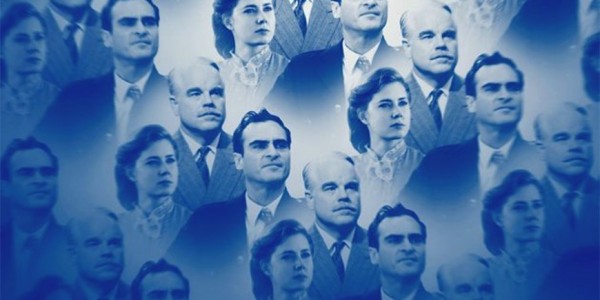 The Master wasn't a box office hit... hell, they lost money on the film, but PTA is already working on his next film as I'm typing away. Why? Because, although whatever PTA makes may not be gold, it's incredibly enriching to watch and learn from his films; he's a rare director that truly makes you see film as an art form. Art has always had the power to deepen certain meanings and themes in our lives. When people look at paintings, they're enamored not just by the beauty of what's in the frame, but by what the picture means. Many people were put off by The Master, including some critics who thought the weak link in the film was the storytelling as it seemed to have no real narrative drive, which I agree with, but there were such strong themes and metaphors in the film that had me thinking long after the film ended. While it may be my own pretentiousness that could be clouding my judgment, I believe that the films that speak to the human condition, revealing an element of truth we can relate to are some of the greatest films we'll ever see. I believe The Master was such a film. Going along with the animal motif in the film, we see Freddie on the beach in the beginning of the movie and then we see him at a beach again doing the same thing he was doing in the beginning of the film. Between the beginning and the end, Freddie is jumping around from place to place, from job to job until he comes across Lancaster Dodd and his followers. There are multiple shots of Freddie running away from people or entering into another place; most of these shots are framed by rectangles or squares that almost appear as portals into different worlds or habitats. As Freddie comes and goes, he's searching for his place in the world and when he meets Lancaster Dodd, he feels as if that is it. He doesn't know that what he's doing is irrational or weird or animalistic; he simply doesn't know any better, but Dodd does. Dodd tells Freddie that he is "above all, a man... just like you" but he's just as much an animal Freddie is. When he is accused of being a leader of a cult, he does his best to hold back his full anger, but a few profanities burst out of him as an instinct. His sexual appetite is inferred to when his wife says she doesn't want to find out about anything when it comes to extramarital affairs, and there always seem to be more women than men at his gatherings. Dodd does his best to keep his animalistic tendencies under wraps and when he meets Freddie, he sees himself and needs to tame Freddie just like he's tamed himself. Of course, Dodd's best efforts to tame Freddie are in vain or are simply temporary. The only thing that seems most human in Freddie is his love for Doris, but when that is no longer a reality, Freddie has a final showdown with Dodd, who realizes that Freddie must fully devote himself to The Cause or leave it forever. Freddie leaves, ends up in a bar meeting a woman, who he sleeps with and tries to "process," but he almost seems like a parrot repeating lines he's heard. Then we finally see him on the beach, back in his natural habitat. Now, what does it all mean? That man is really an animal, that we're all Freddie Quells, who can't change what we are? Or are we all Lancaster Dodds pretending and fighting against the reality of our nature? I'm not sure. But it makes you think, doesn't it? The best films do; they make us ponder again and again about what we've seen and how we relate to the images unfolding on the screen in terms of experiences, beliefs, and desires. I believe the Best Picture nominees did that, as sappy as Les Miserables was, I can understand its nomination along with Silver Linings Playbook, Lincoln, and Argo amongst the others. It's just hard to believe the Academy didn't think The Master deserved to be up there as well.
1. The Master (Paul Thomas Anderson)
This time, I'm not talking about the film, I'm talking about Paul Thomas Anderson. His films may not be commercially viable or as marketable as your typical thriller, comedy, or romance, but he knows what he's doing. Let me repeat that because I think we believe every director knows exactly what he's doing, but PTA really knows what he's doing. The best filmmakers make the most of every shot and every scene; if a picture is worth a thousand words then a film is worth a billion and if most of those words make sense and are stringed into coherent sentences, then you have a great director behind the camera. Every Paul Thomas Anderson film can be watched multiple times and you'll notice something that you hadn't before, thus enriching your cinematic experience of the characters and story. Critics had mixed feelings about The Master and rightfully so, but it didn't stop them from noticing PTA's valiant efforts and execution as the director. Peter Travers said: "The Master, the sixth film from the 42-year-old writer-director, affirms his position as the foremost filmmaking talent of his generation. Anderson is a rock star, the artist who knows no limits."Todd McCarthy said:
"In a film overflowing with qualities but also brimming with puzzlements, two things stand out: the extraordinary command of cinematic technique, which alone is nearly enough to keep a connoisseur on the edge of his seat the entire time..."A.O. Scott said:
"...Mr. Anderson discovers the perpetual promise of new beginnings and a poisonous backwash of anomie, violence and greed. In his world fortunes are constantly being made and squandered. New religions are springing to life. Gamblers, pornographers, hustlers and drunks are plumbing the mysteries of existence. Fathers are at war with their biological and symbolic sons. Husbands are at war with wives. Men are at war with the universe, perversely convinced that they have a chance of winning. All of this striving absurd, tragic, grotesque and beautiful can feel like too much. 'The Master' is wild and enormous, its scale almost commensurate with Lancaster Dodds hubris and its soul nearly as restless as Freddie Quells. It is a movie about the lure and folly of greatness that comes as close as anything Ive seen recently to being a great movie. There will be skeptics, but the cult is already forming. Count me in."I know critics aren't a part of the Oscar ballot, and if they were we'd have quite an interesting list of winners, but these are people who know films and the people that make them. Scott hit it on the nail when he mentioned how broken people are "plumbing the mysteries of existence" because isn't that what all great filmmakers do? They show you a nugget of truth through the mysteries of life we'll never truly know the answers to on this side. Cinematic technique notwithstanding, I don't believe any other director is truly plumbing the depths of these mysteries like Paul Thomas Anderson is and for that I believe the Academy made a mistake. Maybe PTA and Ben Affleck can go grab a drink at an after party and talk about their favorite directors or movies that never won Oscars either. Coming back to the Orson Welles comparison made by Ben Affleck - he may have been right in more ways than one, as Welles was arguably the greatest director to have never won an Oscar. Even if Paul Thomas Anderson never wins an Oscar, at least he's in good company. Like this article? Let us know in the comments section below.