5 Ideas The Wolverine Movie Hopefully Used From The Classic 1982 Mini-Series
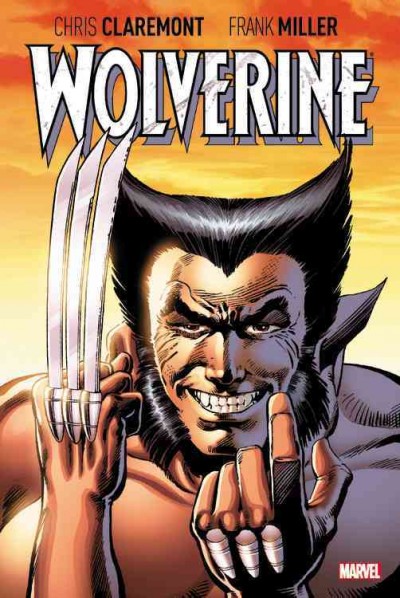
 (If youve never read the 1982 mini-series, spoilers ahead) I have not purchased a Wolverine comic in well, ever. This is not to say that, I, like a lot of adolescent comic book fans didnt think the cigar-smoking, beer-guzzling ultimate fighting machine wasnt the coolest character ever for a time; like many of them, I thrilled to his adventures in the X-Men. I, too, wanted to stalk the world like Dirty Harry, minding my own business, serving the good, but doling out the kind of entirely understandable, potentially fatal ass-kickings that my more liberal-minded buddies in the X-Men, with all their angsty hand-wringing, never could. Before Wolverine, Batman was the biggest badass, but there was never any doubt that Wolverine wouldve taken care of that problem called the Joker a long time ago. Whats there for a teenage boy not to love? Then as I got older, he lost his appeal. Being a one-dimensional character tends to have that effect on adult readers. Theres only so many times you can watch your hero engage in a pissing contest with a small army of villains/ninjas/aliens/bar patrons/more ninjas knowing full well the guys become about as unkillable as Superman; only so many times he can save the day by flying into the requisite berserker rage before you realize the guys got an extraordinarily limited and numbingly predictable - set of coping skills. This is a long-winded way of saying I am probably the last person in the comic-book- reading world who would buy the original 1982 Chris Claremont-Frank Miller mini-series, and much less, enjoy it. But guess what? I spotted the newly re-released hardcover collection in the library, and just out of curiosity, just to see what all the fuss had been about, I picked it up. I figured, if nothing else, Id enjoy Millers artwork (and I did), but, much to my surprise, the thing worked great as a story. A great story. Since I, like many others, found the last Wolverine film to be more than a little disappointing and hope this new one will deliver some kind of payoff on comic-book fans entrenched sense of obligation to patronize big-budget superhero flicks starring characters they once loved, Im hoping this sequel draws on a lot more than the superficial elements from the 1982 classic its reportedly based on. While its probably a very good idea that The Wolverines director, James Mangold, doesnt seem to have pulled a Robert Rodriguez-on-Sin City and filled the screen with scrupulously faithful recreations of Claremont and Millers classic, there are a lot of key story elements from which The Wolverine could benefit. Here are just 5 key story elements from the 1982 mini-series that Mangold, Jackman, and company have, hopefully, made good use of:
5. Yukio Is A Lot More Than Just Another Badass Assassin
 What do Han Solo, Hit-Girl, the Fonz, and, yes, Wolverine have in common? Yes, theyre all brunettes, but Hit-Girl wears a wig so Im not counting it. The correct answer is they all were/are the extremely popular, badasses of their respective franchises. In all of these franchises, they, almost always, work best as part of a team. The reasons for this have a lot to do with the badass generally one-dimensional and predictable nature (i.e. the shortest distance between 2 points for the badass is always violence, or the threat of same in Fonzies case), which serve a story much better when they have other more three-dimensional and relatable characters for all that badassery to bounce off of. Hans got Luke, Hit-Girls got Kick-Ass and Wolverine, despite his long-running solo series and innumerable mini-series and spin-offs works best when hes got his X-Men around. If you dont believe me, ask yourself how many classic Wolverine moments you can count off that dont involve the X-Men? Im guessing the majority (if not all) of his classic, legitimately solo, moments come from the original 82 mini-series. So whom do Claremont and Miller give Logan to bounce off of? The series break-out star, wild-hearted assassin Yukio, who cares for nothing but her next adrenaline rush and Logan himself. The irony is that unlike the Luke Skywalkers and Richie Cunninghams of the world, she doesnt provide a balance to Wolverines Bad Cop by being the more relatable and stable Good Cop. On the contrary shes even more dangerous, more prone to relying on pure animal instinct. The contrast she provides, however, might be even more important, as she provides a mirror of what Logan could easily become. Claremont never writes her as evil though; in many ways shes Logans most loyal ally the one who Wolverine realizes wants me the way I am. Even though she too could be described as simply just another badass, her character works on multiple levels. After all, its surely no coincidence that in Japanese Yukio is a boys name suggesting happiness or independence. So, its a great sign that the trailers suggest shes prominently featured in the new film, but if the filmmakers fail to give her all the meaning and subtext she carried in the mini-series itll be a lost opportunity to give a Wolverine film more depth than weve come to expect.
4. Make Japan A Central Character
 Given all of the ninjas, kung-fu-style fight scenes, and traditional Eastern weaponry Frank Miller brought to the New York-based Daredevil, its certainly no surprise that the Wolverine series featured plenty of the same. Thanks to the scope of the other Japanese elements however, the story is one that couldve only taken place in Japan. When Mariko, the woman Wolverine loves, kicks off his downward spiral by rejecting him in the very first issue - even though she loves him and her husband abuses her - its specifically because her notions of honor are inextricably tied to Japanese tradition. In addition, Claremont and Miller inject some actual Japanese into the characters dialogue and incorporate one of the most popular pieces of Japanese historical fiction, Chushingura, and set it, naturally, on the stage of a traditional Japanese art form, kabuki. These kinds of elements help set the story apart from not just the X-Men, but other comics in general. If anything, The Wolverine film can arguably make better use of Japan than the comic does since there are times where Millers artwork is too minimalistic to fully capture some of the locations. For example, issue 3s private Zen garden scene could only be amplified in Mangolds film if he chose to use it; and the already cinematic chase through Tokyos nighttime skyline is just screaming out for a cinematic rendition that might better capture the awe-inducing display of the blaring neon, digital technology and advertising that blast from the citys rooftops. If Mangold uses it, watching characters dwarfed by a nighttime sky and gargantuan advertising images that could rival the iconic opening scenes of Blade Runners cityscape would make for an unforgettable cinematic image indeed.
3. Do Not Make Another Superhero Story
 If theres one thing the series does exceedingly well is give the reader The Wolverine they know, while at the same time creating a story that feels qualitatively different from stories wed seen Wolverine in before. Yes, he still has plenty of badass tude to throw around (one reason a film could work better than the comic is we likely wouldnt have to suffer through Logans tough-guy narration honestly, only rappers brag as much), but none of it ever feels like a superhero story. There is exactly one panel where we see the X-Men and thats on the last page of the last issue. In fact, even though its set in Japan and Claremont wrote that he set out to write a failed samurai story, if theres any genre the mini-series belongs to its film noir with its hardboiled narration, duped hero at its center, Millers evocative artwork, and Yukios femme fatale. As such, the comic was not only already incredibly cinematic, but it feels refreshingly different something new - from what wed seen before. While hardcore fanboys and corporate mandates may insist on tying this film in with the rest of the Marvel Studios Universe, it seems to me that having the likes of Silver Samurai and Viper in the film is probably a bad idea. If there was one thing X-Men Origins: Wolverine suffered from, it was an unnecessary excess of cameos by other super-powered individuals which may have some appeal to fanboys, but distracts the general audience and only makes them feel like theyre sitting through their umpteenth superhero flick.
2. Raise The Emotional Stakes Because The Physical Ones Are Tired
 Okay, lets be honest: Wolverine, with his constant drinking, smoking and moody irritability may be far more relatable than Superman, but he might as well be Superman in the sense that hes essentially unkillable, and as 70-plus years of Superman shows us its really really difficult to write good stories about characters that are essentially unkillable. Although we all know that characters like James Bond or Batman will never die, the joy of watching action films is placing the hero in situations where hes at least faced with the risk that he could die. The possibility of death makes for the greatest stakes of all (as Eastwood taught us in Unforgiven, you take away all hes got and all hes ever gonna have), so what do you do with someone with unbreakable bones and whos always just around the corner from spontaneously healing and regenerating himself anyway? The mini-series resolved this by having Wolverine fight for internal, emotional stakes. An emotional Wolverine may sound like weak cheese to the kind of fanboy who doesnt want Logan to ever veer more than 4 panels away from slice and dice, but thats exactly what made the mini-series work so well, and its an element thats absolutely necessary to appeal to a general audience. Judging from the trailers, Mangolds aware of this as well, since theres a clip that suggests that Wolverine may lose his powers and be able to die, but thats too easy and implausible unless you believe a truly powerless Wolverine is going to make it alive to the credits. Hopefully, the film will instead follow Claremonts example and have his struggle be an entirely internal one with Logan struggling with the concept of what kind of person he really wants to be. Granted this sounds much more touchy-feely than its execution in the comic, and would be much harder to do on film, but theres no question that the mini-series emotional hook was the end of issue 3 where Wolverine achieves a moment of personal clarity. Taking stock of his surroundings after yet another fight, he notices hes wrecked the beauty and order of a Zen garden and engages in the kind of insightful self-reflection I never thought Id see in a Wolverine comic book. He actually thinks to himself, Peace? Perhaps thats the answer and theres a powerful moment where you get the sense that Wolverine might actually try to resolve a situation with something other than his claws. Unfortunately, its not a feeling that lasts very long (theres still one whole issue to go after all) but you nonetheless get the feeling that you just saw Logan yes, Virginia, miracles do happen grow as a character. It works because its not only different from the Logan wed come to know, but its also an honest moment that was slowly built towards in the preceding issues, finally springing forth from his troubled realization that hes forever been a kind of agent of chaos and the push-pull relationship he has with the two females in the book. These two females brings me to the comics last great idea which The Wolverine filmmakers, with any luck, have brought to the table.
1. A Love Triangle That Actually Changes Things (Even If Its Just For This Story)
 Yes, Wolverine was already in a love triangle with Cyclops and Jean Grey, but it was Jean who was the object of affection in that, and she got to choose. The mini-series turns that dynamic on its head by letting Logan be the decider. His love for Mariko and his attraction to Yukio isnt the stuff of bed-hopping soap operas either, but a clever metaphor for his internal (yes there it is again) struggle. Yukio accepts him for who he is, savagery included, while Mariko makes him want to be a better man. It sounds a little cheesy, but its a perfect illustration of who he is at that point. Its also the engine that readers slowly come to realize in a pleasant surprise - is really driving the story. This aspect of the mini-series might be the most difficult for the filmmakers to pull off because, in the movie universe, no ones ever heard of Mariko before, but then again before Wolverine #1 hit the shelves, comic book readers had never heard of Yukio before either. Certainly The Wolverine could introduce us to both Mariko and Yukio, develop Logans attractions to both within the film itself, and save the choice-making for the final act. The biggest hurdle would be making sure the audience could understand why Logan is so attracted to Mariko. In the comic she represents the honor and integrity side of Logan and the film would have to capture that in a natural organic way. Unfortunately, one of the trailers features Jean Grey prominently (in yet another unnecessary attempt to connect this film to the X-Men films, as if Wolverine himself is not enough), and if this film still has him pining over Jean I think a lot of viewers myself included are going to come away with a feeling of been there, done that, and, if the now-classic status of the 1982 mini-series is any indication, thats not the feeling that creates a future classic. . Hopefully the filmmakers remembered (cause its too late to change anything now) if theres anything any action film particularly a sequel to a lackluster spin-off must do to achieve real success is to either genuinely surprise us or, failing that, make us feel like were seeing familiar characters doing something we havent seen before, or better yet, behaving and thinking in ways we havent seen before. If nothing else, the mini-series proved that you could give Wolverine a character arc and it would work. Watching a hero change and grow is the real reason we read comic books and go to the movies in the first place.