5 Gruesome Movie Deaths That Are Way Worse Than You Think (And 5 That Aren't)
The best and the worst ways to die in Hollywood.

There are many ways to die in Hollywood. Just ask Sean Bean.
Some of them are, frankly, horrific, some of them are definitely not as bad as they make them out to be, and some of them are way worse.
To be honest, anything that shuffles you off the mortal coil isn't going to be pleasant but, we are now so desensitised by violence in movies, that we often forget just how much death is going to fricking sting.
It's kinda tricky to get an accurate report on what death actually feels like, due to the fact that most of the people that could give us a clue aren't up to much of a chat these days. But science is good at extrapolation, and we have managed to piece together what we know about the human body and its tolerance for trauma to get a good idea of some of the worst ways to kick the can.
We can use this information to get a good idea of just how bad many of the most iconic on screen deaths would be. Some are on point, some would barely tickle and, in some cases, the movie makers appear to have glossed over some truly gruesome realities.
Things Thats Probably Wouldn't Even Kill You...
5. Quicksand

So, starting with the movie tropes that are actually nothing to be scared of, death by quicksand is much less of a problem than we were all led to believe as kids.
There was a time between the 1960s-80s that you couldn't move for films containing death by quicksand, but that figure has swiftly plummeted to near enough zero in recent years. This is probably due to the natural half-life of a Hollywood cliche, but also probably has something to do with the fact that quicksand won't actually kill you.
The human body, with a density of 1 gram per cubic centimetre, is able to float on water, let alone the much denser quicksand (2 grams per cubic centimetre).
Should you ever find yourself stuck in quicksand, you're unlikely to ever sink any further than your chest, and that's only if you panic. The real danger usually comes from a rising tide that drowns the quicksand victim, but as that is not technically the quicksand doing the killing, it takes the lowest spot on our list.
4. Shark Attack

Sharks are cold, heartless killing machines that would rip you in half as soon as look at you.
If you're a seal, that is. And if the shark is hungry.
Sharks are actually pretty shy and mostly just confused by the gangly pink apes that occasionally throw themselves into their waters. Sharks, like toddlers, explore the world through their mouths (on account of not having hands or Google), which is how the majority of shark "attacks" come about. If you do get bitten by a shark, there's a pretty good chance that you'll survive.
Obviously, sharks and toddlers differ greatly in one key area (well, many key areas, but one that matters most here), which means that receiving an exploratory nibble from a shark is slightly (but only slightly) worse than getting one from a teething toddler. Once it realises that you're a stringy land mammal, chances are that it will leave you alone, and around 70% of people will survive an attack from a great white. Plus, you get a badass scar.
3. Bees

Regardless of Nicholas Cage's less-than-convincing flailing, death by bees certainly wouldn't be a pleasant experience.
Edward Malus, with his bee allergy, is suffering from anaphylaxis as he slides unconvincingly into unconsciousness.
The symptoms would usually take anywhere from 10 minutes to two hours to begin presenting and it is usually the swelling of the airways that will do it for you as you essentially suffocate on your own throat. As well as coming out in hive, the skin is likely to go a slight blue colour due to lack of oxygen. Cardiac arrest is also a big risk, as well as convulsions and spasms. In people who die from anaphylaxis, autopsy often shows an "empty heart", which is just as unpleasant as it sounds.
His allergy is certainly unfortunate, as that amount of honey bees would not usually be enough to kill a person. The stings of even Africanized Killer Bees are actually no more deadly than honey bees, but their killer reputation comes from their tendency to attack in massive numbers.
2. Exposure To The Vacuum
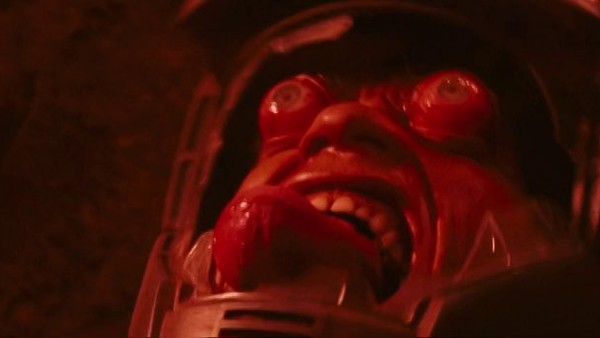
We all know that there are a lot of myths flying around about how exposure to the vacuum of space would go down. The key thing to bear in mind is that the unpleasantness of your death largely depends on how you are exposed.
Generally speaking, your blood wouldn't boil, because the elastic pressure of your blood vessels would be sufficient to keep it pressurised, and you wouldn't freeze solid either, because heat energy requires a medium to travel through and the vacuum of space isn't exactly terrific for that.
According to NASA:
"It is very unlikely that a human suddenly exposed to a vacuum would have more than 5 to 10 seconds to help himself. If immediate help is at hand, although one's appearance and condition will be grave, it is reasonable to assume that recompression to a tolerable pressure (200 mm Hg, 3.8 psia) within 60 to 90 seconds could result in survival, and possibly in rather rapid recovery."
That said, it's not exactly harmless. 90 seconds isn't a great life expectancy.
This is just exposure to the vacuum, however, it's the speed of decompression that you've really gotta watch. In one decompression disaster back in 1983, an oil rig diver's spine was forcibly ejected and flung up to 30 feet when the decompression chamber he was in went from nine atmospheres to one in less than a second.
1. Shot In The Head
Amazingly, taking a bullet to the brain is not always a one-way ticket to the afterlife. The human body can take a fair amount of punishment and a third of people with gunshot wounds to the head actually survive. Whether or not you walk away from a headshot is largely dependent on which bit of your grey matter you damage.
Catastrophic interruption of brain signals, particularly in the mid-brain and brainstem, is what you're really aiming for here (no pun intended). That ensures that your consciousness winks out before you're even aware that a gun was fired.
Damage to other parts of the brain may result in symptoms that are almost stroke-like. Aphasia (trouble with language) is a common problem, as is memory loss and problems with mobility. Something that many people report as being absent is, amazingly, any pain.
The brain itself cannot feel pain and, even if it takes you a while to bleed out from a gunshot wound, the symptoms are more likely to be perceptual distortions than excruciating pain.
So, whether it's a painless, back-seat-ruining headshot, or a survivable ordeal, there are things much worse than a hole in the head.
Things That Are, Somehow, Much Worse Than You Think...
5. Decapitation

Liberating the brain from body is generally a good way to ensure your opponent doesn't get up again. Actual decapitation is, perhaps counterintuitively, not as quick and painless as simply being shot in the head.
This is because, although the mortality rate for having your bonce removed is 100%, the brain is not actually damaged in the process, meaning that you get a few precious moments after the fact to appreciate your new life as just a head.
The actual amount of time it takes a head to die when separated from the body is still not 100% certain, probably due to the fact that its difficult to get volunteers together for a study. Some reports, usually from around the time people got their heads cut off at regular intervals, suggest that survival time could be as long as 30 seconds, but many modern scientists think that this time is likely to be more like three to five seconds.
This is likely to be the most unpleasant five seconds of your severely truncated life.
4. Crushing Walls

It's a classic: someone, perhaps a hapless companion to our hero, trips some kind of booby trap and the walls begin to close in.
This claustrophobic nightmare fuel is certain to be one of the most unpleasant ways to die, and just how unpleasant depends on how fast those walls are drawing in. The slower they go, the worse it gets.
Death by crushing is such a miserable experience that it has been used as a method of torture and execution throughout history. Peine forte et dure was a French method of extracting a plea from criminals and consisted of placing heavier and heavier rocks on them until they cooperated or died.
As well as the obvious skull-going-pop cause of death, crushing injuries to the body have horrible systemic implications. The breakdown of muscles and bones releases substances such as myoglobin, potassium and phosphorus into the bloodstream. If you do manage to make it out of your trash-compactor grave, the chances are that you'll go into renal failure soon after.
3. Burned Alive

Given the depth and breadth of the creativity Hollywood has for death scenes, a bit of good, old fashioned death by fire is always a winner.
Most people caught in a fire will actually die of carbon monoxide poisoning which will render you unconscious before the flames can ever reach you, but if it's more of a flames-on-skin affair, things get very grim very quickly.
To begin with, you body ramps the pain sensitivity up to 11 as an incentive for you you get the hell out of there. After a short while, however, the top layer of skin containing the most nerve endings will have burnt away. On the plus side, this will mean that the acute initial pain will dull to a deep, visceral pain, on the downside, you will also have been able to see, hear and smell your skin and flesh burning away.
The thing that eventually kills you is something called hypovolemic shock, which is a fancy name for "your blood has all boiled away".
2. Nuke

Quite how horrific your experience of a nuclear explosion is, depends on how far away you are from ground zero. Frankly, if the dudes in suits ever do decide to blow us all back to the dark ages, you'd be better off getting as close to the blast centre as possible.
This is not because you're more likely to survive, it's because you're more likely to be vapourised instantaneously. If the bomb is sufficiently powerful, or you are sufficiently close, the thermal pulse will turn you into mist before you know what is happening. Further out, the blast wave is what's going to get you. It'll feel like getting hit by a train.
If you survive impact then the horrors are just beginning. The radioactive fallout will likely keep emitting deadly levels of gamma radiation for a few days. Depending on the wind direction, this should extend out in a plume away from the impact zone. Radioactive dust coats everything and hangs in the air.
So, you have a choice: Immediate death, full body second and third degree burns, serious trauma injuries or radiation sickness and leukemia.
1. Falling Into Lava

Nobody is labouring under the misapprehension that falling into lava is a lovely day out but, in a break with the Hollywood norm, the reality of this fate is actually worse than it is depicted in the movies.
Here, we come up against the same issue that we have with quicksand, our old friend Density.
The density of lava is about three times that of a human, what with it being made of rock and all. This means that you are less likely to stoically sink into its fiery depths, and more likely to go skittering across the surface.
If you do manage to break the crust on top by jumping from a great height, you will come bobbing straight back up like a grisly champagne cork (but with more fire and death). The gas produced by your vapourising flesh would make you skip across the surface of the lava as you burn to death. Like an exploding, fleshy, skimming stone.
That would have been a much more disturbing end to Return of the King.
Does science make you tingle in your special place? Like us on Facebook or follow us on Twitter for plenty more where that came from.