5 Best & 5 Worst Asian Horror Movie Remakes Ever Made
East meets West with varying success as these scary and not so scary horror remakes prove.

During the Asian horror heyday of the noughties, countries like Japan and South Korea proved they had genuine skill for the genre, producing a plethora of movies that still have the power to scare the crap out of film watchers today. Perhaps naturally, the success of genres like J-Horror and K-Horror led to a host of mostly American remakes hoping to cash in on their scare factor and popularity to varying degrees of success.
One of the major problems in adapting Asian horror movies into a horror designed to be more palatable for a Western audience is that there are so many differences between horror films hailing from the East and West. While Western horror, or more commonly American horror, has its established tropes and conventions that we’ve all seen one too many times, what made Asian horror so successful was that it introduced a whole new set of rules – vengeful spirits emerging from TV screens and mobile phones and plots devoid of easy resolution – that were genuinely unnerving.
Sadly, most Asian horror remakes don’t get a grip or make good use of these distinct differences but there are indeed some decent remakes out there that manage to pay homage to their predecessors while incorporating their own style and story. Though for every good remake, there’s an equally awful movie that suggests the Asian horror remake trend is more a boondoggle than a benefit to cinema.
5 Best...
5. Dark Water
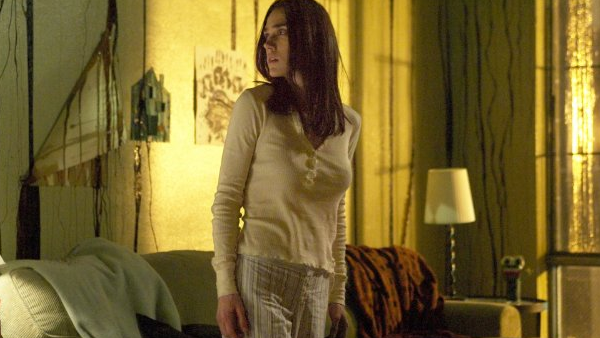
Walter Salles’ remake of Hideo Nakata’s Dark Water is a bit of a difficult one. While it’s by no means a brilliant film, compared to some of the stinkers coming up it’s more than passable but only really gets a place amongst the best remakes by definition of not being as bad as the worst remakes.
With that rather underwhelming disclaimer out of the way, there are some good parts to the Dark Water remake. The plot doesn’t deviate too much from Nakata’s original film and Salles brings his flair for dark visuals to the table crafting a convincingly brooding atmosphere. Likewise, lead Jennifer Connelly gives a sympathetic performance as a single mother dealing with not only a bitter custody battle but a spooky ghost child too and is bolstered by a solid supporting cast featuring Tim Roth, John C. Reilly and Pete Postlethwaite.
Sadly, a focus on familial drama sacrifices many of the scares that Nakata’s movie featured and substituting the original bleak ending for a wishy-washy resolution dents its impact further. Problems aside though, it’s still an above average J-Horror remake and a solid psychological horror-drama even if much of the fright factor is lost in translation.
4. The Ring Virus
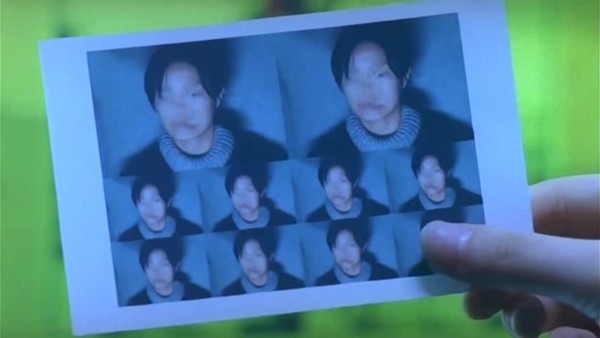
The good ole US of A isn’t the only country to tackle J-Horror. In fact, this South Korean take on Koji Suzuki’s Ring novel proves the Asian remake machine churns even within Asia itself. Released a year after Hideo Nakata’s Ringu, The Ring Virus purports to be a separate adaptation of Suzuki’s book but the similarity between certain scenes and characters suggest it may be more influenced by Nakata’s movie than its makers would like to admit.
Though fans of Nakata’s original and Gore Verbinski’s American remake might find the movie’s slower pace and plot-driven focus off-putting, The Ring Virus does feature some stunning cinematography and some interesting storylines that the other two movies don’t touch upon. Indeed, one element of The Ring Virus that veers closer to its source material is it depiction of antagonist Sadako’s (here renamed Park Eun-Suh) intersexuality, rape and murder – a theme from Suzuki’s book that both Nakata and Verbinski shied away from.
While The Ring Virus is by no means superior to Nakata and Verbinski’s films, it’s nevertheless an interesting counterpoint to the other two Ring films and worthy viewing as a non-American take on Japanese horror. If that isn’t a convincing enough argument, it’s arguably a better way to spend an hour or two than watching the disappointing remake of The Ring 2.
3. Godzilla (2014)

It might not be considered a ‘pure’ horror today, but there was a time when the creature feature dominated the genre and towering, scaly beasts were genuinely scary fare. One of the monster movie universe’s most recognisable characters is Godzilla and since his big screen debut in Ishiro Honda’s 1954 film, there have been several attempts at an American remake including that disappointing Roland Emmerich offering that most people would rather forget about.
It wasn’t until director Gareth Edwards tackled Godzilla in his 2014 reboot that Hollywood finally got it right. Edwards, who first demonstrated his talent for creature features in his cinematic debut Monsters, stays true to the spirit of the original film in both the look of Godzilla and focus on the human element of disaster but updates the movie for a contemporary audience with a new origin story and slick, modern effects.
It’s not without its foibles of course. It’s emphasis on eye candy cast members Aaron Taylor-Johnson and Elizabeth Olsen means more interesting characters like Ken Watanabe’s scientist and Bryan Cranston’s nuclear engineer are woefully underused. Though compared to Emmerich’s 1998 movie, most accurately described as Matthew Broderick aimlessly chasing a decidedly un-scary iguana-frog hybrid, Edwards’ Godzilla definitely comes out on top.
2. The Grudge

Ju-On, the franchise upon which the American remake series is based, has a lengthier background than most actually know so settle in for a brief history. The foundations of the story were laid in 1998 in two Japanese shorts by director Takashi Shimizu and revisited in two made-for-video movies before Shimizu made Ju-On: The Grudge, the film that really had people sh*tting their pants, as a theatrical sequel in 2002.
Then of course, the American remake followed but whereas a lot of remakes have opted to recruit fresh directorial blood this production, spearheaded by Sam Raimi and his company Ghost Pictures, kept Shimizu on as director. Potentially, this is what makes The Grudge a far superior remake to many of its counterparts.
The same vengeful spirits, creeping atmosphere and Tokyo setting are all still there, but certain differences – notably the introduction of American characters and the episodic narrative of the original being toned down somewhat – are included, presumably to make the whole affair more palatable and relatable for US audiences. While it certainly suffers from its fair share of Hollywoodization, The Grudge is definitely among the better remakes.
Interestingly, or perhaps regrettably as the case may turn out to be, a reboot of The Grudge is in the works with Raimi and Ghost House Pictures producing again and Jeff Buhler (The Midnight Meat Train, ABCs of Death 2) as screenwriter. Entirely new characters and ghouls are promised, but whether it will be a patch on Shimizu’s remake of his own original remains to be seen.
1. The Ring

The film that kick-started a wave of American J-Horror remakes just so happens to be the best too. Gore Verbinski’s take on Hideo Nakata’s Ringu, itself an adaptation of Koji Suzuki’s novel, retains much of Nakata’s slow-burning tone and emphasis on chills as opposed to thrills while staying true to much of the original film’s plot. In doing so, the remake succeeds where so many others have failed.
Transferring the action to other side of the Pacific, cinematographer Bojan Bazelli makes effective use of the American Northwest’s rain-soaked scenery infusing the movie with an eerie and bleak sense of foreboding that complements Verbinski’s bent for the surreal. Hot on the heels of her acclaimed role in David Lynch’s Mulholland Drive, Naomi Watts brings her acting chops to the role of a journalist and single mother determined to solve the mystery of the cursed videotape before it claims her son whose increasing desperation matches the film’s feeling of mounting dread.
If there’s an element that falls flat in Verbinski’s take, it’s that evil spirit antagonist Samara’s face is shown throughout the film. Arguably it’s Nakata’s incarnation, named Sadako in the original, whose face is almost always obscured by hair that packs more of a sinister punch. It’s symptomatic of a general trend in American remakes of Asian horrors for overtness over subtlety, but thankfully in The Ring it’s largely limited to this one difference.
5 Worst
5. Pulse
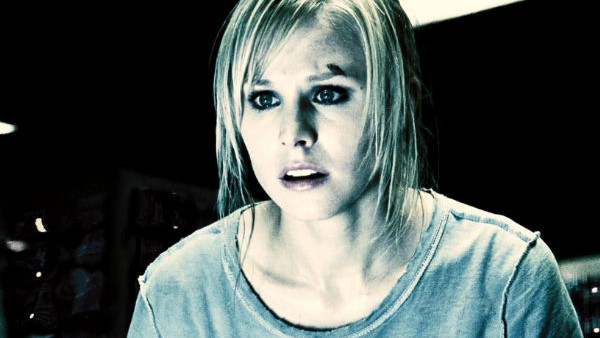
Admittedly, the idea of a film based on ghosts invading the human world via the internet and using a webcam site to compel living folk to commit suicide might sound silly rather than scary, but in the hands of acclaimed Japanese director Kiyoshi Kurosawa it’s nothing short of brilliant. Not only a genuinely original and creepy film, his original Pulse – better known as Kairo in Japan – also incorporates an unnervingly accurate commentary on how a technology intended to inspire connectivity can actually cause alienation instead.
Shame then that director Jim Sonzero, whose dubious past credits include directing a Mariah Carey music video, produced a piss-poor remake that largely disregarded the message and emotion of the original in favour of a simplified storyline and cringeworthy jump scares. Star Kristen Bell, possibly the only saving grace of the remake, tries her best but can only do so much in what is ultimately an utterly pointless remake that ended up barely turning a profit.
Interestingly, co-screenwriter Wes Craven was originally set to direct the remake. One can’t help but wonder how the film might have fared better in the hands of a true horror aficionado like Craven.
4. One Missed Call

As one of the more derivative Japanese horrors out there, Takashi Miike’s One Missed Call has been described both as a cannibalisation of J-Horror tropes that came before it and a clever, self-knowing parody of an increasingly saturated genre. Whatever Miike’s intention the movie’s focus on technology as a tool for evil, in this case mobile phones, certainly shares some similarities with Ringu’s use of videotape and Pulse’s focus on the internet. Still, while it doesn’t hold a candle to Miike’s disturbingly brilliant horror Audition, the original One Missed Call is practically a masterpiece compared to its lacklustre American remake.
Lacking any of the visual style, black comedy and dread Miike infused his original film with, the remake ambles along uninterestingly offering only a slightly more enjoyable waste of an hour and a half than watching paint dry. It looks like distributors Warner Brothers sensed they had a flop on their hands too and consigned the American take on One Missed Call to a January dump month release date.
Widely regarded as one of the worst J-Horror remakes to ever disgrace the big screen, One Missed Call was given a pretty much universal panning from critics after its release. It ended up receiving the dubious accolade of a 0% rating on Rotten Tomatoes, thus earning itself a not so coveted Mouldy Tomato Award in the process. Give it a miss if you want to avoid abject boredom.
3. The Uninvited

Kim Jee-woon’s folklore inspired movie A Tale of Two Sisters is a darkly surreal exercise in psychological horror boasting a labyrinthine plot and distinctly arthouse aesthetic. As the first South Korean horror to be screened in American cinemas and one of the highest-grossing K-Horrors of all time, the movie not only put the K-Horror genre truly on the map but also scooped a host of international film awards.
Unfortunately, the American take on the tale made by British fraternal directing duo the Guard Brothers is none of the above. Abandoning the original’s abstract narrative and twisted twist ending for a more Westernised horror structure made The Uninvited’s plot much more predictable and less jarring than its predecessor. Marketing the film at a teenage audience didn’t help either, with much of A Tale of Two Sisters’ effectively gory visuals sacrificed in the quest to secure a non-offensive PG-13 rating.
Whereas an adolescent-friendly rating didn’t necessarily hurt the American remake of The Ring, most likely due to its supernatural rather than gore based elements, for a remake whose original featured such iconic bloody visuals it certainly reduces the film’s capacity to impact. A lesson in how not to adapt Asian horror movies indeed.
2. Shutter
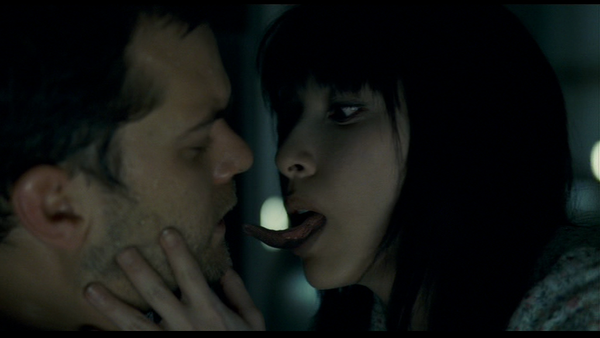
Japan and South Korea might be the more renowned producers of Asian horror movies but that’s not to say that other nations, Thailand included, don’t have a burgeoning horror scene too. One of Thailand’s best known offerings is Banjong Pisanthanakun and Parkpoom Wongpoom’s joint feature debut Shutter. an effectively chilling tale of rape-revenge in a supernatural context.
Curiously transferring the action not to America but to Japan – presumably due in part to director Masayuki Ochiai’s nationality and the fact that J-Horror tropes have proved popular and profitable with Western audiences – the Shutter remake stars Joshua Jackson as a photographer with a dark secret on assignment in Tokyo with his new bride. Interestingly it raked in an impressive profit of almost $48 million on a budget of just $8 million, but as we know good box office performance isn’t necessarily an indicator of quality.
If props must be given to the Shutter remake it’s in the movie’s staying mostly true to the original’s plot, but it lets itself down when it comes to characterisation. Whereas the Thai version’s male protagonist expresses some regret at his bystander role in a young woman’s rape and subsequent suicide, Jackson’s character Ben comes off as unlikeable, arrogant and a victim blamer.
Thankfully, apart from a middling remake of 13: Game of Death by Daniel Stamm in 2014, Hollywood has largely left Thai horrors alone since.
1. The Eye

A creepy little Hong Kong-Singaporean film by the Pang Brothers about a young, blind violinist who starts seeing mysterious ghostly figures following a successful cornea transplant that restores her sight, The Eye is an eerie slow-burner that charmed critics both in its homeland and worldwide. The remake, despite being directed by David Moreau and Xavier Palud who suitably freaked out audiences with their 2006 French-Romanian horror Them, is pretty terrible to put it bluntly.
Even star Jessica Alba’s gorgeous chops couldn’t save the film from being anything but a vapid, non-scary waste of its $12 million budget. Gone are the cultural connections and pathos of the original, swapped for slicker but nonetheless unremarkable Hollywoodized production values. Gone too is the chemistry between original leads Angelica Lee and Lawrence Chou, replaced by Alba and co-star Alessandro Nivola who have about as much chemistry as two planks of wood.
Yet another American remake whose scare factor is watered down by a PG-13 rating, Moreau was reportedly so disappointed with the end result that he even deliberated taking his name off the film. No doubt a sentiment felt by other cast and crew, including Alba whose performance earned her a Golden Raspberry nomination.
Which of these do you think deserves to be considered the best and worst? Share your reactions below in the comments thread.