4 Ways X-Men Film Franchise Showed How To Do A Prequel (And 4 Ways They Messed It Up)
 Im one of those pedants wholl argue that though The Dark Knight is a better film based on a technical and objective perspective, X Men: First Class is an infinitely better comic-book movie. Theres nothing wrong with that. Released in 2011, almost a whole year before The Avengers, it showed that ensemble superhero pieces could work, period superhero pieces could work and that sometimes, Polish concentration camp survivors could have Irish accents and no one would question it. Its a great way to spend two hours and it wasnt hard re-watching it a couple of times to supplement this article. And then theres X Men Origins: Wolverine, which isnt a great way to spend two hours and it was certainly hard re-watching it. So many good ideas and characters gone to waste Deadpools first film appearance will always and forever be this movie. Let that sink in for a minute. Like Doctor Whos journeys through time, the potential of Wolverine is immeasurable and being hopefully better used in the upcoming reboot, The Wolverine. He could have gone anywhere in the world and seen anything in this film. The mysteries surrounding the X-franchises 'favourite' character could built upon and explored. Hes an immortal Canadian born in the 1840s, played by an all-singing all-dancing Australian. What could go wrong with a film focusing on that? As we found out, everything. X-Men: First Class and X-Men Origins: Wolverine both came from the same studio and the same source material. They shared actors and a sequel trilogy. How did it come to pass that First Class is still a solid film today with an upcoming sequel, whilst Wolverine has been pushed to the back of the shelf and already rebooted? In a world of prequels, sequels, interquels and reboots, is there anything truly original left to say? What can we learn from the best and worst of the X-Men Franchise? How To Make A Prequel
4. In A Period Setting, Use The Period Its Set In
 I am a massive fan of the designs and events of the 1960s so when I heard about First Class, I was nearly catatonic with happiness. The film is by no means accurate - set in 1962, Moira and Raven wear miniskirts that weren't truly invented until 1964 and only popularized in 1965, for example - but by setting it in 1962 they make use of one of the defining moments of the Cold War, the Cuban Missile Crisis, which took place over about two weeks of October, albeit with months of build-up. This is interwoven throughout the film - Shaw is seen setting up both the international environment that caused Russia to want to place the missiles in Cuba as well as exacerbating the crisis itself, by having his mutant henchman kill the crew of the missile boat so it won't turn back under orders. First Class also echoes the social changes present at the time, mostly the civil rights movement and women's liberation. As it always has been with the franchise, the existence of mutants can be see an as allegory for the civil rights movement and race relations, though officially the comic and films have applicability and so draw parallels with other marginalized groups such as the LGBTQ community. The film also uses the institutionalized sexism of the 1960s as a plot point - continually Moira is discredited and ignored due to her gender and this does nothing but help Shaw's plans. After Xavier manipulates her mind into forgetting about the X-Men (which she names), she is eventually sent "back to the typing pool," and told the CIA is "no place for a woman." On a lighter note, the film also echoes the feel of films of the 1960s; James Bond and pulpy sci-fi. Fassbender declared that his role was a movie-length James Bond audition, January Jones as Emma Frost dresses like every 1960s pinup at once. The brilliant closing credits in the film are directly influenced by Doctor No. Overall, First Class is a film set in the 1960s, about the 1960s, that could have been made in the 1960s. First Class doesn't just 'happen' to be set in the past, which is the mistake of a lot of prequels. It uses as many aspects of a carefully chosen era as it can to make a coherent and entertaining film.
3. Links Dont Need To Be Tangible
 A mistake a lot of prequels make is thinking that the best way to link back to the main franchise is through repeating actors or characters Im looking at you, Star Wars. You can count the number of main reoccurring characters in First Class on one hand and the number of reoccurring actors on the other. The other ways of linking back to the original trilogy are varied. There are the repeated settings and props of Xaviers mansion, the prototype Blackbird plane, Charles chair, Shaw and Magnetos helmet. First Class also creates links through themes and character development and design styles. Of course there are the fabulous five-second cameos of Rebecca Romijin and Hugh Jackman. But the repeated themes of isolation, hiding vs. revealing, a separate mutant society or assimilation give First Class the same overall feel as the original trilogy. Design wise, we have the repeat opening of coin or object rotating to reveal the X-Men symbol. Charles first turn in Cerebro uses a similar sequence to how Professor X in the trilogy sees the minds around him in the machine. Ravens scales are the same but move slower and are larger to hint that she is less adept at shape shifting. One of my favourite links, and indeed, jokes in the entire franchise, hinges on Xaviers speech regarding the importance and his amazement at mutation. In the original trilogy, it opens the first film, setting up Professor X as a character of great wisdom, intelligence and gravity. In First Class, its his pickup speech at a university bar. This links the two films strongly and tells the audience that yes, this is Charles Xavier, but he has a long way to go before hes Professor X. Even at the end of First Class, its still a long walk (roll?) ahead of him. In short, links dont always need to be namedrops and characters jammed into roles that dont suit. You can be subtler than that.
2. Pick An Approach To Continuity (And Stick With It)
 Right from the get-go, director Matthew Vaughn had a clear approach to fitting First Class in with the continuity of the original trilogy and consistently stuck with it through the script. As with comic books approaching earlier editions of their franchise, he took a broad strokes mentality. It was a prequel, but it was also a reboot. In other words, never let the original canon get in the way of a good story. That said, the minds behind First Class obviously still have respect for the original trilogy and so this is seen in their characterization of young Erik, Charles and Raven. Though the events they go through in First Class were not imagined as part of their back-story in the original trilogy, and yes, go against things said in those films, the seeds of their behaviour and decisions in the trilogy can be seen in First Class. The original trilogy at times contradicts itself for example, in the background of X-Men United, we see Dr. McCoy, fully human and on the television, whereas in X-Men: The Last Stand hes played by Kelsey Grammar and noticeably bluer.
 By openly taking a broad strokes approach, the minor toe-stepping and canon violations usually created by throwaway lines Erik and Charles dont meet when Charles is 17, Erik doesnt build Cerebro - can be ignored except by the most pedantic fans. This is an approach Id like to see more in a world becoming increasingly filled with prequels. The teeth gnashing that occurred after the announcement of Monsters University when, a single line in Monsters Inc. was supposedly violated as Sully and Mike were shown meeting at college rather than in fourth grade. It was almost instantly quelled when Pixar told fans to simply get over themselves or pretend it was a monster-world expression. Never let the truth get in the way of a good story. More of that please.
1. Pick The Story That Needs To Be Told
 I read the leaked script for X-Men Origins: Magneto, eventually scrapped in favour of First Class. It wasnt terrible. It wasnt good. It was unremittingly, utterly and completely, totally average. As First Class eventually proved, we didnt need to see every instant of Erik Lehnsherrs life to understand it. We go from 1945 Erik, a boy frightened of his own power and terrified of Shaw, to 1962 Erik, a blank and remorseless killer. We know hes killed dozens in the interim Nazis and their sympathizers, presumably. Some believe he joined Mossad to get trained in killing, though judging from Fassbenders accent choice, Im more in favour of the IRA. Regardless, we know he is to be feared. Hes similar to the Magneto we see in the original X-Trilogy, with one notable thing missing. Its the presence of Charles Frances Xavier. We know that the history and relationship between the two is complex, multi-faceted and fascinating (and judging from the fanfic, kinky as heck). The emotional core of the film is the relationship between Charles and Erik, and then the brother-sister relationship between Charles and Raven. By telling a story that the audience already knows the ending of, the film becomes a tragedy. We know that Charles youthful enthusiasm and beliefs will be dashed aside. Erik will reject Charles and eventually become the bitter villain of X-Men and even 40 years later mutants will still live on the fringes of society. This was the story that needed to be told not X-Men Origins: Magneto, or X-Men Origins: Professor X. Besides the emotional core of the movie, X-Men films have always functioned as ensemble pieces with varied side characters. So these elements, a dash of tragedy and a heap of foreknowledge, result in an excellent prequel and all-round decent film. So what went so wrong with X-Men Origins: Wolverine? Click "next" below to continue reading 4 ways how not to do it;
And How Not To Do It
4. Pick An Approach To Continuity (And Dont Stick With It)

3. Listen To The Fans (Or Rather, Dont)
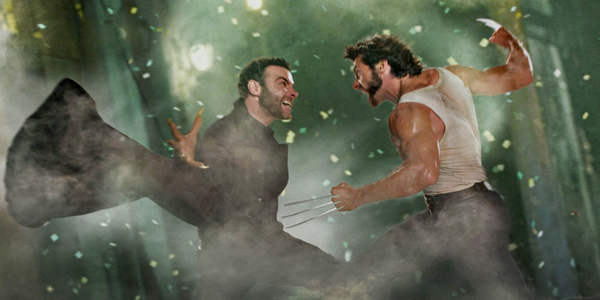 If theres one piece of evidence that supports the argument that fans shouldnt be given control over the media they love, its a name: Steven Moffat. Theres a difference between what fans want and what fans need. They want their favourites with funky powers and substantial roles. They want nods and references to the original comics and other films and obscure corners of canon. They want Dean and Castiel to hook up. What fans need isnt as simple, easy or clear-cut. They need solid stories, character development and a strong cast first, to feed what they create (what they want) out of the media; fanfiction, graphics, fanvids, articles about the media on dorky websites. Unfortunately, Origins forgot about this and was altogether too generous when as a film, it didnt have what it needed to back it up. Gambit? Sure, well fit him in! Sabretooth? Ok! Vaguely anti-war, anti-government message? Alright! Patrick Stewart? Yep! Deadpool? Um, hell yeah! Theres no reason as to why Gambit is there, or why it had to be Scott Summers who was captured, and we ended up sitting in a theatre thinking three things Why is will.i.am in this movie? 2. Ryan Reynolds as Deadpool! 3. Thats Deadpool? People have been asking for a movie about Deadpool for years, but any film focusing on him is going to be exceptionally hard to pull off well. This wasnt the film for it in any way, shape or form. Too late now. In short, just because fans want you to do something, doesnt necessarily mean you should. 2. Repeat Yourself (Or Rather, Dont)
 Logan falls in love with a mysterious, intelligent woman with psychic powers. For reasons beyond their control he loses her and thinks her gone forever. At the end she redeems herself to him and dies, with a hell of a lot of collateral damage. Am I talking about Jean or Logans love interest in Origins, Kayla? Sure, details and side characters mean they do play out in different ways, but after three films of a Logan-Jean-Scott love triangle, did we really need another film of Logans-lost-love-is-a-psychic (but-sane-this-time)? Surely the opening montage of Logan and Victor battling their way through 150 years and historys most famous wars could have made an excellent film in its own right, a mediation of the nature of humanity and perhaps proving Magneto right, that humans will always fight and resort to violence? What could that much violence do to a persons psyche? Strykers mutant special Ops team and their actions, Logans realization at how hes turned down a darker path leads him on a quest for redemption where he takes the team on solo, or with Victor? Where an earlier version of the X-Men team assists him? Either way, we get cameos from fan-favourites, characters from other eras of the canon (but we can avoid 1980s-era Dazzler) and avoid repeating a story weve already seen played out, and one that ends in a very similar manner. Noting is worse than sitting in a theatre and watching a much better film pass you by in montage and time skips, in favour of a convoluted love story.
1. Fit In With The Original Franchise (Or Rather, Dont)
 Id wager that there are more bullets fired in the first 30 minutes of Origins than there are in the entirety of the first X-Men film. In Origins, Logan and Victor spend time fighting their way round the world with a group of mutants with potentially any powers possible. Yet all they do is shoot and stab. Origins is an action film masquerading as an X-Men film. You cannot be both. Logan wanders from set piece to set piece, war to war, explosion to explosion (which he then walks unflinchingly away from). Gone are the meditations on the nature of humanity and differences, the meaningful and believable side characters with varied connections to each other. They do not link to the franchise beyond titles and characters clumsily forced in. Origins is violent, bloody and a complete mess as both a film and a prequel. The only redeeming factor is shirtless Hugh Jackman, and guess what? I can see that, and him in tight leather, in all three films of the trilogy. And even after all that, I have exceptionally high hopes for X-Men: Days of Future Past, and a good feeling about The Wolverine. Its going to be fun. Bring it on.