22 Things You Didn't Know About James Bond
 From 1962s Dr No to the upcoming Skyfall, James Bond films have been guaranteed to thrill us, grip us, make as laugh and keep us on the edge our seats. And with the plethora of information available in books, on the DVDs and Blu-rays, and in the new cinema documentary Everything or Nothing, there isnt a lot left to be said about Britains foremost secret agent and his cinema exploits. Undaunted, here I present 20 things that you probably dont know about the James Bond films surely even the most ardent fan will find a few unfamiliar factoids here. They are presented roughly chronologically, so lets begin with the very first Bond
1. The First Cinematic James Bond Was Bob Simmons
 The first actor to play James Bond was Barry Nelson (who actually played CIA Agent Card Sense Jimmy Bond) in a fairly lack-lustre and under budgeted CBS television adaptation of Ian Flemings first James Bond novel Casino Royalebroadcast in 1954. Felix Leiter, an American agent in the novels and future movies, was turned English and renamed Clarence and none other than Peter Lorre played Le Chiffre. It apparently vanished without trace, so that in 1962 when Dr No opened in cinemas with Sean Connery playing 007, many audiences were introduced to James Bond on screen for the first time. But thats not Connery doing the walk-turn-and-shoot in the gun barrel opening sequence designed by Maurice Binder, its stunt-man Bob Simmons, concealed under a trilby hat and shot in near-silhouette. Thus, he rightly becomes the first man to play James Bond in a movie. And lets not forget, he was also preceded by Bob Holness yes, that Bob Holness in a South African radio production of Moonraker in 1956.
2. Thats Not What Ursula Andress Sounds Like. Or Daniela Bianchi. Or
http://www.youtube.com/watch?v=UsoSehimrsE Ursula Andress was inspired casting as knife-wielding Honey Ryder in Dr No, but the actresss strong Swiss accent was seen as an issue by the producers, and so all of her dialogue was re-recorded by Monica van der Zyl, with Diana Coupland providing her singing voice. Amazingly, the same problem arose in the following film, From Russia With Love, in which Daniela Bianchi is revoiced by Barbara Jefford. And in the third film Goldfinger, wherein the eponymous villain played by Gert Frobe had all his dialogue redone by Michael Collins. In fact, in every one of the first six Bond films, at least one major character is revoiced. In On Her Majestys Secret Service, George Lazenbys voice is overdubbed by George Baker whenever Bond is impersonating Hilary Bray.3. James Bond Is A Killer
http://www.youtube.com/watch?v=btjBvrly2aI&feature=related The justly-famous scene in Dr No in which Bond coldly shoots Dent in the back (Thats a Smith and Wesson. And youve had your six.) was shockingly brutal for the protagonist of a film in 1962. Audiences were quite unused to supposedly heroic figures executing a defenceless man in this way. Imagine the outcry if the scene had been passed uncut by the censors. In the original cut submitted to the BBFC, Bond shoots more bullets into Dents body as he lies dying on the floor. The cuts were made to the negative (as was the norm in the 1960s) and so the cut footage no longer survives.4. Pussy Galore Was Oder Than James Bond
 In 1964, when Goldfinger was released, Sean Connery was a youthful 34. But that same year, Honor Blackman, who played Pussy Galore, turned 39. Not only is she the oldest-ever Bond girl (second oldest is Maud Adams in Octopussy) she is one of only two Bond girls to be older than the actor playing Bond. The other is Blackmans successor in The Avengers, Diana Rigg, who was 31 when On Her Majestys Secret Service was released, playing opposite 30-year-old George Lazenby.
5. Thunderball Was The first James Bond Screenplay
 The story of Thunderball is incredibly complicated. Heres a very brief summary. In 1958, wannabe film-producer Kevin McClory contacted Ian Fleming regarding James Bond and suggested that they collaborate on a James Bond screenplay. With various other writers in the mix, they developed a story involving Blofeld and SPECTRE holding the world to ransom, but the project never got off the ground and Fleming, perhaps unwisely, reused the basic storyline for the novel Thunderball for which he was credited as the sole author. When Harry Saltzman and Albert R Broccolis James Bond movie series was well underway, with Sean Connery as 007, McClory began demanding that he should be involved, and so a deal was done to film Thunderball with him as producer (at least in name). That didnt pacify McClory who continued to litigate against Eon Productions essentially until his death, eventually producing a rival Bond film in 1983 when Never Say Never Again (a remake of Thunderball, being the only Bond work McClory had any claim on) with Sean Connery went up against Roger Moore in Octopussy. Moore just edged a win, with his film taking $68m in the US, against $55m for the rival. Thunderball meantime, although not rated highly by many critics, was the highest-grossing Bond movie to date and, adjusted for inflation, is the most successful Bond movie ever by quite some way. It sits at number 28 on Box Office Mojos list, with the next most successful Bond movie, Goldfinger, languishing at 42 and nothing else in the top 100.
6. You Only Live Twice Was Written By Childrens Author Roald Dahl
 The first four movies are fairly straight adaptations of the Fleming novels they share a name with, but the producers struggled to wring anything cinematic out of the book You Only Live Twice in which an amnesiac James Bond becomes a peaceful Japanese fisherman having set out on a mission of revenge to kill Blofeld, who murdered his wife Tracey in the previous volume. Richard Maibaum, who had worked on the previous four films was unavailable, and so Roald Dahl who knew Fleming well was offered the job. Dahl created a brand-new story from scratch, retaining just a few character names and the Japanese setting from Flemings book. A short time later, he wrote the screen adaptation of Ian Flemings childrens book Chitty Chitty Bang Bang and these remain his only produced screenplays (with the exception of Willy Wonka and the Chocolate Factory which was largely rewritten behind his back). This approach became the norm with the exception of the next film, On Her Majestys Secret Service, which is such a faithful adaptation of the book that Blofeld fails to recognise Bond, even though in the movie series they have already been face-to-face.
7. Blofeld Has Been Played By Seven Different Actors

8. Bond Is A Killer (ii)
 The Guardian recently published a lovely infographic, in the style of the Dr No title sequence, lovingly enumerating the body-counts in the various films. In total 196 deaths occur in You Only Live Twice, making it the most blood-soaked entry by this reckoning, with The Spy Who Loved Me second with 147. But Bond is only responsible for a small proportion of those. The movie in which Bond has the most kills is 1995s GoldenEye Pierce Brosnans first outing in which he killed 47. In fact Brosnan is the most bloodthirsty Bond by a considerable margin, with a total of 135 kills over four movies. Neither Roger Moore nor Sean Connery, with many more movies each, can stack corpses higher than 100. The least deadly film is The Man with the Golden Gun, in which Bond kills only Scaramanga, and only five other deaths occur.
9. Purdey/Patsy Was Also A Bond Girl
 Completing the Avengers hat-trick, in On Her Majestys Secret Service which features Diana Rigg (Mrs Peel) as Bonds ill-fated bride Tracey, a young Joanna Lumley also appears as one of Blofelds Angels of Death. Joanna Lumley would later go on to star as Purdey when The Avengers was relaunched in 1976 as The New Avengers alongside Gareth Hunt and original star Patrick Macnee (who also appeared in Roger Moores last Bond film A View To A Kill).
10. Sean Connery Was Bribed Back In To The Role of Bond
 During filming of You Only Live Twice, Sean Connery was thoroughly disgruntled with the role of James Bond, the invasion of privacy which came with so public a part, and what he saw as greed on the part of producers Harry Salzman and Cubby Broccoli. He quit and the part was recast with inexperienced Australian model George Lazenby as 007 in On Her Majestys Secret Service. When Lazenby declined to return, United Artists who bankrolled the movies, felt that they needed Connery back in order to continue the series, but UA president David Picker saw that relations between star and producers were so poor that they stood no chance of tempting him back. Picker flew out to meet with Connery personally and made him the following astonishing offer. He would return for one more Bond movie produced at UA by Salzman and Broccoli (Diamonds Are Forever), in exchange for which he would receive a fee of £1.25m (a colossal sum in 1971) and UA would green-light any two films of his choosing, with a guaranteed budget of up to $1m. Only one of these films (The Offence directed by Sidney Lumet) never saw the light of day, and Connery donated his preposterous fee to charity.
11. Roger Moore Is Not James Bond
 Despite being resolutely English and therefore far closer to the literary version of the character (Ian Fleming only gave the Bond of the books Scottish heritage after Connery was cast), the character which Roger Moore plays in Live and Let Die departs from the established mould in all sorts of little ways. Most of these were deliberate on the part of the producers. The plan with Lazenby had been to try and make viewers believe they were still watching Connery. It didnt work, and so the plan here was to avoid comparisons wherever possible. So, although Q-branch provides Bond with a magnetic watch, there is no scene with Q himself. Although Bernard Lee appears as M, we are in Bonds home for the briefing instead of MI6 headquarters. Bond no longer smokes cigarettes, instead Moore puffs on his preferred cigars. He is never seen in a tuxedo and doesnt drink a single vodka martini in the entire film. Over the twelve years and six films which followed, Moore was allowed to do all these things, and his unbroken run of movies still gives him the record as the longest-standing actor in the role possibly because of these canny decisions in his first outing.
12. Ian Fleming Stipulated That The Plot of The Spy Who Loved Me Could Not Be Used By Movie-makers
 Written towards the end of the series, and just about the time that the movies were coming out, the novel The Spy Who Loved Me sits very oddly in the Bond canon. Even more peculiar than the demented You Only Live Twice, its a first-person narrative about a young woman named Vivienne Michael who undergoes a sexual awakening in the company of two different men in turn. She then ends up working in a remote American motel and is terrorised by a pair of mobsters, until finally a mysterious British Secret Service agent turns up to save her. On signing the rights over to all the Bond novels, Fleming insisted that only the title of this, his ninth Bond novel, could be used by movie-makers and none of the story. As they had done with four out of the previous five films, the producers commissioned an entirely new story. Although bits-and-pieces of Fleming novels would turn up from time to time, it wouldnt be until Casino Royale in 2006 that anything remotely resembling an adaptation would be attempted again.
13. Roger Moore Doesnt Get His Feet Wet
 By the time of For Your Eyes Only, commentators were beginning to notice Roger Moores age. 53 at the time of filming, Moore was considerably older than the Bond of Ian Flemings books and certain adjustments had to be made. When skating ingénue Bibi (Lynn Holly-Johnson) turns up in Bonds bed, its required that he paternally turn down her invitation since shes 30 years his junior. (In fact, Carole Bouquet playing the main Bond girl Melina Havelock is slightly younger still, but she doesnt actually get to go to bed with Bond either until they go skinny-dipping together as the end titles roll.) As with Thunderball before it, a lot of the movie takes place underwater, and Eons team of stunt divers and camera operators were on hand to capture the action, both in the tank at Pinewood Studios and in an underwater set in the Bahamas. But Roger Moore and Carole Bouquet never made it in the water. The reasons for this are unclear. Some sources claim Carole Bouquet had some mysterious illness which prevented her from being safely submerged. Others say she simply couldnt swim. Ive also heard it suggested that the insurance company wouldnt allow the 53-year-old male star to spend days underwater in scuba gear. Regardless, all of the close-ups of the lead actors, supposedly exploring the depths, were faked on a dry sound-stage with a combination of filters, fans and slow-motion photography.
14. Minister of Defence Is A Job For Life
 Sadly, Bernard Lee who had played M in every movie from Dr No to Moonraker was too ill to reprise the role for a twelfth time in For Your Eyes Only and so a pair of characters Bill Tanner, played by James Villiers and Minister of Defence Frederick Gray, played by Geoffrey Keen are deployed to handle Bonds briefing. Various other Bill Tanners pop up later (hes a minor character in several of the Fleming novels) but although he was keen to be promoted to the post of M, Villers did not appear again. Following Bernard Lees death, the role was recast with Robert Brown who had previously played Admiral Hargreaves in The Spy Who Loved Me, leading some fans to conclude that this was the same character, now promoted. Geoffrey Keen on the other hand, had already played Frederick Gray in the two previous films, The Spy Who Loved Me and Moonraker, and was now embraced into the Bond family, appearing as the Minister of Defence in this and three subsequent films. Given that The Spy Who Loved Me was released in 1977 and The Living Daylights in 1987, that means he lasted over ten years in office, surviving three general elections, two prime ministers and a change of ruling party!
15. Working On The James Bond Films Is Also A Job For Life
 The Bond Family is a well-documented phenomenon, literally as well as figuratively. It is Cubby Broccolis daughter and step-son who currently control the franchise, but Bond contributors in front of and behind the camera are very apt to get rehired. Three people are credited on every single official James Bond movie: Cubby Broccoli, Ian Fleming and Monty Norman who composed the famous James Bond theme although John Barrys arrangement contributed enormously to its success and its easy to see which composer the producers preferred as Barry was rehired for 11 subsequent movies and Normans services were never called-on again. But while Norman only worked on one movie and Fleming never actually worked on any, Broccoli was producer, or co-producer of the first 17 movies, taking a back-seat for GoldenEye and sadly passing away during production of Tomorrow Never Dies. Other names which crop up again and again in the Bond credits include writer Richard Maibaum who contributed to 13 different scripts, designer Peter Lamont who worked on 12 different movies, redoubtable Lois Maxwell who played Miss Moneypenny for an unbroken run of 14 movies and Maurice Binder who designed the titles for 14 also. But its Desmond Llewelyn as Q who can really challenge Broccoli himself, matching his total of 17 movies in which he played the gadget-master head of Q Branch. He appears in every movie from From Russia With Love to The World Is Not Enough, opposite five out of six of the Bond actors.
16. James Brolin is Not James Bond. Nor is Sam Neil. Nor is Mel Gibson. Nor is
http://www.youtube.com/watch?v=LhkUWMJoccQ Roger Moores initial contract was for three movies, covering Live and Let Die, The Man With The Golden Gun and The Spy Who Loved Me. Especially following the enormous success of Spy, Moore realised that by signing another multi-film contract, he was giving up a significant bargaining chip, and so he only ever signed for one movie at a time, insisting that the producers renegotiate anew every couple of years. Probably for that reason, in between movies, producer Broccoli made sure that there was a steady stream of able and rugged young actors who passed through the gates of Eon Productions and United Artists, eager to try out for the role. James Brolins screen-test can be seen on the Octopussy DVD and Sam Neill can be seen on The Living Daylights. Michael Billington (Sergei in Spy) tried out after Moonraker and so did Lewis Collins (Who Dares Wins). Many other actors have been linked with the role at various times also including Mel Gibson (Lethal Weapon), Michael Jayston (Doctor Whos The Valeyard), Ian Ogilvy (Moores successor as The Saint) and even Patrick Mower (Rodney Blackstock in Emmerdale). If some of these seem bizarre, then consider that approaching them may simply have been an effort to persuade reliable, bankable, popular Roger back for one more go. Of course, that approach eventually created its own problems Moore was 58 when his last Bond film A View To A Kill was released.17. Pierce Brosnan is not James Bond
 With Moore having finally departed following his defeat of Max Zorin, the hunt was on for a new Bond and one actor was already in the cross-hairs. Pierce Brosnan had visited the set of For Your Eyes Only when his first wife (Cassandra Harris) was playing a modest part opposite Moore. Seeing the handsome and strapping Irishman, Broccoli commented that he might have already found Moores eventual successor. In the years that followed, Brosnan found fame on American television with the sprightly caper series Remmington Steele on NBC. After four years, the series had reached the end of its run and Brosnan was tremendously excited to be offered the role of James Bond for The Living Daylights. Despite having officially cancelled the series, on paper NBC had 60 days to pick up the option on Remmington Steele and aware of the new buzz around their star, thanks to 007, they eventually recommissioned the series on day 60. Brosnan was devastated, even more so given that the new series of Steele was actually six one-off TV movies instead of a full order of 22 episodes. He ruefully concluded that he would never be James Bond.
18. Americans Do Know What Revoked Means
 Timothy Daltons second (and final) Bond film was shot under the title Licence Revoked and draft designs for publicity material can be seen with this name. But a change was made at the last minute to the more familiar but less pertinent Licence to Kill and many in the UK crowed and mocked when it was revealed that this was because Americans surveyed for the titles appeal had no idea what the word revoked meant. As pleasing as the image is of a monumentally stupid American hick, struggling with basic vocabulary especially to urbane British movie-goers who secretly think they share James Bonds savoir-faire the story isnt really true. What is true is that in America, the phrase licence revoked is almost exclusively associated with losing a drivers licence and producers felt that James Bond called to account by the California Department of Motor Vehicles wasnt quite in keeping with the image they were trying to promote.
19. "Goldeneye" is Ian Flemings House
 Although only the first four, plus On Her Majestys Secret Service, and at a push Casino Royale, are in any way adaptations of books by Ian Fleming, almost all the Bond films take their titles from works by Bond's literary creator. The book For Your Eyes Only is a collection of short stories, which includes From A View To A Kill, and Quantum of Solace. Octopussy and The Living Daylights, likewise are Fleming short stories and Licence To Kill was the phrase coined by Fleming to justify Bonds government-sanctioned murders. Finally, The World Is Not Enough is identified as the Bond family motto in the book and film On Her Majestys Secret Service. Only Tomorrow Never Dies, Die Another Day and Skyfall have no connection to Ian Fleming at all, leaving GoldenEye as the odd one out. Goldeneye (without the capital E) is not anything which Ian Fleming wrote, but it is the estate in Oracabessa, Jamaica, in which he wrote many of the novels. His next-door neighbour was Noel Coward and the next inhabitant of the estate was Bob Marley.
20. Halle Berry Is The Only Oscar-winning Bond Girl (depending on how you count)
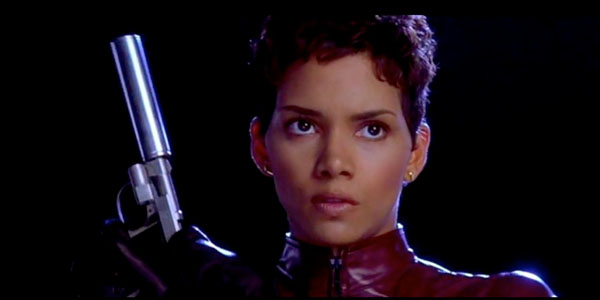 Especially when Roger Moores salary was climbing (see 14), producers tended not to spend production money on star names to play his leading ladies. Villains were quite often recognisable box office names Christopher Lee, Julian Glover, Louis Jordan were all familiar faces and Christopher Walken had won an Oscar for The Deer Hunter. In the 90s and 2000s, both chief villain and lead female tended to be more well-known. Teri Hatcher and Jonathan Pryce shared the screen in Tomorrow Never Dies and so did Sophie Marceau, Robert Carlyle and Denise Richards in The World Is Not Enough. But in Die Another Day, the Bond team scored a tremendous coup, signing Halle Berry to play NSA agent Giacinta 'Jinx' Johnson. After she was cast, but before the film was released, Berry won Best Actress at the 74th Academy Awards. Whether or not she is the only Oscar-winning Bond girl crucially depends on who you count as a Bond girl which in turn depends on what you count as a Bond film. Obviously, Judi Dench doesnt count, but if you include Never Say Never Again, then Kim Basinger is clearly the leading female performer and she won the Academy Award for Best Supporting Actress for her role in LA Confidential in 1997.
21. Pierce Brosnan Was Fired Because of 9/11
 In the new cinema documentary Everything or Nothing, Barbara Broccoli and Pierce Brosnan have talked for the first time about the reasons why Brosnans contract was not renewed after Die Another Day. Although some aspects of the film the reliance on CGI, the invisible car and the lacklustre villain failed to find favour with Bond fans, the movie was an enormous box office success, as were all of Brosnans outings. At 49, Brosnan probably didnt have too many more Bond films in him, but the failings of his last movie had nothing whatever to do with the actors age. Many were surprised when he was not invited to return (Quentin Tarantino had repeatedly expressed a desire to shoot an adaptation of Casino Royale starring Brosnan as 007), and legal problems put the franchise on hold for four years. In the documentary, Barbara Broccoli reveals that the horrific sight of the devastation of New York on 11 September 2001 jarred with the breezy violence they were so lucratively depicting in the Bond movies. They knew a complete rethink was required and even though they had no idea what new direction the series was going to take, they did know that they couldnt continue with Brosnan in the leading role. These decisions are almost never made publicly, for perfectly good reasons, but Brosnan is arguably the only James Bond actor to have been fired rather than leave the series of his own accord. His four movies collectively grossed around $1.5bn at the box office an astonishing number which pretty much any film series would envy (the four Bourne movies, by comparison, grossed around $1.2bn).
22. Casino Royale Is The Longest Bond Movie
 Whereas Brosnan had long been seen as Bond-in-waiting (see 15), Daniel Craigs casting as Bond was met with outrage. Campaigns, websites and lobby groups were set up to protest the choice. And yet his first Bond movie Casino Royale is now seen as one of the very best in the entire run (it has a 94% rating at Rotten Tomatoes). For the first time, the series is rebooted, entirely abandoning the previous continuity (not that that had ever been a big concern) and the film depicts a James Bond who has only just earned the title 007. Despite being based on a relatively slender novel (its 213 pages account for roughly the middle third of the film), Daniel Craigs debut clocks in at a weighty 144 minutes, making it the longest Bond movie so far (even including the upcoming Skyfall). Its successor, Quantum of Solace,immediately picked up the opposite end of the spectrum, running a trim 106 minutes, making it the shortest film in the series.