20 Vampire Movies You Must See Before You Die

Fangs for all these cinematic gems.
Vampires have long-fascinated mainstream culture; as a result, they have inspired thousands of motion pictures across almost a century's worth of cinema - to seriously mixed results. The genre goes all the way back to the earliest days of cinema, while a revival in the late '50 - courtesy of Britain's own Hammer Horror studio - eventually drove the sub-genre towards oversaturation in the late '80s. Nevertheless, due to tongue-in-cheek reinventions like Vampire's Kiss and Fright Night, this lull was relatively short-lived. Generally, vampire films remain somewhat divisive, mainly because they tend to differ so much in quality and often lapse into accidental parody. For every classic of the genre, there's usually a dozen terrible releases: Vampires Suck, Dracula 2000 and Bloodrayne are all notably lacklustre efforts. In more recent years, the Twilight series has brought negative connotations to the vampire, but - as always - the genre survived the mauling. So why vampires? What is it that continues to draw us? Maybe it's the idea of a vampire's bloodlust that plays into our primal instincts? And then of course there's their frequent association with sex that makes them ripe for cinematic representation. As a result they have continued to dominate as a cultural obsession - most notably in cinema, perhaps, because vampires - mysterious, blood-thirsty and frequently erotic - seem destined for the big screen. There are countless vampire films out there, though just a handful are worth actually seeing before you die: here are 20 notable works that cinephiles should check out immediately, all of which - in their unique ways - have ensured this as one of horror's best sub-genres...

20. Only Lovers Left Alive (2013)

With her androgynous looks and pale skin, Tilda Swinton was born to play a vampire, but it took Jim Jarmusch to finally cast her as one - opposite Tom Hiddleston, no less - in his 2013 vampire film Only Lovers Left Alive. The plot here concerns a depressed musician vampire named Adam (Hiddleston), who has taken to hiding away in his mansion in a state of total and utter melancholia. One day, his long-time vampire love returns from Africa, bringing her troublesome little sister - played by Mia Wasikowska of Alice in Wonderland fame - along for the ride. The arrival of these characters, especially Wasikowska's, soon sets off a ominous chain of events. Poetic in all the ways that Jarmusch films usually are (not to mention beautifully shot), this is a vampire story that lingers with you long after it's over because - despite their undead nature - the characters feel like fully-formed individuals. Both Swinton and Hiddleston are on top form, and - despite their bloody tendencies - you can't help but feel for their plight.

19. Stake Land (2010)

The world has been decimated by a vampiric plague in Jim Mickle's post-apocalyptic vampire horror movie; the survivors are doomed to wander a scorched planet packed with monsters of both the vampiric and human kind - and it's the fact that both species are made to seem just as dangerous as one other that really cements the sense of terror that carries this film from its horrific first scene to its heart-thumping finale. And so Stake Land stars Nick Damici and Connor Paolo as two survivors bound together on a mission to reach an elusive - and perhaps mythical - place known as "New Eden." Along the way, they pick up - and lose - a number of allies, dodging death at every turn. Films are often described as "nightmarish," but the world that Mickle creatures here really feels like it's been to hell and back. By no means perfect, Stake Land does succeed in drawing elements from the post-apocalyptic and zombie genres, resulting in a violent vampire yarn made more impressive because it was produced on such a low-budget.

18. Daybreakers (2009)

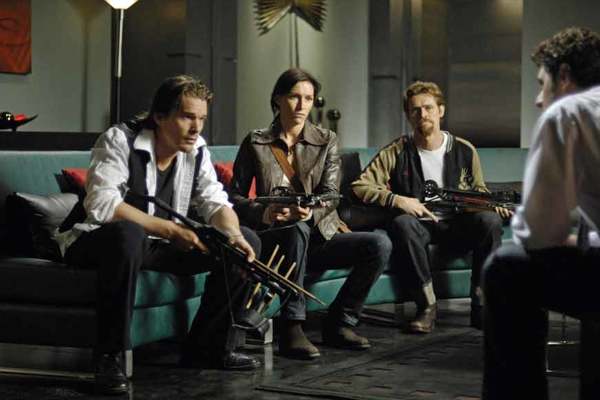
Daybreakers came and went with little fanfare, which is a real shame given that this is one of the most entertaining vampire movies in years. The film is set in a dystopian future where vampires are now the dominant species; any surviving humans have been outcast, and the population live in a world ruled by the night. Written and directed by the Spierig Brothers, it's a creative set-up that paves the way for an action-orientated storyline that sees a vampiric doctor, played by Ethan Hawke, teaming up with a renegade human - William Defoe - who claims to have a cure. Daybreakers is a bloody affair, which succeeds in crafting an eerie future packed with neat little details and cool world-building. As a conflicted vamp, Ethan Hawke makes for a root-worthy protagonist, while the film's blend of sci-fi and horror keeps things interesting. If it doesn't quite push the smarts as far as it could have, it's still a heck of a lot of fun.

17. Thirst (2009)

Of his 2009 vampire film, South Korean director Park Chan-wook - perhaps most famous for his dark thriller Oldboy and the recent dystopian sci-fi flick Snowpiercer - said: "This film was originally called 'The Bat' to convey a sense of horror. After all, it is about vampires. But it is also more than that. It is about passion and a love triangle." Watching the film, it's clear that the director set out to produce a different kind of vampire movie, its plot centered on a young priest who finds himself caught in an unexpected transformation in the wake of a vaccine experiment gone wrong. The picture follows said priest, played by actor Song Kang-ho, as he partakes in disturbing acts of sex and violence, driven by romantic obsession. There's also a rather unforgettable moment with a flute. It's hard to define Chan-wook's picture, as it brings in elements of the horror, noir and serial killer genres, and then throws them into one big melting pot. The results aren't consistently successful, but for fans of vampire movies, this is an essential work of the sub-genre.

16. The Fearless Vampire Killers (1967)

This under-seen - and quite frankly weird - little offering from acclaimed filmmaker Roman Polanski, made the year before his horror classic Rosemary's Baby, somehow manages to be both incredibly fluffy and incredibly dark at the same time, which - at the very least - cements it as a true original of the vampire movie canon. Starring Jack McGowan and - would you believe it? - Roman Polanski himself, The Fearless Vampire Killers mostly plays out as a rowdy comedy, but the rather epic production design enhances the mood to such an extent that both gothic and horror elements seep through. Essentially, though, the film is one giant farce, as Professor Abronsius (McGowan) and his apprentice, Alfred (Polanski), set out to hunt vampires in a castle in Transylvania. The film is also notable because it stars Polanski's late wife, Sharon Tate, who was killed in the Charles Manson murders two years later when his followers invaded Polanski's home. As the kidnapped beauty who sets the plot in motion, she is simply stunning to behold.

15. Blade (1998)

Blade, based on the Marvel comic book series, was one of the first worthwhile superhero films to come out of Hollywood, long before Spider-Man and the X-Men made their mark. Starring Wesley Snipes in what remains his best role to date, Blade is a half-human, half-vampire who dedicates his being to protecting humans from the undead. What most people probably remember from this film is the scene at the beginning set at a rave club, with that sprinkler system that sprays blood, but there's still a lot of joy to be had throughout. The whole film is entertaining schlock, of course, and few would argue that this is anything even close to a masterpiece. But that's what makes Blade stand out: it's balls to the wall vampire fun, incredibly violent and shot with a giddy energy that renders it as a relic of its time - oh, the '90s - and yet interesting for exactly that reason (kind of like The Matrix). Blade II, helmed by auteur Guillermo del Toro, is arguably a better, more creative film; if you like this one, it's worth checking out. Avoid Blade: Trinity at all costs.

14. Bram Stoker's Dracula (1992)

Structurally, Bram Stoker's Dracula isn't one of Francis Ford Coppola's best efforts to date. And yet it's still a notable achievement on the filmmakers' part for two reasons. The first is due to the cinematography, the production design and the editing; the movie feels rich and lavish at its core, old-fashioned and beautifully crafted. The second is Gary Oldman, who gives a mesmerising performance as the infamous Count of the title. Based, of course, on the book of the same name, there is much to like about Coppola's film if you are a fan not only of the story being told, but of cinema in general; it reeks of technique, a purposeful move on the part of the director, marking it as essential viewing for anyone who claims to adore both the medium itself and the vampire genre. The biggest problem with the film is Keanu Reeves' performance as hero Jonathan Harker; his English accent is a crime against humanity and his line readings are flat and awkward. If you can ignore him, though, this is a work to treasure.

13. Shadow Of The Vampire (2000)

Shadow of the Vampire, one of the most underrated films on this list, clings to an ingenious premise: what if it turned out that the vampire in F.W. Murnau's classic, Nosferatu, was actually a real vampire? What if the film was actually a documentary of sorts? Directed by E. Elias Merhige and based on script by Steven Katz, Shadow of the Vampire is a dark and brooding picture, but not one without an underlying sense of humour. The idea that actor Max Schreck, who portrayed the incredibly creepy "Count Orlok" in Murnau's famous film, has been a long-standing myth, and the picture takes that idea and just runs with it. John Malkovich stars as Murnau and Willem Dafoe plays Schreck, the actor who begins to concern Murnau when he's deemed to be taking his role a little too seriously. Both are great here - especially Dafoe and what's more, Shadow of the Vampire pays homage to silent cinema's aesthetics, and can be viewed as a loving tribute to film's earliest days.

12. The Hunger (1983)

David Bowie in a vampire film? It was meant to be! Tony Scott is best known for his action film ventures, but this - one of his earliest and most overlooked works - is best defined, perhaps, as an erotic thriller of sorts... with vampires. To tell his story of a doomed romance shared between a doctor and two vampires, then, Scott sought out David Bowie to play a vampire cellist from the 19th century (because who else do you get to play a vampire cellist from the 19th century?), and Catherine Deneuve, who plays his lover. Throw Susan Sarandon into the mix, playing the aforementioned doctor specialising in sleep studies, and you've got yourself a rather intriguing trio. The Hunger was derided on its original release and attacked for having more style than substance, and too much violence. In retrospect, these criticisms feel more like strengths, cementing Scott's film as a properly strange and moody '80s curio. As an attempt to do something different - something classy, even - this film is a bold and captivating effort.

Contributor

Sam Hill is an ardent cinephile and has been writing about film professionally since 2008. He harbours a particular fondness for western and sci-fi movies.