20 Recent Box Office Flops Everyone Saw Coming
The box office busts that everyone predicted.

The Hollywood box office can be a cruel mistress, and it's certainly gotten crueler since the pandemic heavily impacted audience attendance and habits.
What once seemed like a sure thing no longer is, and so even the most sensible and commercial of movies can end up failing to strike a chord with the masses. But then there are those films that just scream "flop!" before they've actually even been released.
Perhaps the movie's concept itself is peculiar enough to alienate the mainstream, or maybe the cast and crew attached didn't inspire much confidence at all. Elsewhere, bad marketing might be to blame, or a late review embargo that failed to drum up hype in the days before release.
Whatever the reason, it was plainly obvious that the following pictures were all going to flop at the box office. Though to be clear, this isn't necessarily an indication of their quality - there are some absolute bangers on this list which sadly just didn't make much money - but all the same, it was incredibly easy for even the most casual box office analyst to see it coming.
20. Tron: Ares

Despite the passion of its fanbase, the Tron franchise has always firmly been a cult IP with a limited broader appeal, which, in business terms, seems fundamentally incompatible with a sky-high budget.
The original 1982 film grossed a decent $50 million against a $17 million price tag, while 2010's Tron: Legacy grossed a middling $409.9 million on a $170 million budget.
It was easy to be skeptical, then, about the commercial prospects of the third film, Tron: Ares, which, in addition to costing up to $220 million, had the albatross around its neck that was Jared Leto's polarising casting in the lead role. Mediocre marketing that failed to emphasise the film's must-see event appeal didn't help, nor wildly mixed reviews that ensured it failed to attract many beyond die-hard Tron fans.
Tron: Ares ultimately fell far short of box office predictions in its opening weekend, and after three weekends is currently sitting at a brutal global total of barely $120 million, making it one of the biggest blockbuster flops of recent years. And yet, so, so many saw this one coming a mile off, and word indicates that Disney will now be putting the big-screen Tron franchise on ice for the foreseeable future.
19. Mickey 17
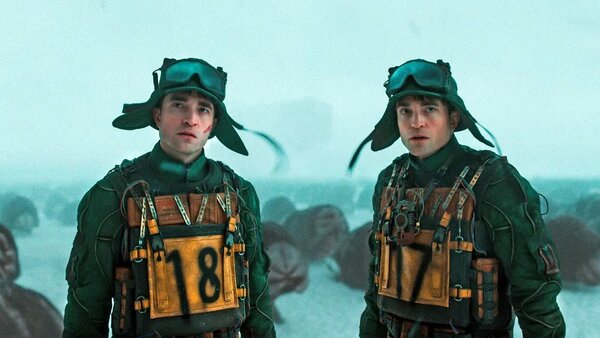
Even accepting that director Bong Joon Ho was fresh off the Oscar-winning success of his global mega-hit Parasite - which grossed an astonishing $258.1 million against a mere $11.4 million budget - few were expecting his follow-up Mickey 17 to repeat the same level of success.
For one, it's based on a rather niche and strange sci-fi novel, which, in conjunction with a $118 million budget, left the break-even point at almost $300 million.
Sci-fi has always been a box office wildcard, considering the larger budgets they typically command. Hence, why the most successful ones tend to have a broad, easily understood marketing hook, like Gravity or Interstellar. But Mickey 17 was more of an esoteric black-comedy whose marketing didn't do a particularly stellar job of selling its premise or tone, which, coupled with good-but-not-great reviews, caused it to settle at a hugely disappointing $133.3 million globally.
In many respects, this is exactly the sort of wild swing a filmmaker gets to make after winning Best Picture and Best Director Oscars, but it's fair to say that Bong probably won't get to play around with this size of budget again for a good while, if ever.
18. Elio
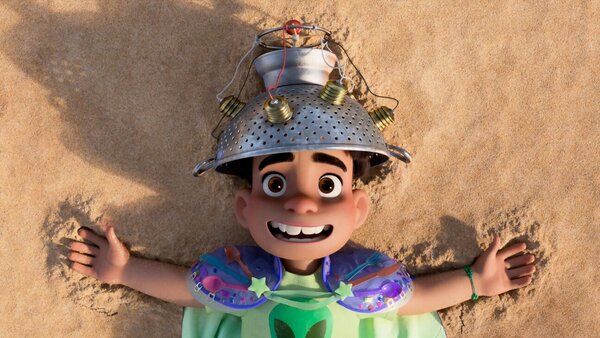
There's no denying that the once-bulletproof Pixar has struggled massively at the box office since the pandemic, when animated films were often sent direct to streaming, and families became conditioned to wait, save money, and watch them at home.
Last year, Inside Out 2 did at least prove the enduring viability of Pixar's tried-and-true franchises, given that it grossed an eye-watering $1.699 billion worldwide, making it the highest-grossing Hollywood animation of all time. But that didn't exactly suggest smooth sailing for the studio's original IP, and so there was a lot of skepticism that their new film, Elio, could go the distance.
With a budget estimated to be between $150-200 million, that left Elio needing to gross at least $375 million to be deemed a success, but it ended up topping out at just $154 million. This made it the lowest-grossing non-pandemic Pixar film by a huge margin and was basically the very predictable result of numerous adverse circumstances conspiring against it.
For one, the marketing didn't do much to sell the uniqueness of Elio's concept or characters - it simply looked like a bog-standard, lower-tier Pixar film one could easily skip and catch on Disney+ in a few months' time.
Reviews were just fine, and additionally, attention was stolen away by the far more successful live-action remakes of Lilo and Stitch and How to Train Your Dragon, not to mention KPop Demon Hunters, which released on Netflix the very same day that Elio hit cinemas.
With Elio's failure and the general struggle for original Pixar movies to hit commercially, it's little surprise that within the next few years we're going to get Toy Story 5, Incredibles 3, and Coco 2.
17. Mission: Impossible - The Final Reckoning
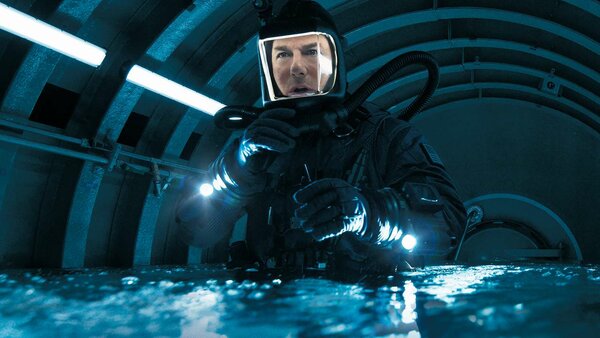
As ridiculous as it might seem to call any movie that grossed almost $600 million a flop, it all comes down to budgeting, and in the case of Mission: Impossible - The Final Reckoning, its costs spiralled way out of control.
The "final" Mission: Impossible movie's price tag ballooned to an estimated $400 million by the end of production, said to be a result of delays caused by both the pandemic and Hollywood strike action, resulting in shooting taking more than two-and-a-half years to complete.
Using the typical 2.5x rule for blockbusters, The Final Reckoning therefore needed to gross in the vicinity of $1 billion to turn a profit theatrically, which it fell far, far short of, ending its run at just $598.8 million.
For a more modestly priced affair of, say, $200 million, this would've been a fine result, but with such ludicrously high costs and following on from the commercial underperformance of the series' previous entry, Dead Reckoning Part One, it caused the franchise to rather unceremoniously sputter out at the finish line.
16. A Big Bold Beautiful Journey
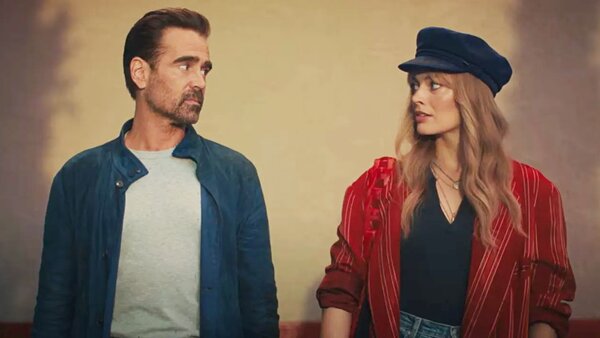
Romance films have struggled massively since the pandemic, given the perception of many that they're not "cinematic" enough to warrant a trip to the cinema, hence why so many of them are now produced directly for streaming services. And apparently, even having the A-list likes of Colin Farrell and Margot Robbie can't move the needle much, as evidenced by their recent romantic fantasy flop A Big Bold Beautiful Journey.
Now, to be fair, the picture's fantastical road movie premise was always going to make it a tough sell to some, and the fact it was being helmed by acclaimed arthouse filmmaker Kogonada - whose first two films, Columbus and After Yang, both flopped at the box office - likely didn't help much either.
Then you throw in reports of poor test screenings, a $45 million budget, suspiciously quiet marketing that suggested Sony knew they had a dud on their hands, and ultimately wildly mixed reviews, and it was easy to see the film's mere $20 million box office total coming.
It'll be interesting to see if this polarising piece becomes something of a cult success in the years to come, but in terms of big-screen business it was firmly rejected by audiences at large.
15. The Accountant 2
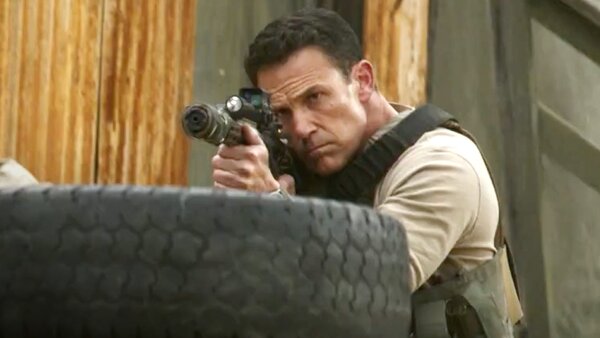
Ben Affleck's 2016 thriller The Accountant was a solid box office hit, grossing an impressive $155.2 million on a $44 million budget, enough that it's genuinely surprising that it took almost an entire decade for the sequel to materialise.
However, during that time, the theatrical landscape changed a lot, with mid-budget action thrillers aimed at adult demographics struggling ever since the pandemic, as many seemingly felt that little was lost by waiting to watch them at home. And so, it was definitely alarming that The Accountant 2 was budgeted at $80 million - almost double the cost of the original in a theatrical environment far more hostile to its existence.
Unsurprisingly, the sequel failed to deliver the results to pay off its larger budget, grossing $103.2 million globally.
The only saving grace is that the film was produced and distributed by Amazon, who basically used the theatrical release to promote its subsequent streaming bow on Amazon Prime, where it drew a massive 80 million viewers within its first month on the platform.
That certainly cushions the blow, for sure.
14. One Battle After Another

Paul Thomas Anderson is one of the greatest filmmakers working today, which is precisely why he's been able to keep producing well-budgeted feature films despite the overwhelming majority of them failing to turn a profit theatrically.
Of Anderson's nine previous films, only Boogie Nights and There Will Be Blood have succeeded at the box office, and so, when his latest film, One Battle After Another, was confirmed to rock a $175 million budget, the road to profitability seemed basically non-existent.
Even with the ever-reliable Leonardo DiCaprio leading the charge and the movie touting a more commercial action-thriller tone, that colossal budget was clearly too tall a mountain for any film directed by Paul Thomas Anderson to climb.
With a break-even point of around $435 million, it wasn't remotely shocking that One Battle After Another fell far short of the mark, and it'll ultimately be lucky to pass the $200 million mark worldwide. Though the near-universal acclaim for the feature and the distinct possibility it wins the Best Picture Oscar next year will likely soothe the damage for Warner Bros., they were probably still hoping for a stronger performance than this.
Such is the inherent risk of giving monstrous budgets to movies that aren't aiming to appease all four quadrants. But from a purely artistic perspective, thank God this film exists.
13. Black Bag

Black Bag is, sadly, the sort of movie that struggles to get audiences out of their homes these days - a more "modest" genre film without epic CGI set-pieces, no matter the plaudits of its exceptional ensemble cast.
In addition to distributor Focus Features barely marketing Steven Soderbergh's terrific spy thriller, it was produced for a budget of $60 million, which is an undeniably high figure for a film that largely takes place in just a few distinct locations.
Sure, a cast including Cate Blanchett, Michael Fassbender, Naomie Harris, Regé-Jean Page, and Pierce Brosnan isn't going to come cheap, but this still seems like an inordinately high figure given the story's confined nature and overall brevity, clocking in at just 94 minutes.
Despite scoring rave reviews from many critics, Black Bag sadly topped out at just $43.4 million globally, though it has quite predictably performed better on streaming, helping mitigate some of its losses. It's certainly a shame that well-crafted genre fare like this struggles to ignite the box office nowadays, especially with so much talent behind and in front of the camera, but that budget is just way, way too high for what it is.
12. The Phoenician Scheme
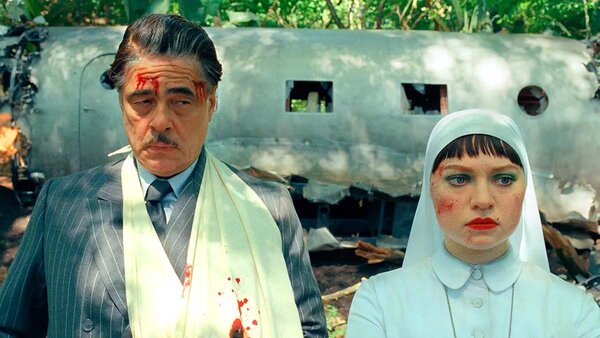
Wes Anderson is in an immensely enviable position for any filmmaker, considering that his movies are financed by billionaire Steven Rales and his production company Indian Paintbrush, ensuring that Anderson seemingly never has to worry about his features underperforming commercially, as they often do.
But Anderson's latest film, The Phoenician Scheme, was perhaps the surest box office flop of his career, and it didn't really come down to anything other than the film's title.
Even the most bizarre Wes Anderson film prior to this had a title that was interesting or amusing, but considering that a great many moviegoers have no idea what a Phoenician is, and might even struggle to say it to a cinema ticket teller, it put the movie on the back foot before anyone had even seen it. Then there's the sentiment among some that Anderson's style is beginning to feel a bit stale, even self-parodying, at this point in his career, and so the novelty factor of his distinctive filmmaking style isn't quite what it once was.
With that in mind, The Phoenician Scheme barely cracked $40 million on a $30 million budget, making it Anderson's lowest-grossing release since 2007's The Darjeeling Limited.
All it'll take for Anderson to bounce back is a banger like The Grand Budapest Hotel, but even if that doesn't materialise, he's seemingly got a blank check to keep making whatever he wants. Good for him.
11. Eddington
Though Ari Aster's first two films, acclaimed horror flicks Hereditary and Midsommar, were massive hits for A24, Aster's third feature Beau Is Afraid - a far more ambitious swing of a black comedy-horror - was a rather predictable flop, its mainstream-alienating premise rustling up just $12.3 million against a $50 million budget.
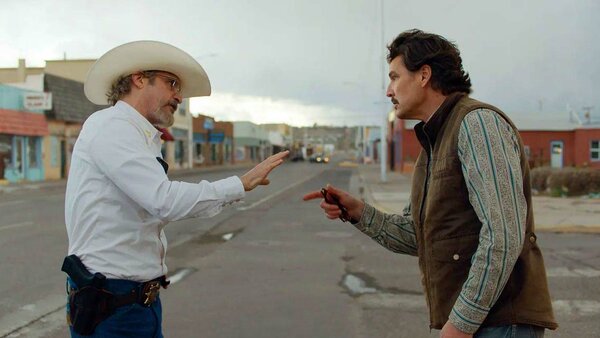
Everything we heard pre-release about Aster's fourth film, Eddington, was that it was another not-particularly-commercial genre-bending experiment that served as a satire of the entire "COVID era."
For one, there are many who just aren't interested in watching a movie that revisits the most miserable period of their lives, even through a darkly satirical lens, and on top of this, reviews were wildly mixed, enough that even an all-star cast led by Joaquin Phoenix, Pedro Pascal, Emma Stone, and Austin Butler couldn't much help it.
Even with a more hemmed-in $25 million budget compared to Beau Is Afraid, Eddington cracked only $12.7 million - just a fraction more than Aster's previous film.
It'll certainly be interesting to see if back-to-back flops impact Aster's relationship with A24 at all, but considering he's one of the most singular filmmaking voices working today, hopefully he'll keep getting to produce his visionary, not-for-everyone art.
10. Wolf Man
In theory, there were many, many reasons that Wolf Man was set to be a solid box office hit.
For one, it had Leigh Whannell working as writer-director, who did a fantastic job reinventing The Invisible Man back in 2020 to both critical and commercial success. With the supremely talented Christopher Abbott and Julia Garner leading the small cast, and a mere $25 million budget, this seemed like an incredibly low-risk, can't-miss project.
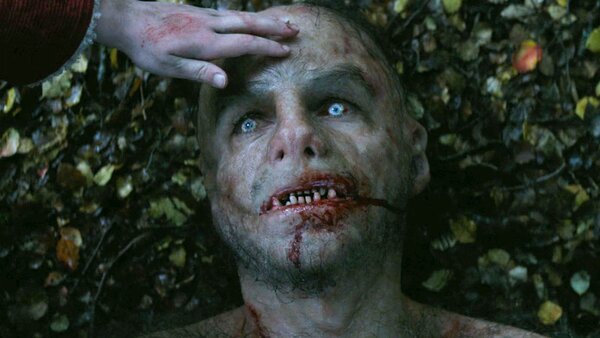
That was, until the months leading up to Wolf Man's release, when there was significant backlash against the title creature's apparent leaked design, prompting Whannell and co. to spend much of the marketing campaign in damage control mode.
This, and a mid-January release - typically a dumping ground for bad horror movies - did little to help its box office tracking leading up to release, and Universal ultimately got desperate enough that they spoiled the Wolf Man's transformation in a clip released shortly before the film came out.
Wildly mixed reviews ultimately dropped just two days before release and basically delivered the death knell to Wolf Man's prospects, causing it to end its run at a shockingly low $35.2 million. It was a poor enough result that even the film's own producer, Jason Blum, publicly tweeted his disappointment about it.
9. Hurry Up Tomorrow

Hurry Up Tomorrow is yet further proof that having two extremely prominent entertainers leading your film means absolutely nothing in the modern theatrical climate.
Even with Jenna Ortega and The Weeknd headlining this psychological thriller from acclaimed director Trey Edward Shults (It Comes at Night, Waves), the warnings were many and often. The Weeknd proved in HBO's controversial TV series The Idol that his acting skills are limited, to be kind, the intensely vague marketing failed to actually tell audiences what the movie was about, and the review embargo lifted just a day before it hit cinemas.
Unsurprisingly, the reviews were absolutely scathing, and even on a seemingly sensible $15 million budget for a production of this size, Hurry Up Tomorrow absolutely tanked, netting just $7.8 million in cinemas.
Even Ortega and The Weeknd's respective fandoms couldn't be relied upon for this one, which suffered from nuclear word-of-mouth after its opening weekend and never recovered, enough that Hurry Up Tomorrow as a whole has largely been forgotten already.
8. In the Lost Lands

While George R.R. Martin's name might've carried some box office cachet a few years ago, Game of Thrones' calamitous final season pretty much put that to bed for mainstream audiences. As such, the new fantasy-actioner In the Lost Lands wasn't even able to coast off the fact that Martin wrote the story on which it's based.
But there's one key factor that killed this one dead: it's a $55 million film from Paul W. S. Anderson, who hasn't enjoyed much commercial success outside of his Mortal Kombat and Resident Evil video game adaptations.
The trailers also looked terrible; neither Milla Jovovich nor Dave Bautista are box office draws in of themselves, and it was scarcely marketed before being quietly dropkicked into 1,370 North American cinemas. Largely negative reviews then sealed the deal, and In the Lost Lands went on to gross a miserable $6.2 million - barely 10% of its budget.
Needless to say, it'll be interesting to see if Anderson can still get decently budgeted genre films made after such a catastrophic failure.
7. The Alto Knights
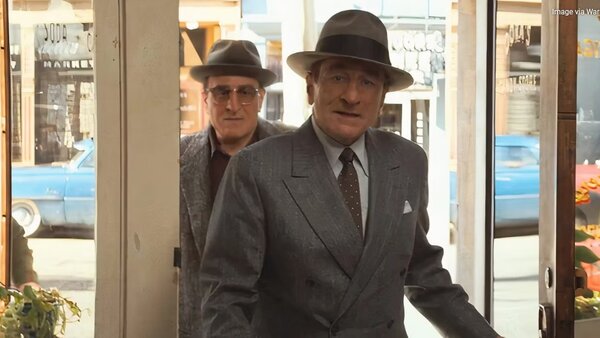
It's been said time and time again that purely adult-skewing films have been struggling immensely at the box office in recent years, and The Alto Knights provides just further proof of that.
Despite starring Robert De Niro in not one but two roles, and being penned by Goodfellas writer Nicholas Pileggi, this crime thriller was a gigantic bomb, netting just $9.6 million on a $50 million budget.
This fate was painfully clear from the moment that Warner Bros. decided to call it The Alto Knights - a terrible title that tells Joe Public absolutely nothing about the film from a passing glance.
As boring and uninspired as generic crime thriller titles might be, they do ultimately get more eyeballs on a project, and this is definitely a case where a more accessible title would've boosted the box office at least a little. Of course, it didn't help that even cinephiles were likely deterred by mixed-to-negative reviews, ensuring many likely waited to watch The Alto Knights on streaming - if they even did at all.
6. The Life of Chuck
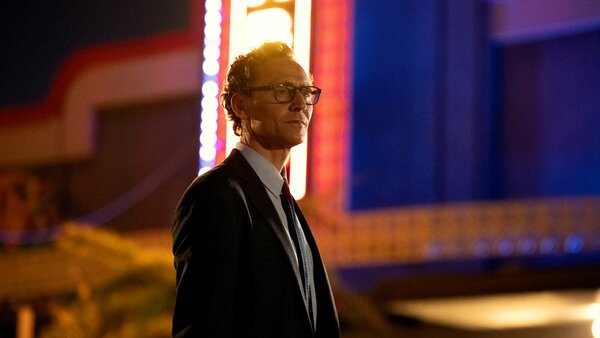
In another timeline where Neon released The Life of Chuck last year, it's easy to see it being way more successful, even if it wasn't an outright hit.
After all, Mike Flanagan's acclaimed adaptation of Stephen King's fantasy story won the Audience Award at last year's Toronto International Film Festival, which is an extremely reliable indicator that a film will be nominated for the Best Picture Oscar. But rather than capitalise on this, Neon left The Life of Chuck on the shelf for nine months, only releasing it this past June when the buzz surrounding it had firmly cooled.
There were certainly other factors to consider, though. The title tells you almost nothing about the movie, and the marketing seemed almost afraid of fully detailing the movie's tricky premise, painting it instead as a more straightforward, mawkish melodrama. And finally, even those who wanted to see it couldn't necessarily do so easily, as Neon barely released it in 1,000 domestic cinemas.
Though we still don't know the movie's budget, there's absolutely no way it turned a profit with a box office haul of just $16.2 million. If Neon had struck while the iron was hot last year, it surely would've performed better. Instead, Flanagan's film was a resolute flop and has little to no chance of scoring any Oscar recognition early next year.
5. Honey Don't!

In 2025, there was always going to be limited big-screen appeal for a neo-noir, no matter who's starring in or making it, because it's a genre many are quite content to catch on streaming a few weeks later instead.
While one might assume that having one of the Coen Brothers - that'd be Ethan - in the director's chair might carry some commercial sway, his previous solo venture, last year's Drive-Away Dolls, categorically proved that not to be the case.
That film, which also starred Margaret Qualley in a different role, grossed just $7.9 million globally, and even with Honey Don't! additionally counting Aubrey Plaza, Chris Evans, and Charlie Day among its ensemble, there wasn't much hope for it.
It probably didn't help that the film misguidedly premiered at Cannes back in May, allowing mixed-to-negative reviews to linger around for three full months before Hurry Don't! came out. Between this and terrible audience scores, it wasn't in any way shocking that the picture made just $6.7 million theatrically - even less than Ethan Coen's previous film.
With a third entry into this thematic B-movie trilogy, Go, Beavers!, already in the works, would it surprise anyone if the numbers tumbled even lower this time?
4. The Ritual

Horror is one of the most reliable of all genres where box office is concerned; it's pretty much critic-proof, and that's especially true when we're talking about exorcism films.
So, on paper, The Ritual should've had something going for it, especially as it stars Al Pacino and Dan Stevens as priests who reluctantly team up to save an allegedly possessed woman. But distributor XYZ Films absolutely buried this one, barely marketing it at all before quietly releasing it this past summer without screening it for most critics. The writing was firmly on the wall, then.
Unsurprisingly, it was near-universally panned by the press, and even undemanding audiences craving some basic possession thrills didn't rate it much either. As such, it was easy to predict its $5.7 million final haul, and while The Ritual's full budget hasn't been publicly disclosed, it clearly wasn't made for a pittance, so there's no chance it turned a profit theatrically.
3. Love Hurts

Love Hurts is a film that a lot of people were rooting for, a romantic action-comedy vehicle for the great Ke Huy Quan, who seemed to finally be getting juicy roles following his 2023 Best Supporting Actor Oscar win for Everything Everywhere All at Once.
With its appealing lead actor and a release just before Valentine's Day, there was potential that strong reviews could push the $18 million film to solid success. But as Love Hurts' release neared, it became clear that Universal had no confidence in it. For one, they barely marketed it at all, then the review embargo lifted just a day before release, and said reviews were also largely negative.
Then there's the 83-minute runtime, which left many assuming that it had been hacked to pieces in post-production, and the fact that many simply found the advertised romance between Quan and the 20-years-younger Ariana DeBose totally unappealing.
And so, Love Hurts couldn't even recoup its base budget, grossing $17.6 million and basically vanishing off the face of the Earth within two weekends. A frustrating outcome as Quan clearly deserves so, so much better than this.
2. Ballerina

While you can't really blame Lionsgate for wanting to expand the John Wick series - one of their most lucrative current IP - with spin-offs, there's a fundamental, inescapable fact that Keanu Reeves is John Wick, both as a character and a franchise.
And so, even though Reeves was heavily marketed as making a supporting appearance in Ballerina, it simply wasn't enough to lure most fans of the series out of the house. As kickass and skilled an actress as Ana de Armas is, Ballerina's marketing largely made it look like a paint-by-numbers action-thriller with action sequences a fair few rungs below the main John Wick franchise.
All the pre-release hubbub about extensive reshoots sure didn't help shift that perception.
It was perfect "wait for streaming" fodder, then, which is hardly what any studio bankrolling a film to the tune of $90 million wants to hear - that's just $10 million less than the cost of John Wick Chapter 4 despite Reeves appearing for just a few brief scenes.
Ballerina ended up grossing just $137.2 million, leaving it miles away from profitability and grossing less than every single mainline Wick movie except the first, which had the huge advantage of being produced for just $30 million. As such, it's little surprise that Lionsgate is now pushing hard for John Wick Chapter 5 to go into production, whatever that might look like considering the ending of Chapter 4 and the state of Reeves' knees.
1. The Unbreakable Boy

It's never, ever a good sign when a film sits on the studio shelf for years, and so it was a given that biographical drama The Unbreakable Boy was destined to flop.
Even though faith-based films tend to perform well at the box office with a demographic who will reliably turn up to support them, Lionsgate didn't make much effort at all to support this one. The movie was shot in late 2020 and didn't release until this past February, apparently a result of the political climate in the U.S. and the need to release The Unreakable Boy at "the right time" in the country, whatever that means.
Despite landing an "A" CinemaScore and stonking 97% audience approval rating on the Tomatometer - in face of more mixed critical reviews - it seems that awareness just wasn't there for it, perhaps in part because Lionsgate released it in just 1,717 theaters domestically.
Given the wildly hit-and-miss track record of production company Kingdom Story Company, it was easy to doubt the prospects of this one, especially with such an egregious release delay.