20 Psychological Thrillers You Must See Before You Die

Mindbending masterpieces.
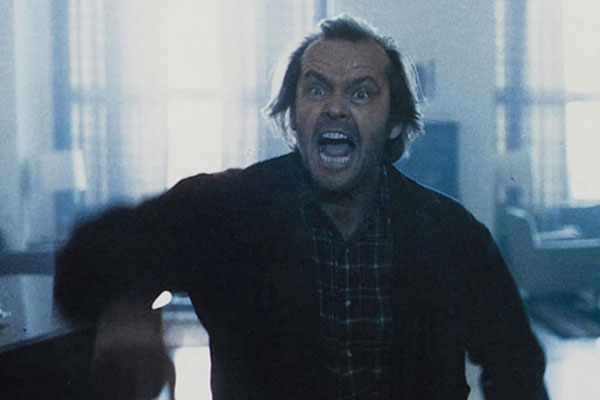
Best described as films primarily interested in their characters' unhinged state of mind, psychological thrillers are more concerned with showing altered, imbalanced emotional states than they are outright violence, though many contain striking uses of it. A close relative of the horror film (many regard serial killers) and the paranoid-conspiracy thriller (examples of which can be found within), the psychological thriller is a far broader genre than most, often creeping its way into everything from drama to sci-fi. It's no surprise that many of the films contained within this list are not only some of the greatest psychological thrillers of all time, but some of the greatest films of all time, period - such is this genre's reach. At least ten of the films presented here are certified, Greatest Of All Time classics, while the other ten fall someplace between Hidden Gem and Something in Between. What's certain about all of them is that they are essential to the genre, psychological thrillers in the very best vein, looking to twist and turn and invert your brain matter until it resembles that of whoever is unfortunate enough to be on screen at the time.

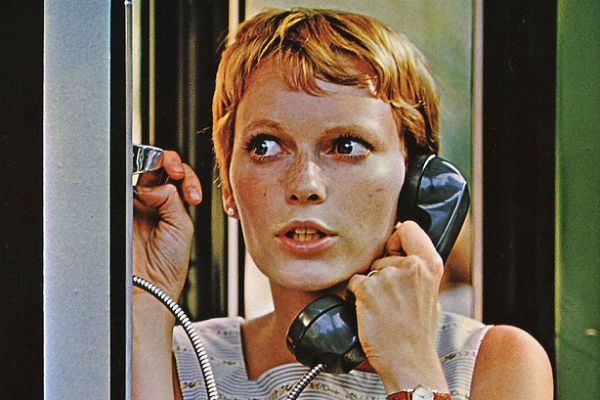
20. Rosemary's Baby

One of those that merges meticulously into horror, Roman Polanski's Rosemary's Baby is an astonishingly tight, atmospheric thriller, one that takes the thought of an unthinkable event (later mirrored in The Omen) and amplifies the terror surrounding it, creating one of the most disquieting films in the canon in the process. Elevated into greatness mostly through Polanski's virtuoso direction (something he would later perfect in Chinatown, my contender for the greatest film of all time and one that could've easily appeared on this list alongside other Polanski classics like The Tenant or Repulsion), Rosemary's Baby is helped immeasurably by a scattergun star performance from Mia Farrow as the titular Rosemary, whose growing paranoia about the fate of her baby begins to control her life.

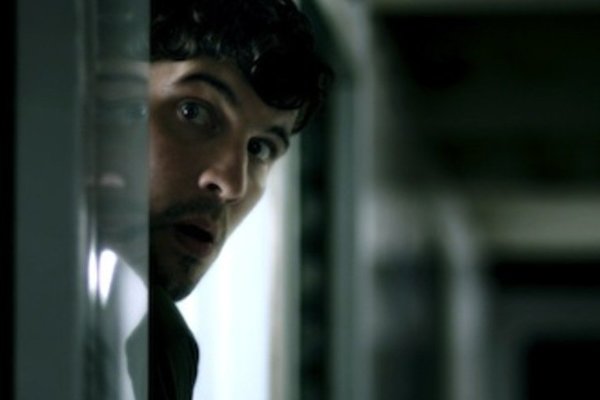
19. Cold Weather

Much more of a hidden gem is this, Cold Weather, Aaron Katz's sorely underseen film from 2010. A thriller in the slacker/Big Lebowski/Stoner Logic sense, not much in the way of action happens here, let alone anything even close to a set-piece or an instance of violence. It achieves psychological thriller status though familiar means (a man becomes obsessed with the disappearance of his ex-girlfriend), but differs in that our hero, Doug (Cris Lankenau), is fully aware that he's acting like a detective, even stopping to buy a Sherlock Holmes style pipe to riff on the vibe (this is far and away the most meta film on this list). Cold Weather is a must see though, sublimely turning into an effective psychological study of how you or I might actually act if we decided to play detective. In it's own understated way, the film is a dazzling example of how to do more with less, and its final scene is the perfect, straightforward evocation of a case that comes to a refreshingly realistic and ordinary close.

18. The Talented Mr. Ripley

This gorgeously shot Anthony Minghella picture stars Matt Damon in his best, creepiest role (he's always better when he's playing a villain) and boasts a supporting cast that includes a never better Jude Law, Philip Seymour Hoffman, Gwyneth Paltrow, and Cate Blanchett. Adapted from Patricia Highsmith's series of Ripley novel's, Minghella's film sees Damon, as the titular character, travel to 1950s Italy in order to retrieve playboy Dickie Greenleaf (Law) on an errand. Seduced by the lifestyle and Greenleaf himself, Ripley concocts a plan to stay, permanently. Fused with a homoerotic subtext and motored by at least three powerhouse performances, The Talented Mr. Ripley is a Hitchcockian adventure full of fakers and impostors. It's Damon who really turns this into a true psychological thriller, though, and the madness his character descends into is mirrored, sometimes literally, in the lush camerawork of Minghella and his cinematographer, John Seale (Mad Max: Fury Road).

17. Rear Window

Talking of Hitchcock, it would be unthinkable to not have him on a list like this, and Rear Window marks the first of his two entries. Regularly cited as one of the great director's top rank films, Window is a much imitated, never bettered, classic, and the setup is ingenious: a wheelchair bound photographer becomes obsessed with spying on his neighbours, eventually convinced that one of them has committed a murder. It's a deceptively simple idea and it makes for one of the tautest films ever made. Other than the obvious star turns from Jimmy Stewart and a mesmerising Grace Kelly, the film's biggest asset is the set design, which saw a whole apartment block built on a Paramount soundstage so that the characters and the audience could look into virtually every room. The film has been parodied countless times (the Shia Labeouf led Disturbia; the Bart After Dark episode of The Simpsons) but the effect of it has never been lessened.

16. Insomnia (1997)

Not the Christopher Nolan/Al Pacino remake, but the original. Insomnia is an early example of Scandinavian Noir, and the film that more than most helped pave the way towards the now prominent genre. Starring Stellan Skarsgård as a troubled cop who begins to suffer from the title infliction in a town with a 24-hour daylight cycle, the film is a clever inversion of the typical Noir trappings, with night becoming light but proceedings staying just as shady. Part police-procedural, part character study, Insomnia is a detached and chilling affair, something amplified by it's icy, unforgiving setting and by Skarsgård's opaque, almost characterless performance. The film also inverts the traditional cop vs. killer scenario, with the killer actually discovering the cop's misdeeds to turn the story on its head. Darker and weirder than the Nolan remake (a fine film in its own right), Insomnia is the quintessential Scandinavian psychological thriller.

15. Kill List

Something a little closer to home, Kill List ranks as one of the best British films of the last decade, and one of its best psychological thrillers, period. Heavily indebted to The Wicker Man, the film is basically one of two parts: the first 3/4, which deals with two hit men (Neil Maskell and Michael Smiley) going about their business, and the last stretch, which turns into a surreal, pagan nightmare. Much has been made of the film's shift, but the ending marks one of the most baffling, dazzling denouements on this list, and the tunnel sequence in particular is stunning. Directed by Ben Wheatley, Kill List, despite wearing a few of its influences on its sleeve, is ultimately a unique film, touching on horror and even family-drama in its short run time to announce its director as a major force in a few different styles. It's that aforementioned ending that truly earns Kill List a place on this one, though, which surely serves as one of the most disconcerting finales ever put on film, especially in Britain.

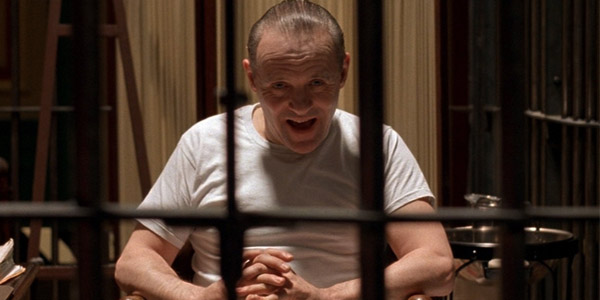
14. The Silence Of The Lambs

A classic of the genre, Jonathan Demme's multi Oscar winning The Silence Of The Lambs has seen its status slightly reduced over the years. Despite this, it's still one of the purest psychological thrillers ever made, helmed by an iconic Anthony Hopkins performance and a dogged Jodie Foster one (both won Academy Awards). Based on Thomas Harris' sophomore Dr. Hannibal Lecter novel of the same name, the films sees Foster's Clarice Starling seek out the cannibalistic, genius doctor to ask for his help in catching another serial killer, Buffalo Bill (Ted Levine). As is his want, Lecter gets inside the young agent's head, and Lambs ultimately becomes more about their twisted relationship than it does the actual hunt for Bill. Hopkins has roughly only 16 minutes of screen time, but he makes full use of it, turning in a macabre, lip smacking performance full of great lines, many of which are now classics of film lexicon. And, though some would have it that Mads Mikkelsen is better in the TV version of Hannibal (myself included), there's no reason why they can't coexist, and Hopkins' incarnation remains one of the eeriest of any on show here.

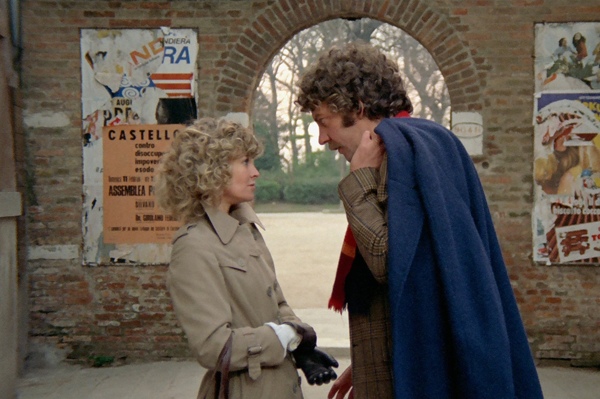
13. Don't Look Now

Nicolas Roeg's celebrated Don't Look Now is a masterpiece of the genre, taking influence from Daphne Du Maurier's short story of the same name to present a paradoxical, grief ridden thriller complete with one of cinema's great twists and endings. In Venice to grieve the death of their young daughter, married couple Laura and John (Julie Christie and Donald Sutherland, who later share one of film's great sex scenes) are visited by two elderly sisters, one of whom brings a sinister warning. Full of famous iconography (the red coat), Don't Look Now is helped immeasurably by the Venetian setting, the architecture of which lends a European Gothic chill to proceedings. Chronologically complex, the film is a high watermark in the psychological thriller come horror, and one of the finest examples of one which imbues itself with growing unease rather than outright violence or gore.

12. The Secret In Their Eyes

Currently being remade by Hollywood, The Secret In Their Eyes will do well to topple the original (El secreto de sus ojos), which took the Academy Award for best foreign language film back in 2010. This Argentinian sprawl sees a retired legal councillor seeking closure of an unsolved crime, the nature of which still haunts him. Containing one of the great takes in all of film (a sweep across a full blown football stadium that seems to descend from the heavens without the use of CGI while an actual match is taking place), Secret is a decade spanning mystery, and a morally ambiguous one, too. The forthcoming remake will hopefully point more people towards the original, which serves as one of foreign cinema's finest examples of a psychological thriller. The Secret In Their Eyes gains bonus points for it's meticulous balancing of the narrative's love story, which is prominent but not to the detriment of the suspense.

Contributor
Contributor

No-one I think is in my tree, I mean it must be high or low?