20 Movies Where The Hero Winning DIDN'T Matter
Hard fought victories that were ultimately all for nothing.

Audiences need to be given a reason to invest in any film they are watching, whether this comes from the characters or the story. Ideally, it'd be both. For anyone to care about what actually happens, there typically has to be stakes and potential consequences at play.
However, "typically" doesn't always apply when it comes to any art form, because expectations are subverted, and people love to be surprised. So with that in mind, there are plenty of movie endings that genuinely didn't matter, whether because the themes ran a little deeper than a surface victory, things stayed the same anyway, or even in some instances the writers seemingly didn't think everything through enough.
WhatCulture has previously looked at those moments when it didn't matter that the hero lost, but there is of course the other side of that coin. What about when the protagonist a viewer has been rooting for over the last two hours wills themselves to a win, often incredibly hard fought, only for it to end up meaning nothing?
Victories have been hollow in the face of overwhelming grief, characters have won small battles that likely went unnoticed amidst huge wars, and in some cases, triumph was merely a catalyst for more pain in the very near future...
20. The Hunger Games

The thing with dystopian game shows, as will be explored multiple times on this list, is that when you are shoved into what is typically a fight to the death against your will, even winning isn't really winning. The prize may be life, at least for the time being, but at what cost?
When Katniss Everdeen and Peeta Mellark (Jennifer Lawrence and Josh Hutcherson) were thrown into the Hunger Games arena, they under the idea that only one could survive. Until however, they threatened to both lose, leaving the Games without a winner, and in the process outsmarting and embarrassing Donald Sutherland's President Snow and his entire regime.
A victory of course, but not one that lasted long. When they left the arena, all they had done was paint a target on their backs, with Snow still very much in control of their lives. Haymitch (Woody Harrelson) told them as much, that they were enslaved to him forever, even as victors. This was proven in Catching Fire, when they were thrown back into the arena once again on the whim of Snow.
Winning the Games wasn't really winning, something that stretched even further than just the competition. When they ultimately overthrew Snow, there was another in Julianne Moore's Alma Coin, ready and waiting to step into his shoes and continue his megalomaniacal work.
19. Ratatouille

Disney Pixar has never been shy about pairing heartwarming animated stories with truly devastating, gut-wrenchingly sad scenes. Ellie's death in Up, the toys facing the furnace in Toy Story 3, Coco being moved by Miguel's music, and many more, just go to show how skilled the studio is at this.
Some of these moments however, don't have to be shown on the screen for the audience to know that they are going to happen. In Ratatouille, Remy's (Patton Oswalt) relationship with Linguini and Colette (Lou Romano and Janeane Garofalo) is wholesome, but realistically how long could it possibly last?
After proving that Remy could successfully run a kitchen, the three major characters opened their own restaurant. However, as a rat, and not a particularly young one at that, Remy would have had only a couple of years at absolutely maximum left to live.
Of course, that's no reason not to live life to its fullest for as long as possible, but with Remy's talents in the kitchen being all but the sole reason for the success of the restaurant, after proving to Anton Ego (Peter O'Toole) that he was truly special, there was a clock on this new venture that could ultimately leave Linguini and Colette in a very tough position before too long.
18. John Wick
With John Wick, not only was the world given one of the most iconic revenge flicks since Kill Bill, it also brought Keanu Reeves into one of his biggest and best roles of all time. It says a lot that even with four movies, the franchise didn't wear thin.
Incredibly, this came as the stories all followed back to back from each other, with the first three pretty much taking place within just a week or two. John (Reeves) lost his wife, then had to suffer his dog being killed, with everything after coming as a domino effect from this.
The original events saw John pulled back into the world from which he miraculously escaped once. Using his peerless skills as an assassin, he hunted down Iosef (Alfie Allen) and made him pay for what he did, but in doing so only threw his own life into further turmoil.
His revenge almost felt like an obligation, and only served to make things worse. Yes, there may have been some level of satisfaction in killing Iosef, but his life became immediately far more troubled and under constant threat as a direct result of it.
17. Happy Death Day

When watching a movie, or being told a story of any kind really, an audience should be able to expect for the narrative to stay on track, and to tell of what is relevant and important to the situation. That isn't always the case however.
Happy Death Day is a fun and unique outing, and is a more than enjoyable romp, but it does kind of miss the point of its own premise. When Tree Gelbman (Jessica Rothe) was murdered on her birthday, she kept waking up to relive the day again from the start.
Being able to see what was coming, Tree was ultimately able to use several goes around to figure out who was killing her and why, and eventually survived the day. However, the fact that she lived to see tomorrow wasn't the point, it was that she kept dying.
At no point was it suggested that her time loop was initiated or could be broken by solving her own murder, and in fact the sequel actively confirmed that this wasn't the case. So yes, she escaped her death, and she should be very happy about that, but when she does die, no matter in how many years' time, in theory she will return to her teenage body just like every other time she died.
16. Captain America: Civil War

In the build up to Avengers: Infinity War, the Marvel Cinematic Universe began systematically breaking its heroes apart, ensuring that Josh Brolin's Thanos was coming to Earth against a fractured team of Avengers. Thor (Chris Hemsworth) was grief stricken, Bruce Banner (Mark Ruffalo) had been away for a couple of years, and of course there was the Civil War.
Orchestrated by Helmut Zemo (Daniel Brühl) as revenge against the Avengers for the death of his family in Sokovia, something he perceived as their fault, he successfully turned Chris Evans' Captain America against Robert Downey Jr.'s Iron Man in a fight that wouldn't be settled until after the five year time jump of Avengers: Endgame.
Technically, this was a victory for the Avengers, as with the help of T'Challa (Chadwick Boseman), Zemo was stopped and incarcerated. However, even with that being said, he achieved his goal, meaning his arrest was way too little, and way too late.
Earth's Mightiest Heroes were broken, and with how hard Steve and Tony fell out, over the circumstances in which latter's parents died no less, it didn't matter that Zemo was caught. The Avengers would never be the same again, which came at a terrible price to the entire universe.
15. The Longest Yard

Everyone likes a feel good story of an underdog overcoming the odds and winning the day. The likes of Dodgeball, Remember the Titans, and Rudy all play to this trope, as do both the original and the remake of The Longest Yard.
Sticking with Adam Sandler's 2005 take on the story, Paul Crewe (Sandler), former NFL MVP Quarterback and newest recruit in Warden Hazen's (James Cromwell) Texan prison, was forced to put together a team of convicts to play the semi-professional team of guards. Essentially, they were there as punching bags to get the team's confidence up before the season, until they started to fight back.
Things began to get more serious, Caretaker (Chris Rock) was killed by an explosion meant for Crewe, life sentences were threatened, but the game ultimately came down to the final second. Nate Scarborough (Burt Reynolds) came off the bench and won the game with a last-ditch touchdown.
Cue the mad celebrations from the inmates as they beat the team they were supposed to just lay down for. Said celebrations however, likely wouldn't last long, as the next day they would go back to convicts being at the mercy of those same guards they just embarrassed on the field. And they thought their lives would have been hell before.
14. The Silence Of The Lambs

Even now, over 35 years later and with relatively little screen time, Anthony Hopkins' Hannibal Lecter remains one of the most iconic movie villains of all time. Not just villains, but one of the most memorable characters ever, even earning Academy recognition, which for a horror flick is a feat in and of itself.
The thing with Lecter is that he was never the true antagonist of the story, not until the sequel at least. In The Silence of the Lambs, he was used as a sounding board by Clarice Starling (Jodie Foster), having already been locked up for his cannibalistic crimes.
In a way, Hannibal helped Starling with the capture of Jame Gumb, also known as Buffalo Bill (Ted Levine), and with the man killed it was an absolute win for Starling. However, this was tainted by the escape of Hannibal himself, who killed two guards on his way out of his cell.
While stopping Bill, and subsequently saving Catherine (Brooke Smith) was what the entire story was leading up to, Hannibal's escape almost evened the score. A serial killer stopped for a serial killer freed, allowed to roam the world, not being stopped even after the events Hannibal ten years later. This is arguably what turned Clarice into the more bitter and world-weary character she ultimately became.
13. Would You Rather

Horror movies arguably more so than anywhere else possess the potential ability to put their characters through more trails and tests, with Would You Rather being a prime example. It all comes down to the title.
The fun game in which players have to choose between difficult, opposing, and often ironic choices was turned into a horrifying, visceral slog in 2011, as Brittany Snow's Iris went through the games, watching people get hurt, hurting others, and getting hurt herself, until she was the last one left.
With her victory came the promise of help for her brother, Raleigh (Logan Miller), who was dealing with Leukemia, and the depression that his condition brought with it. It is a bleak story, with Iris going through everything she did for the sole purpose of helping her him.
Naturally, she returned home with hope and excitement to give Raleigh the good news, but instead had any glimmer of happiness brutally ripped away from her, as did the audience. While she was away playing and winning the titular game, Raleigh lost his battle with depression and took his own life, rendering the horrors Iris went through pointless.
12. The Long Walk
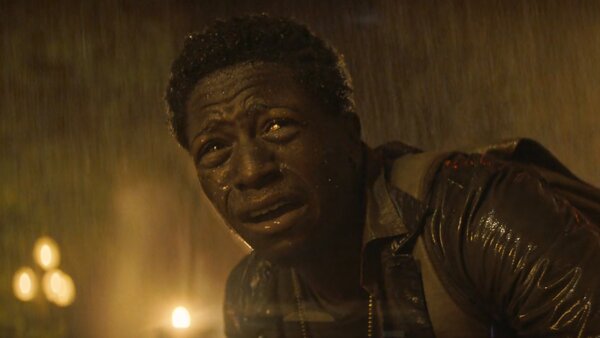
Another dystopian TV game now, with a similar premise to that of The Hunger Games. Though the reasons behind President Snow's spectacle are clearer, as The Long Walk appears to just be a form of entertainment, a certain number of children and young adults were pitted against each other until all but one were dead.
In the case of The Long Walk, the name is pretty self-explanatory. The 50 boys selected walk for as long as they can, being shot in the head if they fall under three miles per hour three times within an hour, until one remains to claim the prize of untold riches and a wish to be granted.
Pete, David Jonsson's character who made a point to see nothing but the good of the world, wanted to use his wish to make the world a better place, but when the time actually came, he didn't follow through.
Instead, he took Ray's (Cooper Hoffman) idea to heart, and wished for a gun immediately after the finish, so he could kill the Major, (Mark Hamill) the man behind the game. There may have been some form of petty revenge with the Major's death, but it would have been swiftly followed by his own, and someone else simply stepping into the Major's shoes. He had a chance to do something good from his victory, but he chose not to.
11. The Graduate
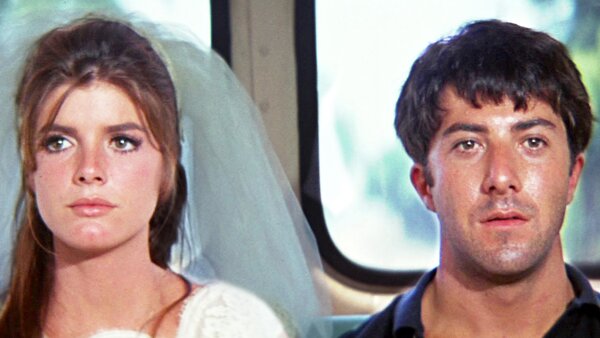
As far as iconic movie endings go, there aren't too many that can compare with that of The Graduate. The 1967 outing followed Dustin Hoffman's Benjamin, and his complicated romantic entanglement with Mrs. Robinson (Anne Bancroft) and her daughter, Elaine (Katharine Ross).
The big conclusion showed Benjamin racing to stop Elaine's wedding after the two were forbidden to get close to each other, eventually escaing on a bus as the guests, Elaine's parents included, were locked within the church. The elation that plastered the faces of the young couple very quickly soured to something more akin to melancholy, and doubt.
It's a frustratingly brilliant and ambiguous ending, as mere seconds tick by before the excitement of their forbidden love seemingly fades. Both directionless in life, Benjamin and Elaine have essentially thrown themselves into the deep end of life, without thinking about things more than they really should have.
Benjamin got exactly what he wanted, or what he thought he wanted, as did Elaine, but the melancholic dawning of having to face the future without a safety net, completely alone as a partnership casts more than a little doubt. Anyone guessing as to what happened next couldn't have imaged a particularly happy or fruitful subsequent chapter, even before the sequel novel of 2007.
10. Rocky IV

Sylvester Stallone's Rocky Balboa is as iconic as sporting movie characters can get, as the original in 1976 told a story of a true underdog that resonates as strongly now, 50 years later, as it did back then. As his success grew however, it no longer became about merely taking part.
The journey of the storytelling throughout the Rocky franchise is quite an ironic one, as it didn't matter that the Italian Stallion lost in the original film, while nine years later in Rocky IV, it didn't matter that he won.
After fighting Apollo Creed (Carl Weathers) twice, and Clubber Lang (Mr. T) in Rocky III, the fourth film became more personal than ever. In what should have been an exhibition bout, Dolph Lundgren's Ivan Drago killed Apollo Creed in the ring, resulting in Rocky challenging the monster to a fight in Russia, in order to avenge his fallen friend.
Of course, Rocky ultimately won, and Apollo was avenged to a degree, but honestly what would have been different had he lost? That's the thing with revenge flicks, in that success is never going to achieve what the protagonist truly wants it to. Apollo couldn't be brought back, there were no professional stakes since the fight was unsanctioned, and it was driven by pride, grief, and anger, three things that were never going to be satiated by victory in the ring.
9. Starship Troopers

When Starship Troopers released in 1997, the sci-fi elements arguably fell second in line to its political and satirical nature. Yes, the Federation were fighting an army of alien "bugs", but the story and the themes went far deeper than just guns being fired in space.
Throughout its run time, the film was peppered with propaganda pieces, showing how the Federation was gearing up to win the war, and how civilians could join up and become citizens, allowing the right to vote and such. It was also one of these videos that ended the movie.
After some twists and turns, Johnny Rico (Casper Van Dien) found himself leading the Roughnecks into battle in order to find, capture, and bring home the intelligent and elusive "brain bug". This would allow the Federation to study it, understand their enemy, and in doing so ensure victory. When the beast was captured, there were huge celebrations, but to what end?
After the bug was brought back and experimented on, the Federation was still at war, having seemingly made no further strides in grasping how the enemy's minds worked. Instead, they were still churning out the same recruitment propaganda as they were throughout the film, strongly suggesting that the Roughnecks' victory on Planet P ultimately meant very little at all.
8. Master & Commander: The Far Side Of The World

With Master and Commander: The Far Side of the World, audiences found themselves quickly dropped and immersed into the fight between the Royal Navy and Napoleon Bonaparte's forces in 1805. The action started immediately, with Russell Crowe's Jack Aubrey spending the rest of the movie on the hunt for the elusive ship, Acheron, that attacked them to begin with.
The argument was whether this was his duty, before he confessed that he had surpassed his orders a long time ago, and his chase was far more about pride than anything else, often at the expense of the souls on his ship, the HMS Surprise.
After weeks of pursuit against the ship everyone admitted was far superior to his own, Aubrey won victory by disguising the Surprise as a whale trawler, luring the Acheron in to capture them before mounting a full scale attack. It was genius, but it turned out that Lucky Jack wasn't the only one who could deceive.
During the attack, Jack was told by the enemy's physician that the captain had been killed, however after sending their newly captured ship back to England, Jack found out that he too had been deceived by the captain, who was simply dressed as the doctor. This put him right back to square one, having to chase exactly the same target once again.
7. The Running Man

Yet another dystopian TV show pitting people in a fight to the death for the sake of ratings, and one which came long before The Hunger Games, and before the film adaptation of The Long Walk. The Running Man is a bona fide Arnie classic, but the ending certainly isn't as triumphant as it is cracked up to be.
After being framed for killing unarmed rioters who just wanted food, Ben Richards (Schwarzenegger) was sent into The Running Man, a game show in which he would be hunted down for sport and entertainment. However, what he actually did was destroy the show, tearing it down from the ground up, and exposing it for the lies it broadcast, and the lives it took.
However, at the end of the day this was just a game show, a relatively small cog in the wider police state. Taking it down may have opened the door to a larger revolution, sure, but even after this victory, the totalitarian authority would still be in power, happy to treat any and all rebels as they did the rioters at the very beginning of the film. Gunning them down in cold blood.
The same could be said about Edgar Wright's 2025 remake. Though this showed more of the rebellion that came from Ben Richards' (Glen Powell) spark, it was still just a game show, and victory against it did not mean victory against the ruling government.
6. Godzilla Vs Kong

Behind the Marvel Cinematic Universe, you could argue that the MonsterVerse is the next most successful, critically and creatively, even if it falls behind the DCEU in terms of box office figures. After the two titans were separately introduced, Godzilla and Kong came together in 2021.
The story and the spectacle as a whole was everything you could expect it to be, and nothing more. There was absolutely nothing memorable about the human aspect, it was purely about a big monkey fighting a big lizard, and rather than picking a true victor, it was made so that it truly didn't matter who came out on top.
The two monsters tussled twice, and over the course of them it was clearly Godzilla, the film's central protagonist, who stood tallest. However, before too long they were both teaming up to fight Mechagodzilla, and were happy to co-exist by the time the credits rolled.
Of course, Legendary would want to get more mileage out of both characters, so while they certainly weren't the best of friends, Godzilla reigned as king over the Earth as we know it, with Kong taking residence within the Hollow Earth. Godzilla won, but it didn't really matter in the long run.
5. Uncut Gems

Though Adam Sandler has dabbled with serious roles throughout his career, he is of course most well known for his goofball comedy that has made the likes of The Waterboy, Happy Gilmore, Big Daddy, and even Little Nicky so good. His role as Howard Ratner however couldn't have been more different.
Even with Punch Drunk Love under his belt, nobody could have seen Sandler's outstanding turn in Josh and Bennie Safdie's Uncut Gems coming. His performance was as shocking as the final moments of the movie itself.
The story revolved around Howard, a high end but crooked jewels dealer, who was typically in the hole for a lot of money. This came to a head when he owed his brother-in-law Arno (Eric Bogosian) $100,000, something that he eventually planned to solve by betting heavily with Arno's own money on Kevin Garnett and the Boston Celtics in an NBA game.
It was arguably the biggest risk he ever took, and he certainly didn't make any friends along the way. He was hated by Arno and his goon Phil (Keith William Richards), and locked them in a security cage for the duration of the fateful game until the final whistle finally came, and his bet won. Yes he had gambled with Arno's money, but it had come in, and earned over $1 million. None of that mattered however, as the irate Phil shot Howard in the head the moment he was freed from his game-long captivity.
4. Jurassic Park

He may have been everyone's favourite loveable grandad, but John Hammond (Richard Attenborough) is unequivocally the villain of the entire Jurassic franchise. Some of the worst things imaginable have been done with good intentions, as Sam Neill's Alan Grant once told his young protégé Billy (Alessandro Nivola), likely with Hammond's actions in mind at the time.
The man brought dinosaurs back to life from extinction, something that was never going to be contained to one small island, affecting just a small number of people. This was always going to be a game changer across the globe.
Yes, the likes of Hammond and Grant, along with Ian Malcolm and Ellie Sattler (Jeff Goldblum and Laura Dern) were able to escape Isla Nublar with their lives, but the damage had been done. You can't put the genie back in the bottle as it were, and as Ian Malcolm so eloquently put it, life finds a way.
Particularly with the fact that multiple further dino-inhabited islands have been introduced in the years since 1993, and the fact that greed is one of the most powerful motivators in history, there were always going to be adventurers and businessmen looking to exploit the animals for their own personal reasons, resulting in an inevitable damage and further loss of life. Grant and co. may have bettered the dinos that day when they escaped, but it was a victory that wasn't going to last long.
3. The Terminator

There haven't been many time travel films that didn't ultimately get more than a little messy, creating some sort of loop hole or paradox, or failed to get even close to water tight in some cases. Even The Terminator, as strong of an outing as it is, can't evade this scrutiny.
The story seems simple enough. Skynet, the evil sentient supercomputer of the future is on the verge of being defeated by the human resistance, and so sends the Terminator back in time to kill Sarah Connor (Linda Hamilton), the one-day mother of the human leader, John. John's response is to send one of his best men, Kyle Rees (Michael Biehn), back to the same time to protect her.
Further instalments in the franchise only went to prove that Skynet will seemingly always have an answer in the future no matter what happens in the past, but even in just the original alone, there is enough to question actually how much impact Kyle and Sarah had.
Yes, Sarah ultimately survived the assault from Arnie's T-800, but all this did was maintain the status quo. In the future Skynet would, in theory without the sequels at least, still send the Terminator back in time to kill her, and John would still sent Kyle back as well. It's a loop that wouldn't have ended had Skynet not had other ideas in the subsequent stories.
2. Inception

Has there ever been a final movie scene as hotly debated as that of Inception? Even with the likes of Total Recall, Lost in Translation, and the aforementioned The Graduate to name but a few offering frustratingly ambiguous endings, the short answer is no, there hasn't.
There is of course the theory of Dom Cobb's (Leonardo DiCaprio) wedding ring being his true totem, and the fact that Michael Caine has claimed Christopher Nolan spelled out the exact ending to him, but regardless, the question of whether the final moments where Dom finally reunited with his children were real or not is one that feels as though it will always be relevant.
Forced to go into hiding away from his children, Dom was promised by Saito (Ken Watanabe) that if he helped convince Cillian Murphy's Robert Fischer to dissolve his father's company, then his name would be cleared and he could return home. At the end of the story, he finally saw his children again, but since the line between dreams and reality had blurred to the point of no distinction, it was impossible to tell if he was in reality or not.
The truth is that it didn't matter. Even Nolan himself has said as much, and so although Cobb and Arthur's (Joseph Gordon Levitt) plan of inception was successful, the character himself was beyond caring whether he was in reality or not. It was simply inconsequential.
1. 1917

With any war story that doesn't directly result in that particular conflict's end, it's hard to take anything as a win. A little victory perhaps, but if the war keeps going, you know that immeasurably more lives will be lost.
This is particularly true with 1917, even before the film started. You don't need a history degree to know that World War I went until 1918, meaning that there was a strong chance men would still die even after the credits rolled on the movie.
Then, George MacKay's character was actively told that everything he went through was effectively all for nothing anyway. Lance Corporal Schofield travelled across German-occupied France to deliver a message stopping hundreds of soldiers falling into a trap and being slaughtered. Though he arrived just as the first wave went over the top, he eventually convinced Colonel Mackenzie (Benedict Cumberbatch) to call off the rest of the attack, saving many, many lives.
However, as Mackenzie calmly explained, this was war, and it was going to keep going until just one side was left standing. Those men may have had their lives spared that day, but it would only be another week before they were sent on another mission, doomed to die in the trenches regardless of what Schofield achieved.