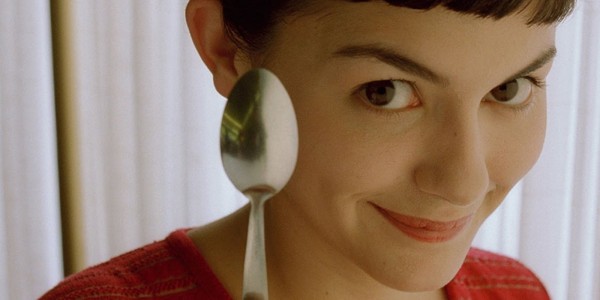
Another film featuring a female protagonist who escapes into the fantasy realms of her imagination, Jean-Pierre Jeunet's Amelie is decidedly more warm-hearted and playful in tone that Del Toro's Pan's Labyrinth but no less visually impressive. Having been raised in isolation from other children on account of a heart condition that never was, Amelie grows up with a peculiar outlook on the world around her. Her overriding preoccupation in life is to help improve matters for those around her, and while in lesser hands such a premise could easily sink into sickly sentimentality, Amelie's jovial atmosphere and uplifting vibe never feels saccharine. The lack of cynicism in the film and its whimsical tone certainly makes for a refreshing change, while Jeunet's direction is nothing short of polished to perfection.
10. The Pianist
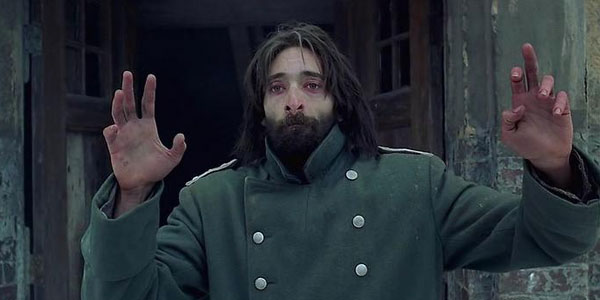
More than a few movies about the horrors of the Second World War have gone on to become acknowledged as classics - Steven Spielberg alone has directed two of them, Schindler's List and Saving Private Ryan, while other lesser known movies such as Come and See have arguably explored the horrors of that conflict with considerably more depth. Roman Polanski's The Pianist, adapted the memoirs of concert pianist Wadysaw Szpilman (played in the movie by Adrien Brody, delivering one of the finest performances of his career), sits aside from many war films in that its focus is on an outsider, neither a perpetrator of atrocities nor a hero saving the world from facsism but a survivor, no more or less. Sitting in this morally ambiguous landscape, The Pianist rises above many of its peers on account of its objective appraisal of the war, making it one of the most rewarding if ambiguous war movies of all time.
9. Ida
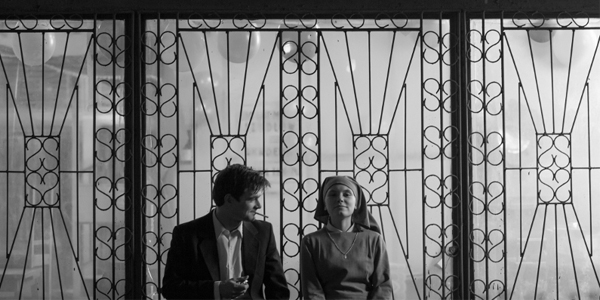
Whereas Polanski's The Pianist focused on the life of a Jew in Nazi-occupied Europe, Pawel Pawlikowski's hauntingly austere and minimalist film Ida takes us to post-war Poland and the era of Stalinist-influenced communism. Anna is a young novice nun instructed to visit her family before taking her vows, who learns from her aunt that she is actually a Jew by the name of Ida Lebenstein who was put into the convent by her parents so that she could avoid death at the hands of the Nazis. Agata Trzebuchowska, who plays Ida, is a true revelation - an actress with a wonderfully expressive and mesmerising face - but perhaps the real beauty lies in the black and white cinematography. The unusual compositions, often with characters foregrounded against expansive backdrops, enhances the stark landscapes and feeling of isolation and confusion Ida experiences, make Ida a visually poetic film as much as an emotionally resonant one.
8. 12 Years A Slave
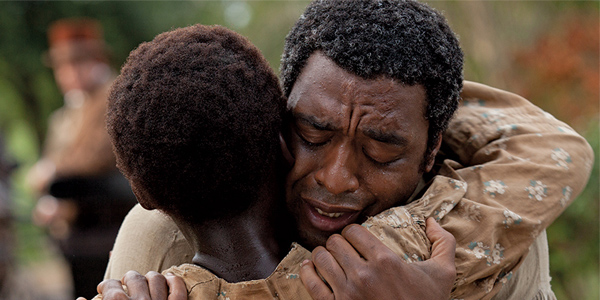
While Hollywood has often been more than happy to examine the wrong-doings of other nations it has rarely had the honesty to project its ire against the bad deeds of America itself, preferring instead to serve up hagiographic movies in which America is "good" and its enemies "evil". This simplistic revisionist approach to history is completely lacking in 12 Years a Slave, British director Steve McQueen's intricate adaptation of the Solomon Northup's memoirs of his time spent in slavery. The shameful period of America's past is explored in all its unflinching brutality, with exceptionally strong performances throughout, particularly from Chiwetel Ejiofor in the central role and Lupita Nyong'o as the abused slave Patsey, which rightly earned her an Oscar for Best Supporting Actress. Unpleasant at times 12 Years A Slave may be, but then that's the only appropriate way to depict such a cruel system as slavery.
7. The Lord Of The Rings Trilogy
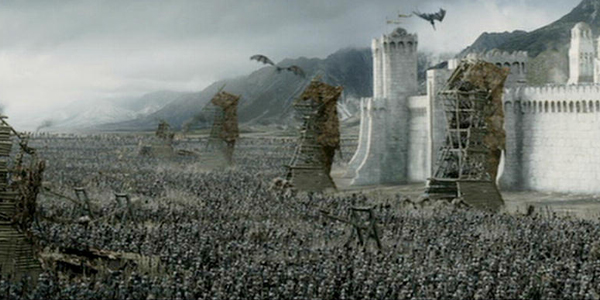
If there's a cinematic experience since 2000 that fully deserves the title "epic" then Peter Jackson's The Lord of the Rings trilogy is a contender for the top spot - on a logistal level alone few films in the history of the medium have attempted anything as grand and sweeping as this. Adapting such beloved books as J R R Tolkien's epic fantasy trilogy to the screen is never going to satisfy all its fans, but it's hard to imagine anyone pulling it off with more flair and invention than Jackson managed - irrespective of any nitpicking about subtle changes and tweaks from the source material, his trilogy is a thoroughly impressive work of cinema, rich in detail, full of atmosphere and at the same time delivering an undeniable mass appeal. Such a shame, then, that Jackson and his collaborators haven't been as successful in imitating this experience in their drawn out adaptation of Tolkien's The Hobbit.
6. Spirited Away
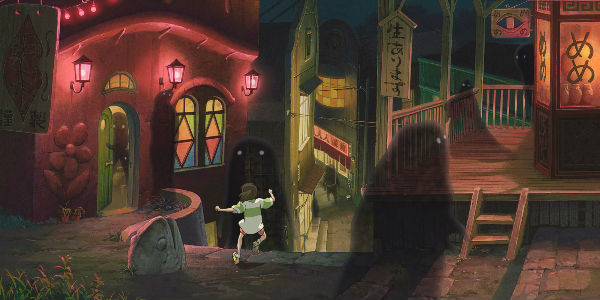
Japanese animation director Hayao Miyazaki was no stranger to making incredible animated movies widely considered to be classics before the 21st century - from Laputa: Castle in the Sky through to My Neighbour Totoro and Porco Rosso, his fantasy realms have wowed a generation of movie lovers. His first effort since 2000, Spirited Away, for many condensed everything that makes his films so appealing into something nothing short of perfection. En route to her new home, young girl Chihiro finds herself transported into a strange ethereal realm of spirits and demons, where gods hang out at a weird bath house and strange dragons fly through the sky. Archetypal in its exploration of the passage of childhood into adulthood - and a great companion piece to the much darker Pan's Labyrinth - Miyazaki's masterpiece has never been bettered, even by the great director himself.
5. City Of God
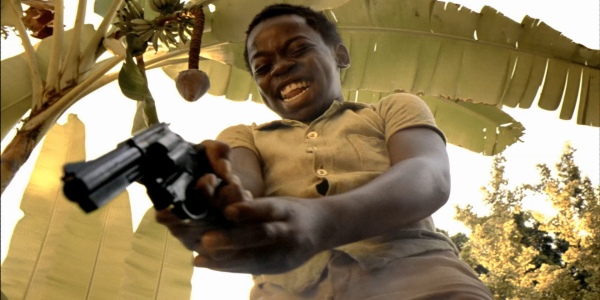
From its frenetic opening sequence in which a group of young men frantically chase a chicken through the slum back streets to its messy and violent conclusion, City of God is a first class example of fearless, bravura filmmaking. Adapted from the novel of the same name by Paulo Lins, which itself was loosely based on real events, City of God is an sprawling examination of the criminal underworld in the impoverished slums and favelas of Cidade de Deus, a district of Brazil's Rio de Janeiro, spanning from the 1960s through to the 1980s. Filmed with a boundless energy and with sterling performances from a largely unprofessional cast, this is a film where truth becomes stranger than fiction, where larger than life characters inhabit the screen before meeting their unexpected demise and, beyond it all, a sense of futility suggests that the cycle of violence and poverty will continue indefinitely.
4. No Country For Old Men
Following on from 2000s O Brother, Where Art Thou? the Coen brothers seemed to hit something of a rough patch in their otherwise exemplary career as filmmakers, with Intolerable Cruelty, The Man Who Wasn't There and their misjudged remake of The Ladykillers failing to match their usual fine form. Fortunately, 2007's No Country For Old Men, adapted from the Cormac McCarthy novel of the same name, saw them returning to the quality of their best efforts in true style. On the surface a cat-and-mouse thriller in which a hitman is dispatched to hunt down the man who unwittingly stumbled across a suitcase full of drug money, the Coens - sticking closely to the source material - imbue the film with a grander sense of fate and destiny whilst ending on a daring note of ambiguity that irritated some in the audience but impressed many others. It finally earned them an Academy Award for Best Picture and Best Director - something which many agree was a long time coming.
3. The Tree Of Life
Only three films released since the year 2000 managed to make it onto British film magazine Sight and Sound's 2013 critics poll for best movie of all time - David Lynch's Mulholland Drive has already been discussed - another is Terrence Malick's divisive 2011 movie The Tree of Life. It's not hard to see why Malick's film caused such diverse reactions from audiences upon its release - wildly experimental and largely eschewing conventional narrative, for some it came across as little more than a self-indulgent exercise in pretentious naval-gazing. With the extended "creation" sequence it's understandable why some reacted this way, but The Tree of Life transforms into something truly marvellous to behold when viewed as the cinematic equivalent of the ambiguous nature of memory and how we recall our childhood. Whether or not you think Malick's fleeting, abstract approach is fully successful, there's no denying that it is one of the most visually mind-blowing and audacious movies ever made.
2. In The Mood For Love
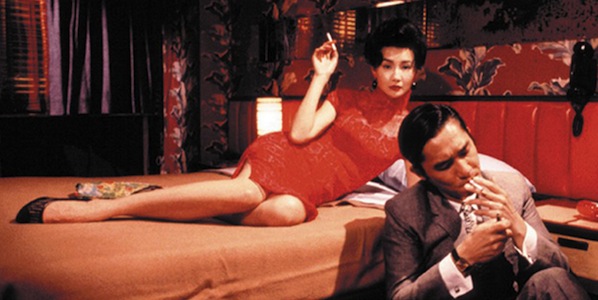
The highest ranked film since 2000 on Sight and Sound's critics poll (it placed 24th), Wong Kar-wai's sumptuous In the Mood For Love is perhaps already widely considered to be a truly classic movie in every sense of the word. In the Mood for Love explores unrequited love in a similar vein to David Lean's old classic Brief Encounter, but here the stuffy conservative values of post-war Britain are switched for Shanghai in the 1960s, a place where equally conservative values - and gossiping neighbours - play a damning role in the potentially flowering passion between two people who discover their spouses are cheating with one another. Tony Leung and Maggie Cheung - both disarmingly photogenic presences - play their roles with understated grace, while Christopher Doyle's camerawork is notably more elegant than the fast-paced energy found in his previous films such as Chungking Express and Fallen Angels.