20 Movie Characters Completely Different From Their Source Material
What the MCU did to Adam Warlock is a crime.

Originality feels like it is at a premium on the big screen in recent times, with it apparently seeming a safer bet for movie studios to lean on a pre-established property than to do something that people have never seen before.
This is where the unprecedented amount of sequels comes from, as well as reboots, remakes, and adaptations of anything from novels, comic books, and video games, to viral internet memes. However, that being said, it is rare that such adaptations are ever perfectly faithful to their source material, otherwise what would be the point (other than a quick cash grab, of course).
There are levels to this. A detail can be tweaked here or there, maybe even a plot line or a character dropped in their entirety, but then there are those characters who are changed completely, without even a trace of who they were in their first iteration.
Important characters have been reduced to less than nothing, insignificant characters have been made integral, backgrounds have been changed, motivations altered, as well as appearance, role in the story, and in some cases, the entire point of the story has been twisted around them. Nobody wants shot for shot remakes, but do we need these kinds of changes either?
20. Matt Hooper - Jaws

When a character is changed from the source material for a big screen adaptation, it could be done for any number of reasons. Matt Hooper (Richard Dreyfuss) was unrecognisable in Steven Spielberg's Jaws when compared to the version from Peter Benchley's novel, and though it's not always the case, this was for the better.
He may not have been the central protagonist, of course this was Brody (Roy Schneider), but he was certainly right up there with him, and it's hard to imagine audiences rooting so much for him had he been adapted faithfully from the book.
There, not only was Hooper arrogant and rather slimy, he actually had an affair with Ellen Brody behind the Chief of Police's back. Though they certainly got on well when Hooper joined them for dinner in the film, it's almost impossible to imagine Dreyfuss' character doing something like that. He was a nice guy, and a decent man, and was far easier to connect with on screen.
In this regard, the film is rather more straight forward than the novel, with less twists, turns, and intricate dynamics in favour of a straight up man vs shark story, and this worked. Yes, Hooper was ultimately eaten by the great white originally, but it made far more sense to Spielberg's version of the story to have him a hero to root for next to Brody than a bad guy getting his comeuppance.
19. Jumba - Lilo & Stitch
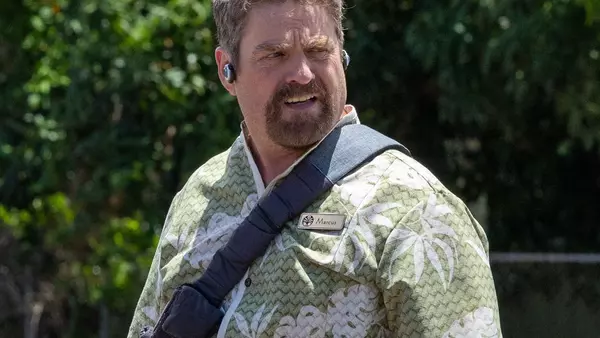
There were a lot of things changed when Disney brought Lilo and Stitch into live-action. Some decisions, like Nani (Sydney Elizabeth Agudong) opting to leave Lilo (Maia Kealoha) and move away for college were real headscratchers, while others were very clearly motivated by budgetary reasons.
Not only did this see Jumba and Pleakley (Zach Galifianakis and Billy Magnussen) shift into human form for the bulk of the story, something that was not an aspect of the original from 2002, it led to the omission of Captain Gantu completely. Understandable, as the character is a giant humanoid shark, however it did leave something of a gap in terms of villainy.
This is where Jumba was utilised in the remake. As if he wasn't different enough already, without the accent and showing him in human form for the most part, he was turned into a complete antagonist.
By the end of the original movie, his outlook on 626 was changed as he stuck around on Earth, as does Pleakley in both the original and the remake as something of a fun uncle to Lilo. In the live-action version however, he was taken away as the bad guy still hell bent on destroying Stitch.
18. Jack Reacher - Jack Reacher

When adapting a popular character from a source material, the aesthetic is always going to be important. Fans of a novel or a comic book are already going to have an idea of what certain characters will look like, and to deviate too far away from such thoughts could provide a mountain to climb from the get go.
Sometimes changes in this regard are not only beneficial but important, while others aren't. In this case, the change was so drastic that the character on screen felt absolutely nothing like the character from the pages of Lee Child's work.
Of course, this is in reference to the bemusing casting of Tom Cruise as Jack Reacher. You know, the 6'5", physically imposing monster of a man who could intimidate just about anybody with little more than a look? Somehow, the film series took this version of Jack Reacher and turned him into the famously short in stature Tom Cruise.
Particularly with someone like Reacher, his frame does play into the personality of the character a lot, and the Amazon series couldn't have nailed its casting better than with Alan Richter. Cruise, in spite of the star power of his name, was a swing and a miss.
17. Red - The Shawshank Redemption

When the topic of greatest movie of all time crops up, there will invariably be the mention of The Shawshank Redemption, widely regarded as as close to perfect as a movie can get. Arguably made even more impressive by the fact that its source material is just 103 pages long.
Who could have predicted that Stephen King's Rita Hayworth and the Shawshank Redemption would go on to be such a huge part of popular culture? The film is faithful to the story in a lot of ways, though of course there are differences, with some of the most noticeable coming with the two chief characters.
Andy Dufresne is chubby and short in the book, and certainly not the "tall drink of water" as played by the 6'4" Tim Robbins. Then of course, there is Red, who was played wonderfully by Morgan Freeman, while being white, Irish, and red-haired in the book.
This answers the question of why Red was in fact called Red, something that was cleverly alluded to in the film with a subtly meta answer. When Freeman's version of the character was asked why he was called Red, he said it may be because he is Irish. Those who haven't read the book won't have realised just how accurate a statement that is.
16. Toothless - How To Train Your Dragon

Some cinematic adaptations can either end up as completely unnecessary shot for shot remakes, while at the other end of that spectrum are such films that hold barely any resemblance to their source material at all.
Weirdly, How to Train Your Dragon has experienced both, as the 2025 live-action remake was an almost shot for shot remake of the 2010 outing, which in itself was adapted from the children's book series with little more in common than a few names and the fact that there were Vikings and dragons. As such, Toothless is barely recognisable.
The fact that Toothless the Dragon is a dragon named Toothless in the films is about where any similarity ends. On the big screen, the beast is a rare Night Fury, a figure of something akin to legend and myth in the Viking community, whereas in Cressida Cowell's novels, Toothless is a tiny green dragon small enough to fit on Hiccup's shoulder.
Again, the entire story is changed with this most loose of adaptations, and this new narrative certainly wouldn't have worked with a Toothless faithful to the source material. There is also the small matter of the dragon being able to talk, which was not something carried over to the movie.
15. Freddy Krueger - A Nightmare On Elm Street

When a film character, particularly a villain, is still as relevant and iconic decades after their first appearance, there is obviously a reason for it. When the seemingly inevitable reboots come knocking however many years later, it's probably a good idea not to stray from those ideas too much, right?
You'd have thought that was little more than common sense, and though such movies have to make an effort to differentiate themselves from the originals, changing everything about a character is largely ill-advised. Look no further than 2010's A Nightmare on Elm Street remake, in which the very core of Freddy Krueger's (Jackie Earle Haley) backstory was changed.
The messy story played with the idea of Freddy being a sympathetic, wrongly accused victim before randomly driving home that he was in fact a child molester. Though this may have been the initial idea for Freddy back in 1984, he was changed for the better before the release of the film.
Jackie Earle Haley's version of Freddy also couldn't have been further from his Robert Englund counterpart in terms of the joy he took from tormenting his victims, and his quippy nature, as well as the look. The practical, unrealistic look of Krueger was absolutely key to what made him so memorable, and it's no surprise that the remake was reviled for leaning into a more "realistic", CGI-based aesthetic. Literally everything about Freddy's reimagining in 2010 missed the mark.
14. The Mandarin - Iron Man 3

When bringing to life a super hero on the big screen, one of the many, many things to consider is when to pit them against their greatest ever foe. Captain America (Chris Evans) crossed swords with Red Skull (Hugo Weaving) immediately in The First Avenger, while Heath Ledger's Joker was saved for Christopher Nolan's Batman sequel. Tony Stark (Robert Downey Jr.) didn't face his until Iron Man 3.
After seeing off Obadiah Stane, Ivan Vanko, and Loki (Jeff Bridges, Mickey Rourke, and Tom Hiddleston), the MCU's first hero was finally put on a collision course with The Mandarin, and it couldn't have been further from what anybody was expecting.
Ben Kingsley seemed a perfect casting for the maniacal terrorist threat, and the character seemed to track well with what could have been expected based on his comic appearances. However, the reveal that The Mandarin was nothing but a ruse by Guy Pearce's Aldrich Killian, designed to stay anonymous, pulled the rug out from everybody, whether they were aware of the character's past or not.
Expectations were subverted and then some here, and the twist was largely hated. So much so that the real Mandarin (Tony Leung) has since been introduced in Shang-Chi and the Legend of the Ten Rings, while Slattery has amazingly reappeared in the All Hail the King short, Shang-Chi, and the upcoming Wonder Man series.
13. Agent 47 - Hitman
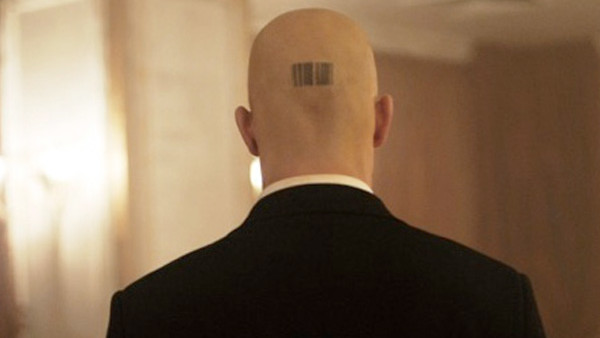
There has always seemed to be an issue when it comes to bringing video games onto the big screen, and while there have been some success stories in recent years, the bad still far outweighs the good. Hitman, for example, has had two shots at being adapted into film, and both have fallen completely flat.
The list of missteps from both Hitman and Hitman: Agent 47 are far too long to list here, but when you can't even get the main character right, you know you're in trouble.
Agent 47 has always been an assassin with the secondary objective, after killing his target, to do it as quietly as possible. He is the Silent Assassin after all, and yet the films have made absolutely no attempt to convey that. Instead of actually adapting the character and the games, they have just thrown a bald guy in a suit into a generic shoot-em-up, blow-em-up popcorn flick.
Then, particularly in 2007's Hitman, Agent 47 (Timothy Olyphant) was made far too emotional. He all but fell in love with Olga Kurylenko's Nika Boronina, which has never been something associated with the character. He is the best killer the agency has, and he is that way because he is cold and emotionless, something that has never been successfully translated to the screen.
12. Ben Richards - The Running Man

Sometimes a film will lean further into the strengths of its lead actor rather than the source material it is adapting, which can beg the question, why cast them in the first place? The answer for 1987's The Running Man is simply down to the unmatched star power Arnold Schwarzenegger would bring with him.
Who wouldn't have cast Arnie in the 80s if they had the chance? However, family man wasn't exactly what anyone thought when they looked at the Austrian strongman, which may have had some influence in why his character's backstory was so different than Stephen King's novel.
Originally, Ben Richards was a devoted husband and father who was forced into playing The Running Man out of desperation. His family were past the point of struggling, and with the alternative being his wife turning to sex work, he signed up.
Arnie's version of the character however, was a police officer, completely different from the source material. He still had the sympathetic factor, as he was framed for murder after refusing to kill innocent civilians, but the motivation and reason for playing the game couldn't have been more different. Edgar Wright and Glen Powell played it closer to King's version in this regard, but unlike Arnie, there was absolutely no issue with Powell playing the family man.
11. Mario - The Super Mario Bros. Movie

It's probably fair to say that not too many would have anticipated such unmitigated success for The Super Mario Bros. Movie, even taking into account the popularity and longevity of the source material. It's probably also fair to say that without a few key changes to the titular character, such success may not have come.
The gaming franchise is incredibly popular, however Mario himself, as well as some of the other major characters, aren't exactly particularly deep. Their characters aren't explored in any proper way, and so it was up to the film to fill in some of these blanks.
One of the biggest aspects in terms of the backstory given to both Mario and Luigi (Chris Pratt and Charlie Day) was that they were, not only part of a huge family, but were also something of the laughing stock of it. Mario having that need to prove himself is something that was never really present in the games, yet vitally important in the movie.
Then of course, there is Mario's voice, as well as the fact that he hails from Brooklyn rather than Italy. There was still a very strong influence of Italian heritage, while it was the voice that the most jarring difference. Yes, Chris Pratt's take on Mario was vastly different to that of Charles Martinet, but arguably better suited to a two hour film.
10. John Constantine - Constantine
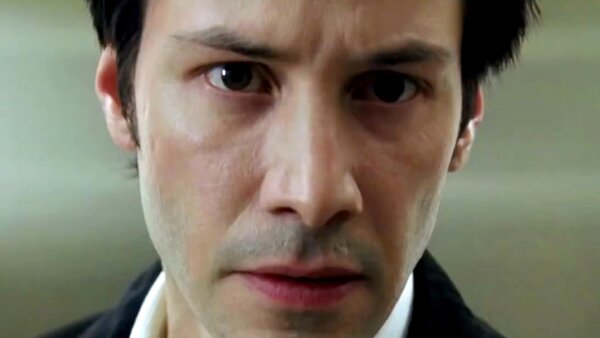
Keanu Reeves is arguably one of the most popular leading men in Hollywood, and he himself has shared the same wish as many of the film's fans for a sequel and the chance to return to the character of John Constantine.
However, this has to come with the caveat that Reeves may not have been the best person to portray the character, at least if the idea was to adapt him from his DC comics faithfully.
There are plenty of thematic and tonal differences between 2005's Constantine and the source material from which it was adapted, with one of the biggest being the man's background. In the comics, Constantine is proudly English, hailing from Liverpool before moving to London, and a lot of the aesthetic and the feel of those books reflects its British background. Reeves' version of course was made American, though this may have been for the better having heard what an English Keanu Reeves accent sounds like.
Reeves' backstory and motivation as the character differ greatly as well, as he is rarely portrayed as the sarcastic trickster, instead rather a bitter man trying to escape his own fate. Oh, and he's not blonde. He is just one of a few on this list whose differences may have been compounded further by a subsequent adaptation doing a far better and more faithful job, in this case Matt Ryan in the CW's ArrowVerse.
9. Radagast - The Hobbit Trilogy

It's a common problem when a novel is adapted to a film that there is not enough time for everything, and certain aspects and characters have to be reduced greatly. The Hobbit trilogy had the opposite problem however, as it turned one book into three movies, and as such had to stretch a lot of the story out.
Arguably one of the best examples of this is Radagast the Brown. One of Middle-earth's five wizards, Sylvester McCoy's character had a much more significant role on screen than he does in Tolkien's novel.
On the page, Radagast was name-dropped just once by Gandalf in a bid to earn the trust of Beorn, while not actually playing a part in the events at all. In the movie trilogy, his story is greatly intertwined with that of Gandalf (Ian McKellen) and the Necromancer (Benedict Cumberbatch), another character who is barely mentioned in the book itself.
Radagast's greatest impact on the story of Middle-earth came during the Fellowship of the Ring book, where Gandalf explained how his fellow wizard was used as a pawn by Saruman to lure him to imprisonment at Isengard. Other than his love of animals, there is very little from either The Hobbit, or the Lord of the Rings source material that translates over to the films.
8. Nate & Sully - Uncharted
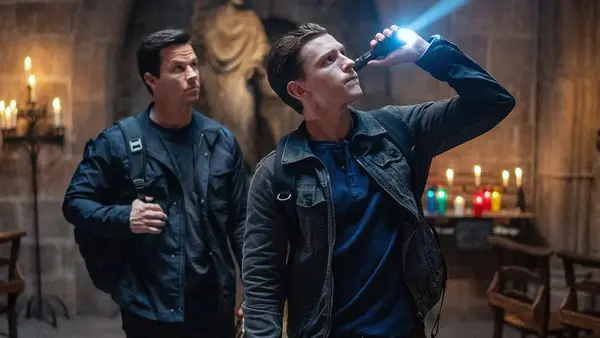
Since the first game, Uncharted: Drake's Fortune released on PlayStation, players of the game have gotten to know and connect to the wonderfully sarcastic and witty Nathan Drake, and his gruff but equally loveable mentor and father figure, Victor Sullivan.
The two have appeared together across multiple games and even a novel, and for fans of the series, you'd be forgiven for expecting their movie counterparts to be in at least some way recognisable as those characters. However, the fact that the two leads of Sony's 2022 Uncharted film share their names is about the only similarity anyone is likely to find.
Tom Holland has done great work for Sony as Peter Parker, but there wasn't a person alive watching who could have reconciled his casting as Nate, and the same could be said about Mark Wahlberg as Sully. Two big names in the industry, certainly, but they couldn't have been further from what an Uncharted adaptation should have looked like.
Even taking into account the fact that it was a younger version of the characters brought to life on the big screen, they were still nothing like the flashbacks seen in the gaming series, and their backstories were changed so much as to feel like a generic action romp rather than the adaptation of a beloved series.
7. Mort Rainey - Secret Window

It may be taken for granted sometimes, but it can be extremely difficult to pull off a good mystery, a big twist, and satisfying conclusion in a movie. Not everything can be a Knives Out or The Sixth Sense, and as such there are plenty of these stories that fall completely flat.
One such is Secret Window, in which Johnny Depp's Mort Rainey is plagued by a mysterious stalker who accuses the writer of plagiarising his work. The ultimate reveal that Mort's stalker, John Shooter (John Turturro), was a figment of his own imagination was unfortunately just too easy to telegraph throughout the whole thing.
In fairness to the filmmakers, there was at least an attempt of a curveball upon a curveball within the story, as Mort and Shooter were changed significantly from the source material, namely Stephen King's Secret Window, Secret Garden.
In the movie, as Shooter, Mort kills both his wife and her lover in a fit of rage that he seemingly never finds comeuppance for. In the novel however, Mort's created character actually separates from him to a whole new person, who instead kills Mort and heads into the wind. It's a huge departure from the book that changes everything, though it still wasn't able to encapsulate the audience on the whole.
6. Roland - Borderlands

Jack Reacher isn't the only character to be wildly miscast based on their stature. In the same way that Tom Cruise fell far short of Lee Child's hulking giant of a protagonist, so too did Kevin Hart fail to match the size of Roland in Borderlands.
While the likes of The Super Mario Bros. Movie, Detective Pikachu, and Sonic the Hedgehog have been working hard to prove that it is possible to adapt a video game into a decent movie, it felt as though Borderlands wasn't paying attention. This starts with the cast.
In spite of a surprising amount of star power, not one of the film's casting decisions was well received, arguably most of all Kevin Hart as Roland. With the greatest of respect to the actor, what could possibly have convinced anybody to believe that he could portray such a character?
No, appearance isn't everything, but even Roland's personality was off. Of course Kevin Hart is famous for his comedic roles, and so that was bound to come into play in Borderlands, but with Roland it was something that just didn't belong. He has always been a stoic statue of a man, far from what the film ultimately brought to the screen.
5. Bogdan - The Thursday Murder Club

There will always be roles that are chopped and changed when a novel is adapted to film, as a run time of two or even three hours often simply isn't enough to bring to life every aspect of the story. It is largely unavoidable.
However, some projects are affected more than others in this. Netflix's The Thursday Murder Club is one such film, and several characters and plot points were reduced and changed, but few so much as Bogdan (Henry Lloyd-Hughes). The man may have been a killer in both iterations of the story, but in completely different ways.
In the novel, it was ultimately revealed that Bogdan, who had become something of a friend to the Club, in particular Elizabeth and husband Stephen, had killed Tony Curran. This was as revenge for Curran killing Bogdan's friend many years earlier, and was generally accepted as a reasonable action.
He has gone on to play huge roles in Richard Osman's subsequent books, something that is now seemingly off the table in terms of the movies, should any sequels be forthcoming. Rather than a justified action, Bogdan was given a much shallower narrative revolving around Curran (Geoff Bell) stealing his passport, and Bogdan murdering him for it. He was arrested as one of the villains of the piece, and seemingly has no way of coming back. Should The Man Who Died Twice be adapted next, it will have lost a compelling and integral character.
4. Mulan - Mulan

The best Disney live-action remake Disney has produced is its stunning take on The Jungle Book, though this is the exception. Most are either soulless cash grabs or pointless shot for shot remakes, often both. Then there is Mulan.
2020's reimagining of Mulan is a tricky one, because it has been one of the most well received of all of the Disney remakes, and yet it completely misses the point of the entire thing. This comes with a vital change to the titular character that robs the entire story of its relevance.
In 1998, Mulan was a lone female in the Imperial army, and despite the prejudices she faced, she still excelled, and proved herself just as valuable and worthy of anybody else there, if not more so. So much so, that Disney actually added a new stipulation of an act of heroism to allow her to class as a Disney Princess.
In the remake, none of the above stands, simply because Mulan (Yifei Liu) was egregiously given magical superpowers in the form of Chi. This turned the message of the film from women being able to do anything, to women being able to do anything as long as they had magic to wield. This was such an odd decision, as it completely stripped the story of its core meaning.
3. Adam Warlock - Guardians Of The Galaxy Volume 3

Guardians of the Galaxy Volume 3 may have been one of the better movies of the Multiverse Saga, but it was far from perfect. It was easily the weakest of the Guardians trilogy, as everything outside of Rocket's (Bradley Cooper) story left a lot to be desired, and then there is what James Gunn did to Adam Warlock (Will Poulter).
One of the many mid and post-credit scenes boasted by Guardians 2 saw Ayesha (Elizabeth Debicki) tease the emergence of Adam, the perfect creation. Already, his backstory was changed to be a part of the Sovereign, but it was exciting to think of such a powerful character coming to the big screen.
During the Infinity Gauntlet comic arc, it was Adam Warlock who led the Avengers against Thanos, he was synonymous with the Soul Stone, and had an evil alter ego known as the Magus that could have been explored. He even joined forces with The Mad Titan at one point, and spent a lot of time with Gamora within the Soul Stone itself.
Needless to say, there were so many directions Warlock could have been taken, and with six years between Guardians films, there was plenty of time to get excited. However, when he was finally brought to life, he was turned into a powerful yet petulant, idiotic man child. It doesn't even matter whether the plan was to ultimately grow him into his comic form, what was done to him in Guardians 3 (what could quite possibly be his only MCU appearance), was nothing short of an insult.
2. John Hammond - Jurassic Park

Jurassic Park is one of those rare films where almost every change that was made from the source material turned out for the better. This is true of smaller changes like omitting Ed Regis entirely, or swapping the ages of Tim and Lex round, to larger wholesale changes like the tone of the whole thing.
Then there is John Hammond. Played so wonderfully by Richard Attenborough as something akin to everyone's favourite grandad, the character wasn't nearly so wholesome in Michael Crichton's novel. He felt more like a villain than in the film.
That's not to say he's not a villain on the big screen, because he is. He is the one that brought dinosaurs back to life and directly influenced every single Jurassic story because of that. However, his attitude was like night and day compared to his counterpart from the novel.
While Attenborough's Hammond made his park for the children, obviously with seeing the magic in the faces of kids like Lex and Tim in mind, he was far more concerned with the bottom line in the novel. If people enjoyed the park, great, but he really couldn't care less so long as he was making money. That, and the fact that he did not survive the weekend at Isla Nublar are what largely set the two characters apart, and that near innocence created something of a deeper, more likeable and relatable character.
1. Commander Marshall - Mickey 17
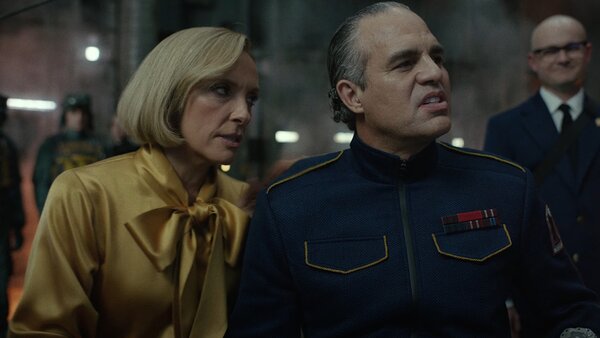
Mickey 17 was a film with such excitement and promise in its build up, with a great source material to work from, a bona fide star in Robert Patterson, and Bong Joon Ho in the director's chair. However, it was ultimately a huge disappointment, not just for newcomers to the story, but particularly for those who had read the book.
Much of the story was left out or condensed, but one of the biggest changes was the character of Commander Marshall. In Edward Ashton's novel, he was a no nonsense military leader who wouldn't put up with Mickey's crap, and who was driven to do whatever needed to be done to ensure the survival of the colony.
For some reason, Mark Ruffalo's version of the character was changed completely. The only thing that remained was that he was in charge of things, but in terms of personality, he couldn't have been more different.
The strict drill sergeant-esque leader was gone and replaced with a cringeworthy, orange-faced oaf of a politician with a cult of followers who wore red hats and acted as though he was a god of sorts. Yes, it's easy to see where the inspiration for the character came from, but quite why the change had to be made is bemusing.