20 Most Rewatchable Movies Of The 2000s
They may not all be peak cinémà, but these iconic noughties flicks keep you coming back for more.
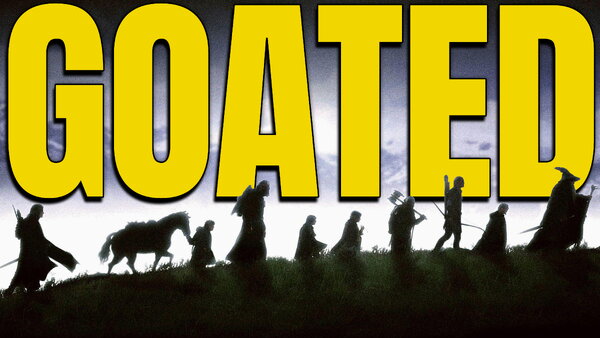
The noughties were a strange time for cinema. Digital technologies were superseding film, CG was taking the place of practical actors and effects, the Wayans were getting films greenlit on the reg, and everybody seemed to be watching the same things. The cinematic tradition that has evolved in the years since has created a gulf between slick, big-budget Hollywood features and an expansive experimental indie scene. But, despite the array of perspectives and approaches on offer today, sometimes we like to gaze back at the monoculture of yore.
The decade of flip phones, MP3s, ASBOs, and MSN gave us a raft of great movies with real staying power. From the family-friendly animation and wry script of Shrek 2 to the hardcore violence and stylised visuals of Sin City, every genre, form, and age-rating from the era has something worth watching again.
They're not always the best films of the decade, but then so many of the finest films made during this time – Requiem for a Dream, Irreversible, Garfield: The Movie – can be a trial, and not the kind of thing you necessarily want to chuck on for a spot of easy viewing. No, we’re looking specifically at those pictures, no matter their RT rating, which you don’t hesitate to slot in the DVD player, that you don’t click off on late-night TV, and which you plaster all over Letterboxd when your streamer of choice finally nabs them.
20. Shrek 2 (2003)
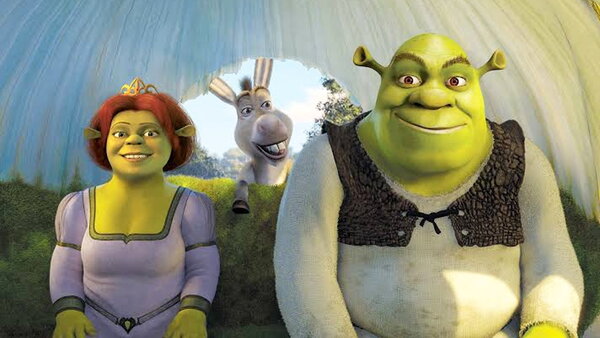
Shrek 5 is nearly upon us, hoping to recapture the glory some 26 years after the original, and 17 after the last and most dismal sequel, Shrek Forever After. Some series start on a high and never recapture that glory, but for many there is a sophomore bump before the decline, and the Shrek franchise is no different. Yes, sharing the hallowed halls of Aliens, Terminator 2, and The Dark Knight, is Shrek 2.
With newlywed Shrek and Fiona (Mike Myers and Cameron Diaz), we travel to the kingdom of Far Far Away to meet Fiona’s parents, who are less than delighted to find their daughter not the fair princess they hoped for, but still an ogre – and now married to one. So, King Harold (John Cleese) hatches a plan to dispatch his new son-in-law and install Prince Charming (Rupert Everett) in his place.
A massive visual improvement on its predecessor, Shrek 2 successfully expands its universe and feels lived-in, earned, and authentic; something none of the other sequels can claim. It’s got Puss in Boots as an assassin, the Fairy Godmother as a maniacal antagonist, and more references, sight gags, and easter eggs than you can shake a magic wand at. And it’s one of the last children's animations that truly deserves the hackneyed descriptor of being as much fun for the adults as it is for the kids. Which is why those of us who grew up with it are still watching it today.
19. Snatch (2000)

The same year he married Madonna, Guy Ritchie dropped Snatch, cementing his place in the UK’s new millennium zeitgeist. And what a zeitgeist it was: Tony Blair led the country, girl and boy bands dominated the charts, and the mean streets of London were being made to look way cooler than they really were.
Snatch gives us a bustling world of organised crime in the capital, in which small-time boxing promoter Turkish (Jason Statham) finds himself indebted to violent gangster Brick Top (Alan Ford), and needs to fix a fight using fast-slurring traveller Mickey O’Neil (Brad Pitt) in order to save his knackers from the chopping block. It’s got all the slick style and humour of Ritchie’s other efforts, and managed to solidify the film star status of Statham, Stephen Graham, and Vinnie Jones in the process – not bad for a film with 1/10th the budget of Sex and the City 2.
Sure, the colour palette is a sort of sepia-beige, but when the action and dialogue are this much fun, this is the last thing you'll be paying attention to. It’s pacey, it’s edgy, it’s got so many different strands going at once that you never find yourself reaching for your phone, and at an hour 40 minutes, it’s never a question of whether you’ve got time for it. Have I made myself clear, boys?
18. The Hangover (2009)

While Judd Apatow and Judd Apatow-adjacent comedies were very much the flavour of the late noughties, The Hangover managed to ride in on the same wave before doing its own thing altogether. The film drops Phil (Bradley Cooper), Stu (Ed Helms), and Doug (Justin Bartha) into Las Vegas for Doug’s bachelor party just a couple of days before the wedding, but the inclusion of his new brother-in-law-to-be, Alan (Zach Galifianakis), throws a spanner in the works.
The 100 minutes of film that follows unfolds like a mystery rather than a party film. Waking up in a ruined hotel room, missing their memories, teeth, and the groom, Phil, Stu, and Alan must retrace their steps and figure out what they did the night before to get Doug back in time for the wedding. Enter Chinese drug dealers, breast-feeding strippers, and Mike Tyson’s tiger.
Taking what was best about zeitgeist comedies like Superbad and Pineapple Express, and blending them with the vibe and feel of director Todd Haynes’ earlier filmography (Old School, Road Trip), The Hangover manages to carve out what was at the time a new niche in the comedy scene. Granted, some of the jokes haven't aged that well, not to mention the inclusion of convicted rapist Mike Tyson, but the film is still one of the most rewatchable comedies of the era, allowing you to feel like you’re living the party life and flying by the seat of your pants without ever leaving the couch.
17. Pride & Prejudice (2005)

For those who came of age in the nineties, there can be no other Pride and Prejudice than the Colin Firth and Jennifer Ehle-led BBC serial, but for most millennials, Joe Wright’s film Pride & Prejudice is the definitive Jane Austen adaptation.
With an undeniable Hollywood glamour, the film gives us Keira Knightley and Matthew Macfadyen as Elizabeth Bennet and Fitzwilliam Darcy, caught in a swirl of manners, rumours, marriage proposals, and confessions. Lizzy is the headstrong second daughter of the Bennet family and in desperate need of a husband to help elevate her social standing and ensure her family doesn’t fall to ruin, and Mr. Darcy is the rich, aloof romantic interest whose apparent disdain is really a mask for deeper feelings. No prizes for guessing where they end up.
The original novel is the archetype for so many beloved romance movies, but this direct adaptation in particular is a stand-out piece of filmmaking. It captures everything that makes the book great while injecting it with genuine humour (Donald Sutherland’s Mr. Bennet is especially entertaining) and wrangling what can sometimes be a yawn-worthy Georgian text into something that can match pace with the likes of Bridget Jones and Love Actually, despite not feeling very noughties at all. And this is precisely what makes it so rewatchable.
16. Borat: Cultural Learnings of America for Make Benefit Glorious Nation of Kazakhstan (2006)
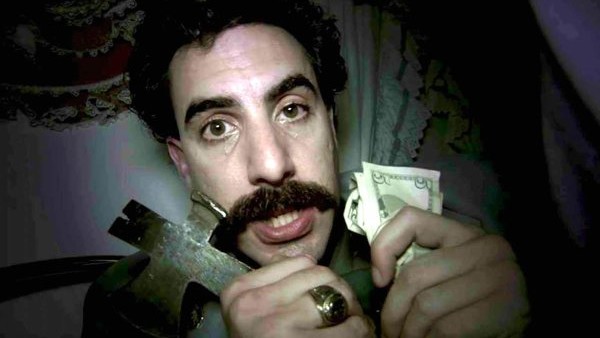
Since debuting Ali G on The 11 O'Clock Show, Sacha Baron Cohen has been the man to beat when it comes to dunking on public figures right to their face. Using a host of characters and disguises, he has sent up journalists, sports stars, geniuses, presidents, and even Jacob Rees-Mogg. But he’s never better than when he’s in the USA, as a humble, grey-suited reporter from Kazakhstan.
Borat: Cultural Learnings of America for Make Benefit Glorious Nation of Kazakhstan takes its titular character to the big screen in a cross-country US road trip that has him spend time with rodeo cowboys, local TV presenters, an etiquette coach, feminists, racists, and every other strand of the American populace. Undercover mockumentaries have been done before, but never quite like this, with Borat’s journey feeling authentic, all while Baron Cohen systematically tears apart the society, norms, politics, prejudices, and affectations of his unsuspecting victims.
Alas, we may never see Borat in the wild again, as the bit has become so well known that Baron Cohen's ability to slip his character in under the radar and catch people with their trousers down is all but gone. 2020 sequel Borat Subsequent Moviefilm was a valiant effort to keep the character alive, prioritising disguises and his daughter Tutar (Maria Bakalova), but the film doesn't have the spontaneous appeal and staying power of its predecessor. Thus, whenever we want the goods, the original Borat is the only place to go.
15. Battle Royale (2000)

Kinji Fukasaku’s dystopian action horror Battle Royale turns 26 this year, and in the years since release, the modern classic has been copied left, right, and centre. But no matter how many Hunger Games films they throw at us, there’s no beating the true original.
The picture follows Japanese students Shuya (Tatsuya Fujiwara), Noriko (Aki Maeda), and the rest of their high school class, who have been selected to fight in the annual Battle Royale by their totalitarian government. They have three days, a booby-trapped island, and a bag of supplies, including one random weapon per student – and if there isn’t a clear victor by the end of it, the explosive collars they wear around their necks will be the deciding factor.
One would think it might be a trial to watch teenagers slaughter each other to a man, and yet Fukasaku manages to balance the serious nature of the premise with tantalising action and horror sequences. The script keeps us on our toes, using twists, turns, wildcard players, and often baffling character actions that access the dark heart of the human condition, all of which means that even after ten viewings there are still nuances we don’t recall. It’s stylish, cool, and, despite all the violence, really good fun, demanding to be watched on repeat.
14. Step Brothers (2008)

Few noughties comedies are as widely recognisable or quotable as Step Brothers. Adam McKay’s film puts 40-year-old, jobless, stay-at-home adult children Brennan Huff (Will Ferrell) and Dale Doback (John C. Reilly) on a collision course when their single parents move in together. Forced to share a bedroom, these new stepbrothers begin as enemies before their own individual stupidities unite as one.
What follows are home-made collapsing bunk beds, job interviews in tuxedos, and a new entertainment business, Prestige Worldwide, with its inaugural promotional music video, “Boats and Hoes”. Now, on paper this may not seem like all-timer kind of stuff, but on the screen it’s something else. Ferrell and Reilly sell their parts so well that Step Brothers has become one of the Millennial generation’s defining comedies, and while it feels very much of its time, that’s not a bad thing.
Brennan and Dale embody a mindset and approach to life that so many of those of us who were teens at the time identify deeply with. And the film sits in a cosy little bubble just on the precipice of the 2008 financial crash, and the subsequent miseries that would follow year after year after year. So yeah, sometimes you just want to eat microwave nachos, play the drums and make bunk beds – and for that reason, Step Brothers will never be far from the DVD player.
13. Inglourious Basterds (2009)

There’s not an entry in Quentin Tarantino’s filmography that doesn’t invite, or in many cases, demand rewatching, and yet the noughties were an uneven period for the director. Following his unimpeachable record of crime movies in the nineties, Tarantino was given the keys to the kingdom (the kingdom here being mid-to-high eight-figure budgets) and allowed to do what he wanted. And what he wanted was an enormously long retro martial arts movie that had to be split in two, a neo-Grindhouse picture passion project that not that many people went to see and, of course, Inglourious Basterds.
The alternate history war film puts US Lieutenant Aldo Raine (Brad Pitt) and his company of Nazi-hunting jews into action in Europe, mid-World War II. Hunted by SS Colonel Hans Landa (Christoph Waltz), the Basterds must pull out every stop (and pull off every scalp) in order to kill Adolf Hitler (Martin Wuttke) in Paris. It’s bloody, it’s brutal, and it’s unlike anything else Tarantino or any other big director was doing this decade.
Vying for the place of the director’s best film, Basterds makes an easy watch, despite its two-and-a-half-hour runtime. It manages to subvert the classic war film formula, it uses every trick from the Tarantino playbook, and it knows how to have fun, with plenty of laughs, set-pieces, and fast-talking scenes to keep things kinetic. And we’d be lying if we said we didn’t like watching Hitler get blown away again and again and again.
12. Jackass Number Two (2006)
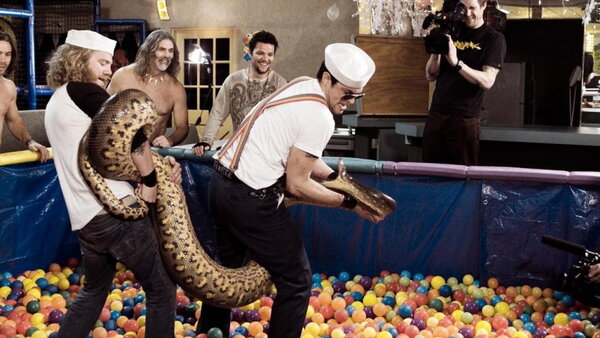
Despite the gang’s longevity, few things are as synonymous with noughties culture as Jackass. What began as a silly, low-rent MTV show spread its wings and translated seamlessly to the big screen throughout the decade, inspiring kids, teens, and even some adults across the Western world to get out there and film themselves getting injured.
No matter how you arrived at the series, there is no denying that Jackass Number Two is the high point, upping the ante from the first instalment with twice the budget, bigger stunts, perplexing cameos, and the full rota of the original cast (something sorely missing from later entries). It’s got Johnny Knoxville riding the big red rocket, Dave England straddling the firehose, Steve-O offering himself up as shark bait, and Ehren McGhehey getting punked by the whole crew in a kidnapping stunt, pubic beard and all.
It’s not pretty, it’s not clever, but who among us hasn’t spun the Number Two disc 100 times? Still, after all these years, we cringe at Knoxville’s hand in a bear trap and Chris Pontius’ penis in the jaws of a snake; gag at Steve-O and Dave’s bodily substances; and feel the love behind every nut shot and sucker punch, soaking in the nostalgia of truly simpler times.
11. The Departed (2006)

The Departed is not quite Jack Nicholson’s final film, but we’ll be damned if it isn’t the best thing he made in the last few decades of his career. Joining crime movie-making’s final boss Martin Scorsese for a Boston-set neo-noir offering of double-crosses, sweary-shouty dialogue, and heavy violence, Nicholson is just one of a star-studded cast who make this a film to revisit.
Matt Damon and Leonardo DiCaprio star as mob asset Colin Sullivan and state trooper Billy Costigan, who are sent by organised crime boss Frank Costello (Nicholson) and the Massachusetts State Police to infiltrate their opposites’ organisations. As each man gets deeper undercover, the lines between good and bad blur, and the web of suspicion widens, leaving a trail of murder, mistaken identity, close calls and chaos, right up to a fateful – and gaddamned bloody – final act.
So, yeah, there’s a lot happening, and it's not exactly top choice if you need to fill a quick 90 minutes, but despite The Departed's runtime and rather brutal nature, it’s ridiculously more-ish. From the "Shipping up to Boston" opening through to the final twist when The Guy Who Does His Job turns up in white booties and tracksuit, it's all go. The performances are some of the best its cast have ever given, every other line of dialogue is quotable, and it has everything you want from Scorsese: mean streets, guns, gangsters, and "Gimme Shelter".
10. School of Rock (2003)

Even though Tenacious D has been around since the mid-nineties, most of our introductions to Jack Black’s musical prowess came via Richard Linklater’s family comedy School of Rock.
Black stars as down-on-his-luck guitarist Dewey Finn, who, having just been kicked out of his band, finds himself threatened with eviction from his best friend Ned Schneebly’s (Mike White) living room. Desperate for any kind of gig so long as it pays, Dewey impersonates Ned and stands in as a substitute teacher at Horace Green Elementary School. He soon discovers the kids he’s in charge of have some serious musical talent, and so assembles a new band – the titular School of Rock – to take to Battle of the Bands.
Nobody expected this film from Linklater, given he had spent the preceding decade and a half making the kind of low-budget, indie features that you would sooner find at Cannes than the local Odeon. Yet his fundamental skills as a director shine through in a picture that has absolutely no artsy frills, and is just a great example of good, strong filmmaking. Black carries the thing, providing the movie’s heart and humour, and support from White, Sarah Silverman, Joan Cusack, and, of course, the kids – many of whom had never acted before, and bring an earnest authenticity to proceedings – provide all the right counterpoints to make this a film to remember.
It doesn’t matter if you’re eight, 18, or 80, you’ll always make time to watch School of Rock.
9. The Dark Knight (2008)

The noughties were a pivotal and formative time for Christopher Nolan, as his small, cerebral films grew in scope, he garnered ever more attention, and Warner began trusting him with nine-figure budgets. And his last film of the decade is still his best to date.
The Dark Knight is the second in Nolan’s Batman trilogy and, shorn of the origin story and worldbuilding required for the first instalment, Batman Begins, it gets to let its greasy green hair down and have some fun. Christian Bale’s Batman comes up against Heath Ledger’s Joker in a monumental ideological clash, as the guy in black seeks to retain order and justice, while his clownish opposite sows the seeds of anarchy and chaos. The streets are lit with gunfire, buildings are blown to hell, good and bad men alike are slaughtered, and time after time Batman and the people of Gotham are called upon to make impossible decisions.
No matter that it's the middle movie of a trilogy, or that it boasts an arse-shimmying two-and-a-half-hour runtime, The Dark Knight is one of the easiest films to stick on. It works perfectly as a standalone effort, requiring no prior introduction to the series, and leaving an open ending that is thematically satisfying and doesn't necessitate watching the third entry. It’s Heat with capes, with a smorgasbord of nail-biting scenes and action set-pieces, and it’s an acting masterclass from the literally unrecognisable Ledger, whose nuanced and wildly entertaining performance never gets old.
8. EuroTrip (2004)

Often lost amongst the bland mish-mash of post-American Pie US teen comedies, Jeff Schaffer’s EuroTrip is more than it seems on the surface.
After drunkenly offending his German pen pal Mieke (Jessica Boehrs), Scotty Thomas (Scott Mechlowicz), his best friend Cooper (Jacob Pitts), and twins Jenny (Michelle Trachtenberg) and Jamie (Travis Wester) head out to Europe to track her down, and have encounters along the way with the locals in London, Paris, Rome, Amsterdam, and, uhh, Bratislava…
Now, there’s no denying it’s not a perfect film, not least thanks to its super-American view of Europe and its sometimes questionable sexual politics. And yet, it really is a laugh-a-minute, subdividing each leg of its trip into snappy, skit-like scenes and sequences – with cameos from Fred Armisen, Matt Damon, Vinnie Jones and others – so that even if one bit doesn’t hit, there’s another coming along soon.
Trachtenberg, hot off her run in Buffy, was the only real name in the movie’s main cast, meaning it got overlooked at the box office, but EuroTrip is still getting attention on DVD and streaming some 22 years later. While the other teen sex comedies of the era often wind up feeling cold, hollow, and downright grotesque, EuroTrip maintains a sense of playfulness, camaraderie, and heart that make it shine. Returning to this one feels like hanging out with old friends, and spinning your favourite tune – in this case, Scotty Doesn’t Know.
7. Kiss Kiss Bang Bang (2005)

Before Iron Man made him a star again, and – at least for a while – the best-paid actor in the world, Robert Downey Jr. was quietly making his comeback in indie sleeper hits like Shane Black’s Kiss Kiss Bang Bang.
The film sees Downey’s small-time crook Harry Lockhart drawn into the decidedly unglamorous underworld of Hollywood when he accidentally becomes an actor. And while this sounds like the setup for a screwball comedy, what unfolds instead is a neo-noir story as Harry teams up with detective “Gay” Perry van Shrike (Val Kilmer) to solve the murder of Harry’s childhood crush Harmony Lane’s (Michelle Monaghan) sister. Phew.
The movie goes non-stop from the get-go and sports the kind of sharp humour Black’s directorial efforts have become known for (Iron Man 3, The Nice Guys). It was a bold take on the noir genre at a time when this was definitely not in vogue, and feels as fresh and timeless today as it did then (flip-phones notwithstanding). It features Downey at his best, not as the snarky big boss but as a downtrodden loser; Kilmer at his best as the kind of camp and acidic Personality the real Tinseltown is full of; and although it’s technically a Christmas film, Kiss Kiss Bang Bang packs enough action, laughs, and rewatchable small details to make compelling viewing year-round.
6. Mean Girls (2004)

The high school movie and the chick flick may both have changed substantially in the years since 2004, but one thing hasn't: Mean Girls is still the film to beat in either genre.
Cady Heron (Lindsay Lohan) joins North Shore High near Chicago after years of home-schooling in Africa, and suffice to say it’s a culture shock. She gets a trial-by-fire initiation into the ways of US teenage life, and, despite making friends with the outcasts, winds up inadvertently joining the Plastics, the school’s trio of pink-clad popular girls: Regina George (Rachel McAdams), Gretchen Wieners (Lacey Chabert), and Karen Smith (Amanda Seyfried). In a fight for the affections of Aaron Samuels (Jonathan Bennett), Cady embarks on a campaign of guerrilla warfare against Regina, ruining her figure, alienating her friends, and exposing her true face to the whole school.
Mean Girls was a staple for teenage girls and boys alike in the noughties, with Tina Fey's writing elevating it far above its sloppy, mawkish contemporaries and ensuring enough quotes, laughs, spats, and higher-level commentary to suit viewers of all ages. On the surface, it conforms to every cliché in the book, but look past the blonde hair and pink tees, and there’s expert satire, pulling every trope apart at the seams and dissecting the high school experience one internal monologue at a time.
After all these years, putting Mean Girls on is still so fetch.
5. Sin City (2005)
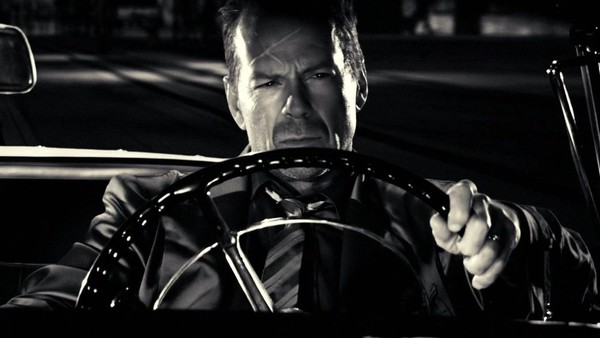
Once touted as an auteur in the same vein as Tarantino, Robert Rodriguez spent most years post-1996 proving his cheerleaders wrong. But just because his filmography is scattershot (five Spy Kids films, two Machete films, and The Faculty?!) doesn't mean he hasn't made some all-timers, and none in the new millennium so genuinely, capital-G Great as Sin City.
Frank Miller's black-and-white graphic novels had been wanting adapted for the better part of a decade and a half when he teamed up with Rodriguez, and somehow the comic book writer with no behind-the-camera experience and the guy who made Shark Boy and Lava Girl delivered not just one of the best comic adaptations, but one of the best neo-noir pictures this century. Bruce Willis, Mickey Rourke, Clive Owen, Benicio del Toro, Rosario Dawson, and so many others assemble as the inhabitants of Basin City, the most crime-ridden, corrupt, flea pit of a place ever to grace the screen. Using a bold, formalist, pop art visual style and occasional splashes of colour, we're treated to an anthology of grim violence, rank misogyny, murder, cannibalism, and revenge. And we bloody love it.
With so many story strands to follow, it's easy to get caught up in Sin City, and piecing its interwoven, non-chronological parts together to get the full picture is half the fun – and a good reason to return to it yet again. It ain't your grandfather's detective movie, but here that's a good thing.
4. The Lord of the Rings: The Fellowship of the Ring (2001)
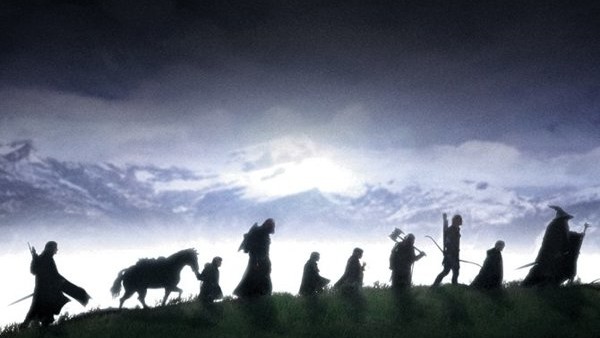
The conversation around trilogies in the noughties came down to two big series, and while we will never stop watching the Star Wars prequels, we accept that, for many, once is more than enough. Thus, we turn to their competitor, and Peter Jackson’s masterpiece, The Lord of the Rings trilogy, and the most rewatchable of all three: The Fellowship of the Ring.
In Middle-earth, we join hobbit Frodo Baggins (Elijah Wood) as he leaves the Shire to take the Dark Lord Sauron’s ring of power to Mordor and destroy it for good. Joined by grey wizard Gandalf (Ian McKellen), heir to the throne of men Aragorn (Viggo Mortensen), and his, umm, gardener Samwise Gamgee (Sean Astin), Frodo forms the titular Fellowship, and they embark on a treacherous trail that pits them against orcs, uruk-hai, a balrog of Morgoth, and the dark wizard Saruman (Christopher Lee).
Now, we could watch the entire trilogy any day of the week - it has the best acting in any fantasy series, manages to build an entire Middle-earth in just three films, boasts a crazy-talented cast, and indulges in so many spectacular battle scenes - but when pressed to just choose one movie, it’s always going to be Fellowship. It is cosy, familiar, and grounded in a way the other films aren’t, and while it invites further viewing, it is the easiest to just drop in on and leave it at that.
3. Ocean's Eleven (2001)

Noughties remakes of classic films didn’t often get the reception they were hoping for; just look at Tony Scott’s The Taking of Pelham 123, Rob Zombie’s Halloween, or Tim Burton’s Planet of the Apes. However, one film not only bossed the remake, but left the original in the dust: Steven Soderbergh’s Ocean’s Eleven.
Fresh out of jail, Danny Ocean (George Clooney) assembles a crew of swindlers, pickpockets, contortionists, technicians, and con men to knock over three Las Vegas casinos in one night: the Bellagio, the Mirage, and the MGM Grand. Backed by wealthy mogul Reuben Tishkoff (Elliott Gould), Danny, Rusty Ryan (Brad Pitt), Linus Caldwell (Matt Damon), and the rest of the titular eleven pull the wool over everyone’s eyes – including our own – in order to achieve the impossible and swindle ruthless casino owner Terry Benedict (Andy Garcia) out of $160 million.
This picture didn’t just capture the early noughties zeitgeist, but created it, proving that there was space amongst the bubblegum pop, Pokémon, and boy wizards for sharp suits, fast-talking dialogue, and good old cinema trickery. The all-star cast, smoothly cool soundtrack, dry humour and punchy scenes keep the thing in such seamless, constant motion that every time it comes on TV, you find yourself locked in until the end.
2. Spirited Away (2001)

Hayao Miyazaki is almost single-handedly responsible for taking Japanese animation mainstream in the West, and since the late '70s he has been gifting us fantastical worlds and characters that have become pop culture staples. Yet few of his films have penetrated the minds and imaginations of viewers globally as his crowning glory of the noughties, Spirited Away.
The movie follows Chihiro (voiced by Rumi Hiiragi and Daveigh Chase), as her small family is waylaid during their move to a new home in the country. When they inadvertently enter the world of the spirits, and her parents are turned into pigs, Chihiro must take a role in the witch Yubaba's bathhouse while she figures out a way to restore her family and return home. But the rules, norms, and beings in this reality aren’t like anything she’s used to, with talking frogs, enslaved dragon-men, giant babies, and a mysterious spirit named No-Face who is intent on eating everything in his path.
An Alice in Wonderland for a generation raised on global culture and consumerism, Spirited Away blends surrealism with a heartfelt coming-of-age story. Unlike some other Miyazaki movies, it never drags, the quality of the animation and story never slips, and there are so many small details and indelible images throughout that we find ourselves staggered at every viewing.
1. Hot Fuzz (2007)

Edgar Wright hasn’t exactly covered himself in glory in recent years. Indeed, the last film of his you’d want to have on your shelf is Baby Driver, released nearly an entire decade ago. Nonetheless, for every Running Man, Wright has made a Scott Pilgrim, and for every Last Night in Soho there’s a Hot Fuzz.
A no-holds-barred, adrenaline-fuelled thrill-ride and quaint countryside comedy in equal parts, Hot Fuzz pulls big city cop Nicholas Angel (Simon Pegg) out of the Met and plonks him down in the rural town of Sandford, Gloucestershire, where he trades fighting junkies and making busts for chasing swans and kicking under-agers out of the pub. Partnered with small-town bobby Danny Butterman (Nick Frost), it seems life is destined to be slow for Sergeant Angel, until he uncovers a series of grisly murders linked to the Neighbourhood Watch Alliance.
The quintessential British movie, Hot Fuzz deftly captures the manners, sensibilities, and quirky norms of UK culture and tradition. Sure, it’s set in England, but the West Country attitudes and surroundings feel familiar to anyone who has lived in a small town or village anywhere from Abergavenny to Drumnadrochit. Its cast features some of the cream of British acting (including Jim Broadbent, Olivia Colman, and Timothy Dalton), it satirises crime and action movie clichés while simultaneously delivering the kind of scenes that make these genres so watchable, and it’s so jam-packed with jokes, sight gags, and callbacks that even 100 viewings will never be enough.