20 Most Controversial Movies Of All Time
Some are legendary, others obscure, but all are important in one way or another.

Controversy is an inevitable byproduct of art but because of the size and scope of the film industry around the world, movies have the ability to create controversy on a massive scale, more so than many other art forms.
However, there are controversial films, and then there are controversial films. The ones that get banned for years, incite mass protests, lead to directors being arrested and receive anti-humanist awards. Some of them are mere exploitation, others have changed cinema forever, and some fall somewhere between the two. Others still puzzle and confuse curious audiences around the world.
The films on this list have all incited massive controversy for very different reasons. Some have faced criticism for their depictions of sex or violence, others have spawned protests for their handling of racial or religious matters. And while the controversies regarding some of these films have died down or gone away, for other films the debates still rage.
Some are legendary, others obscure, but all are important in one way or another.
20. Antichrist

Lars von Trier could probably have a controversy list all his own, but if one moment from his career sticks out for cinematic (and not personal) reasons, surely it's Antichrist.
The art-horror piece about a nameless couple who retreat to the woods to find closure over their child's death starts out bleak and only gets worse. As the couple begins to slowly torture each other, first psychologically and then physically, the film presents a graphic account of the primal versus the rational, science versus nature, and man versus woman. Already brimming with graphic and frank depictions of sex, the film was further derided for its depictions of violence, including two instances of on screen genital mutilation.
Its premiere at Cannes 2009 caused an uproar, re-raising longstanding arguments about von Triers potential misogyny (though Trier stated that he identified more with the female character than the male), and featured a press conference where scores of journalists ripped into the film and its director, looking for an explanation for what they'd just seen.
All this culminated with the Cannes jury creating a special anti-humanist award to give to the film, which unfortunately overshadowed Charlotte Gainsbourg (rightly) winning the festival's Best Actress award. Critical and public sentiment over the film (and Trier himself) are still sharply divided, but those who are willing to stick out the bumpy ride may find Antichrist to be a worthwhile yet troubling meditation on guilt, depression, and grief.
19. The Da Vinci Code

After the phenomenal success of Dan Brown's book, making a movie was a no-brainer. And much like the book, The Da Vinci Code was greeted with massive protests and boycotts concerning the films religious subject matter (which asserted that Jesus married and had children).
The film was banned in Pakistan, Samoa, Lebanon, and Sri Lanka, and was criticized and protested by religious organizations (especially Catholic) throughout the world for containing blasphemous material (despite the film being admittedly a work of fiction).
The Da Vinci Code did well at the world wide box office, but got little love from critics and eventually sort of just faded away, along with much of the controversy that surrounded it. Tom Hanks' mullet, however, was much harder to forget.
18. The Exorcist
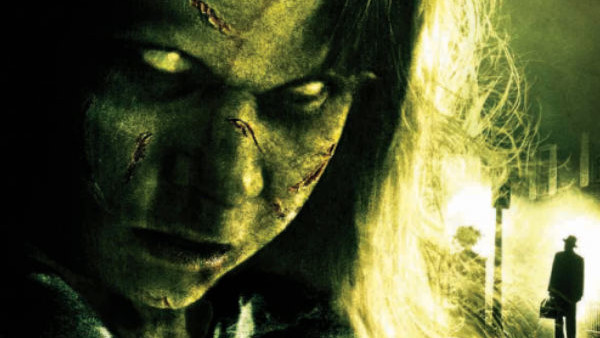
The controversy surrounding the release of William Friedkin's The Exorcist is interesting because so many people had contradictory issues over it. Some claimed the film glorified Satan, others viewed it as religious pornography that berated the modern world in favor of old school superstitions. Even before it hit theaters, William Peter Blatty's tale of a young girl possessed by a demon was a hot topic because its first teaser trailer was banned by several theaters for being too distressing to certain viewers.
Then the movie came out, and the controversy escalated. Certain towns banned the film, leading to organized bus rides for moviegoers eager to see it. Evangelist Billy Graham claimed that he believed a literal demon was living in the films' reels, and young star Linda Blair was besieged by threats from those who felt she was glorifying the devil. Rumors of accidents and strange occurrences on the set, along with the deaths of several people involved with the film's production, led to greater belief that there was something truly evil about the film. This speculation, of course, drove up public interest in the film, which went on to become a massive box office hit.
In the end, The Exorcist survived the controversy, going on to score a slew of Oscar nominations, and is now widely regarded as one of the greatest horror films of all time.
17. The Brown Bunny
The Brown Bunny is probably one of the lesser known films on this list. It's slow, arty, and mostly obscure. It also features a graphic scene of unsimulated oral sex between Chloë Sevigny and director/star Vincent Gallo.
And while the film's 2003 Cannes premiere is perhaps most remembered for the feud it ignited between Gallo and Roger Ebert, who claimed the film was the worst in Cannes long history, the depiction of legitimate fellatio raised up a real ethical controversy. What lines should actors or actresses draw when giving a performance, and more so, what is the difference between a necessity of the performance and outright pornography or exploitation?
Sevigny, for her part, defended her work in the film, and after some serious cuts to its overall length, The Brown Bunny met much more favorable reception later that year at the Toronto International Film Festival. While it may only be remembered for what's probably the most infamous blowjob in film history, the questions raised by The Brown Bunny's controversy at least fostered a serious critical discussion of an important issue.
16. United 93

It was only a matter of time before 9/11 was recreated on screen, but still, when the initial trailers for United 93 started to play in multiplexes across America, there was a sizeable level of public distress and concern that the events were still too fresh in the memory to be recreated so soon. Many theaters, especially in the New York area, pulled the film's trailer after complaints from patrons, and numerous critics and entertainment journalists wondered if America was ready for a 9/11 dramatization less than five years after the attack took place.
There were also concerns whether the film would be an honorable portrait of the passengers heroism, or an overdone melodrama (Pearl Harbor being the worst-case scenario). The film's release remained on course though, and when it did arrive in theaters, those who were ready to see it heaped praise on both the film and director Paul Greengrass' sensitive handling of the material.
15. I Spit On Your Grave

One of the most hotly debated horror films of all times, Meir Zarchi's I Spit On Your Grave is either pornographically violent and degrading to women, or a brutal but potentially empowering tale of pro-feminist strength, depending on who you ask. The story is simple enough, starting when a young woman moves to a new town to work on her writing. Once there, she's beaten, raped and left for dead by a group of men in scenes of astonishing (even by today's standards) brutality. After the attack, she tracks down the men and exacts bloody, bloody revenge on them.
There had been other rape-revenge films before (Thriller: A Cruel Film, The Last House on the Left), but I Spit On Your Grave seemed to strike more of a nerve because of how unwavering the film was in depicting its violence. Some critics (including a very vocal Roger Ebert) argued that the film was reveling in the heinous acts that it should've been condemning. Several countries banned the film completely on the grounds that it celebrated violence against women.
But the film did have some supporters, or, at least, those who saw it in another light. Several critics and scholars, including Carol J. Clover (author of Men, Women and Chain Saws), took the view that the film actually forced the viewer to sympathize with the victim instead of the attackers, and thus, was not anti-woman, but pro-woman in endorsing her revenge against the cruelty of her would be male dominators. This seems to be director Zarachi's intent as well, as the film was originally titled Day of the Woman.
Whatever side of the argument of the argument you find yourself on, I Spit On Your Grave is sure to to be one of the roughest films your ever likely to see.
14. In the Realm Of The Senses

The Brown Bunny already secured a spot on this list for its depiction of unsimulated oral sex. In the Realm of the Senses takes that further - much further - and then throws some final act genital mutilation to secure its place as one of the most controversial films of all time.
The story, based on the true but somewhat mythic case of Japans Sada Abe, tells of a relationship between a former prostitute turned maid (Abe) who begins an affair with the owner of the hotel she works in. The affair grows darker, eventually based entirely on possession and obsession, and ends when Abe kills him and then uses the blood from a certain removed male organ to write a message on his body.
The fact that real sex was being filmed, coupled with the film's graphic climax, meant that even though the film was shot in Japan, the footage had to be developed elsewhere (France) to comply with Japanese censorship laws.
The film was heavily edited in several countries and temporarily banned in others, but has more recently become more available in its full, uncut form.
13. Song Of The South

It may seem strange to find a Disney film listed in the company of I Spit on Your Grave and Antichrist, but Song of the South has earned its place on the list through some very questionable depictions of African Americans in the reconstruction south. The film was accused and criticized by various organizations (Including the NAACP and The National !*$% Congress, among others) of stereotyping African Americans, glorifying plantation life, glossing over the inhumanity of slavery, and presenting a view of African American life in the reconstruction that was offensive on multiple levels.
While the music of Song of the South has survived (Zip-a-Dee-Doo-Dah being the most notable), the film itself has not. Disney has never released the film on home video or DVD in America because of its controversial content, and has no plans to do so for the foreseeable future.
12.Last Tango In Paris
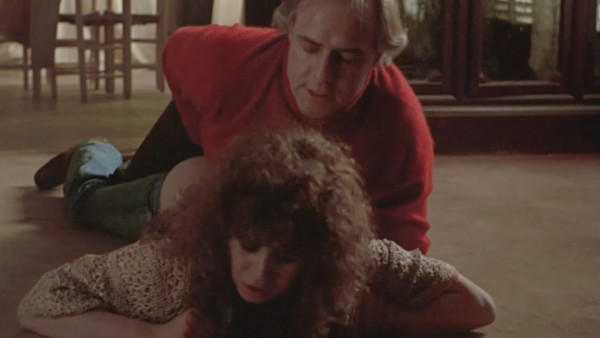
Sometimes a film can become more controversial based on the reputations of the people involved in its making. Consider Last Tango in Paris, a film that is far less sexually explicit than some of the other entries on this list, but earns a higher spot because its controversy was magnified by the presence of star Marlon Brando and director Bernardo Bertolucci.
Released with the now-defunct X rating, Last Tango is notable not just for the explicit nature of its sexuality, but also for its emotional darkness. Tango doesn't aim for titillation; it's a brutally honest examination of a relationship based purely on primal instinct. Some of the film's heaviest criticism came in the US, where early reports condemned the film's supposedly pornographic content, especially the infamous butter scene. But its most noteworthy controversy may have come in Italy, where director Bertolucci was put on trial for obscenity and the film was banned until 1987.
Critical and public perception of the film has warmed significantly over the years, but even upon its release, many critics and filmmakers saw it as a masterpiece. Pauline Kael perhaps said it best when she wrote that the film altered the face of an art form in her review of the film, which would go on to become one of the most celebrated pieces of film criticism ever.
11. Bonnie And Clyde

The idea of glamorizing violence is thrown around a lot today, but Bonnie and Clyde might be the first major, mainstream example of this concept being played out in front of audiences. Portrayed by Warren Beatty and Faye Dunaway, the titular bank robbers/murderers were undeniably attractive, and the fact that their crime spree went hand in hand with their young, rapturous love certainly did play into the hands of those that argued that the movie was painting a rosy, glamorous picture of murder and outlaw life.
But then there's the films ending, which features both Bonnie and Clyde being mercilessly riddled with bullets in what was (for the time) one of the most violent moments in the history of American cinema. This seems to show the dark side of Bonnie and Clyde's lifestyle, providing them with the punishment they've been reaping the whole time.
The debate over whether or not (or to what extent) Beatty's film romanticizes a life of crime is open to interpretation, but either way, the film has become one of the enduring classics of the New Hollywood era in American film.
10. Cannibal Holocaust

The name really says it all. The infamous peak of the Italian cannibal film craze, Ruggero Deodato's film (one of the first ever found-footage films) works as a social commentary, but only under layers and layers of rampant, brutal violence. Some DVD copies of the film now bear the boastful tagline the most controversial movie ever made.
While that assertion may not be true, the film did earn its fair share of controversy over the onscreen violence to the actors and animals. Italian authorities charged Deodato with murder because they believed the actors in the film had actually been slain, but he was eventually cleared once he proved the actors were still alive and all the violence against humans was staged. The violence against the animals in the film, however, was not faked, which led to another controversy all its own.
Deodato has stated that he feels great remorse over the cruelty to animals thats portrayed in the film, but regardless of his feelings, the films legendary status among grindhouse aficionados isnt likely to go away anytime soon. You'll never look at turtle soup the same way again.
9. Birth Of A Nation

D.W. Griffith is undoubtedly one of the foremost pioneers of cinema as a serious art form. But his most (in)famous film, 1915's Birth of a Nation is also riddled with racism, bad history, and Ku Klux Klan hero worship. Birth of a Nation did introduce a wealth of evolving, modern film techniques and devices to audiences, and films after it would never be the same. Its influence is undeniable.
But the film also features incredibly offensive portrayals of African Americans, and depicts the KKK as heroes, saviors of the ways of the old south. This (obviously) caused massive uproar from the NAACP, and riots followed screenings in Boston and Philadelphia.
Worst of all, the film is credited with helping to restart the Ku Klux Klan in the 1920s.
8. Natural Born Killers

Oliver Stone's acid-tinged, ultra violent social satire makes the list not only for its violence (it has plenty) but also for its potentially backwards message. A sort of Gen-X version of a Bonnie and Clyde-style crime couple, Killers follows the cross country murder spree of young lovers Mickey (Woody Harrelson) and Mallory Knox (Juliette Lewis), who soon become media superstars.
Stone's aim was clearly to mock and analyze the American media's obsession with violence; whether he succeeded in that aim is a whole different story.
While Stone supposedly set out to make a movie that mocks the celebrity status of serial killers, the film he ended up with (depending on how you look at it) makes Micky and Mallory easily the most likeable and enjoyable characters in the film. By having them become the heroes of the movie, it was easy to say that Stone achieved the exact opposite of what he set out to do.
Worse than that, numerous charges came that film had inspired real crimes based on the onscreen exploits of the Knoxs', further working against Stone's intentions.
7. Fahrenheit 9/11

A portrait of the Bush administration by the already controversial Michael Moore was always going to be a hot button film. But when Fahrenheit 9/11 won the Palme d'Or at Cannes, and then got a release date five months before the 2004 Presidential election, its level of noise being raised over the film reached unbelievable heights. Various film critics and political pundits took turns assaulting and defending the film's timing, intention, and the validity of its arguments.
It wasn't that all the individual facts in Fahrenheit 9/11 were false; in fact, Moore published a fact sheet that he claimed proved everything in the film was true. The bigger problem was, as always, Moore's selective and occasionally deceptive editing, which took potentially legitimate facts but arranged them in such a way that questionable, or outright false, conclusion was formed.
Moore has been doing this since Roger & Me, but this time, with such charged subject matter, faced more scrutiny than ever. Though the election and the Bush administration are long gone, Fahrenheit 9/11 remains a divisive work because of Moore and his lenient filmmaking methods.
6. Deep Throat

Deep Throat, one of the first high-end pornographic pictures to receive mainstream attention, told the story of....well, the title has that covered. Deep Throat was banned in various locations in the United States on the grounds of obscenity, but this attempt at censorship backfired, and the film went on to become possibly the most popular adult film of all time.
Deep Throat isn't notable for being particular graphic in its depictions of sex, but rather for becoming such about as large of a piece of American culture as an adult film ever could be. It's most notable influence is undoubtably the fact that the informant who helped break the Watergate case that brought down President Nixon chose Deep Throat as his pseudonym.
5. Salo; Or, The 120 Days Of Sodom

Heavily symbolic of the corruption and destruction fascist Italy brought down upon its citizens, Pier Paolo Pasolinis Salo has the benefit of being highly acclaimed by many who've seen it. It also has the distinction of being banned or censored in a number of countries for its depictions of a brutal ritual of torture and sexual abuse handed down to a group of teenagers.
Based on The 120 Days of Sodom by the Marquis de Sade, Salo follows a group of distinguished Italian politicians and religious officials who gather eighteen youths (9 men, 9 women), and then perform increasingly humiliating and degrading acts upon them for their own amusement. These offenses range from forced consumption of human waste to having their eyes and tongues carved out.
Unrelentingly violent and cruel, Salo has also been hailed as a masterpiece by many filmmakers and organizations, including the always cheerful Michael Haneke.
4. Triumph Of The Will

Triumph of the Will, much like Birth of a Nation, is a film praised for its cinematic prowess, but derided by many for its content. Whereas Birth put forth objectionable racial content, Leni Riefenstahl's 1934 work chronicles the Nazi Party Congress in Nuremberg, ripe with images showing Adolf Hitler's leadership and the glory of the Third Reich.
Riefenstahl's work is controversial for two reasons. The first is the struggle between admiring a film's merits while damning its message. Upon its release, the film won multiple awards inside and outside of Germany, and Riefenstahl was praised for her innovative uses of cinematography, but the film was still viewed as Nazi propaganda, and once Hitler's true ambitions became clearer, Triumph of the Will was labeled as a glorification piece for a mass murderer and his thugs.
The second reason for controversy is the longstanding debate over whether or not Triumph of the Will actually even is propaganda, or if it could be viewed as a legitimate documentary. Riefenstahl herself took the latter view, but critics and film scholars have debated the topic for years.
Can a film that paints such a grand picture of such evil men possibly be considered anything but propaganda? Or is it possible for a filmmaker to capture the feeling and optimism of an age without endorsing its message?
3. A Clockwork Orange

Condemned by the Catholic Church, initially slapped with an X rating in the US, and eventually banned for 27 years in the UK, A Clockwork Orange is certainly the most notorious (and maybe the most celebrated) film of Stanley Kubrick's career. Several real life crimes were linked to the film, including a rape case in which the attackers sang Singing in the Rain, mimicking the film.
Kubrick's wife claimed that the family faced protests and threats from an angry public, and eventually Kubrick himself asked Warner Bros. to pull the film's British distribution. A Clockwork Orange was not readily available for viewing in the UK until after Kubrick passed away in 1999.
Now one of the most iconic films of Kubricks career and full of images that have become ingrained in modern pop culture, A Clockwork Orange has more than survived the controversy surrounding it, it's thrived on it.
2. The Last Temptation Of Christ

Race, politics, violence and sex all cause plenty of uproar, but when it comes to creating controversy, religious issues typically seem to trump everything else. So Martin Scorsese's The Last Temptation of Christ, adapted from an already controversial non-biblically based novel by Nikos Kazantzakis, was always destined to be a divisive film, especially amongst the higher ups in the Christian community.
Last Temptation tells the story of Jesus the man rather Jesus the divine, and in doing so, takes some large liberties with the story put forth by the Bible. The film acknowledges that it's not based on scripture, but rather functions as an attempt to explore and understand the struggle between Jesus humanity and divinity. For fans of the film, that struggle created a portrait of Jesus that was deeply moving and relatable, far different from many previous visions of his life on the screen.
But a late sequence in which Satan tempts Jesus to come off the cross, showing him the life he could lead as a normal human being (which includes images of him making love and raising a family) caused (predictably) enormous uproar. The outrage from the religious community was rampant, and reached a peak when a group of French fundamentalist Christians attacked a theater showing the film in Paris with Molotov Cocktails, injuring several moviegoers.
Numerous critics, and even some religious leaders, found the film fulfilling and interesting, and though it is a relatively small chapter of Scorseses career, it remains a passionate topic for those who support or condemn the film.
1. The Passion Of The Christ

While it didn't play with scripture in the same way that The Last Temptation of Christ did, Mel Gibson's personal passion project earned much more controversy, if only due to its larger distribution and the off screen antics of its creator.
First, there was the violence. While many argued it was a necessity in telling the story of Jesus' ultimate sacrifice for mankind, others thought the unrelenting brutality - Slate reviewer David Edelstein said it felt like a two hour and six minute snuff movie - obscured any real message of mercy or sacrifice, especially without the larger context of Jesus' overall story and mission.
Those complaints, however, seemed much smaller than the numerous charges of antisemitism that were leveled against the film. Even before the film was released, early screenings and advanced copies of the script stirred debate that the film was essentially blaming the Jewish community for Jesus' death. When The Passion was released, many felt that Jewish characters were depicted as little more than a blood thirsty mob, many of whom had stereotypical and almost cartoonish features about them. This controversy only increased when Mel Gibson himself spat out an antisemitic tirade after a drunk driving arrest in 2006 (which he later apologized for).
It's difficult to say exactly whether The Passion of the Christ or The Last Temptation of Christ is the more controversial picture. That much could be said for many of the films on this list. In the end, a lot of what makes a given film more controversial or inflammatory than other comes down to personal beliefs and different backgrounds and upbringings.