20 Incredible Modern Horror Movies That Came Out Of NOWHERE
Just about every horror fan became obsessed with Obsession!
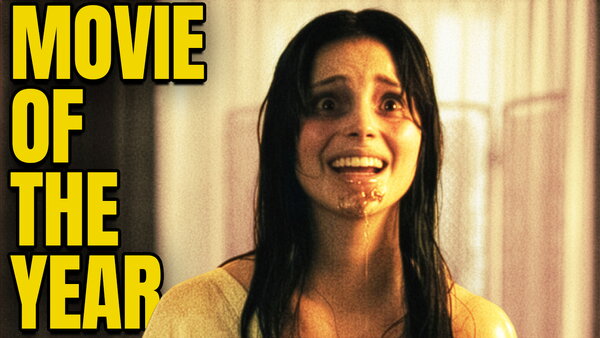
Over the past few years, there've been plenty of horror releases from established filmmakers and franchises that were on genre lovers’ radars.
For example, and regardless of whether they're good or bad, you can’t honestly say that the newest Scream, Evil Dead, Hellraiser, Halloween, Insidious, and Terrifier sequels didn't arrive without plenty of attention. Likewise, you couldn’t seriously argue that Trap, Beau is Afraid, Nosferatu, and Thanksgiving came from unknown names.
However, many of the greatest recent horror pictures snuck up on people, for one reason or another.
In some cases, they’re first-time efforts from burgeoning directors who obviously had no proven track record. Or, they marked the creative and commercial breakthroughs of visionaries who’d already done some solid but underappreciated work.
Elsewhere, these movies signified the introductions of known quantities in other genres – such as comedy – who tried their hands at something scary. Perhaps most impressively, they may be legacy sequels to long-dead franchises that were significantly better than they had any right to be.
Whatever the circumstances, the following films easily count as 20 incredible recent horror movies that came out of nowhere!
(As you might guess, spoilers ahead!)
20. Together
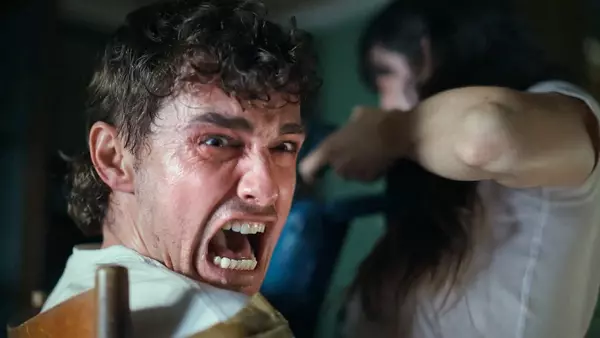
Despite having some inherent appeal as a new entry in one of horror’s most beloved subgenres – body-horror – there were a few reasons to be skeptical about 2025’s Together.
Primarily, main stars and actual married couple Alison Brie and Dave Franco were known for their comedic chops and occasional dramatic leanings, so the fact that they’ve barely done any scary cinema beforehand could’ve been a red flag. Likewise, Together was the feature-length debut of writer/director Michael Shanks, meaning that it was being helmed by someone largely unknown and unproven.
Nevertheless, Together was met with widespread acclaim and respectable financial profits.
Unsurprisingly, Brie and Franco were great as Millie and Tim, respectively, effortlessly mixing their real-life chemistry with the fictionalized complications of their characters. In particular, Together did a fantastic job of complementing its superficial weirdness and violence with thoughtful subtext regarding failed ambitions, co-dependency, and the all-too-relatable romantic dilemma of staying with someone out of complacency rather than true compatibility.
Plus, it harkened back to the bizarreness, discomfort, and mystery of the best body-horror pictures from decades past, with superbly off-putting effects, designs, and situations making audiences squirm throughout the runtime.
Fortunately, Together stuck the landing, too, with a resolution that’s simultaneously grotesque, logical, and unforgettable.
19. Leviticus
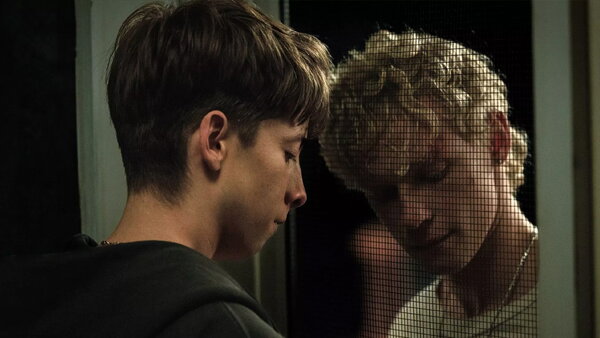
Actor Joe Bird certainly brought some attention to Leviticus because of his traumatizing role as Riley in another recent Australian horror knockout: 2022’s Talk to Me. Of course, Mia Wasikowska has become instantly recognizable over the past 20 years as well.
Beyond them, however, none of the other names associated with the movie – including fledgling filmmaker Adrian Chiarella – were big enough to guarantee sizeable viewership. Add to that Leviticus' limited distribution and marketing in the U.S. from international distributor NEON, and it’s easy to understand why it went unnoticed by plenty of people prior to release.
That’s also why it was so gratifying to see how well Chiarella’s initial outing turned out.
Leviticus is centered around two teenage boys who’re targeted by an unseen supernatural force after their evangelical Christian community learns of their same-sex interests. Sure, that might sound like merely filtering It Follows, The VVitch, and Saint Maud through an LGBTQIA+ lens, but there’s enough uniqueness and power to Leviticus to let it stand on its own.
Aside from its distinctive camerawork, moodiness, acting, and dread, its realistic depictions of forbidden love, religious oppression, and identity crises are as heartbreaking and enraging as they are frighteningly genuine.
As such, Leviticus is a hidden gem that’s largely been embraced by the queer community for its boldly necessary social commentaries.
18. The First Omen

Legacy sequels are almost always met with doubt – if not outright scorn – for feeling like desperate cash-grabs devoid of artistic merit.
While there are exceptions to the rule – such as the surprisingly good Alien: Romulus and Doctor Sleep – there are just as many misfires that justify audiences’ preemptive contempt.
As the unexpected prequel to one of the most revered horror properties of the 1970s, 2024’s The First Omen couldn’t help but raise eyebrows accordingly when it was revealed.
Not only was it positioned to provide answers to questions few fans of the franchise were asking, but it was happening over 30 years after the last continuation of the series – not counting the 2006 remake of the original Omen – 1991’s Omen IV: The Awakening. Thus, it supposedly came far too late and with far too little justification.
Oh, how wrong we were, as The First Omen was a terrific new addition to the lore.
Fueled by an unnerving yet empathetic performance from Nell Tiger Free – who previously wowed viewers of Apple TV’s Servant – it mixed modern surrealism, grossness, and style with vintage classiness and storytelling. By the end, it’s exponentially more startling, intriguing, and audacious than it had any right to be.
The First Omen isn't flawless, but it is a clear example of how to do a legacy sequel well.
17. Barbarian

Prior to Barbarian, mastermind Zach Cregger was known solely for outlandish comedy.
After all, he co-founded amusing American sketch troupe The Whitest Kids U' Know, and his only prior writing/directing film credits were comedies Miss March and The Civil War on Drugs. Therefore, he was unproven in the world of horror.
To be fair, though, the trailer for Barbarian alluded to an appropriately creepy and cryptic experience, with its superb use of lighting, atmosphere, and camera angles aiding in the ostensible depiction of an innocent woman staying with a stranger whose seemingly harmless demeanor masks his barbaric tendencies.
Furthermore, two of its main stars – Justin Long and Bill Skarsgård – had major genre credentials thanks to their respective roles in Jeepers Creepers/Tusk and the two-part IT remake.
Even so, the true nature of Barbarian knocked countless cinemagoers off their feet. Much cleverer and gnarlier than it initially seemed, the film was full of ingenious subversions regarding story structure, the motivations and outcomes of multiple characters, and the complex meaning of the title.
Consequently, Barbarian became one of the most commercially and creatively successful horror movies of 2022. In the process, it transformed Cregger from an unknown quantity into a bankable visionary who had all eyes on him when he followed Barbarian with 2025’s absolutely brilliant Weapons.
16. Sinners
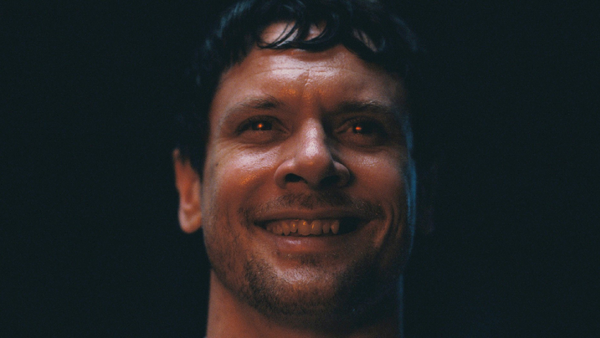
It’d be foolish to bet against any team-up between Ryan Coogler and Michael B. Jordan, as the dynamic duo has repeatedly struck gold via their Creed, Fruitvale Station, and Black Panther partnerships.
That said, those pictures were about as far removed from horror as you could get, which is why so many fans were rattled by the news that the pair’s fifth feature-length collaboration – Sinners – would be a vampire-centric period horror/drama set in the American South during the early 1930s.
Even more amazing, however, was how multifaceted and rewarding Sinners turned out to be by the time the credits rolled.
Considering that both titles concentrate on criminal brothers joining forces with other people to battle bloodsuckers in an entertainment venue, comparisons to 1996’s From Dusk Till Dawn were justified. Yet, said associations were also reductive given Sinners’ classier and richer tapestries, especially in terms of its mesmerizing celebration of Black culture alongside its condemnation of post-slavery racial inequality in the U.S.
In addition to exceeding box office estimates by grossing over $370 million worldwide, Sinners earned virtually unanimous praise from critics and eventually became the most nominated movie ever at the Academy Awards. It ended up winning four of them, too, solidifying that Coogler and Jordan are as adept at handling horror as they are at tackling anything else.
15. The Ugly Stepsister
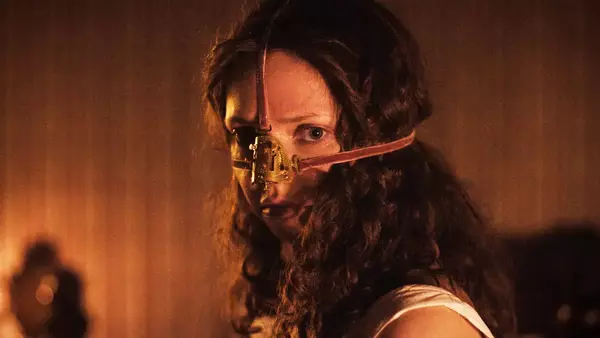
Few spectators were ready for what The Ugly Stepsister had in store for them.
Beyond being the debut film from Norwegian writer/director Emilie Blichfeldt, it was adapted from the Brothers Grimm’s macabre reimagining of Cinderella – Aschenputtel – which tells the twisted and violent account of two stepsisters maiming themselves to potentially win the prince’s heart.
So, it’s fair to say that many moviegoers were unaware that the satirical body-horror they were about to watch was actually a bold, troubling, and graphic new take on the immensely adored fairy tale.
Indeed, The Ugly Stepsister’s reframing of Agnes/Cinderella as an unlikeable antagonist was unexpectedly daring and refreshing. What’s more, the lengths to which her titular new sibling – protagonist Elviria – goes to outshine her were arresting not only because of their depravity, but also because of its authentic implications about the mental and physical tolls body dysmorphia can have on women.
Blichfeldt truly puts Elviria through the wringer by depicting the psychological anguish and extreme mutilation she suffers to achieve so-called perfection and companionship. For instance, she turns ill after eating a tapeworm to lose weight, has her nose broken and reset, and cuts off her toes to fit her foot into the famous golden slipper.
Without a doubt, The Ugly Stepsister is a criminally underseen endurance test that should be discovered ASAP.
14. The Sadness

Asia has produced some of the most unsettling and explicit horror movies of the last several decades, such as Audition, Ebola Syndrome, Grotesque, Macabre, and the Guinea Pig franchise. With his 2021 cinematic introduction, The Sadness, Rob Jabbaz delighted, disgusted, and/or disturbed unsuspecting viewers with a comparably revolting spin on the zombie subgenre.
Essentially, it centers on a Taiwanese couple – Jim and Kat – who are trying to reunite while steering clear of the catastrophic Alvin virus. You see, the virus doesn’t just make people ill in a conventional sense; it turns them into remorselessly cruel and horrific-looking killing machines whose sole purpose is to inflict unfathomable pain on anyone who crosses their path.
Jabbaz establishes the stakes and sadism early on by having Jim witness an infected elderly woman gleefully pour boiling oil on a café employee’s face and rip apart his flesh. Afterward, another contaminated person stabs his friend to death, and then the woman is run over by a car that’s driven by another elated zombie.
From there, all manner of brutal mayhem ensues, including self-mutilation, decapitation, disembowelment, people breaking each other’s bones, and most notoriously, a businessman sticking a certain part of his body into the eye socket of a woman. The Sadness even avoids a typical Hollywood happy ending (and that’s all we’ll say about that).
Understandably, The Sadness shocked and impressed many people who clicked “play” when it came to streaming platform Shudder in 2022.
13. Longlegs

It would’ve been easy to accuse Osgood Perkins of indirectly benefiting from nepotism to enter the horror space since his father was late Psycho star Anthony Perkins.
That is, until Osgood silenced skeptics with 2015’s exceptionally chilling and thought-provoking The Blackcoat’s Daughter. Even so, neither it nor Perkins’ relatively under-the-radar successors – The Girl in the Photographs, I Am the Pretty Thing That Lives in the House, and Gretel & Hansel – could’ve predicted the powerhouse he’d have with psychological/supernatural serial killer scare fest Longlegs.
Basically, it blends elements of genre touchstones such as The Silence of the Lambs, Cure, and Prisoners with Perkins’ signature knack for folk horror eeriness, ambiguity, and subtlety. It’s not as masterfully done as those films, but it’s in the same orbit. With career-best performances from Maika Monroe, Alicia Witt, and especially Nicolas Cage, Longlegs was arguably 2024’s biggest horror surprise.
The fact that Longlegs earned roughly 13x its budget by the end of its theatrical run is proof positive that the film caught fire, just as the sustained use of Cage’s immediately iconic villain in GIFs, memes, and the like demonstrates his enduring pop culture cachet.
Ironically, though, Longlegs being Perkins’ breakthrough movie meant that his 2025 follow-up duo of The Monkey and Keeper were almost destined to disappoint.
Hopefully, he’ll have another runaway hit before too long.
12. The Coffee Table

2022 Spanish psychological horror/black comedy The Coffee Table went viral for a short but significant period after countless people sang its praises on social media, YouTube, and Reddit. It’s no mystery why, either, as the film quickly violates one of the biggest taboos in modern cinema: killing a baby.
It’s a nail-biting pressure cooker revolving around a father named Jesús who’s left alone to care for his newborn son while his wife goes shopping. All the while, viewers know that something bad will happen with the eponymous object, yet having Jesús drop the baby through the coffee table’s glass pane top and get decapitated probably wasn’t what they anticipated.
Panicked, Jesús subsequently cleans up the mess, puts the body in the baby’s crib, and leaves the head underneath a chair. From there, he naturally does his best to keep his wife – María – distracted and unaware of what he’s done as the couple entertain Jesús’ brother, Carlos, and his new partner, Cristina.
For much of its runtime, The Coffee Table presents an incredibly tense and harrowing escalation of events. That said, masterminds Caye Casas and Cris Borobia still inject humor into the mix via the awkward coffee table salesman, an adolescent girl who routinely hits on Jesús, and Jesús’ increasingly desperate means of hiding the truth from his family.
It’s exquisitely unbearable, and the devastating ending further cements The Coffee Table as one of the most impactful outings in recent memory.
11. Deadstream

It’s relatively rare for the protagonist of a film to be its most irritating character and the one most worthy of a grisly demise. Undoubtedly, Annie from Rob Savage’s Dashcam remains the premier example of such a person – at least in terms of movies from this decade – but obnoxiously cocky and proud vlogger Shawn Ruddy in Deadstream might take the silver medal.
A delightful homage to Sam Raimi’s Evil Dead trilogy and The Blair Witch Project (among other things), the highly humorous and horrific picture sees humiliated influencer Shawn facing off against over-the-top supernatural horrors while livestreaming in a haunted house known as Death Manor.
Filmmakers Vanessa and Joseph Winter conjure plenty of grotesque creature designs and amusing gags after Shawn stupidly completes a séance to summon various spirits. The standout one is the diabolically cheeky Mildred Pratt – a poet who took her own life – but there are others who are crucial to Deadstream’s nostalgic blend of superb practical effects and tonal shifts.
Plus, the movie cleverly evokes survival horror video game franchises such as Resident Evil and Silent Hill by having Shawn backtrack, find objects, and discover clues and backstories to explain what’s going on and how he can escape Death Manor.
Suffice it to say that the finale is as startling as it is gratifying, too, and Deadstream’s glowing reception definitely put the Winterses on the map.
10. Daddy's Head
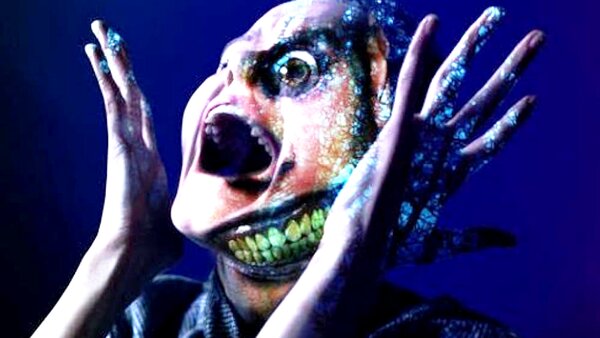
Daddy’s Head focuses on Laura, a widowed woman who’s trying to connect with her stepson, Isaac, following the sudden death of his father, James. Meanwhile, the pair keep encountering a strange and malicious James-like monster in the woods and around the house that intensifies the rift between them.
Clearly, the movie resembles numerous other recent horrors – including The Babadook, The Hole in the Ground, and Come Play – in that it deals with bereavement, a supernatural force, and a fractured parent/child relationship. Nevertheless, there are several components that elevate Benjamin Barfoot’s latest feature above most of its stylistic siblings.
Chief among them is Julia Brown’s multilayered and meticulously crafted turn as Laura. There’s a depth and realism to her presence that makes her complicated situation – and the resulting frustration, fear, and heartache – wholly believable. Of course, Rupert Turnbull does a fantastic job as Isaac, too, and the rest of the cast is great. Yet, it’s Brown who stands out most.
Rather than rely on cheap shocks and a rushed pace, Barfoot expertly builds tension and drama so that Laura and Isaac’s relationship is adequately developed before the evil entity starts messing with Isaac, Laura, and the people and pets around them. Once it does, its look, movements, and general methods of being shown are highly unnerving.
Without question, Daddy’s Head matches or surpasses every other film of its kind when it comes to accentuating effective scares with poignant storytelling.
9. Backrooms
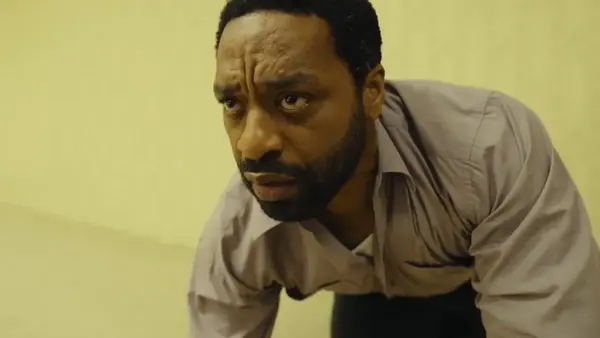
Hollywood is brimming with tales of remarkably young filmmakers knocking it out of the park and being skyrocketed to stardom with their debut efforts. The textbook case of that is probably still Orson Welles and 1941’s Citizen Kane.
Although Kane “Pixels” Parsons’ Backrooms isn’t exactly the Citizen Kane of the horror world, it’s nonetheless an astoundingly self-assured, contemplative, eerie, and multilayered accomplishment given that he made it when he was only 20 years old.
Adapted from Parson’s beloved sci-fi analog horror web series and the original creepypasta, it chronicles moody furniture store owner Clark and his therapist, Mary, as they and some side characters contend with the titular liminal space. There are also vague implications about the Backrooms’ function and purpose coinciding with the involvement of scientists from the Async Research Institute.
The central performances from Chiwetel Ejiofor and Renate Reinsve as Clark and Mary – respectively – are predictably outstanding, and Parsons' camerawork, sets, creature design, and the like fully capitalize on the fascinatingly distressing and incomprehensible mythology viewers already adore.
The movie truly becomes special when it explores the relatable complicatedness of its characters, with everything from alcoholism and a broken marriage to failed ambitions and childhood trauma brewing beneath or on top of the dread and dangers of the Backrooms itself.
Backrooms didn’t have to use Maslow’s hierarchy of needs as subtext for its otherworldly scarefest, but it does, and it’s all the better for it.
8. They Will Kill You
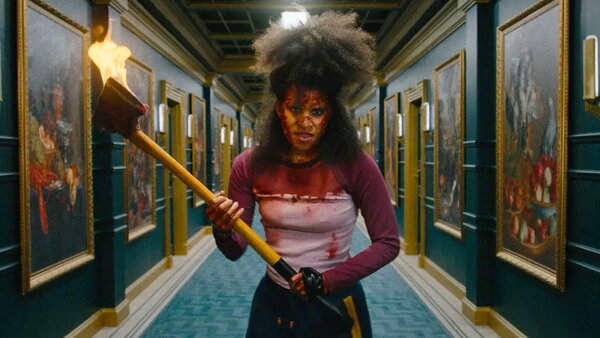
Upon release, 2026’s They Will Kill You justifiably drew constant comparisons to films such as Evil Dead II, Ready or Not, John Wick, Oldboy, and Quentin Tarantino’s deliciously stylish and savage Kill Bill duology. Whatever it lacks in originality, though, it more than makes up for with blood-soaked carnage and delightfully ridiculous confrontations and lore.
The always great Zazie Beetz plays Asia, an ex-con who becomes the new housekeeper at a shadowy and elite New York City high-rise as a means of rescuing and reconnecting with her estranged younger sister, Maria. Almost immediately after Asia arrives, the building’s manager – Lily, played by the equally reliable Patricia Arquette – and a slew of other scoundrels attempt to murder her.
From there, They Will Kill You lives up to its title by having Asia and Maria’s assailants pursue them throughout the building for their own sacrificial and cultist purposes, prompting both women to fend them off and survive the night in perpetually awesome, silly, and imaginative ways.
By the end, the sisters have dealt with plenty of fantastical dismemberments and resurrections, as well as a sentient eyeball and the godlike figure whom Lily and company were trying to appease the whole time: a severed pig’s head possessed by Satan.
They Will Kill You is the perfect example of creating something fresh out of familiar ingredients, and it deservingly took budding director/co-writer Kirill Sokolov to the next level of creativity and recognition.
7. The Long Walk
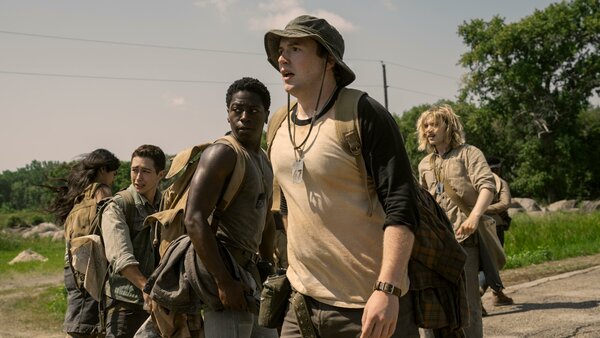
The Long Walk didn’t come out of nowhere because the people behind it were just getting started, but rather because it’s based on a relatively lesser-known Stephen King novel and because it’s the all-too-rare King adaptation that’s actually very good.
Set in a financially destitute post-war version of the rural United States, The Long Walk follows 50 young men who volunteer to trek nonstop across the country to inspire patriotism, integrity, and a rejuvenated work ethic. They’re guided by army soldiers, and after receiving three warnings, they’re executed without hesitation if they walk too slowly or stop for any reason.
Ultimately, the last one standing receives a ton of money and the ability to make any wish they want.
Every death hits hard because the men are convincingly multifaceted – be they cowardly, friendly, antagonistic, foolishly prideful, etc. – and their believable bonding is the heart of their journey. Thus, there’s overwhelming fear and tragedy in seeing them be brutally murdered while knowing that only one of them will cross the figurative finish line.
In typical King fashion, then, The Long Walk is a dystopic narrative that melds excellent characterizations and dialogue with dreadful circumstances to provoke audiences into considering how much the fictional world mirrors the policies and practices of the real world.
In other words, what’s happening in The Long Walk isn’t too far-fetched from what has happened – or could happen – in the real world.
6. Talk to Me

As we’ve already seen – and will continue to see – the 2020s is the decade that proved that thriving YouTubers/internet personalities can also make some of the coolest and scariest horrors of their generation. That movement was largely kicked off by Danny and Michael Philippou’s socially conscious rejuvenation of the possession subgenre: 2022’s Talk to Me.
Equal parts The Exorcist, Flatliners, and Ferris Bueller's Day Off – but without the comedy – the movie takes the age-old blueprint of brazen teenagers stupidly summoning evil spirits to new heights. In the process, it also tackles loneliness, grief, identity, and peer pressure while serving as a poised examination of modern, technology-obsessed Australian youth culture.
As previously alluded to on this list, the physical and eternal tortures Joe Bird’s Riley endures are truly disturbing, and several other people are put through the wringer as well. For instance, Sophie Wilde’s Mia contends with the evil she and her friends have unleashed alongside wrestling with the death of her mother and the consequential detachment of her father.
That daringness – coupled with the Philippou brothers’ commitment to emotional storytelling, inventive cinematography, and uncomfortable but fitting aftermaths – makes Talk to Me exceptional.
The siblings weren’t one-trick ponies, either, as showcased by 2025’s arguably more upsetting Bring Her Back. Hopefully, their upcoming Talk 2 Me is a worthy sequel to their breakout masterpiece.
5. When Evil Lurks

Like Talk to Me, Demián Rugna’s successor to 2017’s Terrified – When Evil Lurks – is a reinvigorating take on the possession picture that doesn’t merely rip off The Exorcist. Instead, it’s an astonishingly merciless and bleak account of brothers Pedro and Jaime racing against time to stop an evil spirit from taking control of their small village before being born.
It’s quite engaging from the jump, with the siblings encountering the bedridden host to the demon – called a Rotten – whose grotesqueness is legitimately vomit-inducing. Afterward, Rugna continuously escalates the suspense, viciousness, and hopelessness of this world with a handful of extremely shocking scenarios.
Depicting a pregnant woman burying an axe in the face of her husband before doing the same to herself is horrific enough, right?
Well, that’s nothing compared to When Evil Lurks’ two most jaw-droppingly sadistic scenes. Without going into too much detail, suffice it to say that one involves a French Mastiff suddenly mauling a little girl, and the other involves a possessed mother eating brains from her dead son’s skull as she carries him down the road.
Naturally, the climax of the movie – involving Pedro’s mother and autistic son – is no less startling and cruel.
Rugna fleshes out his nihilistic carnage with richly ominous folklore, too, cementing When Evil Lurks as one of the most unflinchingly visceral and disheartening possession movies of all time.
4. Hokum
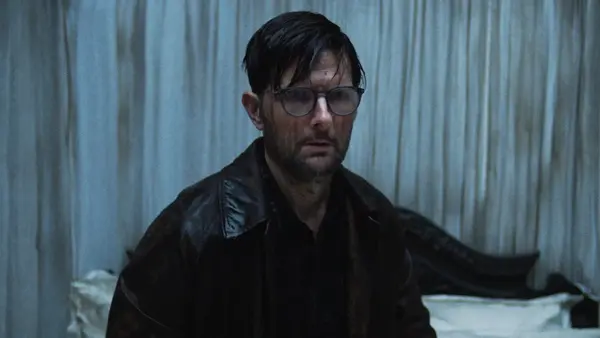
Damian McCarthy became somewhat of a household name with his first two features, 2020's Caveat and 2024’s Oddity. Yet, it’s almost impossible to deny that his third turn at bat – 2026’s Hokum – is his breakthrough given that it grossed roughly 12x as much as Oddity and delivered a significantly more enjoyable viewing experience.
The folk horror tale sees the typically likable Adam Scott playing against type as Ohm Bauman, a mean-spirited author with writer’s block who travels to the Bilberry Woods Hotel in Ireland to bury his parents’ ashes and take his own life.
Luckily, he fails at the latter task, and he spends the rest of his time in the hotel challenging the guilt he feels about his parents’ deaths as he tries to solve the murder of kindhearted bartender Fiona and escape the clutches of the witch residing in the basement.
There’s so much to love about McCarthy’s movie, such as its expert synthesis of effective scares, ghostly atmospheres, quirky characters, and cheeky gallows humor. Almost every main character – including Bauman, eventually – is endearing and three-dimensional, and all three of the aforementioned major plotlines are thoroughly intriguing.
That masterful tonal balance is further exemplified by Hokum having a comforting rustic vibe and a touching full-circle ending, despite also taunting Bauman with perhaps the creepiest cinematic creature of 2026: Jack the Donkey.
Hokum is as chilling as it is cherishable, and it’s easily among 2026’s biggest horror surprises.
3. X

Prior to X, Ti West had already established his distinctively warped, ironic, and savage voice by helming titles such as The House of the Devil and The Sacrament. His contributions to the initial outings in the V/H/S and ABCs of Death anthology series played a part as well.
It was his wonderfully unpredictable, transgressive, and poignant homage to Tobe Hooper’s The Texas Chain Saw Massacre, however, that saw West substantially evolve as an artist and box office draw.
X audaciously subverts the tried-and-true TCM template in at least two major ways.
For one thing, its rowdy protagonists don’t happen upon the deadly farm by accident; instead, they go there to make an adult film. That premise allows West to turn what could’ve been another run-of-the-mill sleazy slasher into a more sophisticated reflection on the 1970s pornography industry in conjunction with societal concerns regarding religious oppression, sexual promiscuity, and body autonomy.
What’s more, West offers a surprisingly touching look at aging, with villainous elderly couple Howard and Pearl murdering their guests in part because they’re jealous of their youthfulness, attractiveness, and ability to fornicate. There’s a particularly moving scene that shows Howard and Pearl struggling to still express their love through sex, and it’s hard not to empathize with them.
Of course, Mia Goth earned newfound acclaim for her dual roles as Pearl and ambitious adult actress Maxine, too, so X was a turning point for its creator and its main star.
2. Birth/Rebirth
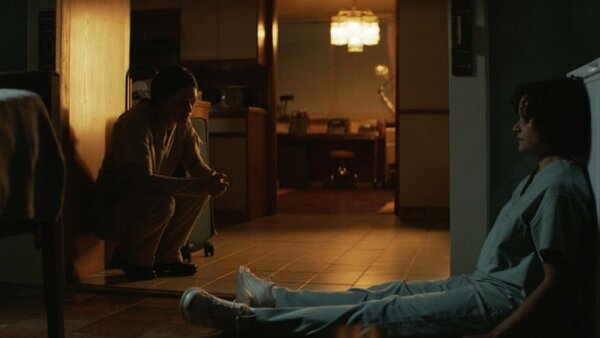
The bond between a mother and her child is among the most sacred human connections imaginable, and it’s certainly ripe territory to explore through the lens of body/psychological horror.
Case in point: Lee Moss and Brendan J. O’Brien’s boldly troubling and thought-provoking Birth/Rebirth. Inspired by Mary Shelley’s Frankenstein, the film examines the moral, emotional, and scientific justifications and outcomes of bringing a deceased child back to life.
In particular, the five-year-old daughter of maternity nurse Celie Morales – Lila – dies unexpectedly from bacterial meningitis. Celie’s situation gets markedly worse when, after going to identify the body, she learns that Lila was stolen and reanimated by withdrawn pathologist Dr. Rose Casper to help with Casper’s at-home research into reproduction and resurrection.
Following their initial confrontation, Morales actually agrees to help Casper with her testing, and from there, Birth/Rebirth becomes increasingly provocative and affective as it forces both women – and viewers – to contemplate the ethics of their partnership and the legitimacy of their goals.
There’s much more to the movie than that, and Moss and O’Brien’s script – plus Moss’ direction – never shy away from the graphic details or questionable principles behind what Morales and Casper are doing.
As such, Birth/Rebirth is a profound investigation into how far a mother will go to see her child again and how far a researcher will go in the pursuit of scientific progress.
1. Obsession
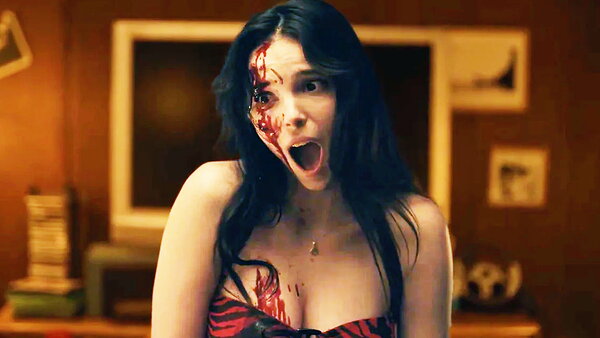
2026’s Obsession is likely the horror movie success story of the decade.
Beyond garnering widespread acclaim, YouTuber-turned-renowned filmmaker Curry Barker’s romantic twist on the age-old monkey’s paw tale became a viral sensation over the summer. In addition to spawning countless written/video essays and social media spoofs, it’s now one of the most profitable movies ever made and a major part of this year’s Universal Studios Hollywood’s Halloween Horror Nights!
It’s not difficult to see why, either, given the picture’s terrifically acted and constructed shocks and social commentaries.
Whereas the trailer(s) implied that Michael Johnston’s Bear would be the victim and Inde Navarrette’s Nikki would be the villain, the opposite is true.
Basically, the real Nikki is trapped within her body and helpless to stop the erratic and violent actions of the entity possessing her. Meanwhile, Bear – one of her closest and most trusted friends – ignores red flags, his buddies’ advice, and the real Nikki’s pleas to end her suffering so that he can maintain his selfish delusions about Nikki’s affections and subjugation.
Barker fills his film with unsettling details and implications to discover as well, including ending Obsession in pretty much the most realistically grim way possible to drive home how much Bear has ruined Nikki’s life forever.
The result is a strikingly necessary glimpse into modern heterosexual male loneliness and romantic/sexual entitlement (among other things). Even people who knew Barker's prior work were blown away by Obsession's clever nuances, striking scares, and relevant insights.