20 Most Important Blockbusters That Changed Cinema Forever
For better or worse these lot completely shaped modern movies.

It's hard not to have a soft spot for blockbusters. Although the majority of the output tends to be mind-numbing actions pieces marketed to the lowest common denominator, at its best it gives us some of the best cinema has to offer, rivalling the more traditionally artsy fare in terms of depth and cinematic prowess.
Of course, with the staggering amount of money in the industry there's a tendency to play things safe. Throughout the summer each week sees a movie studio stake millions on a couple of hours of entertainment with the hopes of it hitting big. And to improve their chances they tend to stick to a formula - certain genres and franchises with a specific approach to marketing - based off the cumulative experience of previous successes.
Not all adhere to the predictable blueprint, however; every now and then a film will come along and completely shake up the industry, trailblazing a spate of imitators or completely shifting the way in which directors approach entire genres.
It's impossible to quantify just how important one movie is relative to another, but damn it we've tried. Here is our (very subjective) list of the twenty most influential blockbusters of all time. Not all were massive gambles, but they all shaped the cinematic landscape in their own way.
With only twenty not every suitable blockbuster could make the cut and there's some big hitters missing, be it due to not being big enough to properly qualify as a blockbuster or simply not being influential enough. It's no comment on their quality; plenty of awesome films were left off the list just because their impact was rather small. Feel free to debate what got missed in the comments.
20. Harry Potter And The Philosophers Stone

Harry Potter was already an absolute phenomenon before it even arrived in cinemas. A series of then four mega-successful books that had transcended their target audience to be a must-read for adults of all ages, the shift to cinema at the height of its popularity was a smart move; Harry Potter And The Philosopher's Stone (or Sorcerer's depending on where you live) became the first bona fide hit of the new millennium.
It didn't change cinema to the same level as some films on this list, but it did kick off a decade spanning dominance of the box office. Across eight films the franchise would become the biggest of all time and is even getting its own spin-off, Fantastic Beasts and Where to Find Them.
The main lasting legacy of the series lies in the rise of young adult movies. A literary sub-genre that grew to prominence thanks to the Potter books, the cinematic adaptations were likewise brought into existence on the back of the success of Harry. Although Twilight was certainly important we wouldn't have had all that nonsense without the boy wizard first.
19. Superman: The Movie
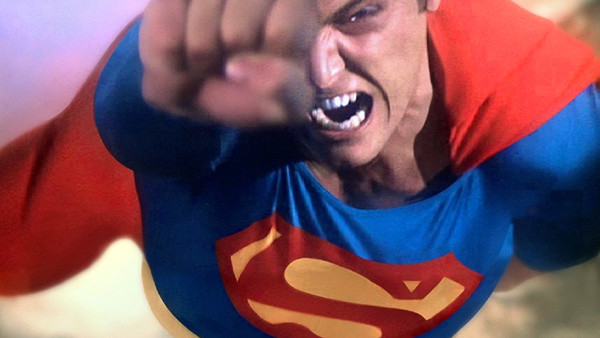
There'd been other cases of superheroes making the transition from comic book to the big screen before, but they were always cheap affairs that did little more than try to cash-in on a well known name (as well as the Adam West Batman there was also a TV Spider-Man movie released theatrically outside of America and an outing for the Man of Steel that served as a pilot for a TV series). Superman: The Movie changed all that.
Investing a lot of time into the motivations of Clark Kent/Kal-El rather than just throwing Superman into action, the movie was for the time the most expensive ever made (expect that phrase to pop up a few more times on this list) and it shows on screen. The effects are expansive and tangible and while you might not quite believe a man could fly as the marketing claimed, you could believe we'd soon see increasingly fantastical ideas realised on screen.
The film didn't lead to an immediate bunch of imitators, but it set a precedent; the hard job of proving superhero movies could be done right was over.
18. E.T. The Extra-Terrestrial
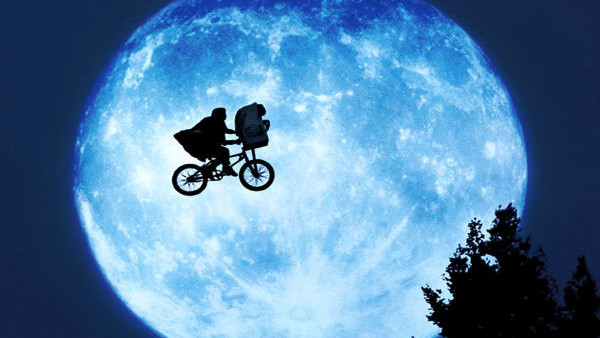
Summer 1982 was one of the best times for sci-fi movies. TRON hinted at a future inside a computer, Star Trek made its best film and Blade Runner and The Thing were released on the same weekend. Oh, and E.T. arrived.
If the notion of a big blockbuster taking place within one town and featuring a small cast of kids feels antiquated it's because the landscape of summer films has changed so much since. But that doesn't make E.T. irrelevant in the history of the medium. The film became the highest grossing film ever thus far (another phrase that'll recur a lot) and with its every-kid heroes gave a generation reason to look skywards and dream; here was family sci-fi not set far far away or in the distant future but here and now.
E.T. would go on to shape family films for the rest of the decade, with Spielberg-inspired suburbia becoming a touchstone for many an eighties-kid; its modern Americana directly influenced Zemekis, Dante and more, along with more recent homage Super 8 and rip-off Earth To Echo.
The film had a much wider effect on film in general though, with the children who grew up with it now shape the industry.
17. Inception

It was a long accepted rule that blockbusters need to be dumbed down because otherwise mainstream audiences won't be attracted to them. It turns out that was a barefaced lie.
As a reward for making over a billion dollars with The Dark Knight, Warner Bros. gave $160 million to Christopher Nolan to make whatever movie took his fancy. The result was Inception, an intricately plotted sci-fi heist thriller set in the world of dreams. With exposition dropped constantly throughout the first half and the final hour consisting of massive action set pieces all taking place simultaneously in different levels of reality, it required complete attention throughout to keep up.
And people did; the film was more successful than anyone imagined, earning bucket loads of cash and even getting nominated for Best Picture at the Oscars. There was immediately a slew of high-concept, hyper-modern sci-fi commissioned (The Adjustment Bureau, Source Code), while plenty of others picked up on various creative aspects of the film (we just had a mental-time-travel X-Men movie).
The lacklustre performance of Edge Of Tomorrow means Inception may not be the total game-changer we hoped for, but there's no doubt it's made screenwriters up their game.
16. Iron Man

One of the biggest releases of 2014 was Guardians Of The Galaxy. That sentence is deliriously awesome, but also completely ridiculous. How did a D-List comic book manage to capture the world's attention?
The answer is Iron Man. He may be now happy to sit alongside Peter Parker and Bruce Wayne at the big boys table, but before his first movie hit Tony Stark was a nobody. There hadn't been any real examples of a hither-to unknown superhero working on the big screen and with the larger franchises starting to fatigue the question of how the superhero genre would continue was beginning to press. With the smart casting of Robert Downey Jr. and deft balance of realism and humour Jon Favreau's film showed that just because mainstream audiences didn't know of a hero didn't mean they wouldn't go see their movie.
It was inevitable one of D.C. or Marvel would eventually properly stray from their safe properties, but no one expected it to be done to such crowd-pleasing results.
15. Star Wars Episode I: The Phantom Menace
Before the hype machine kicked in for Episode VII, The Phantom Menace was the most hotly anticipated film ever. Marking the return of Star Wars to the big screen after sixteen years, the fourth entry in the series cemented the franchise as one of the most important pop culture touchstones of the 20th Century. And while it made truckloads at the box office the film's real lasting legacy is how its reputation was so shockingly changed.
Batman And Robin had already suffered at the hands of the internet, with poor pre-release hype and fan derision destroying the film's hopes at the box office, but what happened with Episode I is much bigger. Initially well-received, the disappointment with the film soon set in and became all-out fan hate as time went by. It's certainly the most high-profile and impactful fan backlash we've seen and marked a true tipping point in the role the internet played in how films were received and who they were marketed towards.
Of course, it didn't help that mere months before audiences had just seen the future of sci-fi blockbusters...
14. The Matrix

The same year The Phantom Menace hit screens so did The Matrix. A film with an idea that didn't let its smarts get in the way of its kinetic action, it took the world by green-lit rain storm. The concept of our reality not being as it seems was far from new, but the presentation of The Matrix that really got everyone talking.
And it really got studios acting. Not leading to the long list of imitators most majorly different hits spawn, The Matrix instead worked its way into all manner of mainstream Hollywood. Wire effects and more creative choreography quickly became the order of the day, while soon everyone was using slo-mo.
When you think direct influences of the bullet-time effect it tends to be the parodies that exploded and quickly grew tired; everything, from Shrek to Scary Movie, tried to get in on the party. But it's much wider reaching than that. Slow motion wasn't anything new in cinema, but in action blockbusters The Matrix was red letter film. It's now nigh on impossible to find a big summer blockbuster that doesn't used slo-mo in some way - it's a ubiquitous effect bordering on cliché - born from the realisation in The Matrix that it looks bloody cool.
13. Batman

Turn a character that had previously fallen into camp into a new, shiny blockbuster made by an up-and-coming director with an recognisable style; Tim Burton's Batman did for the Dark Knight what Christopher Nolan's Batman Begins did for, well, the Dark Knight.
Batman proved a groundbreaking step in the development of the character; although Frank Miller's The Dark Knight Returns had shown comic fans how dark things could go, it was this film that started showing that to audiences. But it isn't simply within the franchise that Batman shook things up. Signalling another step towards the superhero genre (now we had a whopping two successfully translated to the big screen), it was a great example of director well-matched to the material, with a studio making sure Burton didn't go too far into his trademark weirdness.
The major shift Batman brought to the table that has since been ignored, however, is in reference to merchandise. It was truly blanket - toys, product tie-ins, you name it - and although merchandising had been proven a big cash draw before (Planet Of The Apes had obnoxious amounts of lunchboxes twenty years earlier), Batman set the industry-standard approach.
12. Beauty And The Beast

You could make the argument The Little Mermaid should place her, with Ariel's journey to be part of that world signalling a return to form for Disney, who hadn't had a proper hit in decades. But it was Beauty And The Beast that showed Hollywood just what animation could be.
Viewed by many to be the height of the Disney Renaissance (although we'd argue The Lion King gives the good fight), Beauty And The Beast was the Disney princess formula done at its absolute best. Belle is a brilliant unassuming hero and the period French setting lends a realism that had been lacking in the fictional worlds of Cinderella and Sleeping Beauty. It was noteworthy for its use of CGI to enhance some of the scenes, particularly the ballroom dance, although what gets it on the list is what it inspired in people.
With critical praise, the film was a smash hit and even got an unprecedented nomination for Best Picture at the Oscars. It lost out to the unstoppable The Silence Of The Lambs, but to even be considered was monumental; it was a symbol animation had won round even the most traditionalist members of Hollywood.
11. Waterworld

Waterworld is known for two things; having a fun theme park attraction and for being one of the most high profile box office bombs in cinema history. High profile it may be, but it certainly wasn't the biggest; it doesn't even feature on the list of the fifty biggest money wasters of all time. The film's budget was ginormous (adjusted for inflation it was just shy of $300 million) and the resulting product initially lost Universal a lot of cash, but with video sales and the licensing from the previously mentioned theme park the film did scrappily get its money back. It just took a little more time.
That a safe bet (because a mutated Kevin Costner on an endless sea is a sure thing) could fail so spectacularly to connect, however, shook the studios and had everyone a little warier. They didn't want to see this happen again.
Watching the film it feels like a relic of an older time, with expansively intricate sets and nary a computer effect in sight. And although CGI had already begun its rise earlier in the decade, Waterworld really helped its rise to total dominance; the budget had risen so high precisely because of the water-based sets, something computers could have replaced. Although we'd see other giant sets in the future (for Titanic James Cameron essentially rebuilt the ship), it was certainly less frequent when the financial dangers of them became clear.
10. Avatar

From one expensive film to another, although this one fared slightly better. The current highest grossing movie of all time, Avatar was the defining release in the rise of 3D. Previously the reserve of family animations, for many James Cameron's sci-fi romantic action epic was their first experience with the format since its red-blue glasses days. Helping boost the film no end (when your previous run-in with 3D is the likes of The Adventures of Sharkboy and Lavagirl in 3-D of course it'll look groundbreaking), it sparked a rush conversion of many in production films and made a stereoscope release essential for any live-action blockbuster.
Of course, as with Inception, lacklustre product since (aside from Gravity, Hugo and Life Of Pi there's been little praise of subsequent use of 3D) has led to this proving to be less of an impact. Where 3D does have a lasting effect on Avatar is its box office; it grew so high thanks to the ticket surcharge.
But for all its money, as a film Avatar was more a refinement of existing ideas that ground-breaker in its own right. The pre-Christmas release that had so helped The Lord Of The Rings was proven as a box office heaven (expect December to have a massive movie every year for the foreseeable future), while the mo-cap that brought the Na'vi to life had already been showcased in more rudimentary forms in Kong and the dead-eyes of Robert Zemekis' Christmas fare.
9. The Avengers

Ever since Nick Fury swung by to say hello at the end of Iron Man the Marvel Cinematic Universe had been building a shared universe for all its characters, but it wasn't until The Avengers four years later that we knew they'd properly pulled it off. Mirroring the massive continuity of the comics, the MCU stands at the forefront of popular blockbuster filmmaking, with its impact set to be felt long into the future.
Obviously what's happening with The Sinister Six and Batman V Superman is in direct response to The Avengers success, but the shift Joss Whedon's team-up really marked is bigger than that; it's all about what your characters are doing when they're not causing geekgasms by being on screen together.
Previously easter eggs put out there to reference the source material were little winks for the fans. Now they're almost certainly laying the foundations for spin-offs of some form. Thanks to the success of the MCU (and particularly The Avengers), the model of releasing a new film in a series every two or three years is old-fashioned thinking; Marvel already are on two per annum, with D.C. hot on their tail and Star Wars set to have a new film in cinemas each year soon.
8. Toy Story

At the time everyone knew Toy Story was something big; its characters were larger than life, the story took the heroes on an epic adventure and the whole thing looked unbelievably cutting edge. But just how big nobody could have quite predicted.
Everyone knows it restarted the ways feature animations were made - it soon became clear that computer worlds were the future and would soon render their less evolved kin extinct - but assessing how blockbusters now work it appears Toy Story changed more than that; it altered all family films at a fundamental level.
Animation had always been a genre in and of itself, but soon it became something more all-encompassing. Live-action family films are much sparser than they ever were (if something's live-action its appeal tends to be much broader), replaced by an ever increasing number of brighter, more profitable animations. When a traditional adventure (The Black Hole, Earth To Echo, Journey To The Centre Of The Earth), it all feels a bit cheap and stuck in the past.
And it's all because the guys at Pixar decided to not just push the envelope, but break out of it completely.
7. Jurassic Park

There'd been Terminator 2: Judgment Day and its liquid-metal T-1000 before, but it was Jurassic Park that finally showed us just what CGI could do.
Like John Hammond, the creator of the titular theme park, Steven Spielberg's dino-ride is all about the showmanship. The marketing didn't go as all in as it would today, teasing the ground-breaking special effects rather than giving them all away, while the film proper took its time revealing the creatures; although we get to see some herbivores early on the real stars of the show - the T-Rex and gang of velociraptors - don't show up for a good hour.
It only served to highlight how good the effects were, with the line of reality impossible to define. Immediately Hollywood woke up. Models and mattes began to feel immediately dated and suddenly previously out of reach ideas became possible; it was only after his buddy's success that George Lucas realised it was time to return to that galaxy far, far away.
There is a sense of irony to Jurassic Park's impact. Although it made great use of CGI, its real visual success game from knowing its limits; the dinosaurs are also brought to life by a mixture of models and the old-fashioned men in suits. That's primarily why the effects hold up today; in many cases what your seeing was actually there.
6. The Lord Of The Rings

To pick out the effect of the individual films in The Lord Of The Rings Trilogy is a rather pointless effort; just as the story only truly works with all three together, to assess the impact they had on blockbuster cinema requires the gigantic enterprise to be taken in as a whole.
For the fantasy genre Peter Jackson's first Middle Earth trilogy will remain a touchstone for years to come. Deftly balancing the epic world-shaking events with small personal moments, it was the adaptation of J.R.R. Tolkien's tome that fans had been craving and audiences hadn't even realise they wanted. And just about every high fantasy movie since has gone for the same approach, with varying degrees of success.
The production aspect reached much further than just the genre however. Shooting the series back-to-back kept costs down slightly, while the marketability of a continuing trilogy helped bring instalment based filmmaking to the fore. The films also led to the first big shake-up of how DVD releases were executed; the Extended Editions set a new high bar for director's cuts and the comprehensive behind-the-scenes coverage made interactive menus and scene select, which had been touted as genuine special features just a few years before, feel archaic.
5. The Dark Knight

To pinpoint one film that proved the turning point in blockbuster cinema's shift into the land of gritty realism is hard. Batman Begins is the earliest prominent release while Casino Royale, a much needed reboot of Bond, showed how existing franchises could be modernised without loosing their uniqueness. But if you want to film that cemented this ideology in audiences it has to be The Dark Knight.
Bolstered by a knock-out performance by Heath Ledger and total commitment to a real-world Gotham, Nolan's sequel took the world by storm. The film was an unprecedented hit, making a billion dollars which was, at the time, a very rare occurrence. And, as dependable as the Jokers love of taunting Batman, Hollywood took to the new style like a very realistic rash.
Begins often gets attributed as the film that really kicked this all off but that seems like retroactive praise. While it certainly brought a character that had once more devolved into camp back from the brink, it wasn't a smash hit, earning less than Burton's Batman had fifteen years earlier. It laid the groundwork, but it was The Dark Knight taking everything that had worked with Begins and putting it on a massive scale that really showed everyone that superheroes (and blockbusters in general) could be serious.
4. Jaws

What are the key components of ensuring a blockbuster hit? Summer release? Wide appeal? Massive marketing campaign? Easy to sell idea? That all began with Jaws.
The third Spielberg movie on this list, Jaws didn't just change the mechanics of how blockbuster movies worked, it created them, irreversibly altering cinema in the process. It used to be the case a film would be released gradually over a period of sometimes years, building momentum through word-of-mouth. It's a totally obsolete method nowadays, although it does have some unconsidered positives; as it hinged so much on quality the better films tended to be the ones that turned a profit.
Jaws was released in a whopping 450 screens upon release, setting the ball rolling on the idea of immediate profits and blanket advertising. Thanks to being both incredibly tense and rated PG it captured the attention of just about every member of the film-going public; it's a corny phrase but there really was something for everyone in Jaws (scares, family drama, action, clashing personalities, a little gore).
3. Titanic

If you get through the tears and Celine Dion there's nary an element of Titanic that wasn't shaping the future of movies. Conceived in the grand tradition of the Hollywood disaster movie, James Cameron's film was a reverential epic of the type "they just don't make anymore", produced with the best modern techniques. Bagging the titles of both most expensive and highest grossing film ever, it's record breaking haul at the box office and Oscars got everyone in Hollywood's attention.
The film's use of CGI was particularly novel; it was something normally the reserve of more conventional action pictures, with its presence in a period piece proving eye-opening. Although many of the effects were practical (as with Jurassic Park), the use of computers in all walk of film has become commonplace after this.
One of its biggest impacts, however, was purely accidental. Intended for release on the fourth of July weekend, the long post-production pushed the film back to December (the press thought we were in for a massive flop after that). With no big budget competition Titanic cleaned up and thus a second blockbuster season, home to only the very biggest of movies, was created.
2. X-Men
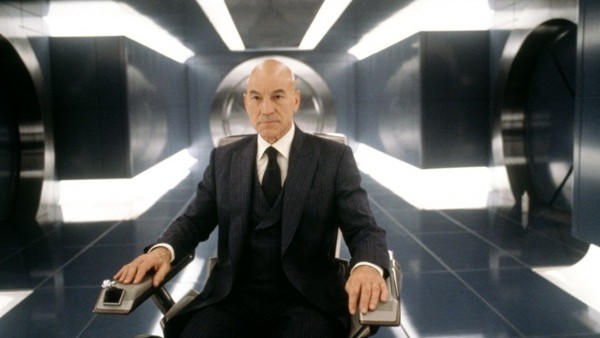
By the time the Marvel Cinematic Universe bows out X-Men will be as old as Superman was when Bryan Singer's superhero team hit theatres. In that twenty-two year period there were four Supermans, four Batmans and a couple of duds. Since X-Men it's been hard to move for all the spandex.
Before Singer's mutants the genre just wasn't taken seriously. Batman and Superman had worked mainly off the back of their existing popularity and both stumbled terribly as franchises after a successful start, while Blade (at that point Marvel's only hit) was so different from the comics it barely counts in the genre. It may not be to quite the same level as The Dark Knight, but X-Men treats the concept seriously, with real reverence to the graphic novels on which it was based.
That was what X-Men's real secret weapon was. Yes, it showed how superheroes could work within the modern world, but it was what it went through to do that that made everything so successful. In the preceding decade the likes of Batman Forever, Steel and Judge Dredd had treated the source as a simple idea to jump off from into more predictable territory. Singer understood that it was more than basic concept that had made the characters endure for so long and that really shows on screen. This is the X-Men, not just a flippant interpretation.
1. Star Wars

Fox fanfare, studio logo, then silence. Ten words on screen and fade to black. What follows would change everything.
Jaws may have started the blockbuster formula but it was Star Wars that truly cemented it in the minds of studios and audiences. Summer was now the time for massive movies with wide appeal that everyone wanted to see straight away.
Hearkening back to the Flash Gordon serials of the thirties and taking a lot of plot inspiration form Akira Kurosawa's The Hidden Fortress, George Lucas created a film seeped in well-worn elements brought to life with cutting edge effects; at once it was both incredibly new and comfortably classical (the same trick Cameron pulled with Titanic). Star Wars was expansive storytelling that captured the imagination of audiences en masse; it's the story of one boy taking on an evil, but there's also the pairing of two robots walking almost obliviously through this massive war, a mercenary questioning what's important in life and a near extinct group of wizards. How could it not be a phenomenon?
Of course as well as the cinematic effect there's also that massive merchandising issue. Everyone knows how Lucas smartly kept the merchandising rights to Star Wars, leading to an empire of products all emblazoned with that logo. As well as giving Hollywood the future of their movies, he'd given them another way to make money from a property.
What did you make of our list? Which major blockbusters did we miss? Get involved in the discussion down in the comments.