20 Greatest Opening Movie Scenes Of All Time
"All my life all I ever wanted to be was a gangster."

Though a film isn't made in its opening sequence, some of the most affecting scenes in all of cinema have come from the very first moments of a given picture.
Whether they be thematically important to a story at large, cinematographically outstanding or groundbreaking in their own unique way, there've been dozens of memorable and/or spectacular introductions to some of cinema's most beloved films - some recent, others not so much.
Homaged, referenced and replayed repeatedly, some of cinema's most engaging openings have taken form in different genres, different scales and in different ways. Some aim to ratchet up the tension slowly, whereas others plunge into the action immediately, grabbing everyone's attention straight away and ensuring a fast start to the story's proceedings.
Some of the most effective auteurs to have mastered the act of the opening sequence include Francis Ford Coppola, Sergio Leone, and Quentin Tarantino. But while they're the usual suspects, there are countless other directors who've managed to impart a memorable opening in a given feature.
A film might not hinge on those opening moments, but in conveying the drama of any given spectacle, it's better to have a good beginning than a bad one.
20. Terminator 2

James Cameron's sequel to 1984's The Terminator is a sci-fi spectacular in almost every way. It departed from the horror-like tone of the original, turned Linda Hamilton's Sarah Connor into one of the silver screen's most iconic leading figures and gave Arnold Schwarzenegger a career defining role as a reprogrammed T-800.
Before all that, however, came an opening look at the post-apocalyptic future awaiting humanity in the year 2029. Cameron's original film had done the same, but only briefly, and while Judgement Day's sequence barely lasts two minutes and thirty seconds, it was enough to conjure one of the most iconic dystopia's in sci-fi history.
It looks horrific, and Linda Hamilton's narration only hammers home the nightmare further.
19. The Matrix

The Matrix should really have been a one-and-done movie, but despite its disappointing sequels, there's no taking away from the first film's influence.
The Wachowskis' seminal sci-fi thriller was visually ambitious, unique in its premise and gripping from start to finish. It also kicked off with a gripping introduction, one that showed off Carrie-Anne Moss' Trinity taking on a SWAT team before stylistically leaping through a window onto the street below.
The action's breathtaking, and it's made apparent from the off that something isn't quite right. It makes for a great piece of world-building, and in launching the mystery surrounding this particular dystopia, the Matrix's introduction is superb.
18. Blue Velvet

David Lynch may not boast the most expansive of filmographies, but the few films he has directed have - for the most part - been memorable.
Blue Velvet, the director's 1986 suburban film noir, is both that and disturbing, and it has the kind of introduction to match.
What makes Blue Velvet's opening scene such a clever one is that it cuts right through the facade of suburban living. There are the white picket fences, the perfectly mowed lawns and the blue skies, but beneath all that lies something sinister. When your everyday homeowner collapses on his own lawn (to the tune of Bobby Vinton's eponymous 1963 song), the camera pans down to the undergrowth, picking up a disconcerting rumble before fading to black.
It's atmospheric, tonally dissonant and immediately captivating. It also sets the stage for Lynch's dissection of suburban living, and in peeling through the veneer of that dream, Blue Velvet is just as devastating today as it was when it first released.
17. The Lion King

Composed by Elton John for the 1994 Disney film, Circle of Life has become one of the most famous theatrical compositions of all time, and while there are countless other factors that made The Lion King the classic it was, that opening sequence instantly cemented it as one of the best animated features ever made.
From the moment Lebo M.'s vocals get going the scale and majesty of The Lion King is made apparent, and while the film would have other musical numbers later down the line, its first is still its most definitive.
16. Scream

Wes Craven's satirical slasher Scream was an instant hit when it premiered in 1996, and its opening sequence has had horror fans quoting it ever since.
Much like Psycho forty years earlier, Scream took the bold decision to kill off a character early on who everyone expected to feature heavily throughout the film. In its case the character, Casey Becker (played by Drew Barrymore), becomes the first victim of Ghostface, the franchise's ghoulish serial killer who's able to boast an encyclopaedic knowledge of horror films.
It's a fantastic set-up, and subverts the first of many horror cliches Scream affectionately takes aim at. Barrymore's character was meant to be the film's lead, but in killing her so early, it became clear that this particular horror film wasn't going to play by the rules.
15. Up

There isn't an opening scene as devastating - or emotional - as Up's.
Pixar's 2009 release went on to become one of the studio's best received of all time, and while there are plenty of other sequences that drew plaudits from moviegoers, the opening montage featuring Ed Asner's Carl and his wife Ellie is the scene that everyone remembers.
That's partly because it features what could be considered a cruel ending, but regardless of the couple's fate, the journey Pete Docter, Bob Peterson and Pixar's animators take everyone on in that opening is breathtaking.
Carl and Ellie embody love and togetherness in a way few other cinematic couples have, with Up's opening scene beginning with the pair's marriage and progressing right on through their life together.
There isn't a line spoken, and yet it's made abundantly clear that Carl and Ellie simply adore each other. It's what makes Up's journey such a compelling one, and while Pixar delay Carl's happy ending for another ninety minutes, it's one worth seeing play out first hand.
14. Platoon
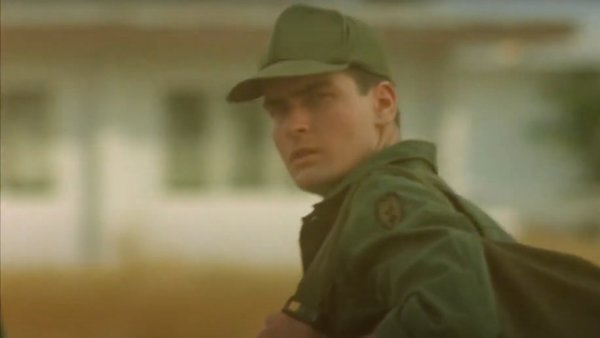
Up until the release of Oliver Stone's Platoon, the Vietnam War had suffered from a dearth of cinematic coverage from US studios. Or at least not authentically.
1968's The Green Berets starring John Wayne was essentially just government funded propaganda, and while Michael Cemino's The Deer Hunter marked a watershed moment in this regard, illustrating the destabilising effect the draft had on American families and veterans, Platoon aimed to lay bare the experiences every GI had during the conflict.
Stone, a veteran of the war himself, wasted no time at all in painting a chaotic picture of America's ill-fated excursion to Vietnam. The opening scene, featuring a young Charlie Sheen disembarking from a transport plane to the tune of Samuel Barber's Adagio for Strings, is bone-chilling.
The young enlistee is greeted by bodybags, thousand-yard stares, and then the heat and swelter of the Vietnamese jungle. It makes for a horrifying opening, and while the film does, of course, escalate the carnage of the war with each passing act, the image of Private Chris Taylor arriving to Barber's swelling orchestral score will go down as one of the war genre's most authentic.
13. A Clockwork Orange

A Clockwork Orange still makes for an uncomfortable watch forty years on from its original release, and its opening instils that feeling almost immediately.
Wendy Carlos' score combines perfectly with Malcolm McDowell's stare - and later narration - to intimate the dystopia Alex and his droogs reside. Alex himself is concerned with nothing more than a bit of the old "ultra-violence", and in hammering home the extreme nature of this future, Kubrick sets the action inside a hyper-sexualised locale, adapting Anthony Burgess' novel with the same kind of satire that made it so successful when it initially released years earlier.
12. Goodfellas

Goodfellas, Martin Scorsese's seminal 1990 gangster drama, is the perfect crime film. Based on the real life case of Henry Hill, Scorsese's film is a tour-de-force in good storytelling, enshrining Goodfellas as one of the all time greats of the genre.
There are plenty of key moments in the film to note, most of which involve Joe Pesci in one way or another, but one of the best involves the now iconic opening scene where Hill and fellow gangsters Tommy DeVito and James Conway are on their way to dump a body. Only, it turns out that the body isn't actually a body, and that the person is alive and well in the trunk of the car.
What follows serves as an introduction to the brutal mob violence that typified Scorsese's film, with Pesci's DeVito taking a kitchen knife and stabbing the victim repeatedly, before DeNiro's Conway shoots him at pointblank range.
Then, in a bid to drive home Goodfellas' tonal dissonance, Hill remarks that this was all he ever wanted to do in life, a line of dialogue accompanied by a swelling jazz accompaniment. It's the perfect introduction to a world that's all but normalised brutality and violence, and while the film boasts moments of equal notoriety, it can't be overstated just how well the opening sets the stage.