20 Actors Who Had To Wait DECADES Before Hitting Big
These actors got their big breaks later in life.

We all know that Hollywood is a tough, unforgiving racket and certainly not an industry for the weak of stomach, especially as it pertains to actors.
Talent is ultimately only one of the possible requirements for success - many great actors are never truly recognised in their lifetimes, while mediocre performers can strike it big through luck, timing, connections, or just being very, very good looking.
Every jobbing actor out there is just desperate to get their big break - the role that'll make them asked-for by producers and filmmakers, and perhaps even mean that they won't need to audition in future.
And while this might happen to a lucky actor after a few years of hard graft, the reality is that many extremely talented performers don't smash through that glass ceiling until they've been on the job for decades.
That's absolutely true of these 20 actors, each of whom spent 20, 30, even 40 or 50 years chipping away at their craft before finally gaining mainstream recognition.
It shouldn't have to be this way, but most of these actors certainly made the best of their late-blooming success...
20. Christoph Waltz
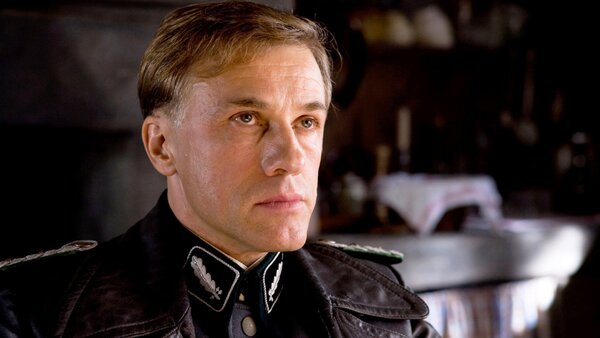
Let's kick this list off with one of the all-time examples of an actor finding global fame later in life.
Christoph Waltz came to global prominence courtesy of his ultimately Oscar-winning role as Austrian SS officer Hans Landa in Quentin Tarantino's Inglourious Basterds.
The film released in 2009, when Waltz was 53 years of age, and prior to this he was a total unknown to international audiences outside of his native Austria.
And yet, prior to this Waltz worked in German television and theatre for more than 30 years, his first screen credit being in 1976.
But Waltz certainly made the most of his later career break, soon enough earning a second Oscar in his next collaboration with Tarantino, Django Unchained, and later starring as a new iteration of Blofeld in the James Bond franchise.
Considering the specificity of the Hans Landa role, requiring a challenging command of several languages, it ultimately felt like everything happened precisely as it needed to for Waltz.
19. Kathy Bates

Kathy Bates is one of the most reliably brilliant actors working today, and she was launched into the A-list when she won a Best Actress Oscar for her barnstorming performance as psycho-fan Annie Wilkes in Rob Reiner's Misery.
This breakthrough came in 1990 when Bates was already 42 years old, but she was certainly no slouch in the lead up to this.
Bates spent most of the 1970s performing on stage and in smaller roles in TV and film.
Though she was nominated for a Tony award for her performance in the 1983 Broadway rendition of night, Mother, to moviegoers she was a total unknown - or, at best a "that lady" character actress - until Misery finally shattered the glass ceiling.
Bates' Oscar win cemented her as a Hollywood mainstay, with just a few of her more memorable roles being Primary Colors, Dolores Claiborne, Titanic, The Waterboy, About Schmidt, and Richard Jewell, while her storied career has also earned her an additional three Oscar nominations.
18. Morgan Freeman
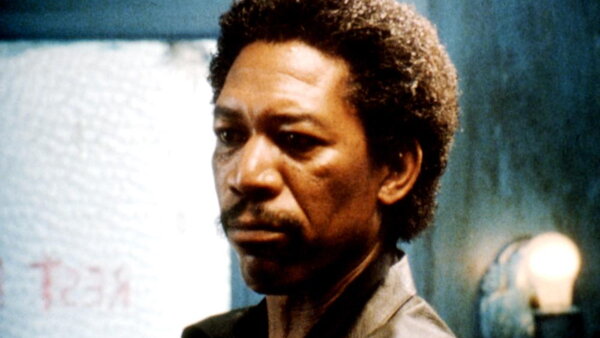
Morgan Freeman is one of those rare, truly statuesque actors who basically seems like he's been famous his entire life - or rather, he's been famous for our entire lives.
Yet Freeman didn't get his well-deserved breakout until he was almost 50, when he received a Best Supporting Actor Oscar nomination for his superb performance in the 1987 crime thriller Street Smart.
For more than 20 years prior to this, Freeman had worked steadily on TV and in film, most famously in the sketch comedy series The Electric Company, while also earning a Tony nomination on stage for his role in 1978's The Mighty Gents.
Freeman was certainly a respected actor long before he rose to fame, but after Street Smart he swiftly became a bonafide Hollywood icon, absolutely unforgettable in the likes of Driving Miss Daisy, Unforgiven, The Shawshank Redemption, Se7en, and of course Christopher Nolan's Dark Knight trilogy, among so many more.
Freeman is basically part of the furniture in Hollywood and it's always felt this way for moviegoers of a certain age, even if he actually had quite the steep climb to get there.
17. Bryan Cranston

Bryan Cranston began his screen acting career way back in 1980, after which he spent the majority of the next 20 years playing small roles in TV shows and films, before winning the iconic role of Hal in 2000 sitcom Malcolm in the Middle.
But even so, it wasn't quite the part that propelled Cranston to undeniable superstardom - it wasn't until 2008 that he entered the veritable A-list with his phenomenal, against-type starring role as Walter White on Breaking Bad.
At age 52, Cranston finally graduated from respected "that guy" actor into a genuine star, opening the door for him to land juicy roles in a variety of films such as Drive, Godzilla, Trumbo, Power Rangers, and several Wes Anderson films, to name just a few.
Perhaps it was that Hollywood simply wouldn't take a chance on a sitcom dad in a dead-serious role, but bless Breaking Bad creator Vince Gilligan for seeing the enormous untapped potential, and in turn the duo birthed one of TV's all-time greatest characters.
16. Viola Davis

Viola Davis can bring an enormous amount of gravitas to even the most thankless of paycheck roles, and if you need to cast someone to convey strength and power, there are few better options.
Davis turned many, many heads with her astonishing performance in 2008's Doubt, which despite its brevity proved so magnetic that she received a Best Supporting Actress Oscar nomination.
Since then she's received three additional nominations for her turns in The Help, Fences, and Ma Rainey's Black Bottom, while racking up a bevy of credits in both buzzy prestige projects and more mainstream fare like the Suicide Squad movies.
But by the time Doubt came out, Davis was already in her forties and had been working at her craft for a full two decades, even winning a Tony award in 2001 for her performance in King Hedley II.
Yet once Doubt was released and the entire world finally knew who Davis was, she ascended to genuine GOAT status in basically record time.
15. Steve Carell

Steve Carell earned plenty of "who is this guy?" notices with his show-stealing supporting performance as newscaster Evan Baxter in the 2003 Jim Carrey vehicle Bruce Almighty, which he followed up with an equally unforgettable role in Anchorman, before 2005 became the year that everyone took note of him.
That year he starred in both the Judd Apatow mega-hit The 40-Year-Old Virgin and, of course, became a genuine icon as Michael Scott in the U.S. version of The Office.
Carell was already in his forties at this point, and had been acting for around 20 years, performing first with a touring children's theater company and then in a restaurant commercial in the 1980s.
Though Carell made many appearances on both The Dana Carvey Show and Saturday Night Live, wider fame eluded him for many, many years until it all came flooding to him at once, and he instantly became one of the most recognisable comedy actors of the 2000s.
14. Pedro Pascal

In terms of recent actor breakthroughs, nobody has gotten more press for their slow ascent to stardom than the great Pedro Pascal.
Pascal took his first acting role in 1996, and though he soon enough had bit-part roles in TV shows such as Buffy the Vampire Slayer, NYPD Blue, and Law and Order, he didn't catch mainstream attention until 2014 with his star-making performance as Oberyn Martell in Game of Thrones.
But this was just the beginning for Pascal, whose profile grew considerably through the next decade-plus with appearances in Narcos, The Mandalorian, The Last of Us, and Fantastic Four: First Steps.
All the same, he was 39 years of age before he finally escaped bit-part status, and so for the many who might suggest Pascal has become a bit over-exposed in recent years, can you really blame the guy for wanting to strike while the iron is hot? Get that bag, sir.
13. Jacki Weaver
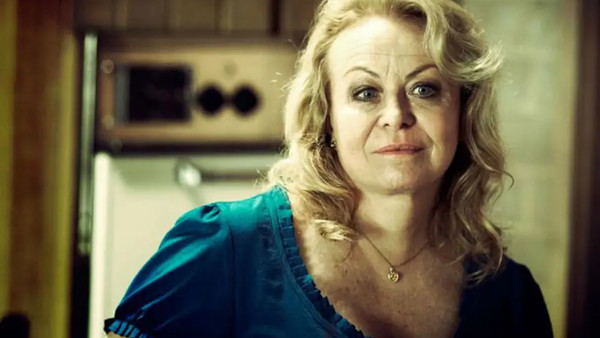
There's a good chance you didn't know who Jacki Weaver was until she received a surprise Best Supporting Actress Oscar nomination for her superb performance in 2010's Aussie crime thriller Animal Kingdom.
This was Weaver's first major role to get much play outside of her native Australia, by which point she was in her mid-sixties, and had an incredibly storied and diverse acting career behind her.
Weaver has been regularly acting since the early 1960s across theater, film, and television, and though well-regarded in Australia, she was virtually unknown elsewhere.
And so, her road to mainstream success spanned the better part of 50 years (!), after which she swiftly became a Hollywood regular, working with directors such as David O. Russell, Park Chan-wook, Woody Allen, and Steve McQueen, to name just a few.
Her performance in Russell's Silver Linings Playbook ultimately netted her a second Best Supporting Actress nomination, establishing her as a go-to screen matriarch.
12. F. Murray Abraham
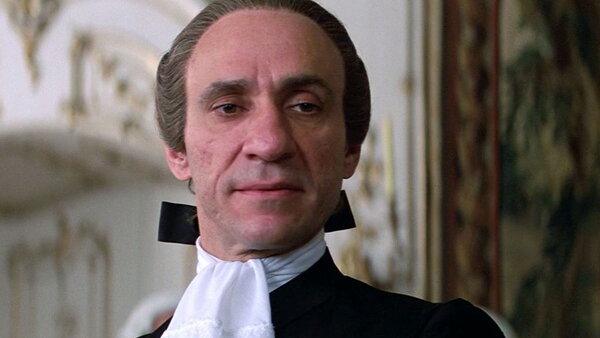
F. Murray Abraham is another actor who seems like he's always been there, but he didn't actually get his breakout role until he was in his mid-forties, with his Oscar-winning portrayal of the villainous Antonio Salieri in 1984's epic Amadeus.
By this point Abraham had already been acting on stage professionally for two decades, making his Broadway debut in the 1968 play The Man in the Glass Booth, while also having a handful of smaller movie and TV roles to his name over a period of roughly 15 years.
Yet Amadeus made Abraham internationally recognised overnight, ensuring he's worked regularly ever since, in film roles as diverse as The Name of the Rose, Last Action Hero, Mighty Aphrodite, Star Trek: Insurrection, and The Grand Budapest Hotel, as well as TV shows Homeland, Mythic Quest, Moon Knight, and The White Lotus, the latter recently nabbing him Golden Globe and Emmy nominations.
11. Brian Cox

Brian Cox is yet another actor who had quite the celebrated career on stage before finally breaking through into film with his marvelously chilling performance as Hannibal Lecter in Michael Mann's 1986 thriller Manhunter, lending him the distinction of being the first actor to play the iconic cannibal on screen.
This propelled Cox into a fruitful career as an ever-in-demand character actor, and more recently he won himself a whole new generation of fans through his sublime work on the HBO series Succession.
Yet Cox actually began his acting career in 1961 at the mere age of 14, working in local Scottish theater alongside periodic TV bit-parts.
By the 1980s he had a regular tenure with both the Royal Shakespeare Company and the Royal National Theatre, and in 1984 won his first Laurence Olivier Award for his performance in Rat in the Skull.
This is all to say that Cox was an incredibly seasoned performer by the time Hollywood took any interest in him, and he's racked up one hell of a prolific filmography ever since.
10. Lin Shaye
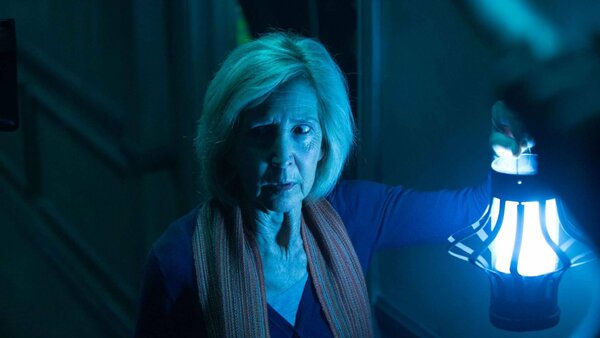
Lin Shaye became known to millions of horror fans through her incredible, show-stealing performance as psychic Elise Rainier in 2010's Insidious - a part which she's reprised in some form in most of the series' sequels.
Shaye was actually in her late sixties by the time she broke out, by which point she'd actually already been acting for the better part of 40 years.
As the sister of New Line Cinema founder Robert Shaye, she was a regular fixture in the studio's horror films for many years, including the likes of Alone in the Dark, A Nightmare on Elm Street, Critters, and Wes Craven's New Nightmare.
But nepotism be-damned - she also had the acting chops to back it up, and was a somewhat recognisable character actress throughout the '80s, '90s, and aughts, most memorably in comedies Dumb and Dumber and There's Something About Mary.
Yet Insidious made Shaye a genuine icon in her own right, and for all of the franchise's ups and downs, Shaye's work has been a consistent point of critical praise, ensuring she's enjoyed genuine scream queen status ever since.
9. Jeremy Strong
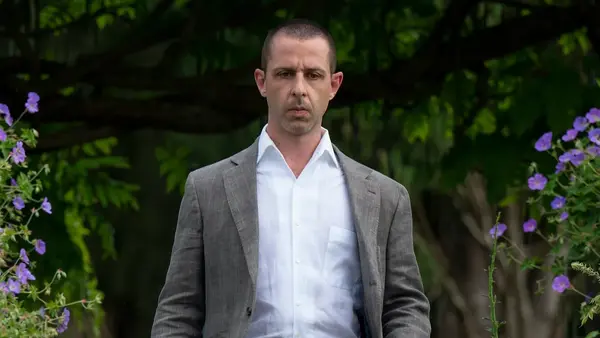
Jeremy Strong's star-making role was undeniably Kendall Roll in HBO's brilliant 2018 series Succession - a part which landed him an Emmy and Golden Globe and made him an incredibly in-demand performer virtually overnight.
Prior to Succession, Strong had a decade's worth of mostly minor film roles to his name, but his acting journey began in the late 1990s while studying English at Yale, where he was a regular fixture in the campus undergraduate theatre group.
Strong subsequently spent many years hustling to get recognised by Hollywood, all while continuing to work on stage, ensuring that his path to genuine stardom took him the better part of 20 years.
But Strong is still relatively young, being in his late-forties today, and with a well-earned rep for being one of the most intensely focused performers of his generation, he's hopefully got a few more decades of astonishing work to show us all.
8. Mark Rylance
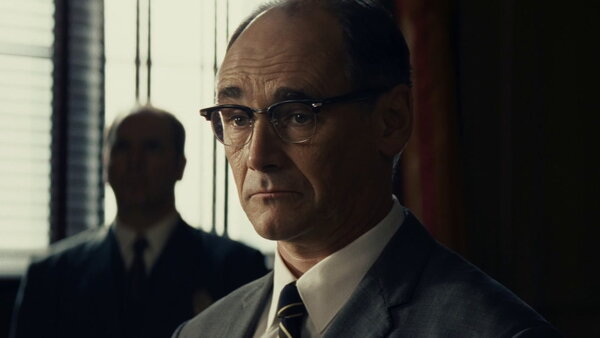
If you're in any way familiar with Mark Rylance's acting career, it would be ridiculous to say that he was a genuine unknown until 2015, when he starred in Steven Spielberg's Bridge of Spies and went on to win a Best Supporting Actor Oscar for his performance.
But Hollywood simply wasn't the actor's focus for decades, with most of his career spent in theater, having made his professional acting debut way back in 1980 - a full 35 years before Spielberg came a-knocking.
Again, though, Rylance was hardly an obscure figure in the theater world, having three Tony awards in 2008, 2011, and 2014, and so by the time he became a globally recognisable, Oscar-winning actor, he was already an extremely well-respected middle-aged stage performer.
But in the decade-plus since Bridge of Spies, Rylance has been a perennial figure in film, with notable roles in the likes of The BFG, Dunkirk, Ready Player One, The Trial of the Chicago 7, Bones and All, and The Outfit.
7. Kathryn Hahn

Kathryn Hahn certainly had many fans before she came a genuine star, but it's also fair to say that she was a consistently underappreciated actress for years and years before finally getting her due.
Hahn ascended to genuine mainstream popularity with her Emmy and Golden Globe-nominated performance as Agatha Harkness in 2021's WandaVision, though she actually began working as an actress on stage and the occasional screen credit in the late '90s, ensuring a near-quarter century journey to stardom.
Hahn certainly had memorable roles prior to this, such as in Step Brothers, Afternoon Delight, Parks and Recreation, Bad Moms, and the TV series Transparent, but it wasn't until the 2020s that the wider world finally got to see the full force of her immense talents on a blockbuster stage.
Hahn's career has basically gone from strength to strength ever since, and it frankly couldn't have happened to a more deserving performer.
6. Boris Karloff

Even casual film fans will instantly know Boris Karloff as Frankenstein's monster in James Whale's indelible 1931 Frankenstein adaptation, but what you probably don't know is that he spent literally decades playing minor bit-parts before the Frankenstein role was his big break.
Karloff began acting with Canadian theatrical touring companies in the early 1910s, and his first screen acting credit was in 1919.
Over the next 12 years, Karloff played largely insignificant roles in more than 80 films, many of them uncredited, and it wasn't until he was cast as Frankenstein's monster that he gained much industry traction.
This of course became Karloff's signature role, but he also followed it up by playing Imhotep in 1932's The Mummy, and spent the remaining 40 years of his life and career an incredibly in-demand actor in the horror genre in particular.
But it took all manner of hard graft for him to finally get there.
5. Ann Dowd
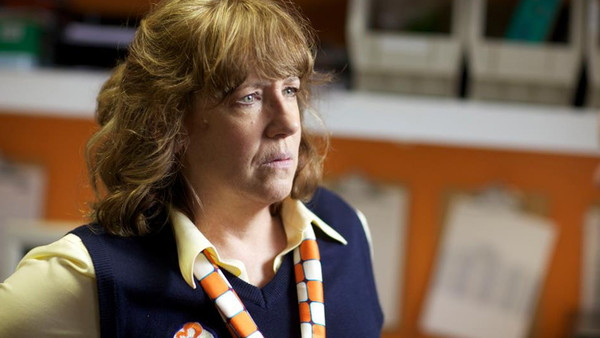
The legendary Ann Dowd came to prominence off the back of her searing performance in the 2011 thriller Compliance, which in turn led to her becoming one of the most prolific character actors of the 2010s, with an Emmy-nominated performance in The Leftovers and Emmy-winning turn in The Handmaid's Tale.
Dowd was 55 when Compliance premiered, and though few filmgoers were aware of her until that point, she'd actually been working as an actor for roughly 30 years before her breakthrough.
Dowd started acting on stage in the early 1980s and had her first screen role in 1985, after which she spent literally decades working as a character actor before finally getting some well-earned recognition.
Curiously, when Dowd was a struggling actress in her 30s and lamenting her lack of opportunities, a voice told her that her time would come in her mid-fifties - and that it certainly did.
4. Robert Forster

Unlike many actors on this list, the late, great Robert Forster wasn't a total unknown before finally making a name for himself, carving out quite the respectable career as a character actor and occasional leading man throughout the 1960s and 1970s.
But more mainstream recognition continually evaded him, and so during the '80s and '90s he largely worked on smaller lower-budget film and TV projects.
Yet everything changed in 1997 when Forster, at the age of 56, starred in Quentin Tarantino's Jackie Brown as bail bondsman Max Cherry, for which he received a Best Supporting Actor Oscar nomination.
Forster already had three decades of acting under his belt by this point, but for the remaining 20-plus years of his life and career, he remained an ever-sought after actor across both film and TV, perhaps most notably with his small but pivotal role in Breaking Bad and its sequel film El Camino.
3. June Squibb
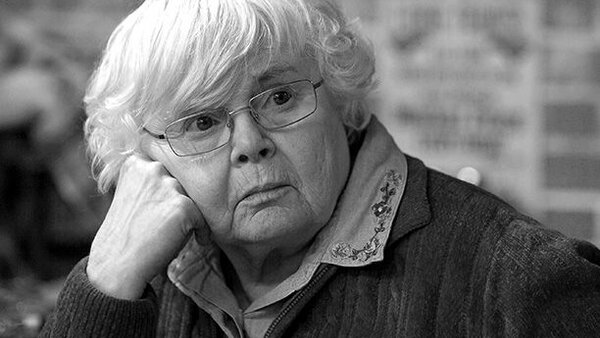
Even for the standards of late bloomer actors, few can hold a candle to the delightful June Squibb.
Squibb began acting professionally in the late 1940s and made her Broadway debut in the musical Gypsy in 1959.
Though she later had supporting roles in films such as The Age of Innocence, Meet Joe Black, About Schmidt, and Far from Heaven, it wasn't until 2013 that Squibb gained wider recognition with her immense performance in Alexander Payne's Nebraska.
At 84 years of age, Squibb was nominated for a Best Supporting Actress Oscar, more than 60 years after she first started acting and having spent most of that time as a relatively obscure character actress.
But Nebraska changed everything - suddenly Squibb was in demand for everything from voice parts in Toy Story movies to lead roles in indie gems like Thelma and Eleanor the Great.
And at 96 years of age, she's still going strong to this very day, bless her.
2. Samuel L. Jackson
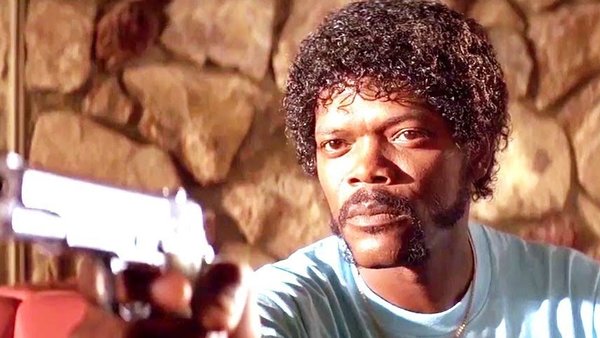
Samuel L. Jackson is such an indelible cinematic icon - not to mention being the single highest-grossing actor of all time - that it's easy to forget that he got his big break a little later in life.
Though Jackson had over 40 screen acting credits to his name between 1972 and 1994 - including parts in Coming to America, Goodfellas, and of course Jurassic Park - it was his unforgettable performance in Quentin Tarantino's Pulp Fiction that changed everything virtually overnight.
At age 45, with an Oscar nomination for his work on Pulp Fiction, Jackson became an immensely sought-after performer, spending the latter half of the '90s starring in the likes of Die Hard with a Vengeance, A Time to Kill, The Long Kiss Goodnight, Jackie Brown, The Negotiator, and Deep Blue Sea.
Jackson has of course remained an immensely popular and well-respected actor ever since, but he's such an ever-present Hollywood staple that one might mistakenly assume he blew up early.
1. Louise Fletcher

Louise Fletcher began her acting career in the late 1950s on TV shows such as Lawman, Maverick, and The Untouchables, though her career momentum stalled when she took a decade-long acting hiatus between 1963 and 1973 to raise her two sons.
But a few years after returning to the fold, Fletcher was cast in the life-changing role of Nurse Ratched in One Flew Over the Cuckoo's Nest, an iconic role that not only made her globally recognised, but bestowed her with the honour of being just the third actress in history to win the Oscar, BAFTA, and Golden Globe for a single performance.
Nurse Ratched well and truly struck a chord with both the industry and general audiences, then, enough that Fletcher became a hugely busy actor for basically the next four decades of her career.
Though the part made it feel like Fletcher had always been in the mix, she was already in her early forties when this opportunity arrived.