18 X-Men Easter Eggs You Never Noticed

Including the dark origins of that Juggernaut line...
More than any other comic book property, the X-Men have a long, involved, and frequently nonsensical history. The characters were originally introduced back in the sixties and had trouble finding their footing, eventually reverting to reprints and on the verge of cancellation before a reboot introduced fan favourites like Wolverine. It's kind of unthinkable now that they're, like, crazy popular, which is mainly thanks to the movies. The X-Men films did a commendable job at honing all of the lunacy in the comics €“ the alternate timelines, soap opera love triangles, robot clones, constant resurrections €“ into something that worked as a Hollywood franchise. ...Then The Last Stand happened, and then Days Of Future Past reset all the continuity, and now the films are about as confusing as the source material after all. At this point, you have about as much chance of untangling the various retcons, couplings and timeline divergences in the films as you do the comics. But you know what? Audiences were given fair warning. All of the films are stuffed to the mutant gills with little winks, nods and references to the larger, more convoluted continuity of the comics. Hidden right under your nose. From conspiracy theories to cameos, foreshadowing to just dorky in-jokes, here are eighteen X-Men Easter eggs you never noticed.

18. Days Of Future Past Appears In The Danger Room (X-Men: The Last Stand)
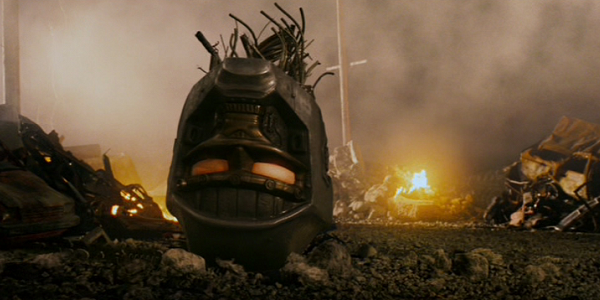
X-Men: Days Of Future Past is probably the best X-Men film so far. It's helped along the way to the top of the food chain by piggy backing on probably the worst X-Men film so far €“ or rather, it totally obliterates the existence of the worst X-Men film so far, and won a lot of fans because of it. Audiences, fans and critics are all pretty down on The Last Stand, the final instalment in the original trilogy which director Bryan Singer abandoned, with Rush Hour's Brett Ratner's totally unsuitable hand taking over. It did manage to achieve lots the previous films didn't, however, including a Danger Room sequence; one which sees the X-Men in a simulation of a dark, post-apocalyptic future, fighting Sentinels.

17. The Kanji On Wolverine's Sword (The Wolverine)
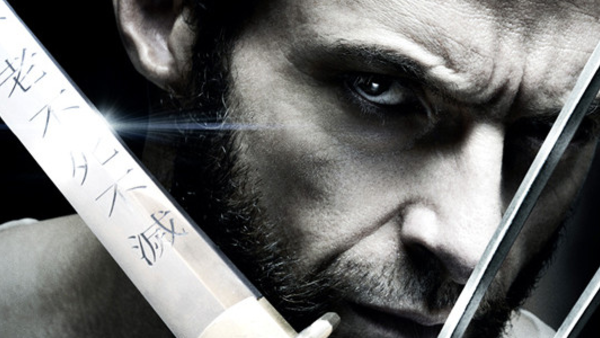
The Wolverine is a weird outlier in the X-Men franchise. On the one hand, it's the first entry in the expanded franchise that doesn't include the phrase €œX-Men€ anywhere in its title, the polar opposite of the clumsily monikered X-Men Origins: Wolverine. It's also not so in thrall to continuity, making vague reference to the death of Jean Grey and dissolution of the X-Men. It's based on a classic comic book story arc, and includes a bunch of familiar villains, but it never seems as packed with references, winks and nods for fans as the previous movies. Probably because it was pitched more at the Hugh Jackman audience than the geek audience. Anyway, there is one cool little Easter egg in The Wolverine. That sword he gets given by young Yashida early in the film? The kanji on it mean "Never Died, Never Aged, Never Destroyed". Pretty apt huh.

16. There's Real DNA In First Class (X-Men: First Class)
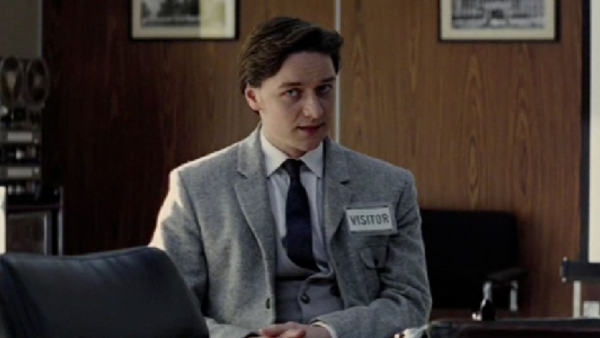
Believe it or not, there is a degree of realism in this series of films about people who shoot laser beams out of their eyes, can control the weather and that kid with the pointy eyebrows from About A Boy grows up to be Frasier Crane. The idea of homo superior loosely derives from Darwinian theories of evolution, after all. That was the initial inspiration for the X-Men, and it's played up a little in the original trilogy, but real-world science makes its proper debut in First Class. When Xavier makes his presentation on mutants to the CIA he's not just showing off a random image of the classic DNA strands. It's specifically an image of the DNA molecule, created by Dr Rosalind Franklin, which helped Dr Francis Crick and Dr James Watson in discovering their Nobel prize-winning double helix shape.

15. The School's Address Is Important (X-Men)

Xavier's School For The Gifted might look familiar to you. In the first couple of movies it's the same mansion used as Adam Sandler's swanky digs in Billy Madion and Lex Luthor's opulent base of operations in Young Superman series Smallville, in the third it was a huge mansion used in...The Poltergeist TV show, and for First Class and Days Of Future Past, they used the same building from British series Hex, which Michael Fassbender had a part in. Which isn't really an Easter egg, so much as a funny little coincidence. What is a sly little reference by the screenwriters is the address of the fictional Xavier School For The Gifted in the first couple of films: Graymalkin Lane, Salem Center. "Graymalkin" was the name of the witches' cat in Macbeth, see? Okay, to be clearer: Salem was the location of the infamous witch trials, where people burnt women they thought had special powers. Sound familiar?

14. Dr McCoy And Dr Shaw (X-2)

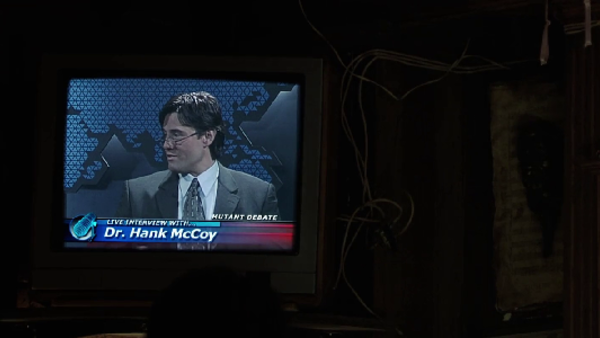
Kelsey Grammer didn't appear properly as Beast until the third X-Men film (and then it seemed somewhat ironic, following an episode of Frasier where his character scoffs at the idea of picking up an intellectually un-stimulating issue of X-Men for his son), replaced by Nicholas Hoult as his younger self in First Class and Days Of Future Past. Singer had tried to find room for the character in his first two films, but had to keep cutting him for time. He still managed to sneak a quick reference to the character in a bar scene in X-2, with a TV showing a debate involving Dr Hank McCoy, the blue-furred mutant's real name. The guy he was debating, meanwhile? That was a Dr Shaw, perhaps better known as Dr Sebastian Shaw, perhaps better known as the villain Kevin Bacon plays in First Class. Which mucks up that continuity even more...

13. The Nixon Gap (X-Men: Days Of Future Past)
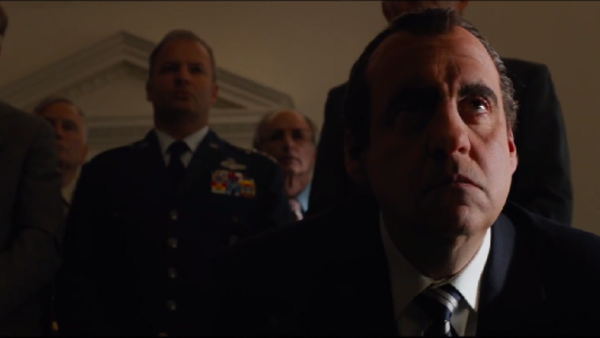
Days Of Future Past, as First Class did before it, plays in historical events in a fun way. There's all the obvious signifiers that Wolverine has successfully travelled back to the seventies with the clothing, lava lamps and music (Magneto quotes a James Brown song at one point, even). Then there's all the weird alternate history stuff, like the implication of mutants in the JFK assassination. Not only involved, but that Kennedy was a mutant himself! That's played on by the scene with Richard Nixon in the Oval Office. You might've picked up on the joke of Nixon switching off the tape recorder which famously documented every conversation he had in that room. The tape being switched off is specifically a nod to the infamous 18 1/2 minute gap on Nixon's Oval Office tapes, which conspiracy theorists reckon involved him discussing his part in the JFK assassination.

12. Nightcrawler Is A Music Buff (X-2)
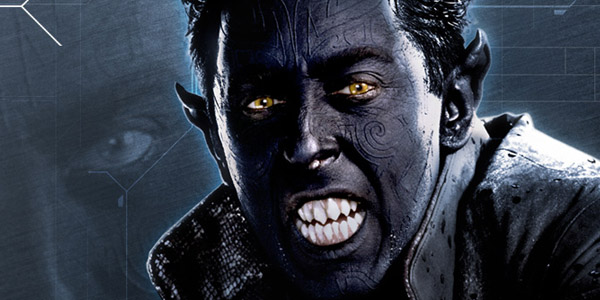
Sadly, Alan Cumming's devilish, teleporting Nightcrawler never appeared in another X-Men film after his debut in the second, the star of a particularly thrilling opening sequence. Apparently Cumming and the crew alike just weren't up for the arduous make-up process for a character that wouldn't appear on screen that much, and his absence was actually explained in a video game of all things. Before he decided to retire from the X-Men because he didn't like all the violence they got involved with, Nightcrawler was the host to a couple of fun little Easter eggs. The music in that opening attack on the White House is "Dies Irae" from Mozart's Requiem €“ because Cumming shares a birthday with the composer. And Nightcrawler's real name, Kurt Wagner, is shared with the singer/songwriter of the band Lambchop, with the character quoting several lyrics in his dialogue.

11. The X-Men Jet Is Controlled With A PC Joystick (X-Men)

That plane that the X-Men tool around in looks like a serious piece of kit, huh? The early version of the X-Jet that appears in First Class bears a striking resemblance to the Lockheed SR-71, a real supersonic plane used for several high-altitude espionage missions deep inside Soviet territory. Rather fittingly. They've got a little more fanciful model to fly around in for the modern-set films, however, but there are a couple of low-tech additions to the control panel. Such as, for the example, the first film, where the controls Cyclops uses are a a CH brand "Flightstick Pro" computer joystick. Scott Summers does seem like the sort who'd play flight simulators for fun. Less so like somebody who would do quite so an obvious nod to the second Ghostbusters film...

10. Dr Rao's Cure Code Is An Easter Egg (The Last Stand)
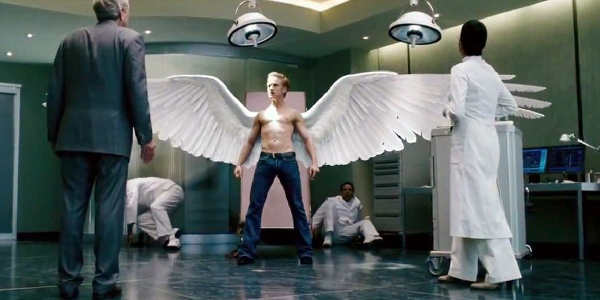
Despite basically tanking the entire X-Men franchise, the makers of The Last Stand were at least trying to do the comic books justice. When Bryan Singer left to make Superman Returns the producers and screenwriters remained, trying to implement some more cool Easter eggs along the way. Which, true, they did a lot better than they did in creating a cohesive film (combining the classic Dark Phoenix Saga with the more contemporary Gifted storyline from Astonishing X-Men €“ written by future Avengers director Joss Whedon €“ probably wasn't a good idea). The Gifted element of the storyline coming in to play when Dr Kavita Rao shows off her mutant cure to Angel. The case containing the cure bears the serial number XM89248. That's a very, very well hidden reference to 1989's Uncanny X-Men #248 €“ the first ever comic work by Jim Lee, whose iconic run on the book made the X-Men in the nineties.

9. Angel's Wings Appear In An X-Ray (X-2)

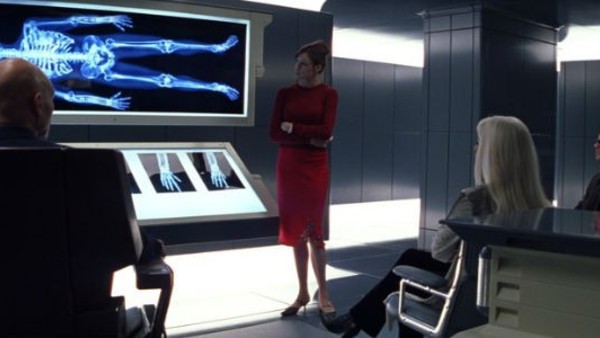
Like Beast and, funnily enough, Gambit (who finally got an appearance in X-Men Origins: Wolverine, and will finally get his mainstream debut as Channing Tatum in X-Men: Apocalypse and his ensuing spin-off film), Angel was planned to appear in the movies way earlier than they managed to. You need a big budget to give a dude angel wings. When they did, it ended up being something of a headache, with actor Ben Foster struggling with the weight of his prosthetics and afraid of heights. It was Brett Ratner who had to deal with that, though, with Bryan Singer only ever having to seed little Easter eggs nodding to the character. Wolverine's visit to the adamantium processing chamber of Stryker's based in X-2 includes, amongst all the other x-rays, an image of wings. FYI, Angel got metal wings in the comics for a bit.

8. All The Shout Outs To The Cartoons (X-Men, X-2)
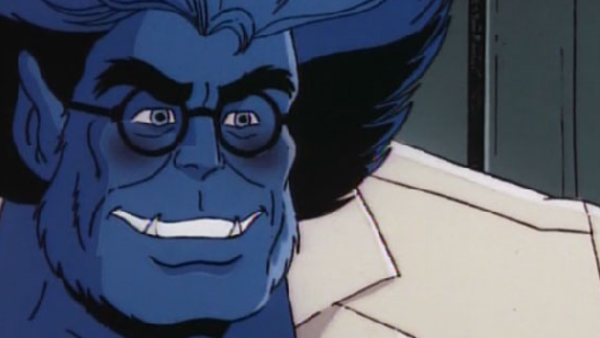
Whilst it was the Civil Rights parallels that finally got Bryan Singer on board with directing the first X-Men film, he didn't get there by the producers simply explaining their existence to him. He eventually broke and dove into the vast history of the X-Men himself, in two ways. First, he read the comics, with the iconic God Loves, Man Kills playing a key role, eventually adapted into X-2. The second was he watched the fantastic (if somewhat dated) animated series from the mid-nineties, which turned on a whole new generation of young fans to the characters. Obviously owing a debt to the cartoon, Singer paid it back by giving multiple actors from it cameos in his live-action films. The trucker who picks up Rogue in the first film? That's George Buza, the voice of Beast. Meanwhile two stars from later series X-Men Evolution turn up in X-2: David Kaye (Professor Xavier) appears as a TV announcer, and Chiara Zanni (Jubilee) is a White House tour guide.

7. "I'm The Juggernaut, Bitch" Is An Internet Joke (The Last Stand)
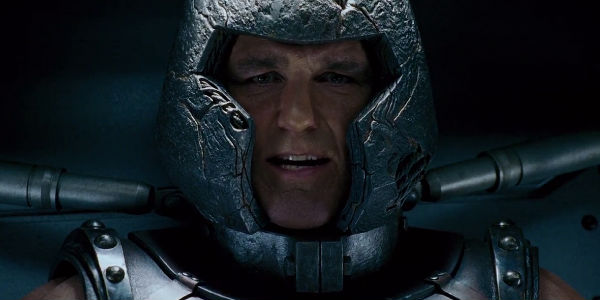
If you need a better indictment of Brett Ratner's X-Men: The Last Stand, then look no further than the presence of Vinnie Jones as the Juggernaut. Whilst the casting might be a holdover from the time Matthew Vaughan was working on the project (he'd produced Lock, Stock And Two Smoking Barrels with Jones), but Ratner was the one who kept him on board. And gave him that stupid line. €œI'm the Juggernaut, bitch!€ has since become something of an internet meme, a five-second snippet of a scene from the film's climactic action sequence that serves as an example of what a poorly written movie it is. Which is weird because it began life as an internet meme. The line is a misheard piece of dialogue from an old X-Men arcade game, became the star of various internet videos and images, which Ratner's official site used to link to. Remember last time the internet inspired a film? It was Snakes On A Plane.

6. Art Imitates Life (X-Men)

Bryan Singer turned down the chance to direct the first X-Men film multiple times before the producers hooked him with the idea of mutants as an oppressed minority. The analogy enticed both Singer and Ian McKellen €“ two gay men €“ because they had first-hand experience with being hated and mistrusted by the general populace. It's a concept that's been baked into X-Men from the start, with the Civil Rights struggle also considered analogous to the mutant struggle. What you might not know is that multiple lines of dialogue in the original film are actual, real-life quotations from figures like Civil Rights activist Malcolm X and Communist witch hunter Joseph McCarthy. Oh, and Senator Kelly questioning whether they should teach about mutants at school? That's less fiction and more a refernce to the real, horrible Section 28, which tried to ban the teaching of homosexuality on the curriculum €“ which Ian McKellen successfully campaigned against.

5. Stryker's Prisoners Are All Pretty Familiar (X-Men Origins: Wolverine)
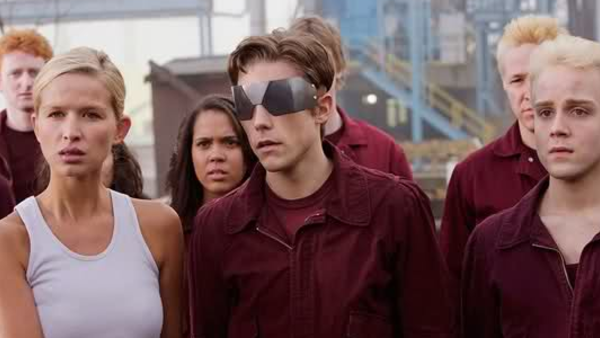
X-Men Origins: Wolverine is not a good film. In fact, were it not for the existence of X-Men: The Last Stand, it would almost certainly be the worst film in the franchise. In comparison to that, however, it's a bloomin' masterpiece. It also does a better job at hiding Easter eggs for the comic book fans in the audience...whilst upsetting them by ruining Deadpool. So it goes. But they also include some cool references to other X-Men characters €“ from previous films and the comics alike €“ specifically in the closing scene where Wolverine breaks a load of young mutants out of Stryker's jail. There's the long-tongued Toad, killed off by Storm in the first movie by lightning/a terrible one-liner, and a speedster who turns out to be Quicksilver, seen in Days Of Future Past. There's also a boy with tape over his mouth, a clear reference to Banshee (with super shouting powers), who pops up in First Class, and the way more obscure Wind Dancer €“ the teenage girl with the tornado.

4. A Parade Of Assassinated Presidents (X-2)
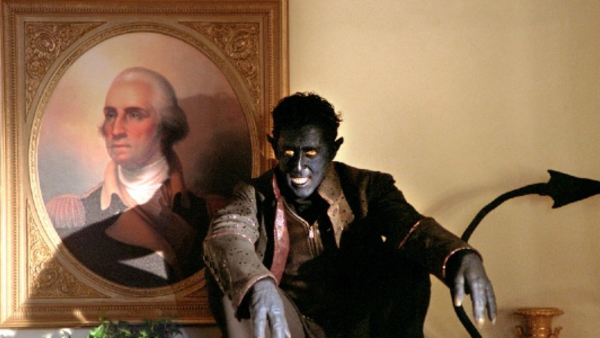
Killing off politicians is a recurring theme throughout the X-Men franchise. In the first movie Senator Robert Kelly dies off after the anti-mutant protester is given powers by Magneto; in the most recent instalment, there's a bunch of stuff about the Kennedy assassination, and whether or not mutants were involved in it; X-2 begins with an assault on the White House. It's the latter which is home to a whole host of Easter eggs. They might have passed you by, since you were distracted by the expertly directed and inventive action scene where Nightcrawler teleports his way to the Oval Office. Shortly before he begins, there's some heavy-handed foreshadowing. The White House tour he's on passes, in turn, a number of portraits of past assassinated presidents: Abraham Lincoln, John F. Kennedy and William McKinley.

3. A Whole Bunch Of Tolkien References (X-Men Origins: Wolverine)
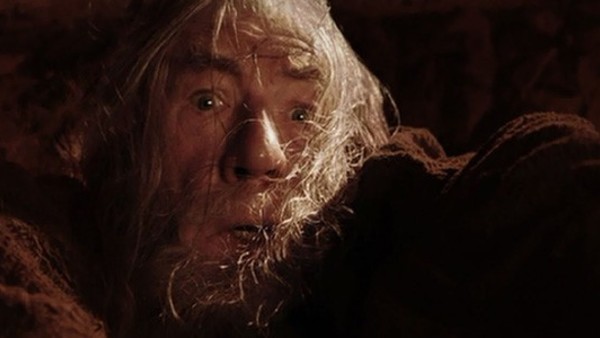
Ian McKellen is doing pretty well for himself, having starred in a couple of the most successful, geeky film trilogies of all time. He almost didn't win the role of Gandalf in The Lord Of The Rings, with his schedule clashing with shooting for the first in Peter Jackson's Tolkien adaptations. Singer kindly filmed all his scenes super quickly so he could bugger off to New Zealand for months. There's actually a whole lot of Tolkien references in the X-Men movies. In the comics, even, there's a villain who names himself Sauron after the conqueror of Middle Earth. X-Men Origins: Wolverine, meanwhile, briefly features a truck with a sticker bearing the quote "Not all who wander are lost". Which, in case you didn't catch it, is a paraphrasing of Aragorn's motto from the Lord Of The Rings. Because, believe it or not, the people who make the X-Men movies are also huge dorks.

2. The Names On The X-2 Computer

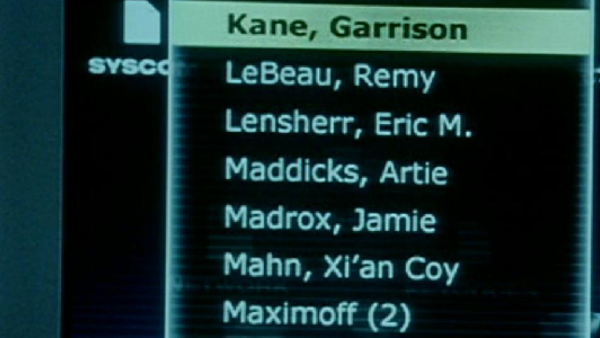
This is the sort of thing the internet would be all over nowadays. Back in an age when computers didn't come pre-loaded with DVD drives, and screencrapping crucial moments was pretty much impossible (and uploading those huge image files would be a ballache), such Easter eggs were the sole preserve of people with either massive tellies or a zoom function and friends to bother. Now, though, you can easily find a screenshot of the part in X-2 where they're rifling through Lady Deathstrike's computer and find a huge list of shout outs to characters and institutions from the comics including (but not limited to) Quicksilver, Scarlet Witch, Deadpool, Franklin Richards, and a bunch of established characters too. There are also files on Muir Island (the home of Moira Mactaggert, as seen in that X-Men: The Last Stand end credits sequence) and the Sentinel program. Talk about foreshadowing.

1. Every X-Men Creator Has Had A Cameo
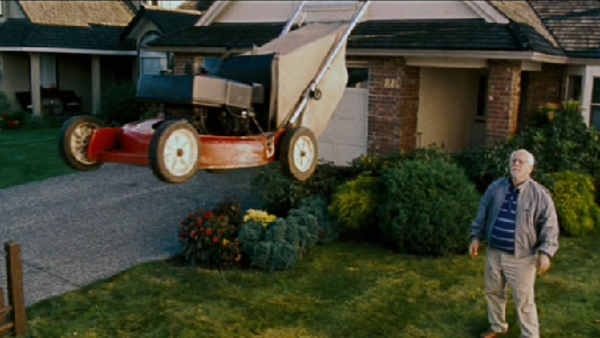
When you're a comic book creator working for a major publisher, rights are a tricky issue. For the most part, characters and storylines you create wind up belonging to whoever you're working for €“ which means it gets all the trickier when those characters and storylines get adapted to film. Whose meant to get royalties then? Usually Marvel just give people significant bonuses, but the filmmakers are also looking out for those writers and artists. Obviously Stan Lee has cameos in most of the X-Men films €“ although there are a handful (X-2, X-Men Origins: Wolverine and First Class) where he's absent €“ but they find the time to credit the people who originated some classic heroes and arcs. Chris Claremont, who wrote the Dark Phoenix Saga and Days Of Future Past, appears at the beginning of Last Stand mowing his lawn, and as a congressman at Trask's hearing in the latter film. Wolverine creator Len Wein plays a similar part in Days Of Future Past. Then there are all the screenwriter's cameos...you're on your own there.

Contributor
Contributor

Tom Baker is the Comics Editor at WhatCulture! He's heard all the Doctor Who jokes, but not many about Randall and Hopkirk. He also blogs at http://communibearsilostate.wordpress.com/