15 Silent Films That Changed Cinema Forever
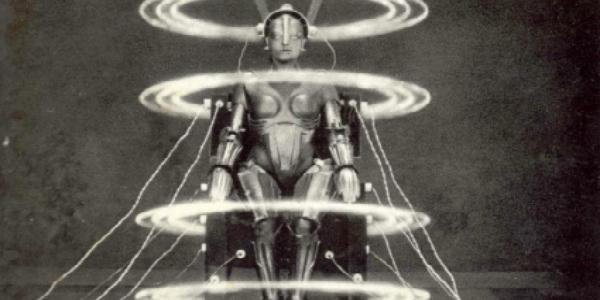 In many ways, silent movies were almost a more pure form of cinema than the sound pictures that are made today. A well-crafted silent film, using only images and music, creates something almost magical that often connects on more levels than does one that uses lots of dialogue for the same effect. Of course, we all know that sound films won out in the end but that doesn't mean that silent films weren't artistically satisfying or important. In fact much of the language and technique used in modern moviemaking was established in the Silent Age and many of the richest and most fulfilling films ever made came out during the period. It could be said that the silent era was the prologue in the pages of movie history, but many of the best silent films are still watched, studied, and praised even today. The following fifteen films helped to set the stage for later movies and many of them still stand up as excellent films. To qualify, the movies either had to introduce some new way of creating movies or they had to have been so well made that they transcended their time period and remain every bit as powerful or entertaining as they were when they were released. They are listed in chronological order to show the cumulative effect that the movies had on the film industry.
15. Birth Of A Nation (1915)

14. Intolerance (1916)

13. The Cabinet Of Dr. Caligari (1920)

12. The Kid (1921)

11. Nosferatu (1922)
10. Greed (1924)
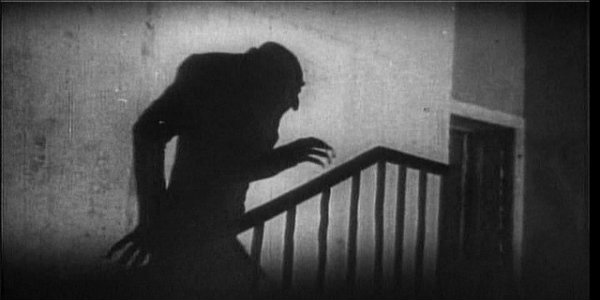
 Erich von Stroheim's 1924 epic is often considered the greatest "lost" film ever made. Although several versions of Greed still exist, the original cut has been lost and it is often referred to as the Holy Grail for film historians. The two hour cut that remains is still considered one of the greatest silent films and has had a huge impact on later filmmaking. Taking the form of a Greek tragedy, Greed tells the story of a dentist named McTeague whose wife wins the lottery. Consumed by envy, he kills her, steals the money, and goes on the run with the climactic scene taking place in Death Valley. Von Stroheim was obsessed with making the film as realistic as possible, McTeague's dentist office is an actual dentist office that allowed them to film there, a scene that takes place in a mineshaft takes place in an actual mineshaft, and Stroheim's overbearing insistence on shooting in Death Valley almost lead to mutiny from his filmcrew. Although it was not appreciated by his crew, or understood by contemporary critics, Von Stoheim's strategy brought out a feeling of intensity in the actors that few other silent films reached. Despite flopping upon its release and receiving putrid reviews, the legacy of the film has grown over the years. It broke ground in technological areas such as deep-focus and montage editing but its most lasting influence might be on the directors who watched it; Jean Renoir called it the "film of all films" and directors as wide ranging as Sergie Eisenstein and Christopher Nolan have expressed their admiration for it.
9. The Last Laugh (1925)

8. The Battleship Potemkin (1927)

7. Metropolis (1927)

6. Sunrise (1927)
 Rarely has a movie worked on so many different levels as does F.W Murnau's Sunrise. In 1927, the year it was released, the film was a technological wonder due to the marvelous cinematography. At the time, cameras were directly attached to the cameraman who had to crank them by hand while shooting, making them difficult to move around on set. Simple tracking shots were accomplished by placing the camera on a rail system but for Sunrise, Murnau and his cinematographer Karl Struss came up with an ingenious method of shooting outdoor scenes inside, and then hanging the camera from a platform from the ceiling. By doing this, the camera had near absolute freedom and the resulting effect made it appear as if the camera could go anywhere, leading to contemporary critics comparing the camerawork to "flying." The universality of Sunrise helped make it one of the big successes of the silent age and even today it still holds up very well. The characters are unnamed, there is very little dialogue, and the story is told almost entirely in images making it one of the most purely cinematic of all films. In 2012, Sight & Sound's critics poll of the greatest films of all time placed Sunrise number five, the highest of all silent films.
5. The General (1927)
 Chaplin vs. Keaton is one cinematic argument that will probably never end as the two silent stars approached perfection in their art form almost effortlessly. The General is often considered Keaton's best film and in addition, it features some of the most impressive stunt work of any film, regardless of era. Set in the south during the Civil War, The General follows Keaton's engineer as he pursues a train full of union soldiers who have kidnapped his sweetheart. Essentially the entire film revolves around the pursuit, which eventually flips with Keaton's train being chased back to southern lines by Union forces. Initially poorly received because of its repetitive nature, the General might now be the best regarded silent comedy of them all. Its ability to remain entertaining while taking place almost entirely within the confines of a train, its nearly perfectly timed stunt work, and its brilliant comic touch make it hold up extremely well even today.
4. The Passion of Joan of Arc (1928)
 Many people consider Carl Theodor Dreyer's The Passion of Joan of Arc to be the first film that proved the medium was capable of being art and it remains one of the great experiences in film history. The performance of Renee Falconetti is legendary not only for being extremely good but it was also the only movie she ever acted in, which prevents audiences from comparing the role to her other performances. Dreyer shot the film almost entirely in close-ups in order to simulate the experience of actually being at her trial and the movie as a whole is almost a miracle of cinematography for its ability to remain absolutely enthralling while remaining almost the same throughout the entire film. Many critics have called the film timeless because there are no recognizable actors, no dialogue, and because it tells a story that had already become legend in western civilization. Jean Cocteau, a famous French director, said that the film played like "an historical document from an era in which the cinema didn't exist", and watching The Passion of Joan of Arc is a must for any fan of cinema.
3. Man With A Movie Camera (1929)
 An experimental documentary, The Man With the Movie Camera has no actors and no story. It is instead, a series of images told in Avant-Garde style and its lack of narrative paved the way for modern directors like David Lynch and Terrence Malick as well as experimental films such as Koyaanisqatsi. Man with a Movie Camera follows an avid cameraman over the course of one day in an urban Russian city. Filmed over a period of three years, Man with a Movie Camera was immensely controversial upon its release for multiple reasons. First, it was edited at roughly four times the speed of a normal film at the time was edited, disorientating many of its viewers. Secondly, it had no intertitles, no characters, no story, and no direction, and was instead an almost pure exercise in technique and style. Lastly, director Dziga Vertov belonged to a group of filmmakers known as Kinoks, who wanted to do away with all non-documentary types of films which did not particularly endear them to other members of the film world. Man with a Movie Camera is still studied for its craft with innovations that Vertov invented or developed including slow motion, freeze frames, jump cute, split screen, tracking shots, and many others. To this day, The Man with a Movie Camera is well regarded and often listed among the greatest experimental films of all time.
2. City Lights (1931) By 1931, silent film was dead. With the release of The Jazz Singer 1927, the Sound Age had begun. Hollywood changed almost overnight and all anyone wanted to watch was the talkies. Charlie Chaplin though, insisted that his tramp character would lose his magic if he spoke and against all odds, four years into the sound age, Chaplin made one of his most memorable films. City Lights is probably the most "Chaplin-y" of all Chaplin's movies, it contains the melodrama, pathos, gags, and the happy ending that define almost all of his work. In City Lights, Chaplin created some of his most memorable scenes; the opening where Chaplin gets stuck on a statue, the scene where he saves a drunk millionaire from drowning, and of course the iconic final scene that is widely considered one of the great tear-jerking moments in film. City Lights did not introduce any cinematic innovations or contain anything "new" but it did what it set out to do better than almost any other film and its reputation has grown ever since its release. Orson Welles called it his favorite film, both Kubrick and Tarkovsky placed it in their top ten, Woody Allen drew from its ending while filming Manhattan, and in most circles it is considered not only Chaplin's best but one of the best movies of any kind ever made.
1. Modern Times (1936)
 City Lights did not lead to a revival in silent film, the Sound Age had taken its hold and would never let go, but Chaplin wanted one last shot and the result is in many ways his best film. A satire of the Industrial Revolution and a critique of modern society released in the middle of the Great Depression, Modern Times started Chaplin's streak of socially conscious work that continued in The Great Dictator and Monsieur Verdoux. It was controversial both for approaching social issues and for being a silent movie ten years into the sound Age but that did not stop it from becoming one of Chaplin's biggest hits. Its influence pervaded not just the film world but the intellectual one as Jean-Paul Sarte and Simone Beauvoir named their philosophical journal after it Chaplin and the rest of Hollywood eventually gave up on silent film, Chaplin's next films were talkies and only occasionally were silent films ever made, usually as a gimmick or for an independent production. Still, with their unprecedented power to entrance, silent films were the prologue to modern filmmaking and they still live on for anyone with the patience and desire to look and appreciate.