15 Movies Banned Overseas For Ridiculous Reasons
Wonder Woman is persona non grata in Lebanon.

Though film censorship is mercifully infrequent in the western world, the same sadly isn't true for far-flung countries with distinctly different - and more conservative - political values.
These 15 movies, all of them popular and successful in the west, enjoyed a far less-favourable response overseas, to the extent that they were outright banned...for some mighty silly reasons, too.
From blatant homophobia to China's various obscure fears of anything that might undermine the state, to misplaced hand-wringing about comedy movies corrupting a nation's youth, these blanket bannings are among the most absurd and unreasonable that cinema has ever seen.
Granted, in most of the affected regions the black market movie trade thrives as film buffs trade bootleg DVDs, so for the most part, the bans are more a symbolic statement than an actual, effective means of limiting availability.
Still, when you consider how bad things can be politically in the west, just be grateful there's nobody trying to stop you seeing the latest superhero movie...
15. China Fears Time Travel - Back To The Future

The Reason: Because it features heavy use of time travel (China).
Back in 2011, China began to institute a crackdown on TV and movies which featured time travel plots, for fear that it would encourage a culture of political dissidents attempting to "rewrite history" rather than uphold the country's current values.
The Chinese government's statement said, "Producers and writers are treating serious history in a frivolous way, which should by no means be encouraged anymore."
Strangely, though, China did grant Terminator Genisys a release back in 2015, and perhaps owing to national thirst for big-budget time travel movies, it made more than $110 million in the region despite being absolutely terrible.
Still, it's absurdly heartless and tone-deaf to think that Back to the Future could be harmful to anyone. Why so serious, China?
14. Humiliating Kim Jong-Il -Team America: World Police

The Reason: For mocking President Kim Jong-Il (North Korea).
Some nations just can't have a sense of humour or an ear for satire, can they? One of the greatest things about filmmaking in the western world is the freedom it gives artists to comment on the world at large, and that extends to ridiculing contentious and controversial political figures.
North Korea, always one to project an eerily self-serious visage to the outside world - one that's ironically quite laughable - took none-too-kindly to their illustrious leader being mercilessly ripped apart in Matt Stone and Trey Parker's incredible puppet musical.
It wasn't the last time the country famously bristled with Hollywood, though: 2014's The Interview was also banned by the country for its unflattering depiction of Kim Jong-un. And we all remember how that went.
13. That Chinese Subplot Nobody Remembers - The Departed

The Reason: A scene in which Chinese secret agents are depicted purchasing advanced military computer hardware from gangsters (China).
You probably don't remember the subplot - if you can even call it that - in Martin Scorsese's Best Picture-winning masterpiece where mob boss Frank Costello (Jack Nicholson) makes a shady deal with the Chinese authorities, so it's pretty ridiculous that China had such a vitriolic knee-jerk response to it.
It's especially ironic as the film on which The Departed is based, Infernal Affairs, is actually from Hong Kong itself, even if this film, ahem, departs from its predecessor's script and tone quite significantly.
12. The "Gay Moment" - Beauty & The Beast (2017)
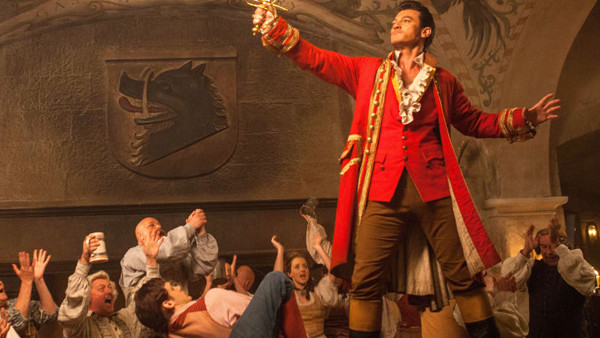
The Reason: For a "gay moment" in which LeFou (Josh Gad) dances with another man (Kuwait and Malaysia).
Wasn't this a whole lot of nothing? In the lead-up to Beauty and the Beast's release, word spread online that the film featured a brief gay interaction between LeFou and another man, which had LGBT activists praising Disney (until they saw the film, anyway), while causing the film to be banned in both Kuwait and Malaysia.
To Disney's credit, they weren't cowed by Malaysia's request for cuts, and their firm standing led to the film eventually being released uncut in the country.
Ultimately, even if you accept the homophobes on their own terms, this was blown wildly out of proportion.
LeFou dances with a man for about three seconds at the end of the movie, and any other nods to the character being gay are surface-level innuendo at most, to the extent that many LGBT advocates ended up criticising Disney for playing coy with LeFou's sexuality.
11. Being "Jewish Propaganda" - Schindler's List

The Reason: For being "sympathetic to the Jewish cause" (Indonesia) and serving as "propaganda with the purpose of asking for sympathy" (Malaysia).
Oof. Imagine being sympathetic to a race of people who a tyrant attempted to wipe off the face of the Earth. Just imagine it. How dare we.
At least banning ultra-violent or sexually explicit movies has a somewhat perceptible moral through-line, but an extremely well-crafted, educational and important movie about the Holocaust?
Unfortunately this insanity speaks to the intense paranoia and fear of Jews in large parts of the conservative Muslim world, utterly baffling though it might seem to westerners.
10. Using Yellow & Red Colours - The Simpsons Movie

The Reason: The "juxtaposition of the colours yellow and red", which was interpreted as support for Burmese rebel groups (Burma).
If you thought the only reason anyone could consider banning The Simpsons Movie is that brief flash of young Bart's penis, think again.
During the time of the film's release, the Burmese junta wanted to keep yellow and red colours out of movies as much as possible (seriously), and so a movie featuring possibly more yellow than any other in existence wasn't going to fly.
Quite what juxtaposition they're talking about, though, is anyone's guess, but perhaps there's not much value in questioning the logic too much here.
9. Gal Gadot Being Israeli - Wonder Woman

The Reason: Because of star Gal Gadot's prior service in the Israeli Army, and in line with an old Lebanese law which prohibits citizens from consuming Israeli products (Lebanon, Qatar and Tunisia).
Lebanon’s Ministry of Economy banned the film shortly before it was due to premiere, and though Gadot's politics are divisive even with western audiences, the Lebanese government couldn't see past Gadot's involvement and rubbished Wonder Woman as an "Israeli Soldier film."
Given that the film has no political inflection from Gadot herself, it feels pretty weak as an ideological stance, especially as previous movies starring both Gadot and fellow Israeli actress Natalie Portman have been released in the country with no qualms.
A prior attempt was made to ban Batman v Superman: Dawn of Justice, but it failed.
8. Gay Panic - Brokeback Mountain

The Reason: The film's depiction of homosexuality, which is illegal in most parts of the Islamic world (Middle East).
There's not much point digging deep into this one: the Middle East is a flagrantly homophobic region for the most part, and we all know how ridiculous that is.
One Arab state, Lebanon, did permit the film to be screened in an edited format, but otherwise Ang Lee's Oscar-winning drama was shunned in the region.
Ironically, the movie also didn't get a release in Lee's native China due to a perceived "lack of demand", despite Lee being hailed as a credit to his nation when he won the Best Director Oscar. Awkward.
7. Kevin Smith Might Influence Horny Teens - Zack & Miri Make A Porno
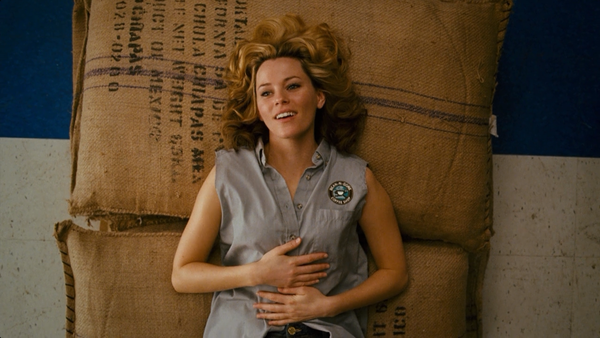
The Reason: Teenagers might try to mimic the central characters' attempt to make their own porn movie (Thailand and Trinidad).
Newsflash: teenagers have been filming themselves having sex ever since recording equipment has existed, and they sure don't need Seth Rogen and Elizabeth Banks to encourage them to do it.
While placing age restrictions on a film to protect younger viewers from "impressionable behaviour" is a common tactic in most countries, that apparently wasn't enough for Thailand and Trinidad, who banned the film outright.
It's especially bizarre as the movie is actually a pretty sweet and warm-hearted, sex-positive romantic comedy. One suspects the censors just saw the title and quickly passed their judgement without actually watching the film.
6. It's The Worst (Best) Advert For Kazakhstan - Borat

The Reason: For being "vile, gross and extremely ridiculous" and for its unflattering depiction of Kazakhstan (in all Arab countries except Lebanon and the United Arab Emirates, also banned in Russia and Kazakhstan).
Sacha Baron Cohen's iconic mockumentary left the Kazakhstan authorities so p***ed off they not only banned the movie from cinemas and DVD, but also threatened to sue Cohen and still routinely arrest tourists who decide to wear Borat-esque mankinis.
The official Kazakh response to the film is especially embarrassing as, more recently, Foreign Minister Yerzhan Kazykhanov ended up saluting Cohen for helping visa requests to the country increase ten-fold and generally heightening tourist interest.
Ultimately, banning the film was looking a gift horse in the mouth somewhat, no?
5. Parents Might Mistakenly Take Their Kids To It - Sausage Party

The Reason: A self-inflicted ban carried out by the movie's Taiwanese distributor to prevent parents accidentally taking their kids to see it (China).
Of all the things you could ban Sausage Party for - its graphic sexual content and thorny religious themes perhaps? - doing so because you don't trust parents to read about the film they're taking their kids to see has to be the laziest.
Everything you need to know about the movie is apparent from the trailers, and if you still decide to take your sprog to see a food orgy, well, that's surely on you.
4. Finland Was Scared Of The Soviet Union - Dr. Strangelove

The Reason: For fear it would offend their neighbouring nation, the Soviet Union (Finland).
Even accepting the delicate nature of postwar Finland's relationship with the Soviets, this is pretty cowardly stuff. After all, it's not as though Stanley Kubrick's indelible war satire is a Finnish movie, and would the Soviets really have been petty enough to lambaste Finland for screening a movie? Wait, maybe don't answer that.
Dr. Strangelove remains a fiercely intelligent and hilarious mockery of the Cold War era - and of the post-nuclear world in general - and the fact that a nation literally deemed it too dangerous to screen is almost too apt.
3. Winnie The Pooh Is A Chinese Political Meme - Christopher Robin

The Reason: Winnie the Pooh is seen as "a symbol of political dissent" (China).
Alright, laugh it up. Disney's new live-action Winnie the Pooh movie was banned from China after online activists began derisively comparing the "bear of very little brain" to the country's president, Xi Jinping, in recent years.
Chinese Internet memes have playfully compared the two to the extent that China has restricted access to official Pooh media as much as possible, culminating in this new movie being outright banned.
It seems unavoidably comical given the affable, harmless nature of the character, but to the fragile Chinese government, he's a petrifying mascot for political revolution. Really.
2. It's "Racist" To Nigerians - District 9

The Reason: For perceived xenophobia and racism towards Nigerians (Nigeria).
The crux of the complaint from the Nigerian government is that the movie depicts its Nigerian characters primarily as cannibals and criminals.
Though they're not strictly wrong, District 9 absolutely isn't saying, "all Nigerians love eating aliens and deal guns", and assuming such feels like a fatal misreading of the movie.
After all, this is a film firmly rooted in themes of racial prejudice and South Africa's own history of apartheid, so unflattering though the depiction of Nigerians might be, calling it racist feels like quite the stretch indeed.
1. China's Afraid Of Ghosts - Ghostbusters (2016)

The Reason: Because it "promote cults or superstition" (China).
China famously has an aversion to screening movies featuring ghosts or the supernatural in general, an apparent holdover from the Communist Party's devotion to secularism, and one that has resulted in numerous high-profile blockbusters failing to sure Chinese theatrical releases.
Paul Feig's ill-fated Ghostbusters reboot, though about as silly, harmless and "unrealistic" as ghost movies come, was apparently discomforting enough for China Film Co. to pass on it. One executive added that in addition to the ghoulish theme hampering its release, "it's not really that attractive to Chinese audiences."
Considering the movie ended up a box office dud, it sure could have benefited from even a small theatrical release in the country.
What do you make of these ridiculous reasons for banning movies overseas? Shout it out in the comments!