15 Feel-Bad Movies That Make You Feel Like Sh*t
For your viewing displeasure.
We’ve all heard of the feel-good movie – those heart-warming films that uplift our very souls and have us leaving the cinema grinning from ear to ear feeling all warm and fuzzy about life.
Then there’s feel-bad movies, which basically have the exact opposite effect of a feel-good film. Movies brimming with pathos and hard-hitting subject matter that leave us feeling uncomfortable, upset and in need of a good hug.
There’s the question of why we’d choose to watch an upsetting film over an uplifting one – why pick up a Ken Loach kitchen sink drama over something like an uncomplicated comedy? Maybe a feel-bad movie is more realistic than a relentlessly twee film or maybe we’re just gluttons for punishment. Whatever the reason, there’s something undeniably cathartic about the experience of watching a film that makes you feel like utter crap.
So, we bring to you a compilation of some of the most depressing and upsetting films in recent cinema history. Prepare yourself for a barrage of nasty stuff including but by no means limited to drug abuse, sexual slavery, murder, apocalypses, racism and transphobia. Get your Prozac at the ready.
15. Happiness

Has indie director Todd Solondz ever made a film that isn’t
miserable and misanthropic? Often featuring a cast of unlikeable misfit
characters and exposing the grim underbelly of seemingly perfect suburbia, his
movies don’t exactly make for comfortable viewing. Happiness, his third and
most controversial film, is no different so don’t let its misleading title fool
you.
Focusing on the lives of three sisters, it’s a portrait of family life at its most dysfunctional. Eldest sister and suburban soccer mom Trish is supposedly happily married to successful psychiatrist Bill, who is actually a paedophile that has taken to raping his son Billy’s friends but assures Billy he would never molest him – he’d just ‘jerk off instead’.
Middle sister and writer Helen is outwardly successful but ultimately dissatisfied with life while youngest sister Joy is caught up in a string of crappy jobs and even crappier relationships. They’re also surrounded by a cornucopia of characters – their separating parents Mona and Lenny, obscene phone caller Allen and sleazy Russian taxi driver Vlad – who are all equally dysfunctional too.
Bet Christmas dinner round theirs is a riot.
14. Blue Valentine

Despite what it’s title might suggest Blue Valentine is definitely
not a film to watch with your loved one on the most romantic day of the year.
In fact, we might go so far as to call it the worst date movie ever … barring
the likes of Antichrist and The Human Centipede, perhaps.
Told in flashback, it’s a raw and heart-breaking exploration of a relationship gone awry that follows Dean (Ryan Gosling) and Cindy (Michelle Williams) over the course of their courtship in their late teens through to the eventual end of their marriage years later.
Whereas other films in a similar vein often focus on a dramatic, marriage-destroying event like infidelity or tragedy, the cause behind the dissolution of Dean and Cindy’s relationship isn’t so clear-cut. It’s a stark reminder that, despite best intentions, sometimes love just isn’t enough.
13. We Need To Talk About Kevin

Anyone familiar with Scottish director Lynne Ramsay’s back
catalogue might have an inkling of what to expect with We Need to Talk about
Kevin. Her debut feature Ratcatcher dealt with childhood poverty and kitchen
sink realism, her follow up film Morvern Callar centred on suicide, grief and
disaffection and Ramsay doesn’t exactly lighten the tone with her third feature
either.
Adapted from a novel by Lionel Shriver, the film focuses on the fractured relationship between reluctant mother Eva (the ever-brilliant Tilda Swinton) and her son Kevin from his early childhood – where he’s already showing signs of sociopathic tendencies – until his teen years when he commits a massacre at his high school, killing several students.
It’s a devastating film that poses many unanswerable questions. Is Kevin a product of nature or his mother’s nurture (or lack thereof)? Could you still love your child even after they’ve committed a heinous and cruel crime?
12. American History X

A tale of two brothers who get involved with Los Angeles’ neo-Nazi
movement, American History X stars Edward Norton as Derek Vinyard – an angry
young man who finds solace in white supremacy after the murder of his father
(also racist, unsurprisingly) in a black neighbourhood and Edward Furlong as
his impressionable younger sibling Danny.
After Derek also commits murder, he lands himself a spell in jail and eventually sees the error of his ways. But just as the film’s tone turns somewhat optimistic and redemptive, Derek finds that history has a terrible way of repeating itself and by the time of his release, young Danny is almost a fully-fledged neo-Nazi too.
Racism, inherited hatred, death by curb stomping, prison rape – it’s just one brutal and disheartening reminder after another of the terrible and irreparable consequences of ignorance, intolerance and senseless violence.
11. Precious

To say the titular teenaged protagonist in director Lee Daniels’
second feature film has had a rough life would be putting it mildly. Living in
inner city poverty in a rundown New York tenement, by the tender age of sixteen
Precious is the mother of two kids (both a product of incestuous rape at the
hands of her father) and subject to daily mental and physical abuse from her
mother.
Although she finds solace by slipping into a fantasy world to escape her awful situation and eventually finds allies in her schoolteacher and social worker, the film never really lets up on her delivering another blow in the third act with the revelation she’s HIV-positive (also courtesy of her dad, now thankfully dead at least).
Precious does get a happy ending of sorts, ultimately breaking free of her abusive, rape apologist mother and determined to raise her kids and succeed but you can’t help but think that after all she’s been through she’s deserves a lot more than just that.
10. Boys Don’t Cry

Kimberly Peirce’s multi-award-winning debut feature tells the
tragic and true story of Brandon Teena – a 21-year-old American trans man
brutally raped and murdered in a small Nebraskan town by two ex-convicts he had
befriended after they discovered he was biologically female.
Even armed with prior knowledge of the film’s background, you’d have to have a heart of steel not to end up a blubbering mess by the time the credits roll. Hilary Swank, who won a Best Actress Oscar for her performance, pays a befittingly beautiful tribute to Brandon Teena while Chloe Sevigny provides a glimmer of open-mindedness as Teena’s girlfriend Lana Tisdel in an otherwise close-minded milieu.
It’s a beautifully sad film that reminds us no matter how far some of us may have come in terms of acceptance in some corners of society transphobia, homophobia and small-mindedness are still rife.
9. Never Let Me Go

To call Mark Romanek’s dystopian drama a bit of a downer would be
quite the understatement. Based on the book by Kazuo Ishiguro and adapted for
the screen by fellow writer Alex Garland, Never Let Me Go is set in an
alternate history in which a medical breakthrough in the 1950s means that the
average human lifespan is now one hundred years.
Sounds good? Not so fast. It turns out living for a century is only possible because of the existence of human clones created solely as spare parts destined to give up their organs for their originals and die – or ‘complete’, as the movie puts it – by early adulthood.
The films focuses on three clones who form a friendship while at a boarding school-like facility where they learn of their fate and a ray of hope in the form of a ‘deferral’ – a rumour that clones who can prove they’re in love can be granted a temporary pardon from organ donation. Naturally, this turns to be a rumour built on false hope.
Admittedly, it’s a beautifully eerie film that poses big questions about morality and the nature of the soul, but still a major downer that slaps you in the face with a reminder that you – just like the clones – have an eventual expiration date too.
8. The Road

Apocalypse movies aren’t exactly laugh a minute (well, unless
you’re watching the likes of Shaun of the Dead or This Is The End) but they
usually have some kind of exciting element, be it hordes of flesh-hungry
zombies or flashy visual effects, that make for an exhilarating and enjoyable
viewing experience.
That is not the case with The Road. Adapted from the book of the same name by Cormac McCarthy and not falling prey to the watering down process many book adaptations go through, the movie follows a father and son duo battling to survive against marauders and cannibals in the aftermath of an unexplained apocalypse and is almost every bit as depressing as its source material.
There are no true happy endings, no government or military swooping in at the last minute to save the day – just two hours of humanity at its most desperate, unforgiving and brutal.
7. Schindler’s List

It may be a bit of a cliché in a compilation of sad movies, and there’s
certainly no shortfall of feel bad movies set during World War II, but
Schindler’s List is quite possibly the most memorably moving and a reminder of
just how truly awful a species us humans can be.
It’s based on the true story of Oskar Schindler (played by Liam Neeson), a German industrialist and Nazi Party member who initially used the war and his influence as a means of making money and securing cheap Jewish labour but began using his standing for the better good and saving his Jewish workers from being taken to concentration camps, it’s responsible for some of the most gut-wrenching scenes in recent cinema history (little girl in the red coat, anyone?).
Though there’s an uplifting story at its core – just like his onscreen counterpart, the real Schindler ended up saving the lives of over 1000 Jews – it never shies away from the abhorrent inhumanity of life under Nazi rule and ends on a bittersweet note with Schindler recognising he could’ve saved many more lives.
6. Dear Zachary: A Letter To A Son About His Father

A bit of an outlier on this list, Dear Zachary: A Letter to a Son
About His Father is a documentary but as is often the case, we need look no
further than real life for truly depressing and heart-breaking subject matter.
Originally made as a cinematic scrapbook by filmmaker Kurt Kuenne for the son of his deceased best friend Andrew Bagby murdered at the hands of his pregnant ex-girlfriend Shirley Turner, the movie gradually develops into a true crime documentary of sorts as Bagby’s parents seek custody of their grandchild and justice for their son whilst battling against a broken legal system.
An already heart-wrenching story builds to an even more tragic conclusion when Turner’s increasingly erratic psychological state leads her to commit a shocking act all the more unthinkable.
5. Irreversible

Told in reverse chronological order over the course of one fateful
evening, Gaspar Noe’s Irreversible is a bleak and brutal tale of revenge gone
wrong. Vincent Cassel and Albert Dupontel star as friends Marcus and Pierre who
vow to avenge the beating and brutal rape of Marcus’s pregnant girlfriend Alex
(Monica Bellucci) at the hands of a psychotic pimp.
Infamous for its graphic violence which includes a ten-minute-long real time rape scene and a guy getting his skull crushed with a fire extinguisher, the film is as acclaimed as it is controversial prompting rave reviews from the likes of Roger Ebert but also a walkout en masse after its Cannes Film Festival premiere back in 2002.
Watch at your own peril.
4. Lilya 4-Ever

In Lilya 4-Ever Swedish director Lukas Moodysson takes inspiration
from the tragic, true life tale of Dangoule Rasalaite – a sixteen-year-old
Lithuanian girl duped into leaving her homeland for a better life in Sweden
only to find herself forced into prostitution who later died after jumping from
a bridge.
A brutally honest exploration of human trafficking and sexual slavery the film follows its young protagonist Lilya as she is abandoned, let down and exploited by the adult figures in her life though she does find brief respite in a friendship with a young lad with an equally awful home life and the offer of a new life in Sweden.
Unfortunately for Lilya, the friend ends up committing suicide and we’re pretty sure you can deduce how that supposedly life-changing move to Sweden actually turns out.
3. Melancholia

Lars von Trier’s films don’t normally make for easy viewing -
unless you consider genital mutilation (Antichrist), rape (Breaking the Waves
and Dogville) or adults pretending to have learning disabilities in an attempt
to upset the bourgeoisie (The Idiots) easy viewing, that is.
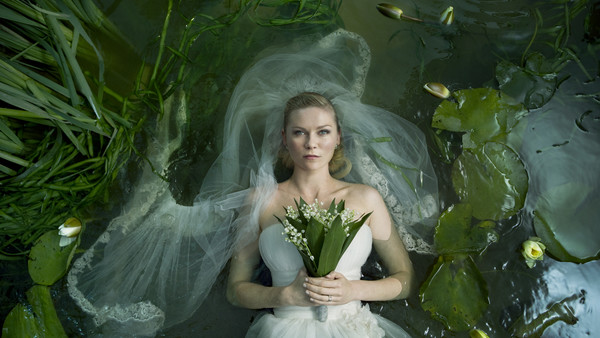
Melancholia, while not courting quite as controversial subject matter as some of his previous films, isn’t exactly a walk in the park either. Hint: the clue is in the title.
Inspired by von Trier’s own battles with depression and the realisation that those suffering from depression tend to act more calmly in a crisis, Melancholia is a portrait of a dysfunctional family in the shadow of an impending apocalypse.
But whereas other films might exploit the impending end of the world as excuse for lauding heroism or humanity or something else equally schmaltzy, Melancholia instead uses it as a frame for exploring nihilism and depression in focusing on its terminally depressed protagonist Justine (Kirsten Dunst in possibly her most acclaimed role to date) and her apathy towards the apocalypse.
Like many von Trier films, it’s a tad arty and pretentious but at its core is a painfully real depiction of depression.
2. Grave Of The Fireflies

Set in the last few months of World War II in Japan, Studio
Ghibli’s Grave of the Fireflies opens with the firebombing of Kobe and the
orphaning of its two main characters – brother and sister Seito and Setsuko –
and let’s just say it doesn’t exactly get much more light-hearted from there
on.
Sent to live with a begrudging aunt who resents having to look after them, the pair decide to try and make it on their own and set up home in an abandoned bomb shelter living off what little food they can scrounge and scavenge. Despite Seito’s best efforts to keep his sister happy, fed and safe she eventually succumbs to malnutrition.
Never mind though – it’s just a dramatization of history, right? Nope, it’s actually based on a semi-autobiographical short story by writer Akiyuki Nosaka who lost not one but two sisters during World War II.
1. Requiem For A Dream

Forget your DARE programmes and Talk to Frank campaigns: if you
really want kids to stay away from drugs, simply show them Darren Aronofsky’s
Requiem for a Dream. If ever there was a film that truthfully and unflinchingly
depicts drug addiction in all its grim reality, it’s this.
Starring Jared Leto, Marlon Wayans (in rare dramatic mode) and Jennifer Connelly as a trio of heroin addicts and Ellen Burstyn as an amphetamine addled TV junkie, there are no happy endings or redemption for Requiem for a Dream’s characters.
By the end of the film Leto ends up minus one arm thanks to an infection caused by shooting up, Wayans is locked up and in withdrawal, Connelly is selling herself for heroin and Burstyn is suffering from drug-induced psychosis and undergoing electroshock therapy that leaves her practically zombified.