13 Movies You Presumed Were Massive Flops (That Really Weren't)
It takes a lot more to flop than you probably think.

The word "flop" can mean a number of things in the movie industry, for a failure can of course be critical, commercial, or in the worst cases, both. Commentators love to discuss movies that have flopped, though it's worth distinguishing between movies that simply underwhelmed at the box office (and possibly with critics) and movies that were flat-out, horrendous train-wrecks.
These 13 films all have one common fibre: they are presumed by most audiences to be colossal, money-losing flops, when in reality, that just isn't the case, even if a profit of $50 million might ultimately seem like chump change to some studio executives.
Did these films all underwhelm compared to expectations? Absolutely, but they're far away from failures such as John Carter (which cost over $350 million to produce and market, and only made $284 million at the box office), or even worse, movies like Mars Needs Moms, Pluto Nash, and *shudders* Cats.
So while these movies were not great successes, factoring in home video sales and TV syndication as well, they were not the massive flops many love to joke about, or simply presumed them to be due to the poor critical reception and lack of a sequel. Feel free to argue amongst yourselves, though...
13. The Cable Guy

By the time 1996's The Cable Guy finally hit the big screen, Jim Carrey had already become one of the biggest stars Hollywood had to offer. His turns in Ace Ventura: Pet Detective, The Mask, Dumb and Dumber, and even Batman Forever had all left audiences begging for more of his elastic brand of comedy. This is why studios were happy to pay the star whatever he wanted to tie him to their feature.
However, this willingness to meet Carrey's staggering $20 million asking price for The Cable Guy, eventually led to Ben Stiller's film being targeted by rival studios. Upon its release, these other production companies began to slam the movie as a massive disaster in comparison to the other features Carrey had been a part of, with their aim being to derail a project and studio that had set a new industry high when it came to an actor's fee.
In reality, The Cable Guy was anything but a monumental flop. On a budget of $47 million, the film managed to bring in $102.8 million worldwide which was admittedly less than the other features Carrey had starred in. However, Columbia Pictures didn't roll out a huge marketing campaign for the feature, so the studio still managed to make a decent profit in the end.
12. Last Action Hero

There were high hopes for John McTiernan's subversive action comedy, starring Arnold Schwarzenegger as an action star who ultimately ends up being dragged into the real world. The problem was that, off the back of a sure-fire classic like Terminator 2, audiences weren't really prepared for an Arnie-starring action comedy, and simply expected Austrian Oak to be his usual, bada** self.
Instead, we got self-deprecating humour at the expense of a lot of action. Yet, for all its dubiousness, Last Action Hero is probably the most underrated movie in Schwarzenegger's filmography.
That said, it was a bit of a box office disappointment, grossing "just" $137 million against an $85 million budget. The movie's lower budget than many of the movies truly considered flops these days meant that it wasn't a catastrophic failure, but merely a let-down given the box-office draw Schwarzenegger had been up to that point. The movie has since become a cult classic, and as such you can bet that its home video sales made it profitable in the long run.
11. Total Recall

We're now leaping ahead, somewhat aptly, with a remake of one of Arnie's classic action films, Total Recall. Few people, be they Arnie fans or not, really cared about this movie being made. Though to be fair, many expected it to be a moderate success given its flashy visual effects, popular lead actor and PG-13 rating (the original movie was an R).
Surprising it was, then, that along with a mixed critical response, the movie netted $198 million worldwide, ahead of its $125 million budget. Again, this is hardly something to get giddy about, but it's not an abject disaster either, and even if the movie had a colossal marketing budget of $50 million or more (which given the lack of posters we saw around release time, I'm doubting), it would still have made over $20 million of pure profit, before even factoring in other distribution methods.
Opposers of remakes love to use it as an argument against them, but really, it could have flopped much harder than this.
10. Ghost Rider: Spirit Of Vengeance

Here's a movie everyone assumes was a total failure because it's hard to find anyone who actually shelled out money to see it. Ghost Rider: Spirit Of Vengeance may have grossed around $100 million less than the original film, but it's also important to remember that its budget was also around half of the original, and with a $57 million budget, it managed to make $132 million.
Given the disastrous reviews and generally awful quality of the product, it raking in so much money should be considered nothing short of a miracle: a fluke worthy of a deal with the Devil himself. With the film being liked by basically nobody, it was fair to assume the movie was a flop, all the more considering chatter of a third outing was muted at best. Alas, the movie was by all measures a bigger success than anyone could have reasonably expected, even if it completely defies any rational system of logic.
9. Waterworld

If you look up the word "flop" in the dictionary, I'm pretty sure there's a picture of Kevin Costner p*ssing into a bottle. At the time of its release, Waterworld was the most expensive movie ever made, budgeted at $175 million and widely expected to be a mammoth success.
The movie ended up making just $264 million at the box office, resulting in a seeming $89 million profit, though with marketing costs rumoured to have sky-rocketed to $60 million, really the movie just made $29 million when it was all said and done. Due to the extensive publicity surrounding the film's underwhelming performance, it was reported that even still, the movie did not present gains for Universal after taking into account the cut that cinema chains would take from the gross.
Therefore, the movie only truly started to generate revenue on home video. Still, it seems a tad unfair that Waterworld is probably the most notorious box office "bomb" in history, when unlike many similarly problematic movies, it actually managed to at least meet its budget at the box office.
8. Battleship

Peter Berg's Battleship was clearly trying to connect with the same audiences who bought into Michael Bay's Transformers movies, what with its similar preference for military fetishism and lots of guns and metal flying around. A movie based on one of the most popular board games of all time: what could possibly go wrong, right?
Well, the movie's opening weekend grosses were considerably less than had been anticipated for an effects-heavy summer blockbuster such as this, and so Battleship was promptly labelled a big, fat flop. Battleship did unquestionably disappoint, but it still managed to do $303 million against a $209 million budget, and you can bet your bottom dollar it's the sort of film that would have done well on home video and also on syndication since. There's no doubt about Battleship being a terrible film, but it's not quite the disaster so many love to go on about.
7. Dark Shadows

Compared to Tim Burton's previous Johnny Depp love-fest Alice In Wonderland, it's easy to see why people were so quick to dismiss Dark Shadows as a flop. Alice grossed just north of a billion dollars against a $200 million budget, causing studio executives to assume that putting Johnny Depp in anything with Tim Burton was going to result in a license to print money.
However, an adaptation of a cult TV series doesn't really compare to a classic fairytale, as proved by the fact that Dark Shadows grossed just $245 million against a $150 million budget. Again, comparatively, it's easy to be horrified by that figure, but within context, it's actually pretty good going.
Given how few of Depp's fans would have ever heard of the original series, and considering, frankly, how terrible the actual film is, to make it almost $100 million into the black is nothing short of a cinematic miracle. The film is rightly torn apart for being another cynical teaming of Depp and Burton at arguably their most creatively bankrupt, but it really isn't the flop many dismiss it as.
6. Batman & Robin

Batman and Robin is a textbook example of a film so unconscionably awful that people don't even care about box office figures. The film was universally reviled by fans and critics alike, and is continually regarded as one of the worst films ever made. This ultimately caused it to fall considerably short of Batman Forever's box office gross ($336 million against a $100 million budget). Batman and Robin still took $238 million against a $125 million budget, so it wasn't an outright failure for Warner, even if the expectation for a sequel is naturally that it out-grosses the previous film.
The universal hatred aimed at the movie accounts largely for the reason a sequel never took off, and the franchise was thankfully rebooted by Christopher Nolan 8 years later. However, it made just north of $100 million over its original budget, and the movie was no doubt a piece of cake to sell to TV networks and on home video (at the time, anyway). That it has earned a perverse cult value in recent years also means that Warner has inevitably not suffered too hard for its disappointing box office.
5. Hulk

Appointing an art film director of Ang Lee's caliber and reputation was a very bizarre choice for a superhero movie, especially one revolving around a giant green monster smashing things up for two hours. As a result, Lee decided to make a different film altogether: a slow-burn, character-driven blockbuster which took a bit too long to tell its story, no doubt putting the kids to sleep before the action even got started.
In spite of its creative direction, the movie was met with a lukewarm reception from audiences and critics, and the movie failed to take off at the box office, taking $245 million against a $137 million budget. A similar profit margin was true of the second attempt to commodify The Hulk with Edward Norton, and frankly it wasn't until the green guy appeared in The Avengers that he seemed to truly latch on with audiences. That said, Lee's film is constantly dismissed as a stone cold flop, when it was really far from that.
4. After Earth

One of the worst films of 2013 was M. Night Shyamalan's sci-fi atrocity, After Earth. It is notable for starring Will Smith, yet making the genius decision of confining him to a chair for the majority of the runtime, while his irritating son Jaden does most of the leg-work.
Clearly trying to latch onto the same audience who threw down almost $2.8 billion for Avatar, Shyamalan's film became yet another notoriously bad entry into the director's filmography, even if it wasn't quite the flop many had readily hailed it has. Again, it didn't do that well, but it made $243 million against a $130 million budget, meaning it made Colombia profit when it's all said and done. It's admittedly easy to just dismiss the film as an outright flop even though, like Shyamalan's The Last Airbender, it somehow did make money...just a modest amount.
3. A.I. Artificial Intelligence

A.I. is one of the most divisive films in Steven Spielberg's filmography, and was certainly one of his most anticipated, given that the project was gifted to the director from Stanley Kubrick in the mid-90s, and film fans were essentially hoping that some of Kubrick's DNA will have rubbed off on the final product. A visually stunning, beautiful and quite bizarre effort, it's fair to say that the film wasn't the breakout hit DreamWorks were hoping for, and the film's domestic box office particularly suffered.
The harsh box office at home no doubt accounted for a lot of the negative publicity stating that A.I. was an overall financial flop, but it performed extremely well overseas by comparison, and ended up taking in $235 million against $100 million. Many today view A.I. as one of Spielberg's admirable, noble failures, but both critically and commercially, the film did win out in the end, albeit more modestly than we might have hoped or expected.
2. Prince Of Persia: The Sands Of Time
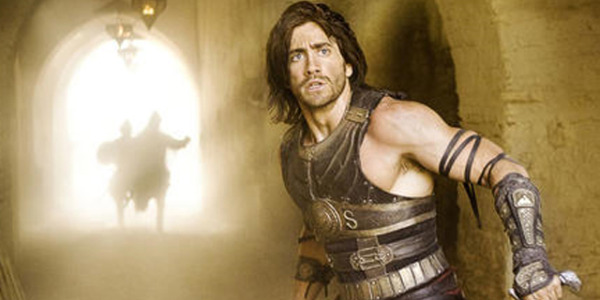
Prince of Persia: The Sands of Time is really the only video game adaptation to date where a studio jumped in with both feet and fully committed themselves to the vision, complete with a huge budget and an A-list cast, headed by Jake Gyllenhaal, playing a version of the famous protagonist.
One of the better efforts to date to adapt a video game, the movie no doubt benefited from Jerry Bruckheimer's presence as a producer, though as he eventually proved with his The Lone Ranger, not everything he touches turns to gold. Prince of Persia received mixed notices from critics, and scooped an underwhelming $335 million against $200 million.
Bruckheimer and co. were clearly banking on this becoming the next Pirates of the Caribbean, though frankly, as a gamer, I was impressed the movie connected with audiences at all and even managed to make this amount of money. It'll doubtless be used for years to come by studios to suggest why they should never put big money into video game adaptations, but it was far from the flop many assumed it to be.
1. Eragon

It's a genuine pain that this movie made the #1 spot, considering it is easily one of the worst blockbusters of the last decade. Yet, despite its reputation, it actually did make money. Eragon is adapted from young author Christopher Paolini's novel, and as critics frequently derided it, it's basically an awkward mix of elements from Lord of the Rings, Star Wars and Harry Potter.
Though boasting an oddly great cast, including John Malkovich, Jeremy Irons, Robert Carlyle and Rachel Weisz, the performers were mostly left flailing helplessly around the risible script. With a modest $100 million budget, Eragon made $249 million at the box office, impressive considering it squared off against Night at the Museum at the US box office. It may not have been a box office barn-burner, but despite its reputation as an epic fail, it ended up becoming the 16th highest-grossing film of 2006, and made a little pocket money for Fox.
Are there any presumed flops we missed? Let us know in the comments!