13 Movies Actually Ghost Directed By A Second Filmmaker
Who really directed these movies?

Just getting a movie to the point of completion is an arduous mountain to climb in the first place, so it’s crazy to think that sometimes a director is heavily responsible for a film without ever getting the credit their work deserves.
If they're employed as a sort of puppet-master behind-the-scenes or come in to salvage a project when there’s a vacated directors chair they tend to only be considered a ’ghost director.'
And while their names remain hidden, sometimes uncredited party is more responsible for the final result than the filmmaker credited. Gareth Edwards certainly had some guidance and re-writes on Rogue One via Tony Gilroy, even if Edwards still stands by the final product.
These days, publicity around such changes makes the required air of secrecy for a 'ghosted' movie less likely. The recent case of Justice League is a good example, as original director Zack Snyder left with majority filming wrapped, then Joss Whedon came in, rescripting and directing reshoots for the final project. The entire ordeal was done with such transparency it's difficult to make a case for its inclusion.
But there are other examples that fit this strange mandate where a second filmmaker called the shots yet remains forever an invisible presence in the credits.
13. Albert Magnoli - Tango & Cash (1989)

This piece of 80s buddy cop cheese - starring superstar duo Sylvester Stallone and Kurt Russell - is a definitive guilty pleasure of that era. Full of baffling plot mechanics, excessive one-liners, blatant homo-erotism and of course, Harold Faltermeyer music. Yet for a film that reads like a simple checklist of action movie cliches, who knew it was marred by such creative turmoil?
Stallone was infamously hands-on during the 80s (more on that later), and several casualties resulted from a production tug of war between him and producer whackjob Jon Peters.
Cinematographer Barry Sonnefield was the first to suffer, as he was fired at Stallone’s behest. Next, the director Andrey Konchalovskiy - championed for his action/drama Runaway Train - was shown the door by Peters. The supposed reasoning was Konchalovskiy and Stallone wished to make a gritty cop thriller, while the producers wanted a full-blown campy quip-fest. It would seem from the final results the producers blatantly won.
With Konchalovskiy gone and Stallone and Peters at loggerheads, Albert Magnoli of Purple Rain fame was brought in to add spades of neon stylings and flighty pizzazz whilst the creative tone of the movie was constantly pushed and pulled.
Konchalovskiy was given final credit for the movie yet the bizarre tonal shifts and emphasis a music video aesthetic feels much more like something from Magnoli’s repertoire.
12. Paul Thomas Anderson - A Prairie Home Companion (2006)

Here was a strange case where the ghost director was added to a film's production as a necessity from an early stage.
Iconic director Robert Altman was in ill health when he signed up for this ode to Country and Western music; a welcome return to the similar territory of his classic film Nashville.
According to MNSpeak, Phantom Thread director Paul Thomas Anderson was brought onboard as a backup support.
“... the producers of the film probably insisted that Altman commit to a 'backup' director because of his age... and some say [Anderson is] basically running daily production of the film. […] Between cuts, Robert belts directions over a mic while PT runs up to the stage and speaks with the actors directly.”
Considering Anderson was a blatant admirer of Altman - look no further than his films Boogie Nights and Magnolia, as case in point - it seemed like a rare occurrence of this not hurting egos but being an enjoyable experience for both parties, as Anderson could collaborate in a hands-on manner with one of his heroes, while Altman could bounce off one of his long-time fans, in what became his swan song.
Conclusively it was certainly Altman's vision, yet Anderson was still heavily responsible for getting the project to completion on every step of the way.
11. Kurt Russell - Tombstone (1993)

In the early 90s, the Western was enjoying a comeback, among those highlights was yet another adaptation of the O.K. Corral showdown bolstered with a stellar cast, a meaty script and some fierce and bloody gun battles. Val Kilmer’s variation on Doc Holiday was the scene stealer but the entire thing was anchored by an on-point Kurt Russell - in more ways than most know.
Glory screenwriter Kevin Jarre was meant to have made his directorial debut on the project, yet was fired after a month, it was up to Russell to pick up the slack. He stated in 2006;
"...that was the one time I had gone out and got the money. I backed the director; the director got fired, so we brought in a guy to be a ghost director. They wanted me to take over the movie. I said, “I’ll do it, but I don’t want to put my name on it. I don’t want to be the guy."
Russell hired George P. Costamos, a veteran action director, and they concocted a unique agreement;
"I said to George [Cosmatos], “I’m going to give you a shot list every night, and that’s what’s going to be.” I’d go to George’s room, give him the shot list for the next day, that was the deal. “George I don’t want any arguments. This is what it is. This is what the job is.”
In fairness, Russell kept mum until Cosmatos' passing in 2005, in respect of a mutual agreement the pair had.
10. The Wachowski Brothers - V For Vendetta (2005)

The Wachowskis were major fans of Alan Moore’s dystopian Thatcher-era comic V For Vendetta, adapting it as working screenwriters but unable to get it sold. In the wake of their Matrix success though, it was quickly green-lit by Joel Silver with Natalie Portman eagerly signing on.
Strangely though, the siblings choose not to direct this long-time passion project; one can only assume they were burnt out after the demanding back-to-back shoots of Matrix 2 & 3.
Yet, if the Wachowskis were meant to take a backseat, they certainly went about it in a round-a-bout manner, not only staying on as producers but also prevalent on-set as uncredited Second Unit Directors (according to Silver at least). Even stranger, their directorial replacement was not some new visionary but their frequent Assistant Director James McTeigue, making his film debut based on their screenplay.
From the final result, it's difficult to conclude where one filmmaker ends and the other begins, as it contains the sibling's trademark visual palette, editing panache as well as several thematic similarities from their distinct filmography.
Whatever the situation, it was amicable one at least, since McTeigue and the duo have worked together since, in a more hands-off capacity though. And McTeigue must have been grateful since the Wachowskis opportunity lead him to a consistent career as a feature director, although it must be said, his other movies came nowhere near the quality displayed with this debut.
9. Kevin Costner - Waterworld (1995)

90s superstar Kevin Costner and frequent director Kevin Reynolds had enjoyed a prosperous relationship since their early breakthrough with Fandango, that continued to blockbuster success with Robin Hood: Prince Of Thieves. Reynolds even contributed to iconic moments from Costner's directorial debut Dances With Wolves, yet never claimed credit due to their transparent friendship.
Unfortunately, things got heated between the two on Waterworld, a film that's hell-fire production has been charted frequently. The simple version is that with two weeks left of shooting, Reynolds exited the movie.
Speculation has stated several different versions of why this occurred, but we'll probably never know the full story. Supposedly, Costner’s famously hands-on approach had soured the friendship and with the director’s seat vacated, the leading man took over main duties, as well as seeing the film through its lengthy post-production.
The final result is a flawed if entertaining ‘Mad Max on water’ riff that feels likes both a Reynolds movie and a Costner. One can conclude that both creative minds were heavy influences on the final result, so no wonder there was so much tension.
Luckily the pair eventually made up, almost two decades later they made the excellent mini-series Hatfields & McCoys together, and officially buried the hatchet.
8. Sylvester Stallone - Rambo: First Blood Part 2 (1985)

Another Stallone movie, another 'ghost directing' rumour. Officially Stallone was not sitting in the director's chair on Rambo yet speculation over the years has pointed to that clearly not being quite true.
This sequel to First Blood in which Rambo almost single-handedly resolves the Vietnam War was when the franchise shed itself of its grounded storytelling in favour of big hair and full-blown jingoism. Its 80s spectacle at its enjoyably goofiest, with the film's director credited as Tombstone's George P. Costamos.
As he grew in popularity, Stallone had begun to exert a vice-like grip on his projects. It made sense since he had directed, written and produced several movies by this point. Still, he apparently didn't mind collaborating with Costamos due to the director letting Stallone be the true boss when it came to filming.
Stallone has never confirmed this though, but long-time friend Kurt Russell pretty much hit the nail on the head in an interview, when speaking of his unique Tombstone collaboration with Costamos;
"I got him from Sly Stallone—called up Sly, said I need a guy. Sly did the same thing with Rambo 2 with George."
7. Curtis Hanson - The Silent Partner (1978)

This obscure 70s thriller is a real gem for those lucky enough to have come across it. it features a uniquely clever spin on the Hitchcockian thriller and with two stand-out performances from Elliot Gould and a deliciously evil Christopher Plummer.
It was based on a spec script from future LA Confidential director Curtis Hanson, with the young writer adamant to direct. Unfortunately, a contractual obligation prevented this with prominent TV director Daryl Duke filling the chair instead.
Still, according to Gould, even if his and Hanson's interactions were limited, the writer was a constant presence on set and collaborated with Duke. Duke's professionalism and wry humour are prevalent throughout the movie, yet the film's distinct voice, elaborately plotted set-pieces and dark twists feel very much in synch with Hanson's work.
Also, one of the films most iconic scenes - a shocking murder involving a jagged edge of a fish tank - had Duke refusing to film it on principle due to its graphic nature, and this decision saw him leave the project. The producers then officially brought Hanson in to wrap up the remaining filming, as well as oversee the entire post-production process.
For film fans curious about the early beginnings of the late Hanson, this nasty little thriller really represents a 'lost' treasure of his. Duke certainly deserves credit for his work on the final project, but Hanson's intricate creative contribution certainly does too.
6. Anthony Mann - He Walked By Night (1948)

From its sudden opening, as a seemingly normal suburban male (Richard Baseheart) brutally guns down a casually inquisitive police officer, to its gripping manhunt finale set in densely lit sewer tunnels, this often overlooked Film Noir is essential viewing for fans of the genre.
It remains groundbreaking for a number of reasons, most importantly though, its one of the earliest examples of the controversial precedent of ‘ghost directing’.
Hired hand Alfred L. Werker is credited as director, yet film historians have pointed to it as the clear product of Noir stalwart Anthony Mann. What exactly occurred behind-the-scenes has been lost by history, yet many point to Mann leaving the project with it near completion and Werker coming in to wrap up the remaining days.
With that in mind several scenes can feel like night-and-day, Werker was as workman-like as they come, with his obvious scenes - usually centred around the vanilla plot of cops on the chase- done standard and unimaginative. On the other hand, Mann was one of the most visually distinct Noir directors, especially when accompanied by cinematographer John Alton (as he is here).
Mann's highly stylised approach mixed with gritty thematics are ever present. Both him and Alton shared a kinetic partnership with a penchant for long corridors, disorientating angles, and feverish contrast lighting. All these traits are showcased here, proving this movie can easily fit in with their other genre landmarks T-Men and Raw Deal.
5. George Miller - Babe (1995)

Mad Max maestro George Miller snatched up the rights to The Sheep-Pig children's book in the mid-80s and while it was an odd match for the R-rated filmmaker to head towards he was adamant and passionate about his vision for the project, and to do the entire film live-action as opposed to a traditional Disney animated approach.
For close to ten years he evolved the screenplay, as well as the necessary technology to get the film to work. Unfortunately, once things were in place and the production ready to go, his scheduling had him unavailable. The directing job went to Miller’s one-time assistant director Chris Noonan instead, who ably took the job, with Miller still credited as co-screenwriter and producer.
The film was a critical and commercial hit - for adults and children - even garnering several Oscar nominations and a Best Visual Effects gong. When asked why he didn’t direct the film, on the interview show The Director’s Chair, Miller responded;
“Because the timings didn’t turn out, by that point I was already doing Lorenzo’s Oil. But as it turns out, I had to get heavily involved in the film, particularly in the post-production.”
Miller would go on to direct the lesser received (and much darker) sequel Babe: A Pig In The City, so perhaps Noonan's contribution is what helped things click into place. Still, Miller’s intricate involvement in every stage of the project is undeniable.
4. Alex Garland - Dredd (2012)

The second adaptation of the 2000 A.D. comic character Judge Dredd died painfully at the box office, yet its critical plaudits and a loyal and ever-growing following have undeniably turned it into the biggest cult hit of recent memory. What was less undeniable - until quite recently that is - was who really directed the movie?
As the film geared up for post-production, a swirl of speculation hit the press that director Pete Travis had been fired and ‘locked out’ the editing suite, with screenwriter/producer Alex Garland taking creative charge over post-production, and him even seeking out a co-director credit for his heavy involvement.
This was quickly backtracked, as Garland and Travisikujik released a mutual statement clarifying that Travis was still involved and that an amicable ‘unorthodox collaboration’ was always intended between the two from the jump. The film came out and flopped, then the issue was never really picked up again.
That is, until early this year. When Dredd star Karl Urban was being interviewed for Joblo.com, he cleared up the whole mess once and for all;
"A huge part of the success of DREDD is in fact due to Alex Garland and what a lot of people don’t realize is that Alex Garland actually directed that movie… I just hope when people think of Alex Garland’s filmography that Dredd is the first film that he made before Ex Machina. You think about it in those terms; it goes Dredd, Ex Machina, Annihilation."
3. Howard Hawks - The Thing From Another World (1952)
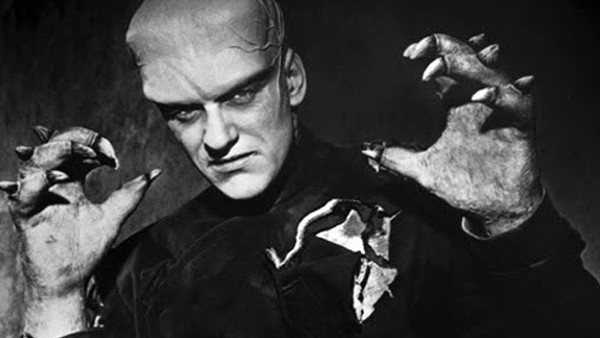
Likely one of the longest-running cases of a ‘ghost directing’ controversy, this classic 50s horror is an atmospheric chiller done in an effectively timeless style. It was directed by Christian Nyby, yet most film-buffs consider this to be a no-contest directorial product of the film’s producer Howard Hawks.
Over the years, speculation on the subject has swung back and forth, most apparently when lead actor Kenneth Tobey said Hawks called the shots. Then that was contradicted by the film's creature James Arness, that championed Nyby for being in charge. Several actors and crew over the years when pressed have swayed either way, with one thing clearly apparent; we'll never really know.
What is curious on the matter is that Hawks’ distinct style is apparent throughout. His machine-gun dialogue, invisible camera moves, and spunky female heroine are all clear traits that belong to the director's trademark repertoire, much more than anything that Nyby would go on to make.
Still, Nyby was Hawk's editor that the seasoned director took under his wing in a mentor capacity. All eyes point that their relationship on the movie was highly collaborative, with Hawks no doubt influential in the production, but did he outright direct it? One has to question the 50/50 split on evidence.
Still, an odd piece of trivia makes an argument Hawks actually did; from the $50,000 cheque RKO paid for the director's fee, the veteran director gave Nyby $5,460 and pocketed the rest. Either he took what he felt was his rightful contribution...or he was notoriously cheap.
2. George Lucas - Return Of The Jedi (1983)

As Empire Strikes Back geared up for production, George Lucas needed to take a step back from the director’s chair and save Lucasfilm from bankruptcy. His old USC professor Irvin Kershner got the job instead, in what resulted in the highpoint of this forty year running franchise.
Lucas had always been irritated about not being able to assert more control over that production (especially for budget reasons), so when the third film geared up and Lucasfilm was thriving as a well-oiled machine without him, he managed to exert a position as a totally hands-on producer.
Low-key filmmaker Richard Marquand got the job as the helmer on the film, yet his disconnect with the main cast was a problem, not to mention his easy-going nature made him an easy 'yes man' for Lucas, who was always present on-set, and setting demand like always shoot a ‘Master Shot’ (a wide angle that captures an entire scene from A to B).
According to Visual Effects member Joe Johnston;
“George’s attitude has always been that the film is made in the cutting room, and production is a process of assembling the raw material. My guess is that George saw Marquand as a guy who could go out and amass the great-looking footage that George would mold into the film in post.”
One questions why Lucas didn't just direct the film himself? Whatever his reasons, if one looks at the accumulated evidence, he certainly came close enough to doing just that.
1. Steven Spielberg - Poltergeist (1982)

This 80s horror movie is a definitive classic of the genre, yet a myriad of differing opinions on who actually directed it - the credited Tobe Hooper, or writer/producer Steven Spielberg - have led the product into a confused state of whose responsible.
The person to trigger the rumour was Spielberg himself who was quoted in an interview with the LA Times in 1982;
“Tobe isn’t…a take-charge sort of guy. If a question was asked and an answer wasn’t immediately forthcoming, I’d jump in and say what we could do. Tobe would nod agreement, and that became the process of collaboration.”
He quickly refuted this, with an open letter he submitted to the Hollywood Reporter soon after.
Rumours persisted though, with evidence suggesting that Speilberg basically needed someone to fill the director's chair due to external reasons. The films camera assistant John Leonetti, recently clarified this point:
“...Steven Spielberg directed that movie. There’s no question…It was really more of a set-up because Steven developed the movie and it was his to direct, but there was anticipation of a director’s strike, so he was ‘the producer’ but really he directed it in case there was going to be a strike and Tobe was cool with that. It wasn’t really anything against Tobe.”
What's clear is if there was a rift between the directors after then it was resolved before Hooper’s passing in 2017; they collaborated twice more with Hooper directing episodes of Spielberg TV shows Amazing Stories and Taken.