12 Ways Comic Book Movie Villains SHOULD Have Died

Seriously, Marvel, do better.
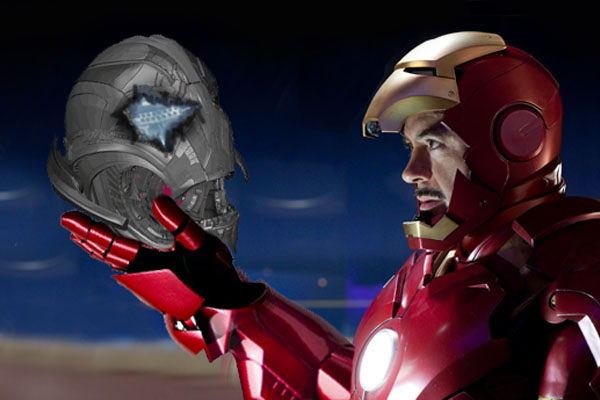
More often than not when it comes to comic book movie villains, they tend to perish (or at least appear to perish) before the first movie they appear in. Sometimes, their deaths are absolutely perfect - look at Jack Nicholson's Joker, Willem Dafoe's Green Goblin, Alfred Molina's Doctor Octopus, Kevin Bacon's Sebastian Shaw and Lee Pace's Ronan for examples - but sometimes, like with character deaths in any other movie genre or fictional medium, their demises just don't sit right with fans. Whether it's because the method of their death was wrong, because the wrong person killed them or because their death came at the wrong time, when some villains die, you definitely end up thinking it should have happened in a different way. So, when it comes to those comic book movie villains whose deaths just didn't seem appropriate, how should they have actually died? Who should have killed them? Did they die at the right time in their movie franchise? Let's right some wrongs...

12. Later In The Movie (Baron Strucker)
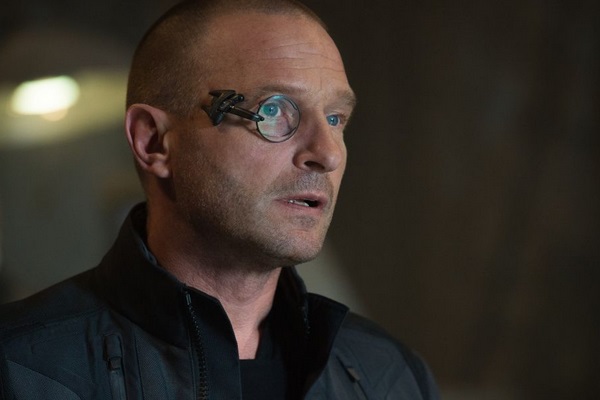
When Thomas Kretschmann was cast as Baron Wolfgang von Strucker in the Marvel Cinematic Universe - first appearing in the mid-credits scene of Captain America: The Winter Soldier - it was quite exciting. Strucker is a major, iconic villain in Marvel comic books and a key villain to the Avengers and S.H.I.E.L.D. - surely, he would make a fantastic secondary villain for 2015's Avengers: Age of Ultron. But he had all of around two minute's screen time before being apprehended by the Avengers and killed by Ultron very early in the movie. While his method of death isn't something that's particularly concerning, the fact is that he should have died much later in the movie - or even not at all. His early death completely wasted both a fantastic actor (he has appeared in the likes of Blade II, King Kong, Valkyrie and Stalingrad) and a brilliant character from the comic books.

11. A Stake (Drake)

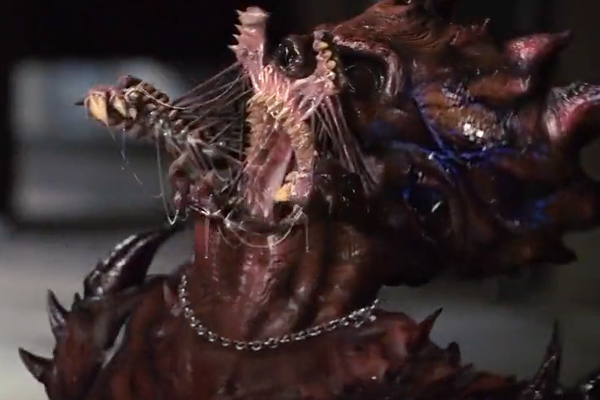
No, not just because it rhymes. In 2004's Blade: Trinity, the titular vampire hunter faced-off against a modern iteration of the classic villain Dracula. That iteration was Drake - played by Dominic Purcell - who was presented as the genetic "father" of the vampire species and a powerful individual who could take on a monstrous form, in addition to his more human form. He was defeated when Blade impaled him with an arrow containing the Daystar virus - an airborne virus that attacked vampires on a molecular level. But it would have been so much better if that virus didn't work on Drake and the Daywalker had to resort to the "traditional" method of vampire slaying - the trusty stake. Blade tends to use silver bullets and U.V. weapons as his tools of the trade, but using a throwback to ancient vampire lore as a means to kill an updated version of Dracula himself would have been a nice nod to classic Gothic fiction.

10. A Green Lantern Team-Up (Parallax)
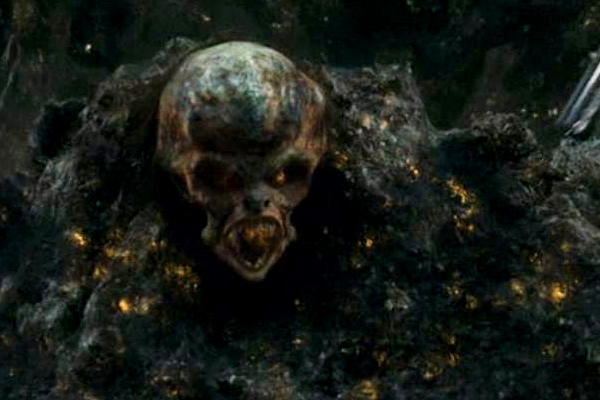
2011's Green Lantern movie went all-out with its villain, pitting the rookie Hal Jordan against the cosmic entity known as Parallax in his first (and only) outing as a member of the Green Lantern Corps. When the powerful creature came to Earth and started killing people by feeding on their fear and life force, Jordan drew it away from Earth and lured it into the Sun by flying so close to it that Parallax was pulled towards it through sheer force of gravity. The fact that Jordan was single-handedly able to beat the thing that is arguably the most potent Green Lantern enemy in comic book history completely undermined its power. It should have been a collective and hard-fought fight between Parallax and the entire Green Lantern Corps; Kilowog, Tomar-Re, Bzzd and so on. By showing that a new Green Lantern could beat such a powerful enemy on his own, it's hard to see where they could possibly have gone with a sequel, had the movie not failed commercially anyway.

9. Suicide (Obadiah Stane)

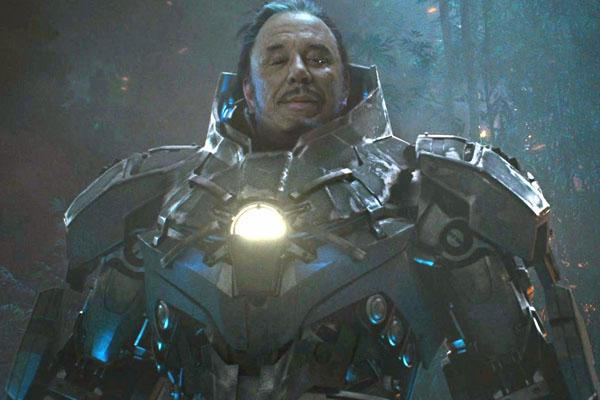
In 2008's Iron Man, Iron Monger - AKA Tony Stark's former friend Obadiah Stane - is killed when Pepper Potts overloads the Arc Reactor, which hurls Stark aside and fries Stane in his much heavier battle suit. This was after a long fight between the two armoured combatants in which, for the bulk of it, Stane was actually on top. But it seems like a wasted opportunity, as the battle was the perfect chance to refer to a classic comic book scene in which Stane kills himself due to his inability to accept defeat. That occurred in 1985's Iron Man #200 - the first time he had ever worn the Iron Monger armour. After losing to Stark in battle, Stane's armour had seized up and he was about to be both arrested and publicly humiliated. Refusing to accept that, he fired his own repulsor ray into his own head, resulting in the disintegration of his skull. This would have fit Jeff Bridges' version of the character, who was very frustrated when his scientists couldn't create technology on a par with Stark's and couldn't bear being inferior to the hero.

8. Gamma Poisoning (David Banner)

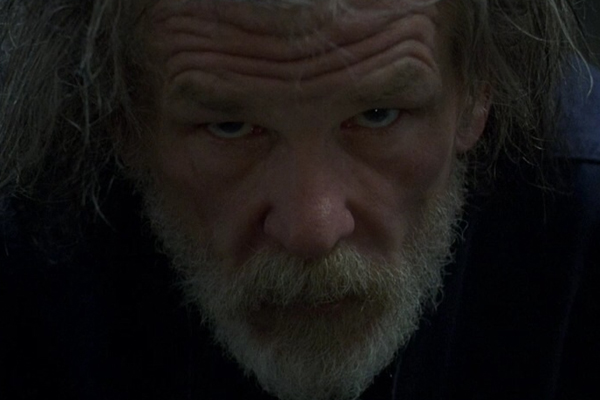
In 2003's Hulk movie, Nick Nolte portrayed a version of Bruce Banner's father called David Banner (a homage to the Bill Bixby character in the 1970's and 1980's television series based on the Hulk). Nolte's character was presented as being mentally unstable and wanting to bring out his son's powerful green alter-ego, as well as wanting those powers for himself. His attempts to gain those powers actually resulted in him gaining powers reminiscent of the comic book villain Absorbing Man - and he and his son ended up fighting with each other. During the fight, David attempted to absorb Bruce's power, which ended up being too much for him. It weakened him to the point that the U.S. army was able to kill him with a missile, but it should have actually resulted in him painfully dying from Gamma radiation poisoning. Seeing him slowly (and ironically) dying from exposure to the substance he thought would give him the ultimate power would have been a suitable death for a dangerous and unstable man.

7. The Ex-Wife (Ivan Vanko)

In 2010's Iron Man 2, Tony Stark and James "Rhodey" Rhodes teamed-up in their Iron Man and War Machine armours for the final battle against Ivan Vanko in his Whiplash armour. Rhodes' armour was equipped with some technology created by Justin Hammer - Tony Stark's rival who had been utilising the services of Vanko to create his Hammer Drones - and that technology included the "Ex-Wife". The weapon was supposed to be incredibly potent, so when Rhodes used it against Vanko, he expected it to win the fight, but it fizzled out harmlessly. It would have been a suitable end to the fight if Vanko was about to land a killing blow on either Stark or Rhodes, only for the Ex-Wife to belatedly explode in his face, killing him. It would have served him right for working alongside Justin Hammer in the first place and would have perfectly set Tony Stark up for one of his trademark typically funny quips.

6. With Batman Trying To Save Him (Ra's Al Ghul)
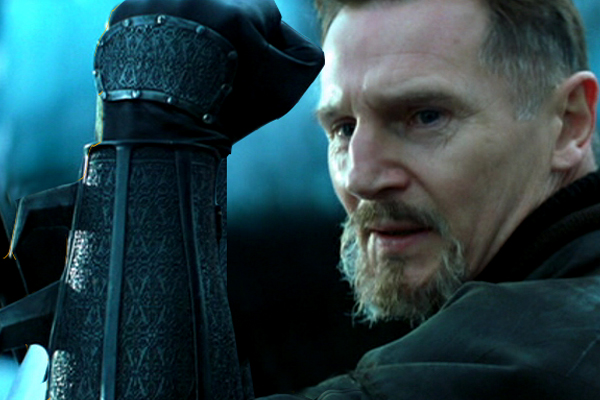
Considering so many people complained about Superman killing General Zod in 2013's Man Of Steel, it's quite surprising that very few people complained about Batman letting Ra's Al Ghul die in 2005's Batman Begins. Granted, Batman didn't actually actively kill Ra's Al Ghul, but he did nothing to prevent his inevitable death and, given that both Superman and Batman generally have a no-kill policy, this shouldn't have sat well with fans of the character. What should have happened is that Batman attempted to save Ra's Al Ghul as the derailed train he was in fell of its track, but he should have failed. Ra's was Bruce Wayne's teacher - calling Wayne his best student - and, although that was in the false guise of Henri Ducard, you'd still think a hero like Batman would have had some compassion and at least attempted to help a man that he once thought of as a friend and ally.

5. Via Extremis (Aldrich Killian)

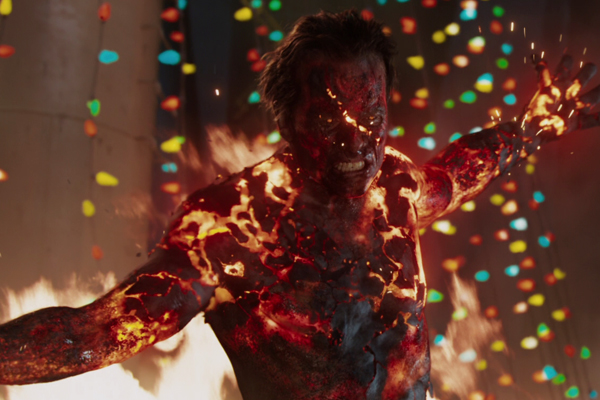
In 2013's Iron Man 3, Aldrich Killian was the main villain. Played by Guy Pearce, Killian was a disabled man who invented the powerful Extremis formula to cure his disability. Having attempted to pitch the idea to Tony Stark years before the events of the movie, he resented the fact that Stark rejected his idea and made him his enemy once he had perfected it. The two did battle - each with a little help from their friends - in the movie's final scenes. Killian was ultimately defeated, but it came at the hands of Stark's girlfriend Pepper Potts, as she re-emerged from what looked like a fiery demise, due to the Extremis that Killian had infected her with saving her life. What should have happened is that, after thinking his body had accepted the Extremis formula, the whole thing was revealed to be flawed and he should have exploded due to his body rejecting it like all of his failed test subjects. That would have been the ultimate comeuppance for his crimes.

4. He Shouldn't Have Died At All (General Zod)

The death that caused the most uproar in this list was undoubtedly General Zod's at the hands of Superman in 2013's Man of Steel. In the final battle between the two Kryptonians, Metropolis was practically destroyed already when Zod used his heat vision to attempt to kill an innocent family. In his desperation, Superman snapped the villain's neck, killing him instantly. Given Superman's general no-killing policy, this undoubtedly seemed a bit much for his first movie (at least his first movie in the DCEU franchise anyway). It would surely have been better for Zod not to have died at all. He could have been depowered, apprehended or banished to the Phantom Zone. That way, not only would fans have been satisfied that Superman didn't murder anyone, there would also have been realistic scope for Michael Shannon to return as Zod in the franchise (as opposed to the rumoured idea of his corpse being used to create Doomsday in a future movie, which has never happened in the comic books).

3. Killed By Iron Man (Ultron)

2015's Avengers: Age of Ultron saw the titular robotic villain inadvertently being created by Tony Stark, when he was trying to "put a suit of armour around the world", in the form of a friendly but powerful robot army. Of course, his work took on a life of its own without his input and subsequently saw fit to destroy humanity, deeming it as the main reason that world peace would never happen. In the end, it was Paul Bettany's Vision who finished the villain off. Not only did he cut Ultron off from the internet, so that he couldn't live on in an electronic form and build himself a new body in the future, he also landed the killing blow on the final Ultron drone. Surely, given that Tony Stark created Ultron, it would have been more apt for him to have landed the killing blow. The whole "destroying the monster of your own creation" thing is a long-running theme in fiction and it would certainly have fit well in this scenario.

2. The Aether (Malekith)

Christopher Eccleston is a superb actor, so it really was a shame to see him wasted as Malekith in the Marvel Cinematic Universe. He was the main villain in 2013's Thor: The Dark World and he had a plan to use the Infinity Stone known as the Aether to plunge the entire universe into darkness and restore his race of Dark Elves to dominance. Of course, he failed, as the combined efforts of Thor, Jane Foster and Erik Selvig saw him transported to the realm of Svartalfheim and crushed under the weight of his own gigantic ship - but that's not how he should have died. Malekith was weak as hell (the poorest villain in the MCU, undoubtedly) and shouldn't have been considered powerful enough to wield the Aether in the first place. It should have vaporised him when he tried to harness its power, as that would have emphasised just how powerful the Infinity Stones are - something that the MCU has spectacularly failed to really get across so far.

1. The Ultimate Nullifier (Galactus)

Let's be brutally honest, this version of Galactus should never have existed in the first place but, seeing as it did, you have to question the nature of its demise. It appeared in 2007's Fantastic Four: Rise of the Silver Surfer and, unlike the gigantic humanoid version in the comic books, it was presented as a ridiculous gigantic cloud that consumed planets by engulfing them. Still, like the comic book version, it had its own Heralds - in the form of the titular Silver Surfer in this instance - and, eventually, the movie version of the shiny character turned against Galactus, realising that what he was doing was wrong. The Surfer used all of his power - which had been granted to him by Galactus, remember - to destroy his master, which shouldn't even be possible. In the comics, one of the only things Galactus fears is the Ultimate Nullifier - a weapon capable of making anything it is fired at cease to exist. The Fantastic Four should have got their hands on it and used it against Galactus - or Reed Richards could even have built the movie version of the device. Either way, having Galactus' lesser-powered Herald be able to kill him was simply ludicrous. What do you think? Should these villains have died in different ways? Which other comic book movie villains didn't die the way they should have? Have your say in the comments section below.

Contributor
Contributor

I'm a Tottenham Hotspur fan who loves comics and comic book movies.