12 Unanswered Questions From Famous Movies That Are Still Killing Us
You wanna know how I got these scars?

What's the deal with all the ambiguity in movies, anyway? Real men don't mess around with the unknown - they demand answers. Facts. Resolutions supported by hard evidence. What's so good about leaving things up to the imagination? Do we really need that?
In the cases of pretty much every movie ever made, then, real men are kind of screwed, given that motion pictures have really got a thing about not explaining every little detail, and occasionally opt to leave things unexplained on purpose, so you can spend the rest of your life pondering the answers.
So although we're really not supposed to know the answers to questions I've assembled for inclusion on the list, all of which were purposely left unresolved in a bunch of famous movies for good reason, we still want to sort of (definitely) know the answers, because that's the point, right?
Why were they left up to the imagination if weren't supposed to want to know? To hell with artistic integrity! There's far too much ambiguity in the universe already!
Just tell us the answers to these nice little questions and we can all get on with our lives once and for all, movies. Thank you.
12. What's In The FedEx Box? - Cast Away
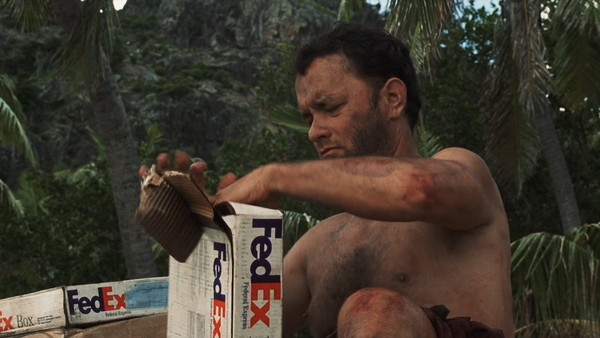
Cast Away is a movie directed by Robert Zemeckis and starring Tom Hanks, a kind of half-motion picture, half-advertising campaign for what is depicted as the world's greatest courier company ever, FedEx, because that's what Hanks' character, Chuck, does for a living: he's a FedEx delivery guy, and a bloody good one.
Anyway, Chuck ends up getting stranded on a desert island for a while, along with a bunch of FedEx packages, and although he opens most of them, he opts to keep one closed as a means of survival: he will deliver that package. It's something to root for, and boy do we want to know what's inside. At the end of the flick, Chuck does deliver the package, but - to our dismay - we don't get to find out what was contained within its cardboard walls, despite the fact that it's the one thing we all really cared about (except for Wilson).
Of course Zemeckis would leave it up to the imagination, though. The director once joked that it was "probably a satellite phone," which was funny until we all remembered that he hadn't told us, and was it really a satellite phone, Robert Zemeckis? Seriously. Tell us.
11. What's The Deal Between Budd & Bill? - Kill Bill, Vol. 2
In Kill Bill, a former assassin (nicknamed "The Bride") sets out to wreak revenge on her former associates, all of which turned up on her wedding day, massacred the wedding party, and left her for dead. Two of these former associates are brothers, the titular Bill, and his younger sibling, Budd.
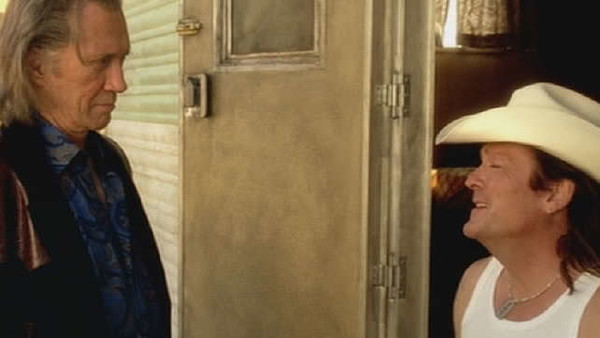
These characters don't share very many on-screen moments, but there's something going on between these characters that writer Quentin Tarantino never outlines fully. We're intrigued. That's to say, there's a scene at the beginning of Kill Bill, Vol. 2 where Bill comes to Budd's trailer in the desert and warns him that the Bride is on route. Budd simply states that she probably deserves her revenge.
Bill then reveals that he and his brother haven't spoken in a long time and that Budd needs to get over being mad at him ("Can't we forget the past?") having fallen out over... well, something. Whatever it is, it has to have been pretty darn bad, given that Budd lies and tells Bill that he pawned his Hanzo sword (a priceless gift from his brother) to hurt him.
10. Was The Joker's Scar Story True? - The Dark Knight

The Joker is one of the most purposely ambiguous characters in all of fiction - we're not supposed to know why or how the Joker became the delinquent that we've all become oddly obsessed with these past few years, because that's the point. Still, are you telling me that you're not the slightest bit intrigued as to what, exactly, happened to this man in order for him to transform into such a crazed, deranged maniac (one with a presumably genius level I.Q, at that)?
The Joker tells a little story in The Dark Knight, of course, which gave rise to his popular catchphrase: "Why so serious?" In the creepy little tale, he describes a scenario where his father came home once, attacked his mother, and then branded a knife at him, all the while repeating the line "Why so serious?"
We're not told whether or not this story has any truth to it, though, and knowing the Joker it might just be his equivalent of Jules' Ezekiel 25:17 speech: some cold-blooded poop to say to a motherf*cker before he pops a cap in their ass (or a pencil, perhaps).
9. What Did Bob Whisper To Charlotte? - Lost In Translation

Lost In Translation is a movie about a washed-up film star, Bill Murray (I mean "Bob Harris"), who spends a week in Japan with Scarlett Johansson, essentially living out pretty much every male fantasy. Johansson plays Charlotte, a recent university graduate who has probably married the wrong man, and as a result, ends up bonding with Bob whilst the two of them do very Japanese things, like, uh, karaoke and digesting weird foods.
At the end of the movie, it's time for Bob to go back to the United States to be with his wife and children, and he leaves a sad Charlotte alone in the hotel after they share an underwhelming goodbye in front of Bob's PR people. What seems like it's going to be a downer ending suddenly flip turns, though, as Bob - on route to the airport - spots Charlotte walking on the street, jumps out of his car, and whispers something in her ear. She smiles, they kiss, it's great. But what in Francis Ford Coppola's name did Bob say to Charlotte?
Search the internet, sure - you'll find all sorts of hackneyed attempts to increase the audio during this scene and figure it out. The point is, though, that we're not supposed to know what Bob said to Charlotte, otherwise we'd have been allowed to listen in the first place. The fact that it's private makes it ultimately great, but also super-annoying. We can't know, but it doesn't stop us from really, really wanting to find out the words spoken here.
8. Who's Side Was George McHale Really On? - Indiana Jones And The Kingdom Of The Crystal Skull

Indiana Jones and the Kingdom of the Crystal Skull is a movie that set out to show us what a once-great character looks like when he tries to go on adventures as a much older man, to mostly poor results. In his fourth outing, Indiana Jones (Harrison Ford) finds himself trying stop the Russians from doing very Russian-y things in the '50s, and finds himself teamed up with pretty much the most intolerable group of oddballs and freaks you've ever seen in an adventure movie.
Yes, long gone is the awesome gang from Last Crusade. Here we're treated to a mentally-deranged professor, a soccer mom, Shia LaBeouf (you get why that's annoying), and a character played by Ray Winstone called George McHale, who may or may not be a good friend of Indy's, depending on what minute of the day it is.
That's to say, McHale, surely the most irritating sidekick this side of Jar Jar Binks, constantly switches his allegiance over the course of the movie, until there's even a joke about the fact that he's a "double double agent," and haha, won't the dads in the audience love that? By the end of the flick, though, we're still none the wiser. Big fat sigh.
7. Did Mookie Do The Right Thing? - Do The Right Thing

The point of Spike Lee's greatest ever film, Do The Right Thing, is to make your own mind up as to whether or not the central character, pizza delivery guy Mookie, does the right thing in the last moments. If you haven't seen the flick, this point comes when Mookie (played by Spike Lee) throws a trashcan through the window of his boss' restaurant and starts a riot.
Throughout the film, we're shown that his boss, Italian restaurant owner Sal, respects Mookie, and we're led to believe that Mookie respects Sal, too. Tensions rise, though, when Sal is accused of being racist. I'm not downplaying the purposely ambiguous nature of this movie's ending.
There are two sides to the argument. Did Mookie purposely save Sal's life by starting the riot, essentially distracting the crowd from attacking him? Or was he just siding with the rioters, full-stop? Here's the reason I want an answer to a point that comes down to opinion, though. During an interview, Spike Lee was asked whether or not Mookie did, in fact, do the right thing, only to reply: "No black person would ever ask that question."
So what are white people missing? What's the definite answer? Lee's wording suggests, at least, that he knows, and it's going over some people's heads.
6. What's In The Box? - Barton Fink

Barton Fink is perhaps the strangest movie in the entire Coen Brothers canon, and that's saying something. Starring John Turturro as a playwright who moves to Los Angles to become a screenwriter, this movie is about as ambiguously-packed as they come - that's to say, Barton Fink has been perfectly crafted as an exercise in "make your own mind up," but that doesn't stop us from wanting to know the answers to some of its more intriguing matters.
Namely, the box. During Barton's stay in Hollywood, he shacks up in a weird old hotel, and befriends a cheery salesman named Charlie, played by John Goodman. At one point, Charlie leaves the hotel, and bestows a mysterious box on Barton before he leaves. Later, it's revealed that Charlie is actually a notorious serial killer, though what's in the box is ultimately never revealed, despite Barton's own inquisitiveness.
Is it a head? It's probably a head. The Coens have never talked at length about the symbolism inherent to the box, which either means it's either nothing, or... well, it's a head!
5. What Happened To Bo Peep? - Toy Story
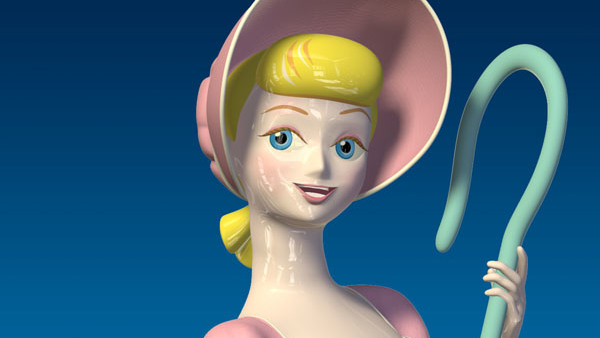
Toy Story 3 is (hopefully) the final entry in the otherwise flawless Toy Story 3 franchise, a movie so good that it genuinely has the ability to make grown men cry, over and over again. The narrative here is fairly adult-minded for a "children's movie" - our heroes, the toys of Andy's room, are no longer getting the playtime they deserve, given that Andy is a teenager now, and getting caught playing with a cowboy doll would probably be enough to get the poor kid sectioned.
At the beginning of the movie, we're introduced to Woody and friends' plight: they're lonely and underused. And then, in a brief line of dialogue, we're treated to the news that some of the characters from the original movies - including Bo Peep - are no longer with them, which was basically Pixar's way of saying: "Yeah, there are too many characters in this movie for it to work, so some of them have to die."
It's understandable, then, but it's still frustrating as hell, given that Bo was Woody's love interest for two whole movies. What happened? How 'bout some closure?
4. Who's Baby Was It? - The Departed

In Martin Scorsese's The Departed (in itself a remake of Hong Kong thriller Infernal Affairs), Leonard DiCaprio (Costigan) -a police officer - goes undercover as a mole, whilst Matt Damon (Sullivan) - a gangster - joins the police force as an informer. If it sounds confusing, it isn't: Scorsese masterfully handles the material, resulting in one of the best gangster movies in recent years.
Did I mention that these two characters both end up sleeping with the same woman? Yes, both Costigan and Sullivan fall for the same lady, Madolyn, at different points in the movie. Eventually, it's revealed that Madolyn has fallen pregnant, though we're never specifically told which of her two lovers the baby actually belongs to.
Though it's hinted in the movie that Sullivan has trouble in bed, whereas Costigan didn't, I wouldn't put it past Scorsese to have made this ambiguous to drive us a little bit crazy. Though the odds say it's Costigan's kid, who knows?
3. What's The Punchline To Bender's Joke? - The Breakfast Club

The Breakfast Club is considered to be one of the best John Hughes movies from his '80s period of awesomeness, a hilarious but touching comedy/drama about a bunch of misfits who briefly put aside their differences to come together and, like, bond for the sum of a single detention.
One of the characters, John Bender, is in detention for pulling the fire alarm and evacuating the entire school unnecessarily, and at one point in the movie he begins to tell a filthy-sounding joke. What we hear of the joke goes as such: "A naked blonde walks into a bar with a poodle under one arm and a two-foot salami under the other. She lays the poodle on the table. Bartender says, 'I suppose you won't be needing a drink.' Naked lady says..." Of course, Bender is crawling through a vent at the time, and it just so happens that he falls through the ceiling at the exact moment he should have been delivering the punchline.
What did the naked lady say!? Please, God, tell us.
2. Where Did The Chicken Come From? - The Hangover

The Hangover tells the story of three friends who awake the morning after an insane bachelor party to find that they can't remember a thing, and must piece together various clues found in their hotel suite in order to find out what happened to the missing groom. This makes way for a variety of relatively wacky set-pieces, one of which includes a tiger, and another with former boxer Mike Tyson.
Whereas most things are explained in the end, though, one thing isn't: the chicken. Yes, amongst all the weird and wonderful things that the Wolf Pack discover in their room after their epic night is a chicken.
On first viewing, as with all the other stuff they wake up to find, audiences probably thought they were going to be treated as to an explanation as to why there was a chicken wandering about. Nope: none such explanation is ever given. There are various rumours circulating around the web as to why the chicken was doing in the movie, but no official reason - from a story perspective - has ever been stated. Tiger bait, perhaps?
1. Did Max Throw Himself Into The Garbage Truck? - Once Upon A Time In America
Once Upon A Time In America is a less popular but totally awesome crime movie that ranks up there with The Godfather. Butchered and edited into versions that didn't do it justice for a long, long time, it's now possible to actually watch the film as its director, spaghetti western maestro Sergio Leone, originally intended, so go do that if you haven't already. I'll wait. A sprawling epic if ever there was one, right?
The movie tells the story of Noodles, a gangster played by Robert De Niro, as we follow the span of his entire life, from plucky teenager to regret-filled adult. To explain the plot of Once Upon A Time In America in a few paragraphs would be like trying to tell you how to solve a Rubick's cube without mentioning the names of any colours, so I won't bother. Let's just say it contains a large ensemble cast, and that in the final moments of the movie, Noodles confronts his old friend, Max (James Woods), who feels guilty about the way he treated Noodles when they were younger men.
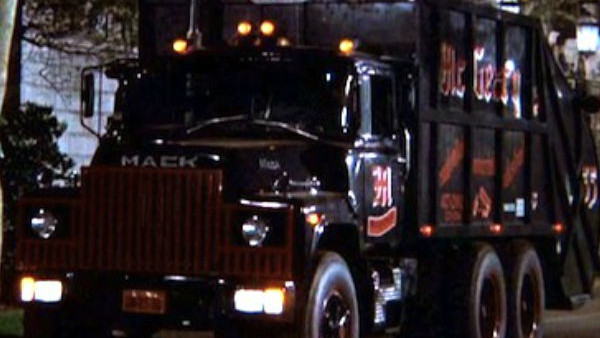
We're totally primed for a final resolution. Just when we think Noodles is going to kill Max, though, he doesn't, and the two characters part ways. Noodles goes outside, and then there's a weird scene with a garbage truck, where it's implied that Max - who we see briefly walking next to it as a drive does the street towards Noodles - throws himself into the back of, committing suicide.
There's no proof of this, of course, and nobody is exactly sure what this moment is about. Even James Woods said he didn't know what happened and that a different actor was used to portray him to make it unclear. Geesh.