12 Things You Learn Rewatching Live And Let Die
Rapey Bond and blatant racism. Oh my!

Our weekly James Bond rewatch series continues with the eighth entry into the franchise, 1973's Live and Let Die. The third of four Bond films directed by Guy Hamilton (Goldfinger, Diamonds Are Forever), it's of course best remembered for introducing audiences to Roger Moore in the 007 role, who remains one of the best-loved - if almost most divisive - Bonds to date.
Though it boasts one hell of a title song from Paul McCartney and Wings, Live and Let Die is a sloppy mixed bag for the most part, if certainly not as insufferable as the previous outing, Diamonds Are Forever.
It's unquestionably one of the most singularly offbeat, left-field Bond flicks, and to that end incredibly uneven despite its intriguing uniqueness. Most of the alluring elements sadly don't quite live up to their full potential, hinting at greater things to come for Moore while squandering most of the game supporting cast.
But the movie has its loyal cult of unapologetic fans regardless, and to many its campy, absurd delights outweigh its dodgy attitudes to both women and people of colour...
12. Bond Isn't Even In The Pre-Title Sequence
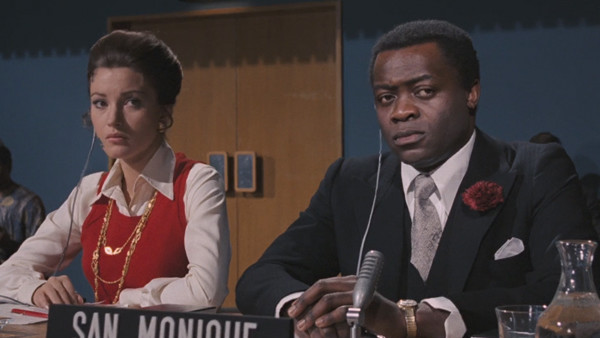
Live and Let Die is often referred to as "the weirdest Bond movie", and that's a precedent it seems to embrace from its very first scene.
In a rarity for the franchise, Bond himself doesn't even appear in the pre-title sequence (unless you count the gun-barrel, of course), with the focus instead squarely on three MI6 agents who are assassinated at the behest of the villainous Dr. Kananga (Yaphet Kotto).
Hell, Kananga himself and his psychic mistress Solitaire (Jane Seymour) are even briefly featured in the sequence, but 007 doesn't show up until we're on the other side of the titles (where he's in bed with his latest conquest, naturally).
Considering the pre-title set-pieces typically depict Bond on his latest sortie, it's pretty odd that this one rather plainly showed three anonymous spooks being murdered in undeniably silly ways (a sonic weapon in an earpiece, a stabbing and stealthy placement inside a coffin, and a bite from a poisonous snake respectively).
11. The Bond Girls Are A Disappointing Waste

The two main Bond girls in Live and Let Die had potential to be some of the series' most intriguing up to this point, but instead they're thoroughly wasted due to atrocious characterisation and some totally blatant sexism.
First up is the female lead, Solitaire (Jane Seymour), who is unquestionably one of the most beautiful Bond girls ever. However, Seymour's striking looks and steely acting talents are wasted on a depressingly passive love interest who has virtually no agency of her own.
She rarely does much of her own accord, is straight-up manipulated by Bond - but more on that later - and is disappointingly forgettable despite her beauty, psychic abilities and weird outfits.
Solitaire is nevertheless leagues ahead of CIA agent Rosie Carver (Gloria Hendry), who initially appears to be a bumbling dolt that falls into bed with Bond all-too-quickly, though it's soon revealed that she's in fact working for Kananga as a double agent.
Unsurprisingly she doesn't last long, being shot dead by Kananga in order to keep her mouth shut. Her fundamental incompetence is all the more disappointing as Carver was the first ever black Bond girl yet barely even made a dent.

10. The Blaxploitation Homage Has Aged Horribly
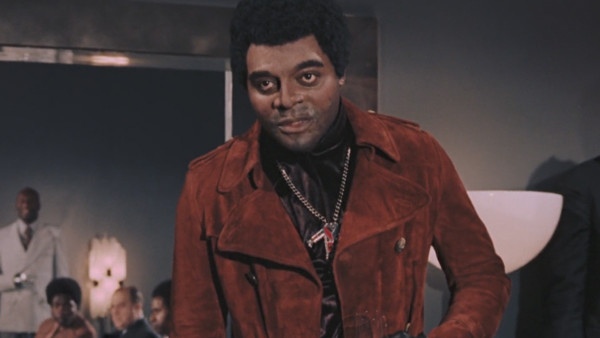
Though the earlier Bond movies aren't exactly known for their lightness of touch when it comes to racial sensitivity - Dr. No's "fetch my shoes" moment will never not be toe-curlingly cringe-worthy - Live and Let Die bizarrely takes advantage of the blaxploitation cinema boom of the era.
Much of the narrative revolves around drug trafficking, there's a clear stylistic and aesthetic influence from 1971's iconic Shaft, and at one point Kananga even disguises himself as a fictional black gangster stereotype, Mr. Big, complete with a latex face mask and stereotypically "ghetto" accent.
Though the film does deserve credit for boasting one of the most racially diverse casts of any Bond film, what was at the time a clear cash-in on a genre trend is decidedly more uneasy when viewed today.
The stereotypes, the fact there's only one positive black character with a speaking role - but of course, he's Bond's hired help - and the sheer incongruity of it all within the Bond canon makes it a tough proposition almost five decades later.
9. Kananga Is A Total Bore

Yaphet Kotto is one hell of an actor, so while he was perfectly cast in the role of Kananga, the character as written is unfortunately a bit of a drag, and Kotto can only do so much to bring him to life.
Despite his stature as the mastermind dictator of San Monique, Kananga is an oddly subdued character whose presence pales in comparison to the several Blofelds who came before him. Even in his own movie, he struggles to compete with the far more memorable Tee Hee (Julius Harris) and Baron Samedi (Geoffrey Holder).
It's a waste of an actor of Kotto's caliber, honestly, and a shame considering he's the only frontline black Bond villain to date. The charm and sense of danger are both sorely lacking in this overly verbose windbag. Disappointing to say the least.
8. Bond Commits Rape By Deception

Revisiting Sean Connery's Bond movies has been an unsettling reminder of just how atrociously 007 views women in his earlier forays in particular, and sadly Roger Moore's first outing is no exception.
The most awkward and eyebrow-raising moment in Live and Let Die sees Bond convincing Solitaire that they have to sleep together after showing her a tarot card deeming them "The Lovers." As the two get down to business, it's revealed that Bond tricked her with a duplicate pack, and the cards weren't in fact willing them to be together.
You can mock Solitaire's beliefs all you like, but the fact that she had sex with Bond while believing it to be fated only to realise 007 was tricking her means she was deceived into intercourse. The law has a phrase for that: rape by deception.
The movie tries to lampshade it by indicating that Solitaire enjoyed it and wants more, but when Kananga confronts her about shagging Bond later, she tells him she had no choice but to follow the cards. Oof.
It's all the worse when you remember that Solitaire was a virgin prior to her tryst with Bond, which also causes her to lose her psychic abilities. Beyond awkward.
7. It Features The Series' First Profanity
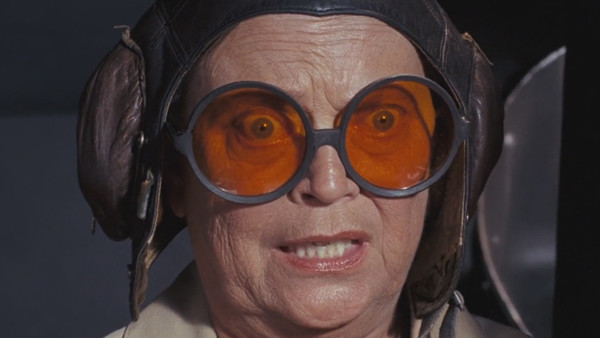
Though the Bond series had featured some incredibly mild swearing ahead of Live and Let Die - namely "bloody" and "b****" - this is the first Bond film to feature some actual, unambiguous swearing, which can be pretty surprising to those not expecting it.
First off, poor Mrs. Bell's (Ruth Kempf) flying lesson is interrupted by Bond commandeering her plane, after which he drives it through a closing hangar door and snaps its wings off. Out of nowhere, she lets out an effusive, "Holy s***!"
The other surprising - yet cleverly concealed - potty-mouthed moment occurs during the later speedboat chase, and as Bond's speedboat hurtles over the head of one Sheriff J.W. Pepper (Clifton James), Pepper says, "What the...", before quite clearly mouthing the f-word.
There's nothing really wrong with it - after all, M (Judi Dench) dropped a very appropriate f-bomb in Skyfall - but to modern audiences expecting these earlier movies to keep things fairly clean, it's pretty shocking that they got away with this.
6. Sheriff J.W. Pepper Might Be The Worst Bond Character Ever
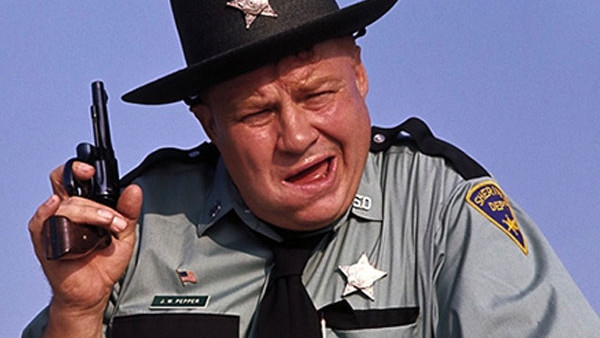
Though it's no secret that unruly Louisiana Sheriff J.W. Pepper is one of the most divisive characters in the entire Bond franchise, revisiting Live and Let Die is a stunning reminder of just how annoying he is.
Clearly intended as an attempt by the filmmakers to widen the series' appeal in America, Pepper is nevertheless nothing more than a grating southern caricature, to the point that he's even straight-up racist to a black assailant he pulls over, suggesting he probably stole the car he's driving.
He's loud, obnoxious, goofy as hell and adds virtually nothing positive to the movie, but Guy Hamilton somehow liked him enough to bring him back for the next movie, The Man with the Golden Gun. Lord have mercy...
5. The Speedboat Chase Is Awesome

Though there's a disappointing lack of action in the movie's first two acts, the speedboat chase that kicks off reel three is an absolute belter, and by far the best set-piece in the entire film.
After barely surviving an encounter with some alligators in Louisiana, Bond takes off in a speedboat towards San Monique while being doggedly pursued by Kananga's men.
Thrillingly, dynamically directed by Hamilton, the sequence has awesome aerial stunts, an amusing aside where the boats ruin someone's wedding, an epic police car pile-up, and finally, one of Kananga's goons getting doused with gasoline and inexplicably blown up. Glorious.
It may be the only particularly memorable and remarkable action sequence in the entire movie, but with its surprising length and wealth of "extras", it helps compensate a little for those anaemic earlier sections of the film.
4. Baron Samedi Was A Wasted Opportunity

San Monique's creepy voodoo priest Baron Samedi is best remembered for his undeniably awesome look and general screen presence, so it's a bit of a shame that he's barely in the movie and he could be removed entirely without putting much of a dent in the plot.
Actor Geoffrey Holder managed to walk a fine line that made Samedi both creepy and deliciously campy, but because the movie treats its supernatural elements with such ambiguity, it's hard for Samedi to make much of a real, visceral impact beyond his theatrical abilities.
Honestly, it would've been way cooler if the movie just leaned fully into its silliness and made Samedi the primary villain, because he was certainly far more imposing and interesting than Kananga. What a waste.
3. Kananga's Death Is Absolutely Hilarious

Say what you will about Kananga, but the guy's death is one of the most howlingly, brilliantly hilarious in the entire Bond franchise. During an underwater tussle, Bond manages to slip a gas pellet down his throat, causing Kananga to violently inflate, propelling him out of the water and into the air, where he pops into a curiously bloodless mess.
The blatant use of an inflatable doll and the goofy zoom into it as it explodes ensure this death is impossible to take seriously, no matter that it's actually incredibly unsettling when you really think about it.
It does at least lead to an hilarious moment that's actually intentional, as Bond quips, "Well, he always did have an inflated opinion of himself."

2. The Final Shot Is The Series' Weirdest
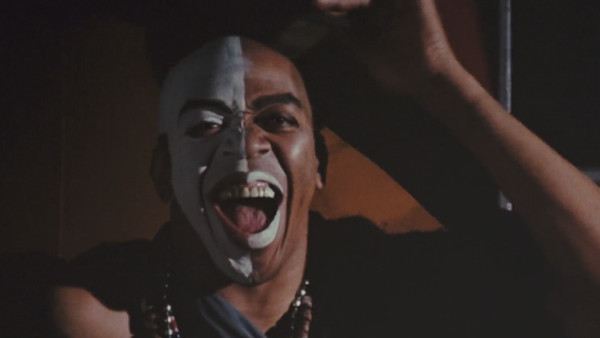
The vast majority of the Bond movies end with Bond in bed with a woman in some exotic locale, but Live and Let Die again dared to do something different.
As Bond and Solitaire cuddle up on a train heading home, we cut to the outside of the train, where Baron Samedi is sat, laughing to himself as the credits roll.
It's an incredibly strange final image, largely due to its ambiguity, yet also a hauntingly gorgeous visual on which to end the film, as is totally uncharacteristic for the series.
Though it clearly wasn't intended as anything more than a cute little nod to Samedi's apparent immortality, it's like nothing else the franchise has ever closed up with.
1. It's A Rough Start For Roger Moore

All things considered, Roger Moore didn't exactly have the best material to work with in his first outing as 007 (or really, most of his movies if we're being totally honest).
Though Moore acquits himself admirably and proves himself worthy of the Bond mantle, he's just not given much interesting to do, and that aforementioned rape business does him no favours either.
Moore would thankfully have far better - and also far worse - outings over the years, but for those seeing him up to bat for the first time, Live and Let Die sadly wasn't the best look.
What do you think of Roger Moore's first outing as Bond? Shout it out in the comments!