12 Movies That Were Ruined By One Dumb Decision
3. Aliens - Indiana Jones And The Kingdom Of The Crystal Skull
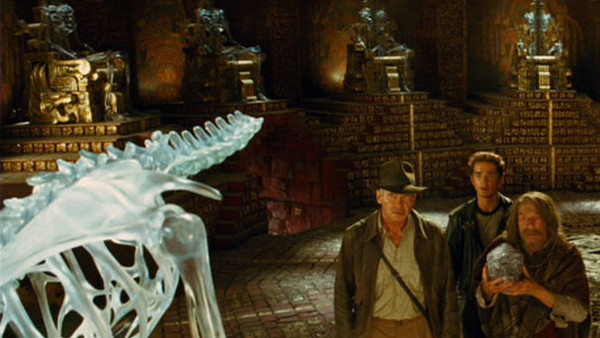
Indiana Jones is a joint venture between writer George Lucas and director Steven Spielberg, with both parties having to be in total agreement of where to take the character. Which, in actuality, translates to Lucas sitting in a huff until Spielberg relents and makes whatever movie George wants. That's why it took so long to get a fourth Indiana Jones movie; since way back in the early nineties, Lucas was adamant that the movie would deal with aliens, with a 1993 draft titled the unbelievable Indiana Jones And The Saucermen from Mars. Seriously.
Spielberg originally refused stating he was done with aliens after Close Encounters Of The Third Kind and E.T. The Extra Terrestrial, although we think the main motivation was that it was a f**king stupid idea. And you know what? It is f**king stupid idea. And this is a series whose first entry ends with God swinging down to kill the Nazis.
It's not that aliens don't have a place in the Indy universe (although that is part of it), but that they don't bring with them an inherently interesting mythology. The Ark of the Covenant, the Sankara Stones and the Holy Grail have an exciting-yet-grounded story, which, even with the Crystal Skulls added, extra-terrestrials don't. Maybe (and this caveat keeps Indy 4 from the top spot), had the film followed its original plan of invoking fifties B-movies rather than simply copying earlier installments, it could have worked, but it's doubtful. Many of the film's dumbest moments (yes, including the lead-lined fridge) come from those early ideas also, although it's the alien one that renders the plot fundamentally uninteresting.
2. The Live Singing - Les Miserables
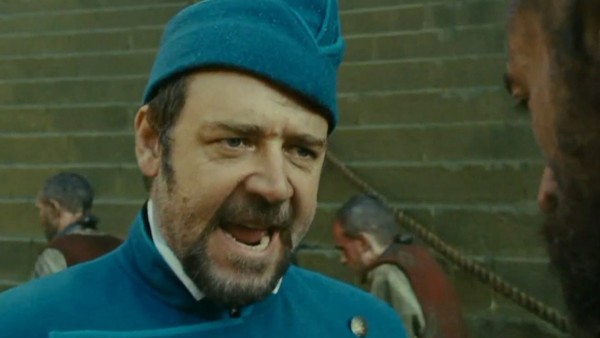
On the face of it it sounds like a genius idea. Instead of having the actors mime on set to pre-recorded songs, why not have them belt out the numbers there and then? You get a more honest performance (whatever that means), as well as unique selling point to trot out during the press junkets.
And, in Les Miserables defence, to some degree the conceit of the actor's singing every line of the musical live works. Anne Hathaway's I Dreamed A Dream is certainly more impactful thanks to her belting it out rather than mouthing the words and it kinda excuses Russell Crowe's, shall we say questionable, delivery.
But for every gain there's a much bigger loss, with the trick making the movie feel less epic than the restricted stage musical on which it's based. The cinematography of Les Mis comes in two flavours - so close to the actor's face you can almost smell their breath and massive wide shots dripping with CGI - which after two and a half hours gets incredibly tired. And while this may be a creative decision made by director Tom Hooper, we're more inclined to think it was done because of the restrictions placed on the film by the amount of recording equipment present on set; you can't have the boom mike in shot after all.
1. Reimagining Everything - Man Of Steel

Reimagining existing properties is the bread and butter of Hollywood franchising. The Amazing Spider-Man mixed things up so much it was afraid to use "with great power comes great responsibility" and Maleficent made the self-proclaimed mistress of all evil into a wronged anti-hero, repurposing the animated Sleeping Beauty as propaganda.
The only ones who don't seem to be getting in on the act are Marvel, who understand that audiences want to see things that are new. Shocking really. Most of this stems from the success of The Dark Knight Trilogy, which jettisoned much of what audiences expected from Batman and made things incredibly sombre (the Joker literally blows up the love interest), but misses the fact that not only was there a precedent for this in the source (Batman: Year One is as grimy, if not as enjoyable, as Nolan's films), but it was the only way the series could continue in any legitimate way. Batman And Robin had essentially smothered the franchise with a sickening day-glow, pun-infused vibrancy that a gritty reboot was the only way forward.
No one has misunderstood this more than the studio behind those films themselves, Warner Bros. Ignoring the inevitable !*$%-up that the D.C. Cinematic Universe will be, with Man Of Steel they simply followed the Dark Knight vein of CHANGING EVERYTHING. Superman wasn't the hippest superhero around, but simply watching Richard Donner's first movie and going "let's just do the exact opposite of everything" isn't going to work. Similar, yet painfully different mythology and a sombre, fun-free tone made the whole thing a slog, with its occasional glimmers lost in the murk.
Worst of all? The one thing they kept was those bloody glasses.
-
Do you agree with out assessment? What other movies were let down by one bad decision? Let us know down in the comments.