12 Incredible Horror Movies With No Jump Scares
These horror films don't need cheap tricks to send chills down your spine.

Horror fans are often divided on the issue of jump scares, with some calling them cheap while others point to examples of films that use them effectively. The Conjuring, for instance, was incredibly jump-heavy yet also a critical success.
Meanwhile, the most recent entry in the Conjuring Universe was a critical failure due to its reliance on jumps while adding nothing else to the mix. The Curse Of La Llorona currently stands at 32% on Rotten Tomatoes, taking a classic creepy story and telling it through a series of predictable and boring jump scares - most of which you've seen in the trailers.
When a film with so much story potential fails this hard, it strengthens the argument that jump scares are becoming overused. Even some of the best horror movies of all time include at least a handful of minor jumps. For instance, Alien has 11 while The Exorcist only has one less. The Omen and Audition are less shock-heavy, but still have one jump scare each.
If you're looking for movies with no jump scares at all, however, there are at least a few options available. The following 12 films vary in terms of fright level, genre adherence and general quality. All of them will make an impact without once trying to make you spill your popcorn.
12. The ABCs Of Death (2012)

Arguably the least "incredible" film on this list, this anthology containing 26 shorts by various directors will nonetheless be worth at least one viewing for avid fans of the genre. Most of the shorts fail horrendously to hit their mark, but a few will linger in the viewers' memories as solid examples of how to make your audience experience true dread with just a few minutes' worth of story.
Not all shorts contained within The ABCs Of Death are necessarily horror-themed. The film also contains oddball comedy (K Is For Klutz), arthouse weirdness (O Is For Orgasm), and cutely innocent romance (F Is For Fart). Meanwhile, some of the more traditional horror entries are unsettling for all of the wrong reasons. L Is For Libido contains more semen than some pornographic films, not to mention a disturbing moment of child sexual abuse. Z Is For Zetsumetsu relies on similarly uncomfortable sexual imagery, while X Is For XXL offers nothing more than a non-stop cringe fest.
Other shorts, however, give the film a bit more value. R Is For Removed, one of the strangest shorts on offer, tells a bizarre story that will test the limits of your imagination. U Is For Unearthed offers a unique take on vampire movies, in which the creature is the true victim of the story. H Is For Hydro-Electric Diffusion is basically a live-action cartoon, and Lee Hardcastle's claymation short, T Is For Toilet, is by far the best of the film's three toilet-themed entries.
Probably the most incredible aspect of The ABCs Of Death is simply that, out of 26 shorts, not a single one makes use of jump scares. Aside from that, this uneven anthology serves to expand your horizons and push your understanding of what horror can - and sometimes cannot - achieve. For as many of the shorts as you're inevitably going to hate, you'll find at least one or two that stick with you as fine examples of creative filmmaking.
You just might want to spread it out over a few sittings to help cleanse your palate after some of the more disturbing shorts contained within.
11. The Devil's Rejects (2005)

At 53%, The Devil's Rejects holds the highest Rotten Tomatoes score of all Rob Zombie-directed horror films. That might not be saying much, although the 78% audience score is much more noteworthy. Among both fans and critics, this sequel to House Of 1000 Corpses is typically considered better than its predecessor in nearly every way.
The Devil's Rejects replaces the cheesy shock scares of its predecessor with extended scenes of grindhouse sadism. While this bullet-filled road trip doesn't always feel like a horror movie, its roots in 1970s exploitation films will become especially obvious once the titular Rejects begin toying with a group of innocents at a motel. The culmination of this, in which a woman is forced to wear her late husband's face over her own, is among the most disturbing scenes Rob Zombie has ever directed.
More disturbing than anything, however, will be the tonal shift in the third act. Baby, Otis and Captain Spaulding were the villains of the first film, but in this film they're clearly intended as the protagonists. When they're hunted by an equally twisted and deranged sheriff, it puts the audience in the uncomfortable position of rooting for their escape. After a time, it will dawn on viewers with some sense of decency that they're rooting for a group who has committed not only brutal murders but also at least one highly disturbing sexual assault.
The Devil's Rejects is a true grindhouse film, but it's one that causes analytical viewers to question their motives for watching horror movies in the first place. There's something inherently sick about enjoying the tortures, murders and other crimes committed in this type of film. The Devil's Rejects understands that, and won't let you forget it for a moment.
10. A Girl Walks Home Alone At Night (2014)

With its fairly low body count, A Girl Walks Home Alone At Night isn't necessarily the most frightening film you'll ever see. Marketed as an "Iranian vampire western," it isn't really trying to be. Ana Lily Amirpour's directorial debut instead focuses primarily on romance, human nature, and a whole lot of tension. In fact, the scenes which offer the most fear of death are actually three scenes in which nobody dies at all.
In one of these scenes, The Girl (we're never given a formal name for Sheila Vand's chador-wearing vampire) taunts a young street urchin while speaking in a monstrous voice. Her goal is evidently to steal his skateboard, but the viewer won't know this since the character never explicitly states her motivations for a single murder in the film. Two other scenes offer tension with similar threats that don't immediately come to fruition, although one such scene does foreshadow the final death of the film.
These scenes offer enough tension to give this vampire film something of a horror vibe, but the film's human characters contribute to the tone as well. One of the most uncomfortable scenes involves a man named Hossein binding a prostitute's wrists and forcibly injecting her with heroin.
Adding to the discomfort, the character is played by Marshall Manesh, whom fans of How I Met Your Mother will know as Ranjit. Seeing an actor known for such a harmlessly lovable character engage in such wanton cruelty is world-shattering, yet his ultimate fate still feels more tragic than deserved.
A Girl Walks Home Alone At Night may not spend a lot of time paying tribute to its horror influences, but the world of the fictional Bad City is still a dark one. This is made clear from the very beginning, when protagonist Arash saunters casually by a mass grave without giving it a second look. Perhaps this film won't truly scare you, but the uncaring world that the characters inhabit will still leave you with a certain kind of chill.
9. Tusk (2014)

Kevin Smith didn't necessarily wow critics when he took a stab at horror with Red State, and he impressed even fewer when he made Tusk. The idea, first developed as part of Smith's SModcast, is fairly straightforward. A man finds an ad posted by a former sea adventurer and falls into a trap that results in his surgical transformation into a walrus. Since it's a Kevin Smith film, this relatively bare-bones plot line is stretched to 101 minutes with a lot of unnecessary dialogue.
Don't let that turn you off entirely, however. Justin Long's performance as an offensive podcaster and eventual victim is shaky at times, but watching him lose his humanity in more ways than one can be incredibly disturbing. Excellent performances by Michael Parks and Johnny Depp add to the film as well. Parks plays the both menacing and ridiculous Howard Howe, while Depp plays Guy LaPointe, the Québécois inspector obsessed with hunting down the killer. Their one scene together is more comedic than disturbing, but worth seeing nonetheless.
There are times when Tusk feels as if it can't possibly get any more insane, only to prove itself wrong moments later. This is especially true of the third act, in which Howe engages in a crazed ritual that he hopes will force his experiment to go "full walrus." Howe's endgame is revealed suddenly, with absolutely no foreshadowing, and the reveal of his final costume comes as a shock that's disturbing yet hilarious at the same time.
If you're the kind of person who watches horror movies for a sick laugh, you'll find more than a handful of scenes in Tusk that will give you what you're looking for. If you're merely looking for gore, the unsettling human/walrus hybrid will make your skin crawl. If you're of the mind that Tusk simply doesn't offer enough merit as a horror film, then at least Depp's take on a French Canadian accent will provide some strange entertainment.
8. The Blair Witch Project (1999)

With more recent films such as Paranormal Activity and V/H/S having normalized the genre, it might be hard for some younger horror fans to believe that found-footage films were ever considered scary. In 1999, however, The Blair Witch Project utilized its core premise in a way few films have pulled off since. Through viral marketing tactics, including a fake documentary entitled Curse Of The Blair Witch, the filmmakers managed to convince a decent number of moviegoers that The Blair Witch Project was 100% real.
The film hasn't aged wonderfully, although there are evidently still some who believe the film to be real footage discovered in the woods of Maryland. Today, the fact that you're watching an 82-minute improvisation of a 35-page script is immediately obvious, with most of the film consisting of repetitive arguments about whose fault it was that the main characters got lost in the woods. Most of the real horror moments don't occur until halfway through the film's runtime, and they're almost always followed by verbal acknowledgements of how ridiculous it is that the protagonist always has her camera on.
Nonetheless, certain aspects of The Blair Witch Project may still hit home. The ending never technically confirms the fictional legend at the heart of the film's premise, and the protagonists spend most of the film believing their antagonist to merely be a group of locals. Even then, the notion that there's anything truly threatening their safety isn't confirmed until 15 minutes from the end of the film.
From the perspective of The Blair Witch Project as a typical horror movie, these will strike some as terrible pacing choices. On the other hand, as a film that attempts to mimic real documentaries, these same choices are what made the film so convincing in the late '90s. You may not be one of the few who believes the legend of the Blair Witch, but that doesn't mean she won't cross your mind the next time you find yourself lost in the woods.
7. Wolf Creek (2005)

Despite a few somewhat convincing title cards at the end of the film, Wolf Creek isn't as true a story as it claims to be. It is, however, based on a very real series of murders committed by Australian serial killer Ivan Milat. The film's antagonist, Mick Taylor, is essentially meant to be something of a combination of Milat and television personality Steve Irwin.
Mick's goofy, caricaturized personality intensifies the reveal of his darkly psychotic true nature, resulting in one of the more terrifying killers depicted by post-millennial horror films. When he's not on-screen, he's hunting. When he is on-screen, he's typically engaging in thankfully brief (yet still deeply disturbing) scenes of torture porn. Most disturbing of all is that his "head on a stick" procedure mimics the actual fates of at least three of Milat's real-life victims. Caricaturized though he may be, Mick Taylor is an undeniably real species of monster.
Wolf Creek didn't fare well with all critics, and its low 52% on Rotten Tomatoes largely stems from beliefs by American critics that the film enjoys its exploitative violence a little too much. Even so, its seven nominations by the Australian Film Institute suggest that those who can overcome the discomfort of Wolf Creek's more unsettling moments will enjoy this well-made modern grindhouse flick.
Of particular interest to some horror fans will be the pacing. Unlike most slasher films, Wolf Creek doesn't truly turn into a horror movie until over just halfway through. Once the dread sets in, however, it doesn't let up until the very end. Just as the film's protagonists find themselves trapped in a non-stop fight for survival, you won't escape Mick Taylor's deranged punishments until he's good and done with you.
6. Rosemary's Baby (1968)
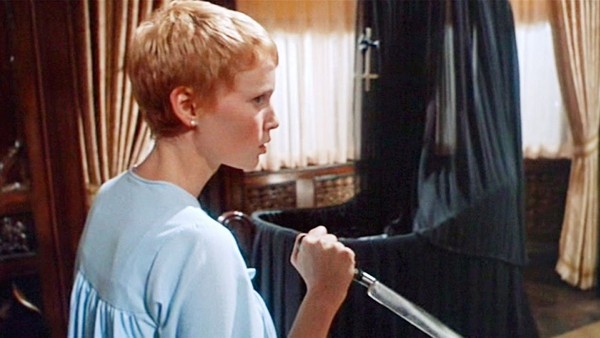
Roman Polanski's classic psychological horror has the highest Rotten Tomatoes score on this list, with a near-perfect 99% rating. Based on a novel by Ira Levin (think The Stepford Wives), it tells the story of a woman who grows increasingly paranoid that her husband and neighbors are plotting against her and her unborn child.
Not only does Rosemary's Baby contain no jump scares, it also contains none of the gore or violence often associated with horror films. Most of the fear comes from Rosemary's own paranoia, with simple moments such as a one-shot scene in a phone booth tricking the viewer into thinking they know what's going to happen next. Much like Rosemary, those watching this film for the first time will wonder at times if the central conflict is actually real, and those answers won't arrive until the very end.
This approach actually stems from loyalty to the source material. Levin's novels are deeply psychological, and Polanski uses that to his advantage in a way that other filmmakers don't. For instance, both film adaptations of The Stepford Wives make the protagonist's fate explicit, whereas the novel's ambiguity is largely responsible for its suspense.
Rosemary's Baby, meanwhile, never truly shows the child that plays such an important role in the story. Explicit answers are given regarding Rosemary's suspicions and the child's ultimate fate, but the true source of terror from beginning to end is simply fear itself. Other paranoia-driven films have tried to achieve something similar, but Polanski - aided by Mia Farrow's excellent performance as Rosemary - pulls it off with incredible success.
5. The Ones Below (2015)

David Farr's feature directorial debut reads primarily as a suburban psychological thriller, but a few key similarities to Rosemary's Baby give this tale of motherhood paranoia just enough of a horrific tone to qualify for this list. Farr blends the horror and thriller genres in a nearly Hitchcockian manner, keeping viewers in rapt suspense as they wonder whether protagonist Kate's new neighbors are truly plotting to steal her baby or if Kate has just developed a nasty case of postpartum psychosis.
New neighbors Jon and Theresa begin to take the shape of horror villains early on. There's something strange about them long before Kate has any real reason to suspect them of anything, and even before they have much of a motive. When Kate reveals that she didn't always want to be a mother, the couple replies with stern countenance and dark tones, judging Kate as if her uncertainty regarding motherhood is enough to warrant malice on its own. After Theresa loses her own pregnancy, the plot begins to take shape.
Similar to Rosemary's Baby, The Ones Below takes its time. Kate's paranoia doesn't develop overnight, but it still leads to a terrifyingly dark place. Most interestingly, the scariest moment isn't where you would expect it to be. The actual twist ending is disappointing, predictable, and drawn out for far too long. Just before that, however, is a false ending far more terrifying than anything else in the film.
The Ones Below won't scare you with violence, supernatural entities or gore, but it will show you a depiction of very real and very frightening problems experienced by thousands of new mothers every day. Whether you're more inclined to fear postpartum mental illness or simply the pressure of keeping a new child safe, viewers expecting their own children may find The Ones Below far more terrifying than Rosemary's Baby on the sole basis of its realism.
Even those without children may find themselves developing severe trust issues after a journey through Kate's paranoid mind. Did you really just lose your favorite Pickle Rick socks, or is your creepy new roommate playing mind games with you? After a horror-thriller like The Ones Below, you won't trust yourself to know the difference anymore. That may or may not have happened to at least one viewer, anyway.
4. The Silence Of The Lambs (1991)
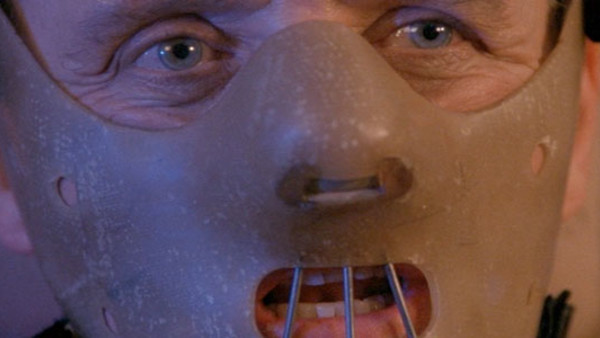
Most viewers might consider The Silence Of The Lambs to be more of a crime thriller than a horror film, but its boogeymen beg to differ. They may not rack up the same body counts as slasher villains such as Freddy and Jason, but Hannibal Lector and Buffalo Bill are nonetheless among the most memorable monsters put to film. Their most frightening moments are largely unique to the adaptation, although Hannibal's gory use of a guard's face near the end of the film is directly from the Thomas Harris novel.
Adding to the chilling nature of the film is the fact that both of the featured monsters are based on entirely real people. Hannibal Lector is inspired by Dr. Alfredo Ballí Treviño, a Mexican surgeon who dismembered his victims. Buffalo Bill's character is influenced by several real killers, with his desire to make a woman suit inspired primarily by Ed Gein. The story of one serial killer helping to find another is further reminiscent of Ted Bundy's role in profiling the Green River Killer.
The characters and their likeness to real-life monsters aren't the film's only effective horror elements. Watching Clarice through the lenses of Buffalo Bill's night-vision goggles as she stumbles through the darkness is more than just suspenseful. The thought of someone lurking behind you, able to reach out and almost touch you without your awareness of their presence, is a very real anxiety among those who fear the dark.
A few might still disagree that The Silence Of The Lambs deserves to be called a horror film, but the evidence is there. This is a film about a terrifying world in which monsters with human faces stalk the pitch-black basements of suburbia. Some viewers won't help but notice that the world to which they're bearing witness is all too similar to our own.
3. Frailty (2001)

Frailty is similar to The Silence Of The Lambs, in that it could be considered a horror movie or a psychological thriller, depending on whom you ask. In his first film as director, Bill Paxton plays a man who becomes convinced that he and his children have been chosen by God to kill demons. As far as his son Fenton can see, these demons are merely innocent people slain by a delusional serial killer.
While the killings themselves are as horrific as they can be for a film generally lacking in gore, it's the psychological element that becomes increasingly terrifying as the story progresses. The God's Hand Killer believes himself to be a true agent of God. Fenton's younger brother, Adam, is almost immediately indoctrinated into believing the same thing.
Paxton's character doesn't even have a name, as Matthew McConaughey's narration refers to him only as "Dad." The childlike lens through which the character is viewed drives a deeper personal connection with him, even when his descent into madness begins to turn him against his own son. He's at once a loving father and a deranged killer, the dichotomy of which is beyond unnerving.
The ending, however, may be a bit divisive. Some will feel angry at the final twist, which almost casts the actions of a serial killer in too sympathetic a light. Others, however, will accept this as a film which effectively showcases the horror of evil men who believe themselves to be heroes. Either way, Frailty gets under your skin in a way that makes it difficult to approach the real world without at least a small amount of disgust.
2. Session 9 (2001)

If you haven't seen Session 9, there's a good chance that you may still recognize its famous wheelchair shot. This image has become iconic among fans, and has been referenced in other works such as Silent Hill 3. The film itself received mixed reviews, with some criticizing its ending and the sometimes uneven mix of psychological, supernatural and slasher horror elements. Nonetheless, it has become something of a cult classic among those who admire its atmosphere.
Session 9 thrives on its environment, a run-down asylum with minimal set dressing. Danvers State Mental Hospital was apparently an unnerving place to film, with real asbestos filling the walls as well as creepy voices and ghost sightings reported by the actors. As a result of this built-in atmospheric terror, the production design team didn't actually need to change much in order to achieve the tone they wanted for the film.
This is also yet another film on the list with shockingly real influences. Director Brad Anderson was inspired to write Session 9 after recalling the case of Richard Rosenthal, a man who butchered his wife for criticizing his burnt ziti. Rosenthal's story only inspires a small part of Session 9's overall plot, but it drives home the chilling idea that the film's most mysterious character, Simon, lives "in the weak and the wounded." Session 9 is a story about the dark insanity that lives in those not necessarily confined to the walls of asylums, and its real-world inspiration only serves to further that message.
At the end of the film, it isn't made entirely clear how much of what you've seen has been supernatural. Is Simon only a mirror for the movie's real antagonist, or a possessive force that set the film's murders into action? Session 9 won't tell you, and not knowing will be the source of your real terror as the credits roll on this dark exploration of human nature.
1. The Eyes Of My Mother (2016)
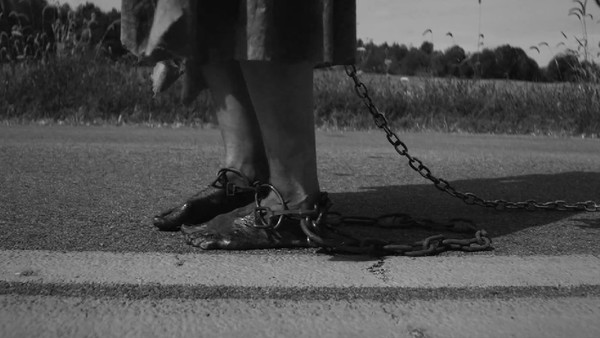
The second black-and-white directorial debut on this list, The Eyes Of My Mother is far more of a traditional horror film than A Girl Walks Home Alone At Night. From its opening scenes, the film takes on an unsettling tone that never once lets up. Why is this strange woman lying in the middle of the road? Why is this weird family obsessed with Bonanza, particularly episodes involving hangings? Why does Francisca's mother let the clearly disturbed Charlie into her house?
Most of the early deaths in The Eyes Of My Mother occur off-screen, as does its main killer's first foray into the world of torturous mutilation. Nonetheless, every moment of the film is tense and disturbing. While the film sometimes leans too heavily on its use of arthouse abstractions, presenting long scenes that simply won't end, this same tendency sometimes aids its success as a memorable entry in the genre. One stabbing in particular runs for an uncomfortably long time, the killing plunging her knife into her victim more than a dozen times before kissing him and telling him "it feels amazing."
Killing may feel fantastic, but it also causes the protagonist a great deal of loneliness. Much like Session 9, this is a killer who is both weak and wounded, transformed into a monster by unspeakable childhood trauma. Her fragile humanity is, almost paradoxically, the precise weakness that turned her into the sadistic creature portrayed on film.
There's an honesty in the sweetness with which both Olivia Bond and Kika Magalhães play the character, and this is precisely what makes The Eyes Of My Mother so horrific. A monster that looks like a monster can be frightening, but a monster that looks like the girl next door? The idea that such a person could exist is the stuff of true nightmares. This film won't have you jumping out of your seat, but it will torment your mind in ways that few other recent horror films have.