11 Movies That Made It Up As They Went Along (But Were Awesome Anyway)
Who even needs a completed script?!

Who says you need to stick with rigid plans to make great art? Even when there's millions of dollars in the balance, it's sometimes better to just wing it. After all, the best-laid plans of mice and men often go awry.
There's obviously a rich history of films with poor preparation ending up the turkeys everyone expected them to be from the outset and of projects that scrap their initial plans and make it up as they go along with rewrites and reshoots ending similarly, but for all of them, there are major exceptions.
Even films that have been years in gestation with a script locked down for just as long can end up being terrible. So it's not always the worst idea to gamble and just go with the flow, particularly when it can lead to such impressive results. Fail to prepare and prepare to fail? Not always, know-it-alls...
11. Edge Of Tomorrow

Given how terrible the title is (especially compared to Live, Die, Repeat, which they basically used for the home release unofficially), it shouldn't come as too much of a surprise that not a lot of forethought went into Edge Of Tomorrow's production.
Apparently, the film began production in 2012 with only a rough outline of its story and the action sequences (which admittedly were both stunning). It was based on awfully named Japanese novel All You Need Is Kill, but Doug Liman clearly didn't need a full script when he started, which producer Erwin Stoff said was "not the most calm-inducing experience."
Still, the final product is incredible - and one of the best sci-fi action movies of recent times - so maybe Liman ought to start more projects without a script and rely on his directing.
10. Jaws

The story of Jaws' production is a notorious one already, what with the malfunctioning (and surprisingly expensive) fake shark that hilariously didn't work in water and Steven Spielberg's necessary inventiveness to get around it. But there was alot more to the production tale. Or a lot less, more specifically.
As well as making life difficult by insisting that they film on the open ocean, Spielberg started off from the even more difficult point of not actually having a completed script or complete cast (including the shark). He essentially made it up as he went along.
The production went out of control, taking 159 days instead of the planned 55, but the delays and the shark errors allowed the script to be refined and finished and scenes to be shot more artfully to conceal the shark. The result is one of the single greatest monster movies of all time, the reason lots of people fear open water and the inspiration for hundreds of terrible shark movies. It remains the granddaddy of them all.
9. Apocalypse Now

Francis Ford Coppola’s sort of adaptation of Heart Of Darkness is pretty much THE gold standard for how not to make a film. It started out with good intentions, but a giant storm set things back very quickly, then Francis Ford Coppola fired his leading actor Harvey Keitel after two weeks of filming, brought in a notoriously troublesome Marlon Brando for a king’s ransom and generally went through the list of everything you don’t want to happen on a set. Including Martin Sheen having a heart attack he played off as heat stroke so the film’s financing wasn’t pulled.
And remarkably, several months after filming officially started, as he was watching a rough cut of footage, Coppola STILL HADN’T WRITTEN AN ENDING to the thing. He was writing as he went and simply improvised his ending because Brando was simply too fat to film the ending as it was originally written. Which makes the decision to hire him in the first place all the more baffling, really.
8. Men In Black III

The best Men In Black movie (at least so far) is also the one with the most problematic production. Despite the fact that it took more than 8 years to get off the ground, when the sequel got the greenlight and kicked off, Barry Sonnenfeld only had a half-finished script.
And those issues weren't sorted out smoothly as the production went on either. When the film was set to halt production for Christmas for five weeks at the end of 2010, the script issues actually led to an extended break until April 2011. And so much was changed that concept art and props that had been built were completely scrapped. The whole delay ended up being expensive, inevitably.
Luckily, the result of such a struggling production was a brilliant, surprisingly emotional film that was a huge hit for Sony - even if it did cost as much as both of its predecessors combined.
7. Lawrence Of Arabia

David Lean and Columbia Pictures had been so interested in making a TE Lawrence movie (since the 40s and 50s) that by the time they actually managed to get a production of Lawrence Of Arabia off the ground, they didn't bother to wait for a script.
Lean apparently disliked the original script written by Michael Wilson, so he scrapped it and hired Beverley Cross and Robert Bolt to rewrite it as the production kicked off. Wilson's characters and story ideas made it in, nothing of Cross' work made it and the majority of the script is Bolt's invention. In this neither too many cooks nor a completed recipe led to spoiled movie broth.
The final film is still considered a masterpiece that was nominated for 10 Oscars (including Best Adapted Screenplay impressively), winning seven. And it's worth every one of them.
6. Bridesmaids

Sometimes winging it isn't a necessity because of lack of preparation, but it's still impressive when a film-maker consciously walks into a film and says "you know what, let's just do whatever with these scenes." Mike Leigh famously never scripts his movies on purpose, relying on improvisation instead and he's far from the only one.
Comedy movies are obviously ripe for that sort of approach too, but it still tends to only be briefer moments that go off script or variations of the same joke. When it's more than that, it's far more impressive and that's the case with the brilliant Bridesmaids, which made ignoring the script the order of the day.
The entire cast was given free-reign to improvise every scene, and a two-camera set-up caught all ad-libs and exchanges without the need for additional takes. That fluidity works delightfully and the character interactions are the funniest parts of the movie. Who needs a writer for jokes, anyway?
5. Alien 3

Alien 3 should have been a disaster, given the now notorious production issues it faced. If the director basically disowns the movie (at least by ignoring it entirely), you know it's problematic.
And most of the problems involved were down to the issues with the screenplay, which started with the hiring of at least a dozen writers all with very different ideas of how to make it. If you're up with Alien movie history, you know that included one version with a wooden planet full of monks.
Clearly, the studio got sick of waiting for the right script so they started production in 1991 without one finished - probably still pissed at having wasted $7m on sets and effects that were abandoned with the early scripts. The story became a further issue for the film-makers and several - including Fincher - left before they were supposed to.
And yet, Alien 3 is still a great movie. it's not up to Aliens or Alien, but considering how messed up the production was, the fact that it's even watchable is astonishing. That it's legimitaely good is way beyond that.
4. Blue Valentine
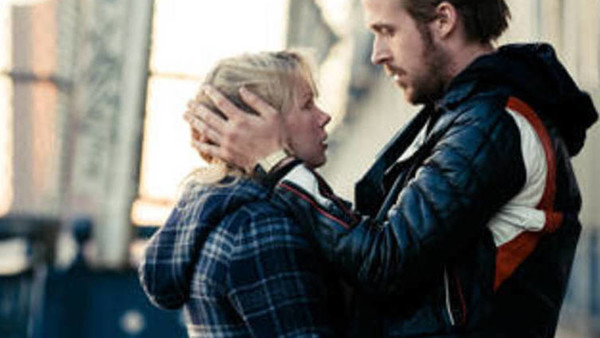
Considering the intricacies of Blue Valentine's heart-breaking, visceral story, you'd think it was intimately crafted at the writing stage. The fact that it was also in various states of production for more than 8 years BEFORE it began filming (as director Derek Cianfrance struggled to get the finances) should have allowed for ample scripting time too. So it should come as no surprise that there were more than 60 drafts of the script.
But the script wasn't at all key to establishing the real emotion of the relationship between Ryan Gosling's Dean and Michelle Williams' Cindy as it begins with passion and ends in pain. That came from Cianfrance's decision to allow his leads to improvise their dialogue and not only that he had them prepare. They lived together in an apartment on a budget based on their characters' income, living moments of family happiness (like a family portrait at Sears) and arguments.
At one point the director told Gosling to go into Williams' bedroom and try to seduce her to raise the tension. She rejected him inevitably, which was the whole point. And that really shows on the screen in an incredibly captivating, but difficult movie to watch.
3. Casablanca

Lots of people agree that Casablanca is among the greatest films ever made, which makes it somewhat astonishing that Warner Bros weren't as hyped about it when it went into production. For them, it was one of many war films rushed into theatres when the US entered the Second World War.
Although Warner Bros bought the rights to the unproduced play Everybody Comes To Rick's in January 1942, the script was only half finished when filming began. It was then shot in sequence to allow the screenwriters time to actually finish writing it as they shot it.
Impressively, that didn't hold the film back at all, as it picked up eight Academy Awards nominations and won three, including Best Film.
2. Mission: Impossible - Fallout

When you watched the sixth Mission: Impossible movie, you will no doubt have been bowled over by the incredible action sequences and stunts, which pushed Chris McQuarrie into consideration for the best direction of the year. With those elements taken care of so well, the story and plot intricacies weren't all that important.
And that was pretty handy for McQuarrie - who admits he only had 33 pages of script when production on the sequel kicked off - because he didn't really have a fully fleshed-out story. But that turned out not to matter.
The lack of a strict script gave the director and star Tom Cruise more freedom to experiment with their sequences - some of which (like a darker plotline involving Ethan Hunt being forced to make difficult decisions while under cover) didn't make it into the film. And that freedom led to one of the most visually stunning and purely entertaining action movies of the past couple of decades.
1. Iron Man

Given all of the things working against it, the first Iron Man really shouldn't have worked. It was being made by a fledgling studio, focused on a supposedly B-list superhero and the star had been blacklisted for his behaviour.
In short, Jon Favreau had his work cut out, which was made all the more difficult by his lack of a complete script. According to Jeff Bridges, the film went into production with no more than an outline as the studio rushed it into production to hit their planned release date:
"They had no script, man. They had an outline. We would show up for big scenes every day and we wouldn't know what we were going to say. We would have to go into our trailer and work on this scene and call up writers on the phone, 'You got any ideas?' Meanwhile the crew is tapping their foot on the stage waiting for us to come on. You would think with a $200 million movie you'd have the sh*t together, but it was just the opposite. And the reason for that is because they get ahead of themselves. They have a release date before the script."
That's not the strong foundation you'd expect a success to be built on. And yet, thanks to Downey Jr's performance and Favreau's story-telling, the script issues didn't stand in its way and it remains the fuse that ignited the whole MCU.
Which other movies belong on this list? Share your picks below in the comments thread.