11 Comic Book Movie Characters Who Were Killed Way Too Quickly
Short term satisfaction yes, but also a world of missed potential...
Unlike the source material that informs it, death in comic book movies is a pretty permanent thing. Yes, there have been moments where characters have seemed dead, and were revealed to have only been a little big dead, or where circumstances combined to give them a ridiculous Lazarus-like resurrection that only worked if you sort of ignored all of the questions in your head, but for the most part, if someone is intended to be dead for the sake of a story, they will remain so in the movies.
The problem with that of course is that comic books rejuvenate dead characters every couple of years, and nobody really bats an eyelash at the idea because it means that beloved heroes and villains alike can be mined for the sake of better and more entertaining stories (rather than inventing new, sub-par baddies, or going with C-listers).
Movies with a kill count really cannot do that without someone pressing reboot, and fans are rightly now becoming a little cynical of that whole start again culture, and unfortunately, because film-makers have to fill a quota of drama and excitement, characters tend to be killed off all too quickly.
While those flashpoints - whether the tragic death of a heroic figure, or the justified death of a villain - are satisfactory for the film, the source is so bountiful that it tends to mean they leave with a trail of missed opportunities and un-explored storylines, and fans are left wishing they'd been a little less fatally dealt with.
And unfortunately, that happens quite a bit...
11. "Deadpool" - X-Men Origins: Wolverine

In truth, Deadpool died a long time before Victor and Logan teamed up to chop his ugly, mutated head off, and even before Ryan Reynolds' motor-mouth Wade Wilson disappeared off screen in his first guise in X-Men Origins: Wolverine.
He died the minute some probably neck-bearded studio executive woke up with the half-formed, bastardised concept of a needlessly shirtless Weapon XI with swords coming out of his knuckles and an abdominal V to soak every seat in the house. For all of the crimes of that first Wolverine movie - and they were multiple and varied - what they did to Deadpool was a damn disgrace to crown them all.
And it probably wouldn't have been all that bad had they not cast Ryan Reynolds - about as good a choice for Wilson as you're likely to find - and allowed him to give everyone a delightful glimpse of what could have been were it not for a lunatic script and a barrel-load of silliness.
The decision not only to kill off that version of the character, but also to totally reinvent Deadpool as a Universal Soldier rip-off with the WORST control system in the history of sci-fi (press Go to start, press kill to Kill) was the bad brand choice to end all bad brand choices. But then, it's not all that surprising: the film-makers were already making a rod for their own back in under-using Gambit, and they probably knew that killing off a fan favourite character - with untold potential for a spin-off of his own - wouldn't ultimately matter because of how God-awful the film was in the first place.
But putting that aside for a moment, Deadpool could have been the next big thing, with spin-offs and wider universe appearances, and even with the new Deadpool films properly up and running, there'll always be the sad trumpet sound of that film in the background distracting everyone.
10. Darwin - X-Men: First Class

There's no denying that the immediately evolving mutant from Matthew Vaughn's wonderfully revisionist franchise "rebirth" was a particularly arresting moment - and a nice confirmation of Sebastian Shaw's capacity for malevolence - but it was actually more problematic than it was entertaining, and it robbed the franchise of one of the better, more useful mutants.
Darwin was a bad-ass, though under-used and played rather oddly as a semi-comical figure, and though it allowed for some impressive CGI gymnastics, the dead-meat tag should have gone to someone else. Like Banshee. The problems with the decision to kill Darwin are two-fold: firstly, and probably most frustratingly, it inevitably attracted accusations of tokenism and of conformity to the rather distasteful cliche: the Minority Dies First trope.
Though he was a smartly conceived character, his death retrospectively made him no more than a red shirt, and for a film that purported to be so invested in socio-political undertones, that is a little difficult to take. Secondly, in purely narrative terms, Darwin's death didn't really make sense.
He becomes the only character to effectively have his primary mutation limited, despite being introduced as being able to evolve to cope with "anything". Given that power, he should have been one of the most powerful mutants in existence, and his self-preservation instinct should have meant killing him was basically impossible.
Consider the World War Hulk comic: when confronted with the revelation that he can't absorb Hulk's radiation, Darwin's self-preservation mechanism told him the best thing to do was run away - so why the hell did the film version of the same character swallow? He could have very easily evolved the ability to close his throat, or to spit, since EVERY HUMAN CAN ALREADY DO THAT.
9. Ronan The Accuser - Guardians Of The Galaxy

Again, the decision to kill Ronan in the latest - and arguably greatest - Marvel movie was problematic not least because it made no sense. Ronan had literally already survived pretty much the exact same thing that apparently killed him: it's not like he could have been a little bit impregnated with the Infinity Stone's power - no more than he could ever be a little bit pregnant - so the fact that the same power then kills him when the signal was boosted by love (or some other flowery reason) is a little odd.
But in longer-term concerns, Ronan is a far more engaging villain than some of the villains in comic book movies who currently remains alive: the spark of humanity in him that manifests in his bubbling need for vengeance actually makes him more appealing and more relatable than Thanos could ever be, and he would have been a good continuous presence.
He's basically Darth Vader to Thanos' Emperor, an over-powered, viscious henchman capable of drawing more fan adoration than his master because he's far more perversely sympathetic. Yes, he was a little under-used, but that's not to say that future Guardians movies couldn't flesh him out in the way Loki was given more time, and frankly the Guardians franchise needs a little help for villains.
Aside from Thanos and Adam Warlock, pickings are a little slim, and it would have been good to have him available for selection at a later date at least.
8. Norman Osborn - The Amazing Spider-Man
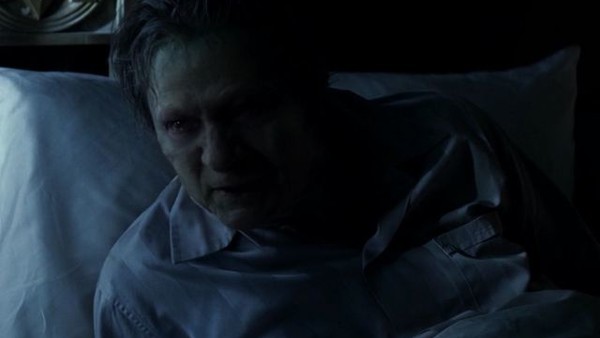
How not to endear yourself to millions of comic book fans as a film-maker: kill of one of the most enduring villains that fandom has ever seen before giving him a chance to shine.
Such was the case with Norman Osborn in the first Amazing Spider-Man. To be honest, there may have been some intention to revive Osborn, but the sequel tanked and that was that. Plus, if he had come back, there would have to have been some heavy retro-writing done to explain not only his deadness, but also why his underlings at Oscorp would maliciously alienate his beloved son.
Even so, the decision to kill him off was a bad one, because it robbed fans of Spidey's most enduring villain, and the opportunity to introduce the real Green Goblin. Yes, Dane DeHaan's Harry was a nice bit of casting, and his crack-whore performance was a nice touch, but he's going to be forever undermined by the fact that he's not his father.
And that's not to mention the fact that Norman's death confused the biology of how Harry didn't die: Norman died slowly over years, and couldn't find a cure, while Harry deteriorated over a matter of days and managed to basically shake off the disease like it was a mild cold, thanks to the spider venom that his father had at his disposal for some time.
7. Red Skull - Captain America

Like Norman Osborn, Cap's most famous Nazi antagonist was killed off way too soon considering how important he has been to the Captain America comic book universe, and how many times he has reared his big red head across the years.
Taking away Red Skull blunts Cap the same way that removing The Joker takes something away from Batman: the two are inseparably defined by one another, and while it was engaging to see Cap face off against HYDRA as a whole in a more political intrigue-charged environment for Winter Soldier, the longer he is forced to fight drones and henchman, without going toe-to-toe with a real big bad, the less impact he will have.
Clearly, Red Skull could be back; it's not like there was a body to bury, and the introduction of the Infinity Stones opens up the possibility that some of HYDRA's surviving Nazi officer types might find a way to bring him back, but in the comics (and indeed within the established logic of the films) they would probably choose to bring Hitler back instead.
Or they should given their affiliation to the Fuhrer, so bringing Red Skull back that way wouldn't make a great deal of sense. Killing him, rather than having him run off with his tail between his legs, meant that bringing him back will be a problem for scripters, and those are the easiest problems to pick apart for comic book movie fans.
6. Ra's Al Ghul

Okay, so maybe it didn't fit Nolan's "more realistic" Batman to have Lazarus Pits and immortal characters, but given how little David Goyer and the Nolans seemed to care about preserving simple logic in the final Dark Knight movie, it shouldn't have been too much of an issue to bring in a little of the supernatural to the franchise as a nod to the source.
The pursuit of realism in a comic book universe that so keenly relies on supernatural elements - this is after all a character born on principles of fear - is a fool's gambit, and one that limits how closely you could adapt the comic book, and Nolan's resistance at times felt a little like bullish commitment to his own agenda to the cost of fan service.
The result was that his Batman films aren't really Batman films in the purest sense (no matter how great they were as a trilogy) - after all, James Bond, Indiana Jones or Jason Bourne could probably have swapped positions with Batman and the films would still have worked.
Nolan should have defied expectations - as some thought he would - by actually bringing in the Lazarus Pits, and having a more traditional portrait of the League Of Shadows' leader would have been far more fitting than having him appear as a plot-developing hallucination that basically allowed Bruce Wayne to learn helpful facts from his own imagination.
5. Rorschach

This one can't only be blamed on the movie adaptation of the Watchmen text, because it was faithful and the death of Rorschach was a key moment in the comic. He was an idealist, and unfortunately for him, he had to die for the good of the wider cause, much to his disgust, but he was also one of the greatest ever comic book movie characters and swerving away from the comic book would have at least given fans the opportunity to see him again.
Frankly, the suggestion of preserving the character to the detriment of the original story would probably have caused massive uproar, and there is some poetry in the manner of Rorschach's death - and indeed the fact that he no longer fit the world he was trying to protect - but the chance to see Jackie Earle Haley under the hood again should have been enough of a sweetener for even the most ardent fans.
But then, perhaps there could have been some sort of retrospective spin-off, concentrating on Rorschach as the lead in his own movie. Alan Moore wouldn't exactly have been likely to give his blessing, but then he rarely does now, and the prospect of such a movie should have sold well to core Watchmen fans at least.
So even if his death was unavoidable, there could and should have still been life in the character yet as a brand, if only Warner Bros had seen the potential.
4. Two Face
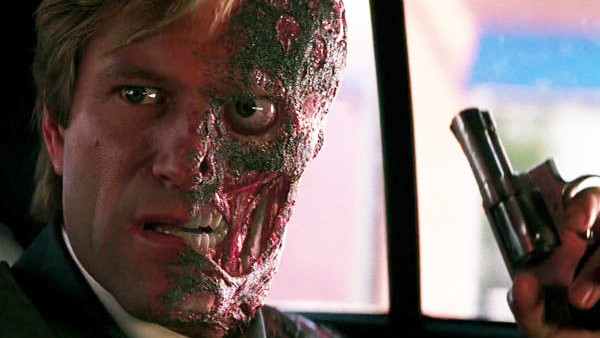
One accusation that it's difficult to swerve of Nolan's Dark Knight trilogy is that it was too definitive, and had too many final narrative solutions. Yes, the Joker's story was left somewhat open-ended by necessity, and the trilogy ended on an open note with several questions posed, but up to that point most character arcs were definitively dealt with, as Nolan sought to avoid embracing a more episodic, comic book like approach.
With that in mind, most of the villains - Ra's Al Ghul, Falcone, Talia Al Ghul, Bane and Two-Face - were all given tight little endings, or deaths in this case, to definitively answer whether they'd ever come back. But comic book fans being what they are, even when the characters were obviously smushed by trains, or blown up, or shot and dropped off a building, questions would still rear up, and the fervour surrounding Two-Face's survival (a hopeful thing more than one based too much in fact) was such that the film-makers basically had to come out with a statement of his Death Certificate.
Still fans resisted the truth, and it was because we didn't get to see enough of Harvey Dent's dark side. Because he played a secondary antagonist he burned brightly but all too briefly, and the potential to see him lead a film as the primary villain would have been glorious.
3. Electro

The very idea that Electro - The Amazing Spider-Man franchise's best villain (not all that hard to be perfectly frank) - would be killed off, while Paul Giamatti's backstreet pantomime Rhino was still free to terrorise audiences for future movies (presumably) is a bloody travesty.
But even judged on his own merits, Electro should never have been definitely dealt with. He would make a particularly arresting addition to the still possibly forthcoming Sinister Six, because of the added dimensions afforded by his origin story, and surprisingly for some, Jamie Foxx absolutely nailed the performance.
Yes, at times it sounded a lot like he was talking through a speaker underwater in a bubble bath, and the overly grand music that was used to greet his appearances was a little insistent, but there was a lot more that could be done with the character.
Thankfully, thanks to the limits of actual physics, there may yet be a reprieve for Electro, since you can't actually kill pure electricity. It will merely change into something else, and he could very much end up following in Doctor Manhattan's footsteps in reforming himself. And that could only be a good thing for Sony's future Spidey universe movies, which probably need a star boost.
2. The Joker

This could really cover both Batman franchises since the sad death of Heath Ledger basically meant the death of his character (as a mark of respect, inevitably), but it was Tim Burton's decision to drop his Joker off a building that should be deemed the bigger crime.
Burton's vision for the movie universe might have been perfectly pitched, but the decision to kill Batman's single most enduring villain in the first movie of what was initially planned to at least be a trilogy (and which would inevitably be stretched out further on the back of success) was a short-sighted mistake that would later bite Joel Schumacher hard.
Without The Joker as a continued malignant presence, the initial Batman franchise had to rely on increasingly poorer villain choices (though still mostly engaging in their own right), and the haunting spectre of the character also fatally meant that Schumacher tried in vain to recapture his spirit in further sequels.
There is more of The Joker's anarchy in The Riddler than in the comics, and Two-Face is the clown prince of crime in a different suit, and then with Batman & Robin, the director just went for silliness without the foundation of the character to ground it.
And the result was Mr Freeze.
1. The Mandarin

Ignoring for a minute the fact that the storm that surrounded Shane Black's "re-imagining" of the Mandarin as a false front terrorist figure-head (and the subsequently awful comedic slant of Trevor Slattery's revelation), there was something else even more troublesome that spoiled the otherwise very good Iron Man 3.
It's all well and good having Slattery as an impostor, and reveal the real villain to be Killian, looking to gain financially out of the terrorism, and it's even fine to have had him be a genuine super-villain thanks to his use of the super-serum to become a walking flamey scab, but there was precisely no need for him to be called the "real Mandarin". Killing Killian meant killing the Mandarin, and killing off any opportunity for a genuine super-villain based on the comic book figure to appear in future Iron Man films (not that RDJ seems keen on them anyway).
Really, Killian should have been Killian, trading off the name of a genuine terrorist faction (which would have tied in with the Ten Rings Easter Egg in the first film more efficiently), and the Mandarin should have been a real terrorist leader, incensed by the hi-jacking of his name, and infuriated that he has been blunted by the defeat of someone with no real affiliation to him.
That could easily have fed into a whole plot for a future sequel, and allowed for a purer (albeit ignoring the racially charged elements) adaptation of the Mandarin.
Which of these comic book movie deaths do you think was the biggest mistake? Share your thoughts below in the comments thread.