10 Weirdest Films To Come From Celebrated Directors
When a director decides to flip the script and do something completely different...

When you become a filmmaker, you have to develop a personal brand. When your name gets attached to a project, that project has to fit into your particular ‘brand’, or else you have the potential to lose the audience that you’ve spent so much hard work building up.
As a result, it’s incredibly rare to see a recognized filmmaker step out of their creative comfort zone and make something completely off-brand. If they do make a film that’s wholly different from their esteemed output, it usually comes at the beginning of their career, before they've released their massive hit and subsequently been compelled to make follow-ups in its image.
Sometimes, when looking at a director’s early work, it’s fascinating to see how far they were willing to go to make something original before breaking in to the business. Other times, though, an avant-garde filmmaker will just create something spectacularly different because they grow bored of their own brand, and they want to showcase something new for their own personal sense of achievement. Whatever the reason, there are times when a notable director can make films so weird that it clashes with every other film they've made. Here are some examples.
10. Peter Jackson - Meet The Feebles

Peter Jackson became a household name with the epic The Lord Of The Rings trilogy of movies, and even before then he had a hit in the American horror market with The Frighteners. However, if you were to dig into Jackson's New Zealand back catalogue, you will find three films that are totally different to his later output, especially his more serious movies such as Heavenly Creatures, District 9, and The Lovely Bones.
The first and third films, Bad Taste and Braindead respectively, were bizarre enough with an emphasis on incredibly gory comedy. However, the second film of his career, 1989’s Meet the Feebles, is the strangest and most deranged that Jackson ever made.
A precursor to such adult puppet media as The Happytime Murders, Fur TV and Avenue Q, Meet The Feebles is a parody of The Muppets Variety Hour. However, whereas The Muppets were wholesome and child-friendly, The Feebles are anything but. The story revolves around a cast of drug-addled, tragically deranged individuals who try to put on as best a variety as show they can with a drug-dealing porn baron as boss and an emotionally unstable hippopotamus in the lead role.
Meet The Feebles is every shade of disgustingly perverse. It may have carved its own niche audience over time, but it will forever stay as the strangest, most disgusting thing that carries Jackson’s name.
9. Matt Stone & Trey Parker - Cannibal! The Musical

Matt Stone and Trey Parker are the genius minds behind South Park. To date, the show has run for 23 seasons, and it doesn’t appear to be stopping anytime soon. Aside from this grand achievement, though, Stone and Parker have also made multiple comedy films such as Team America: World Police, South Park: Bigger Longer And Uncut, and Orgazmo. Each of these films share a common trait: they all parody the industry, whether it be puppet cinema, musicals, or superhero movies.
However, before all of this came Cannibal! The Musical, a musical parody that was Stone and Parker's final year project whilst at film college, distributed by the independent distributor Troma in 1993. The film is a comedic biography of Alfred Packer, the first convicted cannibal in the United States, and although Stone & Parker put their comedic spin on the film as they parody Rodgers and Hammerstein's Oklahoma, it’s still the most violent and gory live-action film they’ve ever made.
It has their distinctively bizarre and nonsensical humor, but Cannibal: The Musical also has some very shocking live-action scenes that are unlike anything else that Stone and Parker would go on to do.
8. James Gunn - Tromeo & Juliet
James Gunn has become the go-to name when it comes to superhero movies. Director of The Guardians Of The Galaxy series, The Suicide Squad, and producer of Avengers: Infinity War and Avengers: Endgame, Gunn has enjoyed a career renaissance with the immense popularity of comic book media.
However, controversy surrounding a group of very distasteful tweets, which emerged in 2018, made common knowledge Gunn's association with the decidedly non-PC film company Troma, ultimately leading to Gunn's firing from Disney. Gunn is still rumored to be working on Guardians Of the Galaxy 3, but nothing is confirmed of its production at the moment.
That being said, the first movie Gunn ever worked on was Tromeo & Juliet, a transgressive, anarchic present-day adaptation of Shakespeare’s Romeo and Juliet. Gunn was writer and associate director for the movie, and he put an impressive amount of effort into the project. His work on the film resulted in Tromeo & Juliet receiving very good reviews when it was released.
Gunn originally wrote the script in iambic pentameter before he decided that it made the dialogue boring; he then re-wrote it entirely at least twice before shooting began. He even cameoed in a sequence that would be re-used over and over in future Troma films. This first project showed just how talented Gunn is, but once he begin working in superhero movies, Gunn never looked back to this weird point in his career.
7. Orson Welles - F For Fake

Orson Welles is the mastermind behind Citizen Kane, one of the greatest films ever made and still regarded to this day as essential viewing for anyone who wants to work in cinema. Afterwards, Welles carved himself an impressive career in the world of dramatic storytelling with The Magnificent Ambersons, Journey Into Fear, The Stranger, and adaptations of Shakespeare’s Macbeth and Othello.
However, in 1973 Welles created a one-off film as a metaphor for how he viewed himself. That film was F For Fake, a documentary about the great art forger Elmyr De Hory. Throughout the film, Welles keeps the line between himself and De Hory very thin; the movie is primarily a documentary about Welles’ opinions on his own career, and throughout he refers to himself as a ‘charlatan’ and a ‘faker’. Between scenes of De Hory and his forged paintings, Welles gives anecdotes about his own career with the intention of drawing parallels between their conman endeavors.
As a result, F For Fake is a very revealing look into the minds of one of cinema's greatest pioneers, and how he views himself and his fame. In comparison to his other works, this film sticks out like a sore thumb as being the most ‘meta’, and it remained the only documentary he ever made.
6. Sam Raimi - Oz The Great And Powerful

Sam Raimi is the gung-ho filmmaker responsible for the Evil Dead trilogy. However, his approach to the Spider-Man trilogy in the early 2000s led to a career turn as he began making more family friendly movies. That said, it seems that Raimi actively rejects this by continuously putting his name to horror films such as Drag Me To Hell, The Grudge, The Possession and Don’t Breathe.
Strangely, though, Raimi’s development from splatter horror to superhero franchise is somewhat coherent because in 1990 Raimi made Darkman, a dark horror superhero movie. The most unexpected film in Raimi’s repertoire is Disney’s Oz The Great And Powerful: a fantasy adventure prequel to The Wizard Of Oz that came about due to the popularity of the Broadway musical Wicked. Even though it was completely outside of his experience, Raimi was hand-picked from a list of interested directors that included Sam Mendes and Adam Shankman.
After its release, however, Raimi worked as a producer on the thriller Murder Of A Cat and Poltergeist, presumably in an attempt to return to his comfort zone of horror cinema after working with Disney. There are rumors of Oz The Great And Powerful getting a sequel, but there is no confirmation about Raimi working on it.
5. Bob Clark - Baby Geniuses

Bob Clark’s film history is one of the most interestingly varied. He started in the grindhouse circuits with writer Alan Ormsby before hitting gold with 1974’s Black Christmas, which is still regarded as one of the scariest horror movies ever made. Although comedy had always been in Clark’s repertoire, starting with comedy elements in 1972’s Children Shouldn’t Play With Dead things, he shifted to making straight comedy movies in 1981 with seminal adult comedy Porky’s.
In 1983, Clark ditched mature content altogether to make what would become an American Christmas staple: the family-friendly comedy A Christmas Story. He would continue his career making comedy movies, but 1999's Baby Geniuses stands out amongst his repertoire. The reason why is because it is the only children’s movie he ever made, as A Christmas Story was targeted to all ages, and it’s also regarded as one of the worst movies ever made in general.
Clark had no experience in making a film targeted towards children, and the quality of Baby Geniuses makes that point quite clear. It was the most unrealistic premise he had ever worked with, and it's obvious that he had no idea what he was doing. However, it didn’t stop him from making a sequel called Superbabies: Baby Geniuses 2 in 2004, which garnered even worse critical reception than the first one did.
4. David Lynch - The Straight Story

David Lynch is regarded as the master of nightmare cinema. From his first film – 1977’s Eraserhead – Lynch has carved a niche for himself as an auteur director of urban horror. His surreal mind blends the real with the unreal to create some of the most memorably horrific scenes put to screen. Over his career, Lynch pursued and perfected his craft, creating unforgettably strange films such as Mulholland Drive, Inland Empire, Lost Highway, and the incredibly successful TV series Twin Peaks.
Then there’s The Straight Story. Not the first dramatic movie that Lynch made, as he made The Elephant Man previously, but The Straight Story stands out as being absolutely nothing like Lynch’s usual repertoire. It’s a film about an aging man who travels across America on his lawn-mower in an attempt to visit his brother who had just suffered a stroke; an incredibly touching story about one man’s determination and the journey he takes on his incredibly slow mower across the plains of the States.
As a result of Lynch’s change of approach, The Straight Story was released by Walt Disney Pictures and had its premiere at the Cannes Film Festival. Critics loved the movie, calling it “a celestial piece of Americana” and whilst Lynch would return to his usual stylings with Mulholland Drive in 2001, The Straight Story stands out as David Lynch’s ‘least weird’ film, which for him is very weird.
3. Francis Ford Coppola - Jack

Francis Ford Coppola is widely regarded as one of the greatest directors of the '70s: he is the director behind Apocalypse Now and The Godfather trilogy. However, as times change, Coppola has reached into many different genres in order to stay relevant and profitable. In 1996, to keep up with the success of family-friendly comedy movies, he made the film Jack alongside Robin Williams.
In this movie, Williams plays a young boy with progeria – an aging disorder – as he grows up and attends school, getting bullied and making token friends as he does. It’s a film as saccharine and whimsical as you can imagine, with every overused cliché that 90s cinema can offer. Critics hated the movie at the time, stating that “Robin Williams' childlike energy is channeled in all the wrong places with Jack, a bizarre tragedy that aims for uplift but sinks deep into queasy schmaltz.” One can sense that there were attempts to tell a dramatic, touching story, but Coppola’s answer to Tom Hank’s Big just wasn’t good enough for the market.
The idea that the mind behind acclaimed and legendary films went on to make this silly little movie that belittles a very real disease is almost unfathomable. It speaks volumes as to how Coppola tried to stay relevant, but the best years of his career were certainly behind him.
2. Steven Spielberg - Duel

Steven Spielberg is the master of commercially viable movies. His career may have touched many different genres, but he is a master at targeting the widest audiences possible by including a lot of happily whimsical content into his films. Even when he dives into horror with Jaws, Poltergeist and Gremlins, he still manages to make them more family-friendly than necessary, ergo people of different ages enjoy these dark movies to this day.
Very rarely does Spielberg create something that’s wholly mature and serious. When he does, however, the quality of these films show just how amazing of a filmmaker Spielberg can be. Saving Private Ryan and Schindler’s List are fine examples of this, but his first ever feature film, Duel, marked the beginning of this trend. Duel is a thriller about a man who is chased and tormented by a truck driver that the audience never gets to see. It’s a film about the paranoia that comes with being in a life-threatening situation that one cannot escape, and Spielberg pulls no punches when it comes to the element of fear.
This film couldn’t
be more different than Spielberg's later endeavor such as E.T., Indiana Jones or Jurassic Park. It feels cheaper and dirtier than anything he
would go on to do. Today, Duel is considered a cult classic with a
following all of its own.
1. E. Elias Merhige - Shadow Of The Vampire
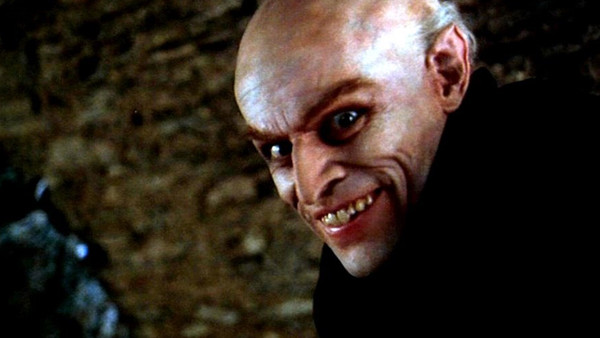
E. Elias Merhige isn’t a name synonymous with Hollywood. To this date he has only ever made two feature films with major studio backing, but in 1990 his name made circles in underground film circuits with the surreal horror masterpiece Begotten. Afterwards, he rose to fame in 2000 with mainstream horror hit Shadow Of The Vampire, which was produced by Nicholas Cage, who hand-picked Merhige after watching Begotten. The film featured such prestigious stars as Eddie Izzard, John Malkovich, Cary Elwes and Willem Dafoe, and it became a critical and commercial success.
After Merhige made the negatively received psychological thriller Suspect Zero after Shadow Of the Vampire, he retreated back into the world of avant-garde horror and kept himself away from the public eye completely. His focus since leaving Hollywood was to make a trilogy out of Begotten. The first sequel, Din Of Celestial Birds, was released in 2006 and he is currently working on the third kickstarter funded entry Polia And Blastema, which is yet to be released.
If you were to only see Shadow Of The Vampire and Begotten, then it may be suggested that Begotten is the bizarre movie in Merhige’s repertoire, when in reality it’s the other way around. Shadow Of The Vampire remains the only non-surreal horror movie he ever made.