10 Ways Trailers Let You Know A Movie Is Secretly Awful
You'll never waste your money on a ticket again.

It's stating the obvious that trailers are carefully crafted to trick us into seeing a movie, regardless of the quality. As frustrating as it may be when we're duped into watching something terrible, that's just the way marketing works and we have to accept it. Right? Not exactly. Trailers for bad movies might dupe you from time to time, but if you know what to look out for then you start to notice a number of red flags that inadvertently tell you a film is going to be awful.
Some of these are obvious - the names Adam Sandler, Rob Schneider and Michael Bay can send countless movie fans running from a movie like it's the plague, and likewise if the trailer features atrocious dialogue, terrible acting and dodgy special effects you can be sure the finished product isn't going to be any better. But other red flags require a little more industry know-how to spot, where editing techniques, sound design and other technical traits betray the film's true awfulness.
Trailer editors are paid well to polish cinematic turds, but they also repeat these tricks over and over again, giving the game away to the savvy viewer. From the use of sound effects to the words you see on the screen, here are ten signs a trailer is telling you the movie is awful. Keep these in mind and you'll never waste your money on a ticket again.
10. The Words "From The Producers Of ..."

There are exceptions (M Night Shyamalan only bled so much goodwill from The Sixth Sense before his name became a reason to avoid a movie), but the same can't be said for trailers for movies which boast the dubious honour of coming from "the producers of..." another film. Producers might work hard juggling a movie's budget, but when it comes to a mark of quality they're far from the best benchmark to go by. Even worse is the trailer which throws in the line "from the studio that brought you..."
There isn't a studio in existence which hasn't made at least one bad movie (even the great Pixar have the unfortunate Cars 2 on their filmography) so as a measure of quality it's about as useful as a chocolate teapot. They're hoping you won't realise that they're hyping their movie on the reputation of a much better film, but don't let them fool you - chances are they're promoting a real stinker.
9. Questionable Review Sources Quoted

Notable offenders: Project X, The Lucky One
There's a lot to be said about the quality of a movie from the calibre of sources used to cull quotes for a trailer. A single glowing quote from someone like Roger Ebert can tell you all you need to know in a few simple, lucid words. On the other hand, some truly awful films have plastered glowing praise from countless publications on some of their trailers, tricking the casual observer into thinking that the film must be something exceptional if that many reputable critics give it the two thumbs up. But a closer look reveals that those 5 stars were attributed by none other than Hello! and Nuts magazines and - heaven forbid - Mumsnet.
We should be thankful that the practice of taking big name reviewers and publications out of context (for instance using the quote "Amazing!" when the full sentence reads "amazing how rubbish like this gets made!") appears to have gone out of fashion. Don't let that stop the folks in marketing tricking you with quotes from obscure websites, but if you remember the rule of thumb to always check the sources avoiding awful movies will be that little bit easier. This trailer for Project X doesn't even go to the trouble of referencing the selected quotes.
8. The Title In Bold, Red Fonts
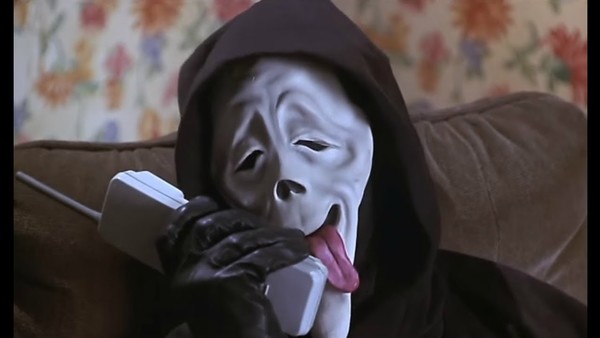
Notable offenders: You Don't Mess With The Zohan, Epic Movie, Scary Movie
As David Fincher has demonstrated in many of his movies, delivering a good title screen is something of an artform when done well. The fonts selected coupled with lighting, particle effects and a hint of animation can really emphasise the tone and feel of the movie.
By the same token, really bad movies similarly feature titles which reflect the low standards of the film being advertised. They are often lazily thrown together using fonts that any one of us could dig out on our free copy of Photoshop CS2 in a few seconds, with the most frequently seen examples being those movies which feature titles in big, red type.
To the untrained eye these bold titles are intended to let audiences know that the movie is fun and exciting - to anyone remotely savvy about graphic design they indicate cheap, lazy production values which is inevitably reflected in the quality of the film. Some of the most egregious examples of this tend to be crass comedies, with films like Daddy Day Care, The Nutty Professor and Norbit standing out from the crowd. It's probably not a coincidence that many of these star Eddie Murphy.
7. A Bass Drop Is Used More Than Once

Notable offenders: Transformers: Dark Of The Moon, Ender's Game, Teenage Mutant Ninja Turtles
In the 1990s the ubiquitous annoying noise featured in trailers for bad movies was the record scratch (the sample is free to use - go figure). Then, the "Bwaaaah!" noise from Christopher Nolan's Inception became the most overused sound in movie trailers (much to the annoyance of Inception's many fans).
More recently, the "Boom" bass drop has trumped the contenders to become the most excessively used noise in movie trailers, often in circumstances where such a noise really isn't called for. From action movies to raucous comedies, the bass drop is featured in films across the spectrum of genres. While it does occasionally work, when a movie trailer feels the need to use it more than once you know the editor is really struggling to make the film appear more exciting than it actually is.
Unsurprisingly it's featured in pretty much every trailer for a Michael Bay film, but for an example of "Boom!" overload look no further than this trailer for the dreadful Battleship.
6. Puerile Bodily Fluid Jokes And Pratfalls
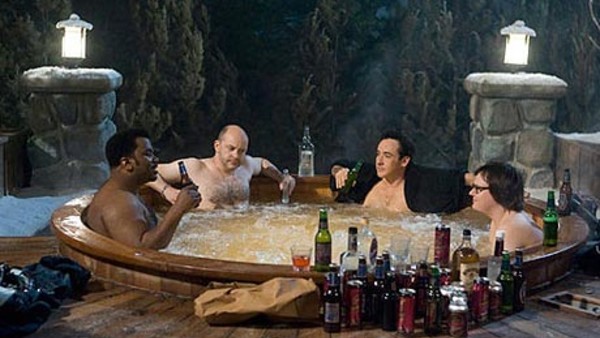
Notable offenders: Hot Tub Time Machine 2, Movie 43, Grown Ups
As independent movies have proven many times, American filmmakers are more than capable of making comedies which are sharply observed and full of wit and invention, as this year's Listen Up Phillip and Love Is Strange alone have proved.
When it comes to mainstream Hollywood, however, this nuance is often lacking. Cleverness is replaced with crassness and jokes about faeces, periods, farts and obesity are often passed off as being "funny" even though the age range which usually find someone covered in poo amusing aren't old enough to be admitted to the theatre.
That's not to say that fart jokes and their erstwhile cousin the pratfall can't be funny (Chaplin and Keaton made cinema history for falling around on-screen), but if the trailer offers very little else then chances are it's going to be puerile drivel which only the lowest common denominator will lap up. If you like crass humour then this probably isn't such a bad thing (and you fall into the target demographic the trailer largely is aimed towards), but for the rest of us it's a clear sign you aren't going to get too many laughs for your cash. I'm looking at you, Movie 43.
5. Establishing Shots Overload
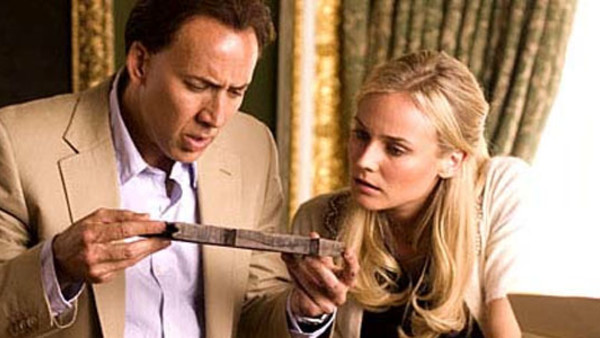
Hollywood movies can be forgiven for following the formulaic use of establishing shots in their movies, but there's really no excuse when a short trailer - designed to sell a flim's best assets - litters it with countless establishing shots from start to finish. If there's one thing this suggests it's that decent shots of action are thin on the ground, and the trailer editor is trying to create a sense of scope and awe where it doesn't exist.
A prime example can be found in the recently released cinematic atrocity Fantastic Four (also known as Fant4stic - Se7en aside, be wary of titles which use numbers in this way), which features such cliched establishing shots as wheat fields, cityscapes and the Pentagon, the last of which surely counts among the most overused establishing shot in the history of Hollywood (followed closely by New York City, Big Ben and the London Eye). Although to be fair, when it came to Fantastic 4, an overload of establishing shots in the trailer was the least of Sony's concerns.
4. Repeatedly Fading To Black
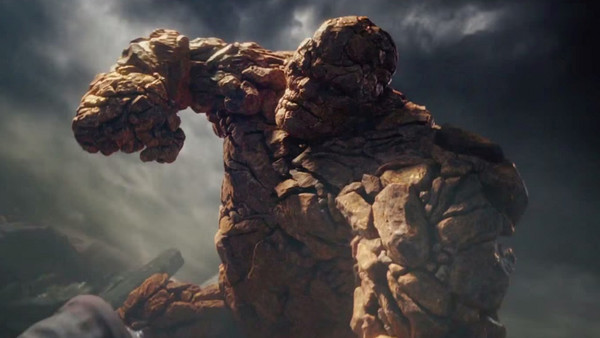
The problem arises when the editor goes into overdrive and uses a fade to black transition on virtually every shot in the trailer. What was once effective has now become incredibly well-worn, and just like a magician who uses the same old trick from one performance to the next, its overuse is a sign that something isn't quite right. Used occasionally and the fade to black can add to the feeling of anticipation - used repeatedly and the studio is clearly over-egging the pudding and creating a falsely heightened sense of anticipation.
We've already seen the fade to black being used excessively in the Battleship and Fantastic Four trailers, but the second trailer for Man Of Steel is a fine example of the effect being used to the point of absolute redundancy.
3. Heavy Use Of Off-Screen Dialogue

An editor of movie trailers elaborated on how this worked during a discussion on Reddit, explaining how "they're either lines that have been cobbled together that don't actually exist that way in the film, or they're lines that have been squeezed into an actors mouth when they're saying something completely different in the movie." So what can we make of this use of dialogue?
According to our industry insider, such decisions "usually indicate a lackluster movie because the editor/studio is fabricating something, as opposed to letting the natural material work on its own." If you add to this the absence of any dialogue from the main character during a trailer (another red flag worth keeping an eye out for, since this suggests an awful performance), what you're left with resembles something like the following trailer. No, Shyamalan! No!
2. The Use Of Audience Reactions

Notable offenders: Paranormal Activity 4, The Green Inferno, The Gallows
A good movie trailer should be edited to capture the essence of the movie it is trying to promote using footage from the film, without giving too much away. The last thing you want to see is shots of people watching the film (who goes to the cinema and sits watching the people around them?) that hasn't stopped a few horror movies using audience footage for their trailer, as if watching people reacting to that tired old genre trope the jump scare is going to entice people into the cinema.
Believe it or not there are even academic papers out there discussing the technique, with one describing them as "manipulative" and "gimmickry". Still, if there's one thing worse in a trailer than audience reaction shots, it's the post-screening reaction with viewers as they leave the auditorium. Anyone who sincerely believes these soundbites weren't carefully selected to omit anything other than glowing praise should consider looking up the word "naive" in the dictionary.
The trailer editor is counting on the audience taking these reaction shots at face value and assuming the film guarantees a primal reaction - most likely, however, these reaction shots derive from cheap and predictable jump scares, which are hardly a sign of a great movie. If actual footage from the movie isn't good enough to sell a film it's probably not worth paying out the cash to watch in the first place.
1. Giving Away A Major Plot Point (Or The Entire Plot)

Getting a feel for the narrative content of a film is something that good movie trailers strike a balance with - they give you an idea of what the film is about but leave you eager to find out more when you actually watch the movie.
The problem arises when the trailer starts to give away more than it really should, leaving audiences wondering to themselves why they should bother going to see it since they already know what to expect. It's a problem which has been increasingly prevalent in recent movie trailers, to the point where many should come with a "Spoiler Alert!" notification before the footage rolls. Director Robert Zemeckis offered his view on why trailers do this, likening Hollywood movies to fast food: "We know from studying the marketing of movies, people really want to know exactly every thing that they are going to see before they go see the movie.
What I relate it to is McDonald's. The reason McDonald's is a tremendous success is that you dont have any surprises. You know exactly what it is going to taste like. Everybody knows the menu. Recent high profile examples of awful movies which not only give away a large portion of the plot but even notoriously ruined major reveals and plot twists include The Amazing Spider-Man 2 and Terminator Genisys, and the disgruntled reaction from fans certainly indicates that Zemeckis is way off the mark in his assessment.
Although it's fair to say that spoiling a twist in the trailer wasn't the biggest cinematic sin committed by Terminator Genisys. Of those, there are too many to count. What other ways do trailers trick people into seeing rubbish movies? Share any we missed down in the comments.