10 Ways DC Movies Can Get Out Of Marvel's Shadow

10. Persevere With A JLA Project
 When it comes to movie development hell, the long mooted Justice League project surely has to rank as one of the most wanted. Though some more critical fans will point to the less likely appeal of some of the lesser characters, such as Aquaman, there are enough personalities in the character line-up, and there has been enough promise shown in the model adopted by Marvel to suggest that supposedly lesser characters can combine to make a greater whole. Hollywood should be crying out for a Justice League movie, and with the Avengers having already set a precedent for ensemble superhero movies, and the definite bankability of both Batman, and Superman (to a lesser degree,) the hold-up seems more confusing as each year passes without any sort of confirmation of a project. Clearly, the appearance of the Batman vs Superman project complicates matters somewhat, but that film should actually be grasped as an opportunity to broaden the DC superheroes' screen presence, in the same way that the Avengers link-up was teased way before it was publicly green-lit. And concerns regarding the viability (or more likely the financial viability) of giving the likes of Aquaman, Flash and Wonder Woman their own movies first need not be an impediment either - there's no reason those films can't come afterwards, boosted by the positive response (you'd hope) of a successful team-up movie, in the same way that Hulk has suddenly become a bankable property again. Have faith DC, because moving forward without a direct competitor to the Avengers, or even X-Men will spell disaster. That may seem like an awfully cynical statement, examining the slate going forward in a more business-focused manner, but those are exactly the type of conversations that should be happening behind the doors at DC Entertainment.
9. Close The Gaps In The Universe
 The Justice League property would be a great thing, considering what it would mean to fans, and how they would respond, regardless of overriding concerns regarding the appeal of some of the wider characters, but DC could bank on similarly positive fan engagement by simply acknowledging more generally that Superman, Batman, Green Lantern and the rest of the cast of DC superheroes exist in the same world. In the same way that Nick Fury was a unifying character whose presence closed the gaps between Iron Man, Hulk and Captain America and helped extend the boundaries of each of their own worlds, as well as suggesting confidence in the longevity of the properties (and confidence breeds confidence,) DC should launch their upcoming stable of films in bridged phases, with unifying events (even if they are only acknowledged) and characters jumping the boundaries into other properties. It is that sort of bold move that helped build the Marvel movies brand into what it is now - the Phase concept is now in common usage, and there can be confidence from fans that even a minor misstep won't lead the studio to suddenly shut up shop and start afresh. The same cannot be said of DC, who seem perpetually on the verge of making a decision to cancel everything, if responses don't come back how they first envisaged. Fundamentally, DC movies feel a lot more reactive than Marvel ones: it's difficult to see the decision to bring Batman into Superman's sequel as anything but a reaction to the relatively poor box office return of Man of Steel. That film was far from a failure, but DC seem to have lost a little faith that Superman can be as strong a box office pull on his own, and have gone the easy route of fan service, and brand-merging by bringing in the Bat. They need to have confidence in their brand, and to make more future plans, which will give fans something more concrete to invest in.
8. Don't Forget That You're Making Comic Book Movies...
Christopher Nolan's Dark Knight trilogy was an exceptional achievement, blighted by some flaws, which were amplified by the weight of expectations built on the foundations of success the films had already established. So-called "fanboys" will not respond to that well, because it isn't the spurting fountain of hyperbole they expect for their films, but it remains high praise. But the films were not comic book movies in the traditional sense: they couldn't have been because of the necessary repairs that had to be done after Joel Schumacher's vision of a comic book movie threatened to make the genre a dirty word. They were, as all Nolan fans seem intent on suggesting, rooted in realism, with a Batman who was JUST a man, as opposed to an over-powered demi-God, and who was genuinely relatable, and that was great for the drama. But what is great for drama is not so great for the genre of comic book movies, and if that successful model is adopted as the all-encompassing model for how to make future comic book movies, fans of the genre aren't going to enjoy the films for what they want to. There is obvious appeal in making these films more realistic, because it is what audiences crave over the day-glo silliness of wilder adaptations, but fundamentally stripping away what made comic books and superheroes so popular is a quick way to turn comic book movies into traditional action flicks under a different banner. And the converse side of this argument rings true as well...7. ...But Equally, Don't Go Too Camp
 Camp has almost killed Batman on at least two separate occasions: firstly, in the wake of the initial success of the 1960s super-camp TV show, pressure was put on comic book writers to adopt a similarly colourful approach, leading to a significant drop in circulation, and the eventual return to a far grittier tone. And then decades later, proving that nobody picks up a history book in Hollywood, unless it's to pilfer material for a movie, Joel Schumacher took Tim Burton's gothic vision for Batman, added lots of luminous paint and some irredeemably sub-pantomime villains and an over-riding camp factor that horrifically derailed the property's association with the big screen. There has to be balance in camp, or at least the acknowledgement that there is no longevity in that sort of approach - the lessons are there from the past - and while Nolan's gritty take on Batman did little to suggest that camp was coming back, the established trend, in both screen and comic book worlds is for camp to follow grit, and for the cycle to repeat once again. If DC misread fans' desire to see comic book movies retaining their essential comic-ness, they will end up with a Batman & Robin style situation on their hands, which could set them back a lot further than any poor Green Lantern adaptation ever did. The lesson is really that DC can't be too extreme in their tonal reactions either way: too grim and you lose the essence of what makes a comic book and a comic book movie (a legitimate genre now) and too camp and over-blown and you lose a relatable element and the hardcore comic book fans who will inevitably see it as a betrayal of the source.
6. Choose The Right Villains
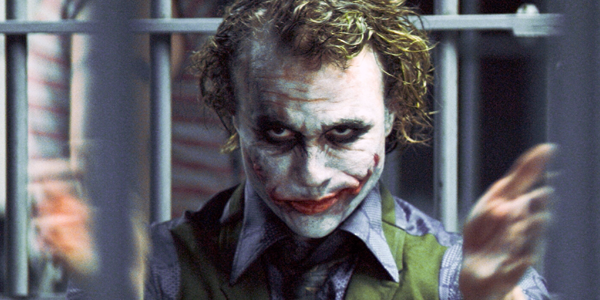 A comic book movie - or any which is ostensibly defined by extreme portrayals of both good and bad forces - can only be judged by the quality of its villains. It stands to reason, as most superhero mythology suggests that the presence of an arch-nemesis is one of the fundamental drives of a superhero beyond the inherent need to be good. Without darkness, there can be no light, and without enduring, engaging villains, superheroes can lack power and impact: they are effectively robbed of their reason d'etre, even when confronted with a lesser villain. DC need to get to work on bringing in a big name villain for one of their next comic book movies - if it isn't Darksied, Doomsday or The Joker (which could be a mine-field) for Batman vs Superman, the presence of both of the heroes will not feel right. Without one of those top level villains, DC will struggle to make their heroes as bankable as Nolan's Batman was. As further indication, the Joker was an absolute winner, but Parallax was too much of a high-concept villain to work in such a key focus for Green Lantern (which is why Sinestro emerged as by far the best part of that entire movie.) There has to be an immediate and quantifiable threat to both the superhero and the world they're saving, and DC have to realise that relying on Lex Luthor for Batman vs Superman just won't cut it.
5. Don't Make Another TV Show
Though Agents Of S.H.I.E.L.D. is currently hot of the pops for TV nerds (especially with the vacuum created by the twin losses of Dexter and Breaking Bad,) it is DC who have ruled the small screen airwaves in terms of superhero adaptations, with Smallville scoring an enduring popularity, and Arrow still pulling in fans. But TV adaptations for stand-alone characters are not the way forward. Smallville's success came down to it channelling the zeitgeist, and audiences' yearning for origin stories (as well as filling the Superman shaped hole in a different way to avoid the bad vibes of a Superman Returns style film adaptation) and Arrow follows a similar thread, while offering a supposedly "lesser character" more of a chance to succeed than he would probably have enjoyed on the big screen. The problem with a TV show is that it splits the appeal of a brand, and robs cinema going fans of the impact of major events and drama: it might be a good way to establish character and to develop particular ideas across multiple storylines, but DC need to be brave and bold and to make a statement on the big screen before they even consider letting another company bring one of their properties to the small-screen (and risking them doing it as badly as the Wonder Woman show did.) DC also need to be careful not to split their properties: they could do with the good fortune Marvel have had in regaining the cinematic rights to some of their biggest properties, as they can begin to work on the kind of unifying brand message that Marvel have built their recent successes on.4. Hit A Big Event First
 The rather unfortunate thing about DC's entrenched battle with Marvel is that Marvel can rely on a number of big narrative events to play key parts in their forthcoming Phases. With the Avengers thread already established, Marvel could now branch off into Civil War, or Infinity or even the Zombies narrative (which they probably won't) and they will have stolen a march on their rivals. The race towards a big comic book event could well be one of the defining elements that we see in forthcoming comic book movies, like a furious arms race, because whoever comes second will look like the reactive party, or the copy-cat, no matter how unique the actual content of the story arc is. It may sound a little petty, but if DC can find a way to launch immediately into Darkest Night, or Crisis On Infinite Worlds, and trust that audiences will respond positively to a story without the usual steps of origin and development, they would be scoring a victory against Marvel in audiences' eyes. That would also solve the problem of having to reboot or tell origins stories for all of the involved characters, which could put DC some distance behind Marvel in terms of their progress.
3. Don't Spin-Off Unnecessarily
 The temptation for DC must surely be to stick with what has worked, and to look at models for diversifying key properties without going too far off brand. The ready-made solution would be to focus on Batman's allies, and to spin-off from the Batcave, focusing on Robin, Nightwing, Batgirl or Huntress, but to do so would be to fundamentally under-estimate the need for Batman to be central to all of those stories. Each of the characters - particularly Nightwing - is enduring in their own right, but they are never more appealing than when their stories converge with a Batman narrative, or when they play supporting roles in a Bats-led arc. If DC run before they can walk with these lesser characters (and they actually rank below the so-called "lesser" members of the JLA,) they will reap failure as their reward. Great characters they might be, but they can only be considered supplementary, especially at this stage when DC are struggling to find their audience, and a grander creative statement is required. Hopefully, the studio will have noted the failure of Supergirl in the past, but judging by Hollywood's tendency to repeat mistakes, you do have to wonder.
2. Diversify Smartly
 Despite the high-profile failures of some of DC's other projects - particularly the failure to get Wonder Woman off the ground, and the critical panning of the Green Lantern and Jonah Hex adaptations - Batman and Superman cannot be relied upon to drive the success of DC's entire movie arm. Past failures do not necessarily mean that future projects should be written off: Green Lantern remains a rich property with massive potential for adaptation, despite how poorly handled the first attempt was, and creative difficulties should not be deemed ultimate impediments. There is still huge promise in events like Blackest Night, or the Crisis On Infinite World's event, and Green Lantern remains one of DC's most enduring and beloved characters (as well as one of the most popular comic book heroes of all time.) But even beyond the realms of superheroes, DC could score big wins with adaptations of Fables or Sandman: both are hugely bountiful sources, and both would offer massive scope for adaptation, particularly with the gap in the market for a long-running fantasy series to replace the likes of Harry Potter. DC proved in their adaptation of Watchmen that the "lesser known" properties can work well, and looking beyond the limits of Batman and Superman could prove to be the smartest move DC could make.
1. Don't Reboot Batman
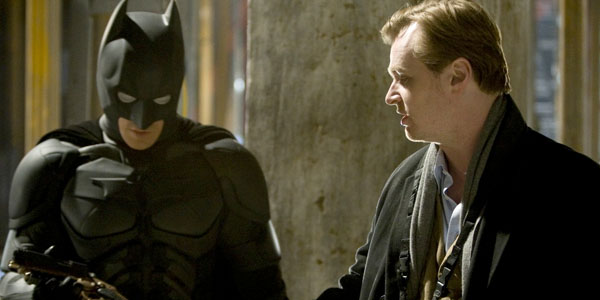 We've seen Batman's origin story, and his genesis from hero to superhero (and back) twice in relatively recent memory, and though the easy creative decision after Batman vs Superman would be to return once more to the source and introduce a new iteration of the character, the better approach would be to bring in a James Bond style continuity where changes in talent personnel don't reflect a change in the continuity of the character. Yes, Christian Bale has retired from the character (for now) and Ben Affleck will be playing a completely different Bat, if rumours are to be believed, but there is no reason that fans wouldn't accept another actor taking over the cowl and cape as a continuation of Christopher Nolan's timeline. As the director and his vision proved in their trilogy ender, Batman is an enduring icon, whose message defies personal ties, and that should be considered applicable to the ongoing direction of the property. In Nolan's world, The Joker remains alive and there are a massive number of villains yet to be introduced, including, most eye-catchingly, figures like The Riddler, Clayface and Hush. With such bounty, and such an established universe (perhaps with a few more gothic touches) there is absolutely no reason to reboot once again. Do you think DC can topple Marvel as the kings of comic book movies? Share your thoughts below in the comments thread.