10 Villains Who Were Completely Screwed By Movie Adaptations
Who cares about the source when lying is so much more delightful?

Even when it's claiming to be showing us films that are based on a true story or real events, Hollywood basically just steam-rolls over the traditional notion of the truth, without concern for the impact on reality, history or literature. And why wouldn't they?
After all, who cares about the source whether historical or textual when lying is so much more delightful?
Oliver Stone basically made up a whole world of lies for his version of the JFK assassination theory, Zulu turned teetotal, honourable hero Henry Hook into a drunken malingerer and Rudy turned Dan Dein the man behind Rudy's selection into a pantomime villain who was overruled by his squad.
But these crimes in the name of fiction are far from the only examples: across many genres and multiple stories, characters who were basically either heroes or misunderstood in their original form have been royally screwed by Hollywood's quest for a better story.
Stories have been retold, and for most of the characters on this list, myths have been wrongly built on those lies, meaning the truth we all now wholly accept is invariably based on great big fibs. Every single one of these victims has been pushed through a malevolent mangle and come out the other side in a totally different, far more nasty form.
And some of them are basically good guys.
Honourable Mention
Mark Zuckerberg The Social Network

Facebook is great: it allows users to find old friends and look at their holiday photos, or reconnect with old flames, and look at their holiday photos, or even discover new friends, and look at their holiday photos. But The Social Network told the story of a socially awkward, downright nasty nerd who invented the site, propelled by romantic rejection, and basically just a bad egg.
However you feel about Mark Zuckerberg, the reality is probably some way off what The Social Network claimed especially the part about his ex inspiring the entire thing.
But, let's be honest, Zuckerberg might just deserve some of the heat, imagined or otherwise, because he invented Facebook, and then has the temerity to reinvent it every couple of months just as his self-righteous users are getting used to the last round of changes.
And that's to say nothing of the spurious privacy practices that see your inane and useless conversations and Likes sold to the highest bidder. Allegedly.
10. Imhotep - The Mummy

Thanks to The Mummy, and its sequel, we all know that Imhotep the titular Mummy, and all round bad dude -
Cruelly relegated to little more than a grumpy, horny wizard with an eternal yearning to bring his object of lust back to life even after his own excrutiating death, the truth of the Egyptian icon was far less nasty.
The Truth
Believe it or not, Imhotep was never an immortal demon sent to terrorise Brendan Fraser, as shocking as it may seem - as a first indication, his name actually means "the one who comes in peace, is with peace."
His legacy was less about killing greedy archeologists, and more about architecture, engineering, and medicine, with his full title being Chancellor of the King of Egypt, Doctor, First in line after the King of Upper Egypt, Administrator of the Great Palace, Hereditary nobleman, High Priest of Heliopolis, Builder, Chief Carpenter, Chief Sculptor, and Maker of Vases in Chief.
He was also a philosopher and poet and is commonly held as the Father of Medicine, and his achievements were such that he became one of very few commoners ever to be accorded divine status some two thousand years after his death in around 2600BC.
And yet, he will probably forever be known as a horny Egyptian ghost thanks to the Mummy series.
9. Frollo - The Hunchback Of Notre-Dame

Another character relegated to a horny villain, propelled by his yearning loins, the malicious, tyrannical horn-dog villain of Disney's The Hunchback Of Notre-Dame was the worst kind of evil.
He was a lady killing, almost baby killing religious nut with a massive contradiction in his very make-up, and he was also pretty much a despicable racist. Good wholesome Disney content.
Not content with lying to Quasimodo, and keeping him hidden from the world, Frollo takes a sexy shine to Esmerelda, despite his racism and devout religion, and then tries to burn Paris down.
The Truth
This is just the first of many cases of Disney amplifying the evil of a villain from the original source, in order to better serve their more rigid moral code.
In Victor Hugo's novel, Frollo is a sympathetic villain, rather than the Machiavellian caricature he becomes in Disney's hands. He doesn't kill the gypsy woman as his first act of note, instead he takes in Quasi, who is abandoned on his doorstep.
He also has a human, relatable story: he himself was an orphan, and he is charged with taking care of his teenage brother, and it isn't until his lust grabs hold of him that he becomes more villainous. He fears women, and is disarmed by his lust so much that he goes crazy, and sets in motion a disturbingly tragic ending far more shocking than the finale of Disney's version.
8. Commodus - Gladiator

The villain of Ridley Scott's Gladiator is an incestuous, daddy killing monster, vain to the extreme, sexually deviant and utterly amoral.
In the hands of Joaquin Phoenix, Commodus is animalistic, repellent and grotesque the ultimate counterpoint to both Russell Crowe's virtue and the quiet poise of his on screen father Marcus Aurelius (Richard Harris.)
Not content with attempting to kill General Maximus out of jealousy, he also kills the Spaniard's wife and son, tries to seduce his sister, kills his lovely old man, and then when he finally gives Maximus the opportunity to get his revenge, he delivers a slow-burning fatal wound designed to ensure his own victory in the arena.
The Truth
Though he did make a habit of stabbing opponents before battles in the expensive games he set up, Commodus wasn't half as bad as Phoenix's version. Crucially, he didn't snuff out his dear old dad, who actually had a heart attack, and though he did spend way too much money on lavish gladiatorial games, he didn't attempt to diddle his siblings (of which he had 12.)
Commodus actually co-ruled with his father, from a very young age, and he was educated as a scholar, rather than a warrior, as Ridley Scott imagined, and while he was definitely a bad leader - hating piffling things like administration and intelligent leadership - he was popular with the army and common folk.
His vilification largely ignores the fact that Commodus was more likely just badly suited to being Caesar, and reimagines him as a malevolent, consciously evil figure driven by perceived inadequacy and jealousy, as well as a dark undercurrent of animalism, both in terms of his lack of morals and his sexual appetite.
There's also very little evidence that he indulged in Miley Cyrus like tongue antics.
7. Hades - Pretty Much Everything

The God of The Underworld has had a bad lot in Hollywood, not only in the God-awful Clash Of The Titans remake (and initially in its lunatic, confusingly named sequel) but also in the Percy Jackson series, which relied on a similarly binary idea of good and evil (or at least heroes and antagonists) without really delving into the complexities of the character.
At his best, Hades tends to appear as a petulant spurned second son, living uneasily in Zeus' shadow, and unhappy that he was given the short straw of ruling the Underworld, with traditionally expressed aspirations to make a play for a more "prominent role." He tends to bear the usual defining characteristics of evil - charisma, dark charm and a propensity to violence, and even when not entirely evil (as in Wrath Of The Gods) he remains the antagonist.
Rather unfairly, Hades has also become synonymous with the Devil, particularly in Disney's Hercules, and also in the Smallville TV, which re-imagined Darkseid's history with humanity with an explicit link to both Lucifer and the darker iteration of the Hindu goddess Kali.
The Truth
Frankly, Hades wasn't all that bad - yes he basically tricked his way to getting a hot wife (Persephone,) but the mythology of the figure has been somewhat lost in more modern interpretations, and an over-riding association with death, which has come to have graver connotations, particularly with religion losing popularity to XBox.
Rather than having aspirations to take over one of his brothers' realms - of either the Earth (from Zeus) or the seas (from Poseidon) - Hades basically stayed in the Underworld judging the dead, and strictly forbade any of his subjects or underlings from attempting to leave his domain. The only times the god ever really kicked off was if anyone tried to defy death, or to steal souls from the Underworld.
It's also important to distinguish the difference between the Underworld and Hell, which is akin to one part of Hades' realm - Tartarus - as opposed to the entire place. So there wasn't a great deal of reason why Hades would want to leave, which is particularly useful considering how much of a spiteful, petulant douche his little brother Zeus tends to be, especially when it comes to threats to his power.
6. Edward I - Braveheart
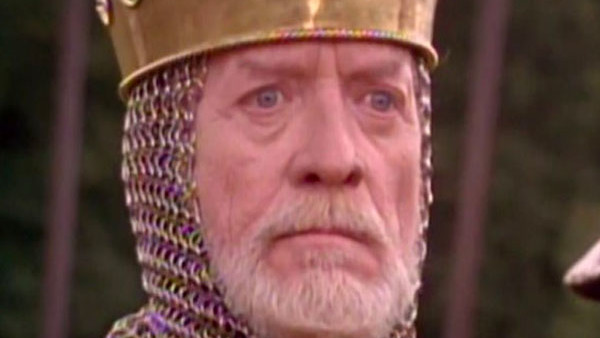
Brilliantly brought to life by Patrick McGoohan in Mel Gibson's not quite accurate historical tale of William Wallace's defiance of the English, Edward I was a malignant force, arrogant, sinister and a heinous, tormenting dictator.
In the 1995 film, Eddie effuses pantomime villainy, stopping just short of cackling maniacally and twiddling his exquisite beard as he passes laws allowing English lords to have their filthy way with newly married Scottish brides and then kills Wallace in a particularly grizzly manner.
The Truth
As much as Scotland and Mel Gibson might hate it, Edward I is still widely heralded as one of the best kings of his era, and this was back before monarchs were just the plate decorations they are today.
He was responsible for revamping the legal system, and at no stage did he invent the law that allowed lordly nookie North of the border. And it was Scotland who made Edward I the villain, by asking him to deliberate on who should be their new king, between John Baliol and Robert The Bruce.
Edward agreed, but only if Scotland accepted England's authority over them, which set in motion a series of events culminating in Scotland's unsuccessful attack on Carlisle with the French. So really, it was all their fault.
5. Ursula - The Little Mermaid

In Disney's The Little Mermaid, Ursula the sea witch is like a tentacled Rumplestintskin, cutting evil deals with terrible small print designed to trick unsuspecting merfolk out of their souls,and generally enjoying her status as a grotesque, heinous trickster.
She is a monstrous creation; an abomination designed to be the antithesis of the beautiful and virtuous merfolk kingdom, who exists only to profit from the hopeless dreams of innocents who are doomed the minute they seek her help.
In short, she's one of Disney's most enduring villains ever conceived.
The Truth
Don't worry, we're not suggesting for one minute that there's a half-Octopus lady witch living under the sea looking like a terrible transvestite.
But the sea witch does exist in the original Hans Christian Anderson-penned fairy tale, which Disney based the cartoon on, and while she was an unnerving presence, she was never as openly evil as Ursula. She appears to make the deal with the mermaid, swaps her tongue for legs and pretty much leaves it at that.
And rather than being the conniving trickster of the Disney flick, the sea witch is presented in a much more favourable light - the caveats of the deal with the Little Mermaid are sacrifices that must be made for the great pay-off of a soul (in this mythology, mermaids don't have souls, but live for 300 years, which is part of the inspiration for the titular character's longing to be human.) She is not needlessly torturing the mermaid, but rather teaching her the value of having the things she lusts after, and while the contract comes with some serious clauses, they are not hidden, and the little mermaid knows the cost of her decision.
4. William McMaster Murdoch - Titanic

Probably the most famously wronged historical figure in the history of cinema, Murdoch was the officer aboard James Cameron's Titanic who lost his head when the iceberg hits and loses all of his moral integrity, before taking the coward's way out.
As the Titanic's doomed passengers attempt to flee the stricken vessel, Murdoch takes it upon himself to shoot one innocent Irish lower class passenger when he thinks he's attempting to force his way onto a lifeboat.
This is not before the officer attempts a bribe from Billy Zane's pantomime spurned lover to ensure his own safe passage on a lifeboat. The cad.
Finally remorseful after killing the immigrant, Murdoch shoots himself, and the audience cheer wildly that justice has clearly prevailed.
The Truth
This one's actually a subject for debate. There was a formidable response to Titanic's representation of Murdoch, especially by his family, and it is generally held, especially in his home town of Dalbeattie, Dumfries and Gallowayin Scotland, that the representation was entirely false, and that Murdoch's heroism deserved celebration.
One officer was recorded as having fired several shots in the air, but this could have been either Murdoch or fellow officer Lightoller (or even a third unknown party.) Reports are naturally sketchy, as are those which suggest an officer may have committed suicide as the ship sank.
Other witness reports suggest that Murdoch died in the water, having been swept overboard by a wave while attempting to launch a lifeboat, and that he would never have shot anyone (according to wireless operator Harold Bride) and survivor statistics suggest that Murdoch was partly responsible for saving 75% of the survivors as he launched 10 lifeboats from the starboard side.
Despite claims that there could be some truth in Murdoch's representation, and that Dalbeattie's celebration of their hero is a little unbalanced, their claims were clearly enough for James Cameron who donated to a charitable prize given in Murdoch's honour.
3. Kaa - The Jungle Book
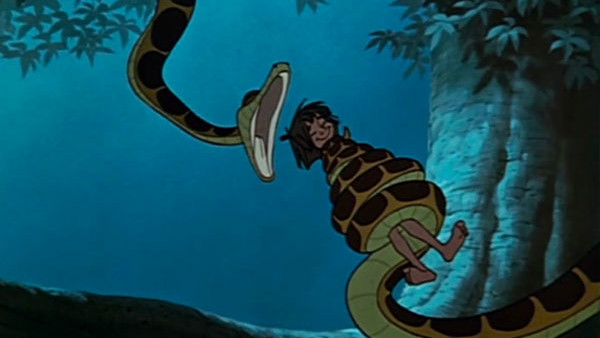
The hypnotic snake of Disney's The Jungle Book was an iconic moment in one of the Mouse House's best classic animations: he was irresistibly designed, with a wonderful vocal performance by Disney stalwart and Winnie The Pooh actor Sterling Holloway.
And while he wasn't the chief antagonist of Wolfgang Reitherman's enchanting jungle story that was of course reserved for Shere Khan the serpent, with his Biblical undertones and creepy, pseudo-sexual creepiness and lispy sensuality was a memorable addition to the film's small gallery of rogues.
He's a nasty creature, comically ineffective, but still nasty, and his designs are to eat little Mowgli, which he almost succeeds in doing twice, before his dastardly plans are foiled on both occasions, despite singing the excellent Trust In Me.
The Truth
Disney's version of Kaa is completely different to Rudyard Kipling's original, who wasn't even remotely villainous. In the actualy Jungle Book book, Kaa is one of Mowgli's mentors and friends, even singing "The Outsong" of the jungle with Baloo and Bagheera for Mowgli at one point.
He is polite, with a quiet poise, and he commands the respect of all animals, and he is instrumental in saving Mowgli from the monkeys, thanks to his hypnotic powers (of dance, as opposed to trippy eyes,) which curiously do not affect Mowgli, because he's human.
So, the snake went from a heroic, well-respected friend of Mowgli to a comically inept, dangerous foe with a hunger for man flesh. Seems fair.
2.The Queen Of Hearts - Alice In Wonderland

The axe-wielding, crazed Queen Of Hearts' is one of Disney's most mysognist creations: she is the paragon of malicious hysteria, a grotesque, pompous Fury with a fetish for execution, and a perverse pleasure in casting sentence.
She is a personified warning against masculinised, immasculating feminity (her husband is about a third of her size, after all) and her ugliness, and manishness are both amplified in the animations, especially in contrast to Alice's innocent beauty.
Basically, she's a murderous, megalomaniac lunatic, and the chief antagonist of Disney's adaptation.
The Truth
In Lewis Carroll's original book, though the Queen is still unbalanced, the author is clearer to present her as a passionate buffoon, whose whims for execution are indulged, but ignored by her husband and everyone else.
She is a harmless, but still pompous obstacle on Alice's journey, fearsome, but not wholly threatening to the titular adventurer, and she is certainly not the villain she appears to be in the Disney version, no matter how famously that version is remembered.
1. The Mandarin - Iron Man 3

Iron Man 3is silly, but it's alsoboldly entertaining, and channels a rich spirit that has long vanished from mainstream action movies, thanks to Shane Black's long association with and fondness for the genre. Sadly, it also drags an iconic Marvel villain through the mud for what amounts to a cheap joke, involving entirely unnecessary toilet humour.
In the threequel, the Mandarin is initially presented as an international terrorist to be feared, and capable of attacking Iron Man on a scale not yet encountered or even conceived. He is as untouchable as the tradition image of the super-villain, and he deserves his top billing, even if his accent is infuriatingly odd, and his rings disappointingly not magical.
But then Shane Black pulls a fast one, and it is revealed that the Mandarin is an empty symbol - a misdirecting front for a criminal arms business, played by an alcoholic, lecherous English actor called Trevor.
The Truth
In the comic universe, the Mandarin is more than a symbol, and while The Dark Knight Rises and Iron Man 3 have both gone big on the importance of symbolism in superhero movies recently, there is something lost when a hero is forced to fight a concept or an ideology. It might be smart, but it's a lot harder to engage than it is with someone like the Joker.
We wanted to see a threat grand enough to really put Iron Man through his paces which we almost got with the Extremis soldiers, until they somehow lost all of their regenerative powers in the final battle - but the issues of racism that would have probably underpinned a true adaptation all but made that impossible. So instead of the world-striding super-villain, with incredible scientific skills, a tight sense of honour and his iconic rings, we got a washed up English puppet without any real power at all, as a comment on the evils of rampant corporate crime.
Even with the modern pre-occupation with "realism" in superhero movies, it would have been far more welcome for the Mandarin to have been the real deal - a superhuman martial artist with the skills to cause Iron Man more than a mild headache, and unfortunately the legacy of this iteration of the character will come at a cost to the next Iron Man film.
Because when you've diluted your most iconic villain - and it is seriously akin to making the Joker a figment of Batman's imagination - where next can you go?
Do any other iconic villains deserve to go on this list? Share your own picks below in the comments.